How Good a Judge Are You?

How Good a Judge Are You?

Ram was at home one day when he heard activity outside and realised that new neighbours were moving in.

A family had arrived with a moving truck: a middle-aged couple and their two teenage children. They seemed cheerful, friendly and easy-going. Ram stepped outside, exchanged greetings with them and watched them carry boxes into the house.

A little later, the new neighbour came over and introduced himself as Gaurav. He said that the family had just moved from another city, and that once they had settled in properly, he would come over again so that the two of them could sit together and chat over a cup of tea.

The first impression could hardly have been better. Ram went back inside thinking he had been fortunate to get such warm, decent and friendly neighbours.

The next day, Ram went to a nearby hair salon. As usually happens in such places, he and the hairstylist began chatting about local matters, and Ram mentioned that a new family had moved into the house next to his.

Ram talking with the hairstylist after mentioning his new neighbour Gaurav.

‘They seem like really nice people,’ he said. ‘Very friendly.’

The hairstylist asked who they were, and Ram gave him the name.

The hairstylist suddenly looked interested. ‘Do you mean the tall fellow with the beard and moustache? A little plump, not much hair on his head?’

‘Yes.’

‘And he said he came from another city?’

‘Yes.’

‘Two teenage children?’

‘Yes.’

The hairstylist lowered his voice. ‘Do you know who that man is? In the city he came from, he is known as a con man. He has cheated a lot of people.’

That was the whole of it. No evidence, no document, no police report, no second source. Just a short conversation in a hair salon.

Yet something had already happened. Gaurav had changed, not in reality, but in Ram’s mind.

When Ram got home later, he saw Gaurav outside near his car. Gaurav smiled and greeted him, and Ram barely responded. The friendliness of the previous day had given way to suspicion. The man he had thought pleasant and trustworthy now looked dangerous and dishonest.

A few days later, the truth emerged. The hairstylist had confused Gaurav with somebody else. Gaurav was not the person he had been talking about at all.

Now Ram felt terrible. He was ashamed of having treated an innocent man coldly and wondered how he could possibly explain his behaviour.

But the most important part of this story is not the hairstylist’s mistake. It is what happened inside the listener.

Nothing about Gaurav had changed. His face, his voice, his family and his conduct were exactly as they had been the day before. Only one new piece of information had entered Ram’s mind, and that single piece of information completely altered his judgement of the man.

This is how easily our minds work. We perceive something, we interpret it, and we form a conclusion. Our judgement depends first on what reaches us through the senses, but what often affects us most strongly is what we hear from another person. Someone tells us something about somebody, and from that moment we no longer see that person in the same way. The troubling part is that we rarely stop to ask whether the information is accurate, complete, relevant or even about the right person.

Emotion then enters the picture. Fear, anger, loyalty, resentment, sympathy, suspicion or excitement can cloud the intellect. Once emotion takes control, judgement becomes far less reliable, and decisions made in that state may later become a source of regret.

This is why I have started a new interactive Tavamithram series called What’s Your Verdict?

You will be given a situation and asked to judge it based on the information available to you at that moment. Then more information will appear. You may discover that something important was missing, or that your first judgement still stands, or that the new details change everything. Then you will be asked again: do you stand by your verdict, or would you change it?

The purpose is not to trick you. It is to let you observe something that normally happens too quickly for us to notice: the formation of judgement itself. How quickly do you reach a conclusion? What information do you trust? What assumptions do you make? How much does emotion influence your decision, and how willing are you to revise your view when new facts appear?

And perhaps the most important question of all: how often in real life have we judged a person without knowing the whole story?

The first case opens on 22 September 2026 at 02:00 GMT.

Read carefully. Decide honestly. Then wait for the rest of the story.

What Would You Do? A New Daily Tavamithram Series

You probably have a fairly clear idea of the kind of person you are.

You know what you consider right and wrong. You know what you would tolerate, what you would never do, whom you would trust, when you would walk away and when you would stand your ground.

At least, that is what most of us think.

But put yourself inside a real situation, remove the comfortable distance, add money, loyalty, friendship, family, betrayal, ambition or fear, and suddenly the answer is not always so obvious.

That is where it becomes interesting.

I have started a new daily Tavamithram series called What Would You Do?

Every day, you are given three real-life situations.

You read the situation. You decide what you would do. Then you see a short reflection that may make you look at your choice again.

There is no need to impress anybody. There is only one person whose answer matters here: you.

Your choices stay in your browser for the day. They are not displayed publicly.

And if you are someone who prefers to think rather than simply follow what everybody else says, you may find this rather addictive.

Three situations. Three decisions. Every day.

So, how well do you actually know your own mind?

The Deepest Betrayal Begins When Gratitude Becomes Inconvenient

A man spends years helping a younger colleague find his feet. He answers calls at odd hours, opens what doors he can, and never once asks for anything back. Time passes. The younger man succeeds. One day somebody mentions the person who once helped him. He smiles politely and says, ‘Oh yes, I knew him once.’

Nobody lied. Nothing was stolen. A history was simply edited down to half a sentence.

There comes a point when something simply ends. No drama, no revenge, only clarity. Trust can survive disagreement, distance, disappointment and even long periods of silence, but deliberate betrayal destroys it. Once something fundamental has been broken, pretending that nothing has changed helps nobody.

Betrayal, though, is only one form of a much larger human problem, and the deeper issue is usually gratitude.

We tend to treat gratitude as a matter of manners. Someone does something for us, we say thank you, and the account is considered settled. But an attitude of gratitude is a good deal larger than politeness. It is a way of understanding one’s own life, and it begins with an obvious fact that most of us manage to forget: none of us arrived where we are entirely through our own effort.

Along the way, people teach us and correct us, open doors we could not have opened, offer chances we could not have created for ourselves, or turn up at the moment when their presence matters. Some contributions change the direction of a life. Others amount to a single sentence still remembered four decades later. Parents, siblings, teachers, classmates, friends, bosses, colleagues, neighbours, strangers and people from whom our paths eventually separated may all have played a part. The size of the contribution is not the important thing. The ability to remember it is.

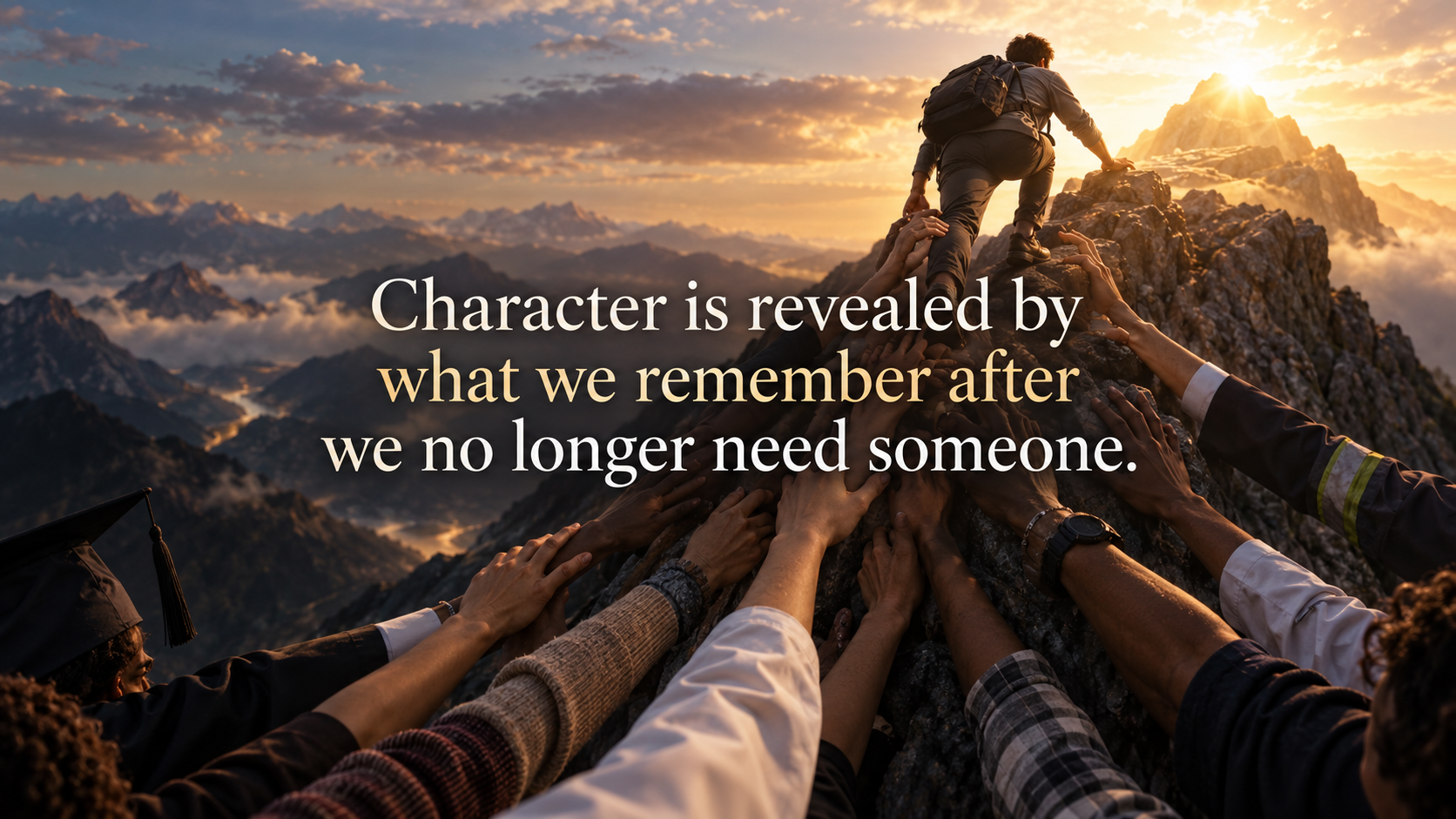
A reflection on gratitude and the people who contribute to our journey through life

Before any of us could speak, somebody had already given up a great deal on our behalf. A woman carried us inside her body for nine months and then risked her life to deliver us, and for most of human history that risk was very far from theoretical. Around that beginning were parents or caregivers taking on responsibilities that would continue for years, earning, feeding, protecting, worrying, sacrificing and doing whatever was necessary to keep a child alive and give that child a future.

What followed were years of labour that children rarely notice while it is being done. The earning and the feeding. The illnesses nursed through the night. The education paid for, the personal desires postponed, the responsibilities that had no end date.

No infant on earth survives alone. Every achievement any of us lists, and every confident opinion we hold about how life ought to be lived, rests on years of care given before we were capable of noticing it was being given. Nothing we could offer equals care of that order. The only thing worth anything here is remembering, and saying so while the people concerned are still alive to hear it.

That is why I consider an attitude of gratitude among the highest of human virtues. It encompasses so many others within it: humility, loyalty, decency, memory, acknowledgement and respect for what we have received from others.

There is something deeply grounding about looking back over the road behind you and asking one plain question: Who helped me get here? The question is not about who made me successful or who deserves the credit. It is about who added something, however small, that made the road easier, clearer or possible at all. Sometimes the honest answer includes a person who rejected us, dismissed us or let us go, since an ending that felt like a wound at the time may have been the thing that cleared the space for whatever came next.

None of this needs to be sentimental, and none of it creates a debt.

Helping someone does not purchase their loyalty, and teaching someone gives us no ownership over their future. Kindness entitles nobody to permanent agreement, admiration or closeness, and the moment generosity turns into an invoice it has stopped being generosity. A person may receive our help and later disagree with us completely. They may leave, grow in another direction, build another life, or decide the relationship has run its course. That is not ingratitude. That is simply a life taking its own shape.

Ingratitude begins somewhere quite different. It begins when history gets rewritten because acknowledgement has become inconvenient, and it shows itself most clearly in people who grow so impressed by where they have arrived that they start believing they travelled there alone. Help that once mattered is downgraded to something insignificant, guidance is minimised or denied, and opportunities are quietly reinterpreted as inevitabilities until the contribution of others has vanished from the story altogether. That kind of erasure is not bad manners. It reveals how a person sees the world.

An attitude of gratitude does the opposite. It keeps achievement in proportion, so that a successful person still recalls the beginner they once were, and whoever now teaches has not lost sight of the people who taught them.

This has mattered to me for as long as I can remember. Even as a boy I felt a need to acknowledge anyone who had done something for me, and over the years I have gone back to people decades later just to say that what they once did was remembered. More often than not they had forgotten it themselves, which is exactly why it was worth saying. A good act does not lose its value because the person who performed it no longer remembers performing it.

This way of looking at life changes how we understand broken trust as well. A relationship can end without becoming a war, and a person can lose their place in our life without being turned into an enemy. Forgiveness need not mean renewed access, and understanding somebody’s weakness is not an obligation to invite that weakness back into one’s house. There are doors that can stay closed for good with nothing but quiet behind them.

Here is where nonduality stops being philosophy and becomes something you can actually use. If existence is one, expressed through countless forms, then the apparent separateness between one person and another is not the final truth about either of them. Ego makes that separation feel absolute, and entitlement, fear and delusion take turns defending it. The obsession with ‘me’ and ‘mine’ is what makes it possible to use another human being as though their experience had nothing to do with our own, and out of that imagined separateness come exploitation, ingratitude and betrayal.

Gratitude weakens the illusion, because to be grateful is to recognise relationship. Something reached us through another person. Their hand may have been a small one in the story of our life, but it was still a hand.

That recognition binds us to nobody forever. A relationship may end, trust may disappear permanently, two people may never speak again, and none of it requires us to deny what was once good, or to pretend that what happened afterwards did not happen. Both truths stand together perfectly well. A person can have helped us and later hurt us, or occupied a central place in our life and forfeited it entirely.

Gratitude does not falsify the present. It simply refuses to falsify the past, and that may be its greatest strength. A grateful person has no need to romanticise anybody. Such a person only declines to let disappointment reach back through their own history and erase every good thing that came before it. Remembering something without clinging to it, and moving on without rewriting the record, is a quieter form of strength than most people give it credit for.

People have come to me at very different points in their lives. Some needed nothing more than a little guidance or encouragement. Others came when they felt utterly rejected, broken or alone, and a few spoke openly of wanting to harm themselves. I gave them whatever time, attention or counsel I could, and never asked for anything back. That was never a transaction. I mention it only because ‘Your friend forever’ was never intended as a pleasant phrase at the bottom of a page. It was meant literally.

A relationship can end. Trust can end. A place once occupied in somebody’s life can vanish permanently. The truth that connects us does not.

That is why, when the time came to name this blog in February 2014, I did not go looking for something clever. I chose the Sanskrit for ‘your friend forever’, Tavamithram Sarvada, and I meant it without a single condition attached. Not friendship on condition of agreement, and not friendship only while it remains convenient. Nothing held in reserve, and no dependence on how anyone chooses to behave. Friendship with conditions attached is not friendship. It is a deal. That was the principle I began with, and after all these years I see no reason to revise it.

Your friend forever.

Self-Enquiry in Advaita Vedanta: What Remains?

Sometimes you identify with your body and say, โ€˜I look good,โ€™ โ€˜I am fat,โ€™ โ€˜I am getting old,โ€™ โ€˜I am sick.โ€™ Other times, you identify with your mind and say, โ€˜I am excited,โ€™ โ€˜I am depressed,โ€™ โ€˜I am angry.โ€™ When life is going well, you say you have a great life, and when you feel low, you say your life is terrible.

Your body changes. Your mind changes. Your story changes.

What are you, then, when everything you call yourself keeps changing?

Give me less than ten minutes.


1: You Are Not the Body

The body is known.

You see it and feel it; you watch it change. It was small once. It is different now. One day it will be frail and unrecognisable. It has never stopped changing since the moment it appeared.

Now, here is the question: can the known be the knower? Obviously not.

You have a body. But you are not the body.


2: You Are Not the Mind

Thoughts appear and disappear. Anger arrives and leaves. Fear comes and goes. Even the silence between thoughts comes and goes.

So, if everything in the mind is passing through, what are you? You are the one in whom all of it is happening. The knower of the mind cannot be the mind. You are not the thought. You are not the thinker. You are what remains when the noise stops.


3: You Are Not Your Story

Your name was given to you by others. Your past is memory. Your identity is a collection of recorded experiences that the mind calls โ€œmine.โ€

Stop at that word. Mine.

You say โ€œmy childhood,โ€ โ€œmy pain,โ€ โ€œmy reputation,โ€ โ€œmy achievement,โ€ and even โ€œmy lifeโ€! If it is โ€œmy,โ€ it is not the final โ€œI.โ€ The story is known. You are not the story.


4: What Remains?

When the body is set aside as known, when the mind is set aside as known, when the story is set aside as known, what is left?

Awareness. Not a theory, not a religious claim, not something you need to practise into existence. It is the simple, undeniable fact of knowing. Before thought, it is there. During thought, it is there. After thought fades, it is still there.

You do not create it. You have simply been overlooking it.

That is what you are.


5: Why Suffering Begins

Now look at this carefully.

The body changes, and fear begins. The mind changes, and confusion begins. Peopleโ€™s opinions shift, and insecurity begins. Circumstances move, and anxiety begins.

Why? Because you placed yourself inside what was changing. You took the known to be the knower. You took the passing story to be the real โ€œI.โ€

That single error is the entire root of human suffering. Not sin. Not karma. Not fate. One misidentification. That is bondage.


6: Do Not Turn This Into Another Idea

At this point, the mind may try to grab the teaching and convert it into a new identity.

โ€œI am awareness.โ€ โ€œI know Vedanta.โ€ โ€œI understand Brahman.โ€ โ€œI am beyond the body and mind.โ€

Careful.

That may only be the ego wearing new clothes.

Vedanta is not a sentence to repeat. It is not a badge. It is not a spiritual status.

The question is not whether you can say โ€œI am awareness.โ€ The question is whether you still collapse when the body is criticised, the mind is disturbed, the story is threatened, or your image is insulted.

That is where the enquiry becomes real.


7: What Vedanta Actually Does

Vedanta does not hand you a new belief to replace the old one.

It removes error.

You already are the awareness because of which the body, the mind, the thought, the memory, and the entire world are known. Vedanta does not manufacture this truth. It exposes the confusion that has been covering it.

It does not say, โ€œBecome something else.โ€ It says, โ€œSee clearly what you have been mistaking yourself for.โ€ Nothing is added. Everything false is removed.


8: What Brahman Actually Means

Brahman is not a bearded โ€˜godโ€™ above the clouds. Not a cosmic authority watching from a throne.

Brahman is the reality because of which anything is known at all. The body appears in it. The mind moves in it. The world arises in it. Even this moment of reading or listening is happening because of it.

Not an object to be reached. Not a reward to be earned. It is the ground that is already here, making all experience possible.


9: What Liberation Actually Means

Liberation is not escape to another world. It is not joining an ashram, acquiring a title, or becoming someone others regard as spiritually elevated.

Liberation is the collapse of the central error.

The body continues to act. The mind continues to think. Life continues with all its weight and texture. But the root mistake is gone: the belief that โ€œI am this body-mind storyโ€ is gone.

Once that error is genuinely seen, and not merely understood as an interesting idea, life stops being driven by fear, vanity, and borrowed identity.


10: Final Strike

Do not believe me.

See it.

Everything you have ever called โ€œIโ€ has been known. The body, known. The mind, known. The story, known. The fear, the desire, and the confusion, all known.

You are the knower. You have never been the known.

That is Vedanta.


No costume. No institution. No borrowed holiness. No performance.

If the false โ€œIโ€ survives this enquiry untouched, nothing has happened. Sorry. But if the false โ€œIโ€ collapses, Vedanta has done its work.

Costume cannot replace clarity. Institution cannot replace enquiry. And no teacher has done the job if the false โ€œIโ€ walks out intact.

The special clothes were never the point. The real โ€œIโ€ was always the point.

The โ€˜Iโ€™ you have been protecting all your life was never you.

What you truly are has never been born, has never suffered, and has never needed saving.

READ THIS ARTICLE ON SUBSTACK

Continue the enquiry into the โ€œIโ€

If this question has become real for you, continue with Modern Rishi. It is built around the same enquiry into identity, the mind, the Self, conditioning, ego, responsibility and living with clarity.

What Next?: The End of Inner Conflict

He Who Conquers His Mind Is the Mightiest Warrior

People think strength is aggression. They think power is domination. Many think victory means defeating an external opponent.

That understanding does not survive scrutiny.

Real strength has nothing to do with overpowering others. It has everything to do with … CONTINUE READING ON SUBSTACK

Stop Distorting the Srimad Bhagavad Gita

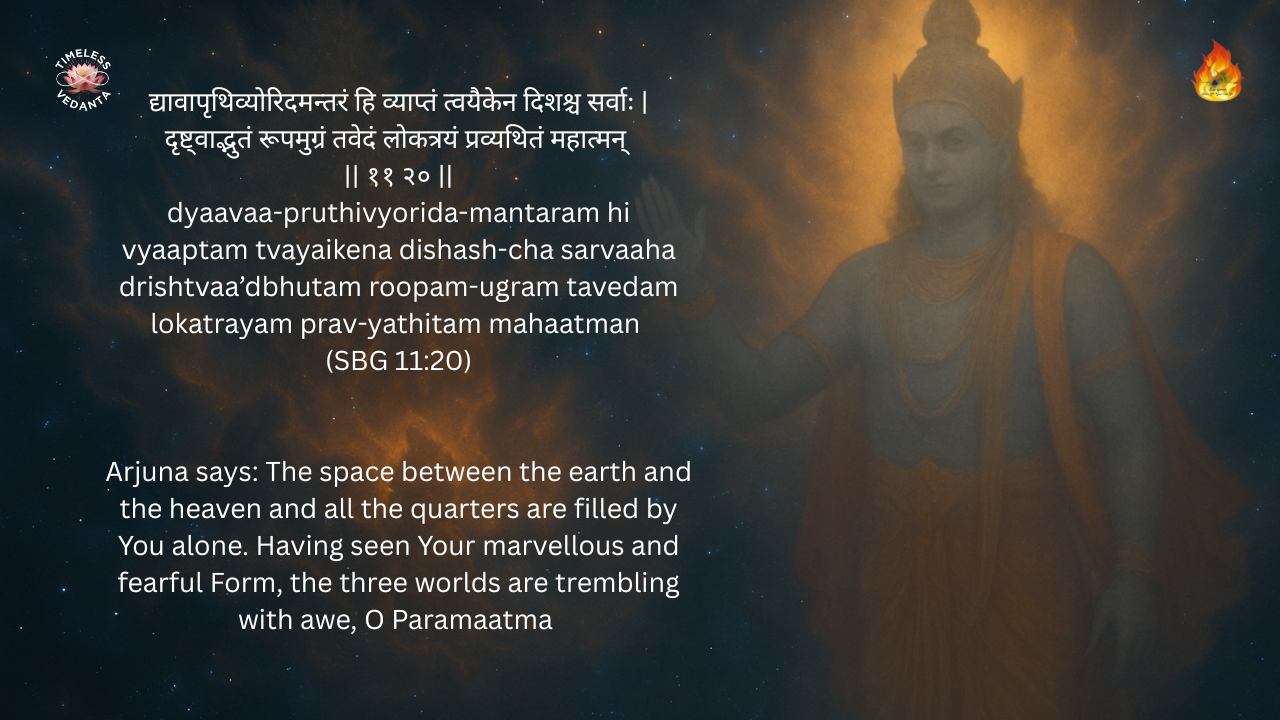
KRISHNA IS THE SUBSTRATUM OF ALL THAT EXISTS AND DOES NOT EXIST! Someone made a video and called Him the ‘backbone of India!’ What? And What about the rest of the universe??

Eisegesis is the practice of reading oneโ€™s own ideas into a text instead of drawing out the meaning that is actually there. That is exactly what the speaker in a video I recently watched did.

The ideas promoted in the video, reduce the universal philosophy of the Srimad Bhagavad Gita to shallow slogans, and that needs to be corrected. The speaker takes ‘Jana Gana Mana’ and forces his own narrow view into it, capitalising on the fact that most people have neither read nor understood the Srimad Bhagavad Gita.

There are confusions and distortions that get repeated again and again. Let us set them straight.

Was it written for George V?
Many people have said that Tagore composed the song in praise of George V in 1911. The timing made the suspicion stronger, since it was sung at the Indian National Congress session just when the King arrived in India. Tagore denied this charge later and said he had written it for the โ€œEternal Charioteer.โ€ The truth is that the words are veiled in such a way that they can be read in more than one way. That ambiguity itself should alert us to be cautious and not jump to easy conclusions.

It is also worth remembering that when this song was written, the modern political entity called India did not yet exist. To confine Krishna, the all-pervading Self, within the limits of a political boundary on Earth is to miss the essence of the Srimad Bhagavad Gita. The Gita reveals the cosmic Krishna, whose presence transcends nations and even this planet, which itself is but a speck in the vast universe.

Krishna is not a human deity
In SBG 7:24, Krishna says: โ€œFoolish people who do not know My formless, exalted, imperishable, and supreme nature think I assume a manifest human form.โ€

And in SBG 10:20, He states: โ€œI am the Self, O Gudakesha (Arjuna), situated within all living entities. I am the origin, the middle and also the end of all beings.โ€

This makes it clear that Krishna is the universal Self, not a political or sectarian figure limited to India! To call Him the โ€œbackbone of Indiaโ€ is to completely misrepresent the entire Krishna Tattva or Krishna Principle.

Contradicting Chapters 10 and 11

  • Chapter 10 shows Krishna as the essence behind every greatness, not as the โ€˜backboneโ€™ of a single land.
  • Chapter 11 shows Arjuna the universal form, containing all beings, all worlds, and all time. Reducing Bhagavan Shri Krishna to a mascot of a country is to rubbish these chapters.

Tagoreโ€™s wording
Tagoreโ€™s phrase โ€œEternal Charioteerโ€ was a universal metaphor. To twist it into a sectarian slogan is dishonest and disrespectful to his intent. Tagore was a poet and philosopher who could have deliberately used metaphors broad enough to be interpreted universally.

Exploiting ignorance
Since most people mistake the personification of Krishna in the Bhagavad Gita for an anthropomorphic deity, speakers like this exploit that gap. They impose their own ideas and turn Vedanta into shallow propaganda.

One word twisted into nonsense
The speaker picks up a single word โ€œchira-sarathiโ€ and cooks up an entire narrative out of it. In the Srimad Bhagavad Gita, Krishnaโ€™s role as Arjunaโ€™s charioteer serves as a metaphor for the intellect guiding the mind. As per the chariot analogy, the chariot is the body, Arjuna is the owner of the body, Krishna is the intellect, the reins are the mind, the horses are the senses, and the path is the world in which one lives. To literalise it and claim that Tagoreโ€™s โ€œEternal Charioteerโ€ must mean a historical Krishna who is the backbone of India is pure invention. Worse, it reduces the Bhagavad Gitaโ€™s universal truth to a narrow slogan.

The truth is simple. Krishna is the eternal, formless Self. The Srimad Bhagavad Gita is a universal scripture that points us to clarity and self-realisation. Do not allow your ignorance of the great life-altering scripture to make you fall for shallow interpretations that limit the boundless truth of Vedanta.

Have you completed reading or listening to the Srimad Bhagavad Gita? Whether your answer is yes or no, here is your chance to spend just three hours and internalise the most supreme philosophy of nondual universal oneness.

Below is my harmonica rendition of the Indian National Anthem

Do This AT LEAST ONCE in Your Lifetime – Only 3 Hours!

No Mantras, No Prayers, No Fasting – Just 3 Hours to Smash Illusion and Gain the Supreme Truth!

I am not saying this. KRISHNA SAYS IT IN THE SRIMAD BHAGAVAD GITA.

All worries, fears, stress, anger, envy, and every negative force that can block, weaken, or destroy your chance of living a truly beautiful and fulfilling life will be crushed to smithereens and pulverised to dust.

With soothing sound, captivating visuals, and clear English text to follow along.

Please let me be honest, my dear brothers and sisters, I find it utterly saddening that so many people have been convinced that the Srimad Bhagavad Gita is โ€œtoo difficult to comprehendโ€ and that without a โ€œgood guruโ€ they can never learn it.

In Shloka SBG 9:02, Bhagavan Krishna clearly says that this knowledge is not only VERY EASY, but also it is also VERY EASY TO PRACTISE and it is EVERLASTING. All it takes is the small effort of sitting down and reading a simple translation of the 700 Shlokas. In fact, I must have read this supreme scripture over a thousand times, and I never tire of it. The same applies to every genuine seeker. You cannot read it once and expect to fully grasp it. But at the very least, read it, listen to it, or go through it ONCE BEFORE YOU DIE!

As part of my SBG for ALL Mission, here is my humble offering: a three-hour guided study of this life-changing scripture, a true gift to humanity.

Experience this once, and the weight of your illusions will collapse into nothing.

Please, take this opportunity. Whatever you think it is worth, COMPLETE IT. Do it at least for your brotherโ€™s sake. You can thank me later ๐Ÿ™‚

JAI SHRI KRISHNA.

LOOK UP, AND WAKE UP

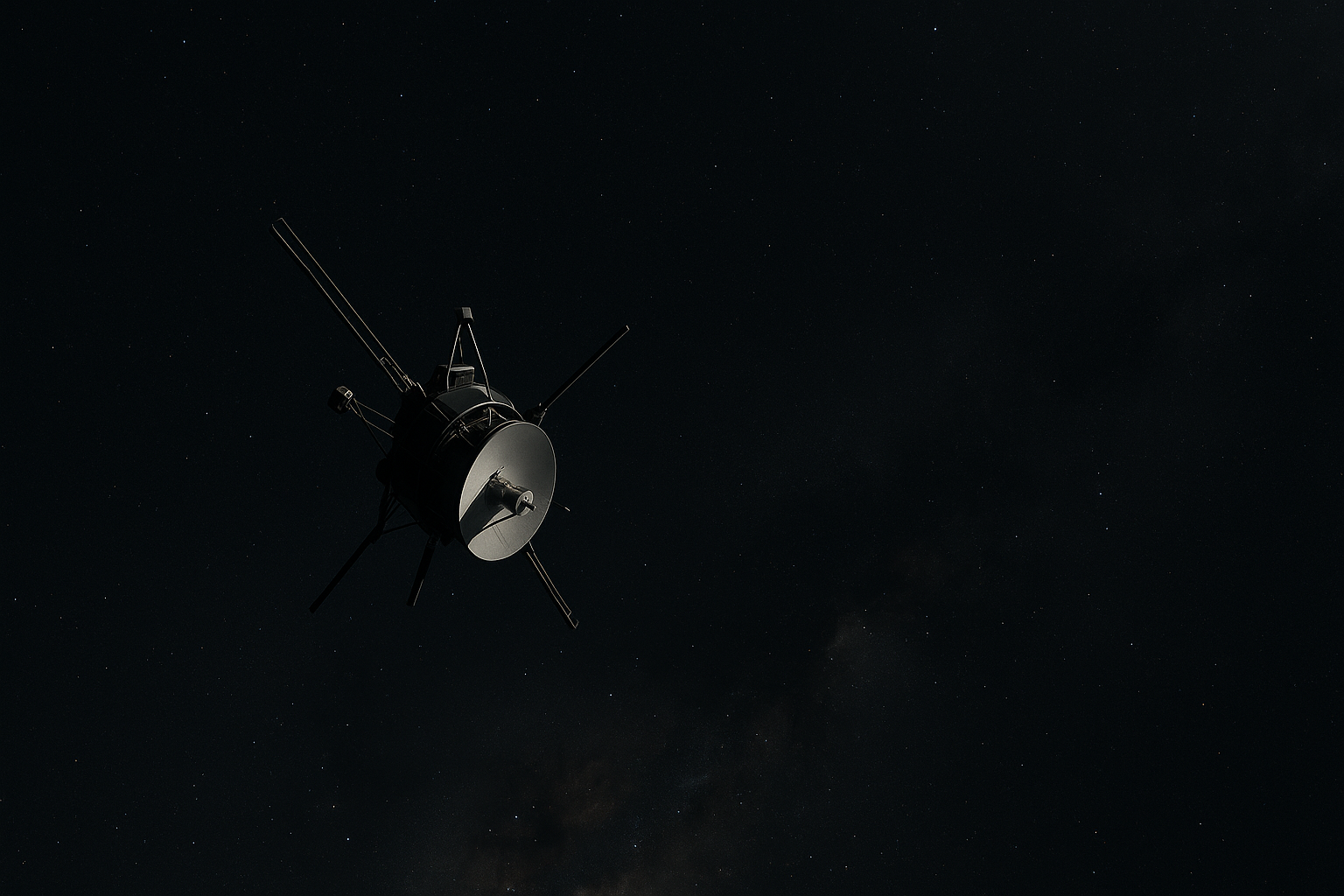
Voyager 1 has been flying non-stop for nearly 48 years since 1977. It has already travelled over 24 billion kilometres and is still not even one light-day away from Earth.
Let that sink in. Just one day of light-speed travel, and we havenโ€™t reached it yet.

And here we areโ€ฆ
On this tiny, fragile speck called Earth, floating in infinite space,
Wasting our precious moment of life with ego, pride, inferiority, religious superiority, hatred, and greed.

All our religious places, ideologies, nations, and flags – they vanish into nothingness when seen from just a few kilometres above Earth, let alone from Voyagerโ€™s view.

The spacecraft carries a golden record of music and greetings from humanity, in case it ever meets another intelligent being.
Imagine if it did. What would we say we stood for?

Itโ€™s time we grow up, let go of imaginary divisions, ridiculous beliefs, and cults, and embrace the sheer miracle of being alive at all. Because in the grand movie of the universe, we’re not even a pixel on the screen.

Experience the Bhagavad Gita: A Dynamic Approach

Now Is the Time. Experience the Srimad Bhagavad Gita Like Never Before!

It is rather ironic that in India, people solemnly place their hand on the Srimad Bhagavad Gita in a court of law and swear to speak the truth, yet many of them have never read it, let alone truly understood its message. How strange it is that a civilisation that produced the worldโ€™s most brilliant text on life, ethics, detachment, work, and clarity, treats it like a prop or a ritual object, rather than the supreme manual for life that it truly is.

This is why I, Tavamithram Sarvada, have taken it upon myself to make the Srimad Bhagavad Gita easily available, accessible, and comprehensible to all, not by mystifying it, but by bringing it to life.
And here is a rendition like no other.

๐ŸŽ™๏ธ Each Shloka Delivered Powerfully, Not Sung Dully

Most recitations of the Gita are delivered in a monotonous and emotionless chant, often with all 700 Shlokas sung in a single flat tune. But remember that the scenario is that of war, and to ensure the energy and power apart from the wisdom the Bhagavad Gita imparts, I came to the conclusion that it needs to be delivered dramatically and powerfully.

With a background in acting and a deep grounding in Vedanta, I have delivered each Shloka with the tone, expression, and intensity its meaning calls for. This is not a performance – it is a sacred transmission, infused with clarity, emotion, and strength.

Each Shloka appears on-screen in Sanskrit, accompanied by its romanised transliteration, English transliteration, and meaning. Whether or not you understand Sanskrit, this immersive experience will draw you into the battlefield of Kurukshetra and place you right beside Arjuna and at the feet of Bhagavan Shri Krishna, both mentally and spiritually.

๐Ÿ“ฝ๏ธ Why This Matters Now

In an age of confusion, disconnection, and identity crisis, the Srimad Bhagavad Gita remains the most powerful antidote to fear, sorrow, and indecision. But you must listen to it, not once, not just as a ritual, but as if your life depended on it.

Because in many ways, it does.

๐Ÿ’ก Don’t Believe. Know!

This is the spirit of Timeless Vedanta, and this is your invitation to listen to the Srimad Bhagavad Gita as never before. There is no concept of belief in Vedanta as it is in organised religions. It is purely about realisation. Donโ€™t leave this life without having at least heard the full message of Bhagavan Krishna.

If you haven’t yet read or heard the Srimad Bhagavad Gita even once in your life, start today. You owe it to yourself.

๐ŸŽง Now is the time. Experience the Srimad Bhagavad Gita, like never before!

๐Ÿ‘‡๐Ÿผ Watch the full video here:

The Srimad Bhagavad Gita Explained Simply In English

SrimadBhagavadGita #BhagavadGitaRecitation #GitaWithMeaning #TimelessVedanta #Donโ€™tBelieveKnow #SanskritGita #GitaForEveryone #PowerfulRecitation #ArjunaKrishna #SpiritualAwakening

Caste Discrimination vs. Bhagavad Gita Teachings: A Deep Dive

What the Bhagavad Gita Says vs. What Society Believes: Shloka SBG 5:18 in 12 Languages

Caste-based discrimination continues to divide society, often in the name of religion. But what do important scriptures of Vedanta say? Find out where the term ‘caste’ is supposed to have originated.

This video presents Srimad Bhagavad Gita 5:18, a Shloka that affirms the spiritual equality of all beings. It is rendered in 12 languages to emphasise the message of oneness that transcends boundaries of caste, language, culture, or nation.

This is not about personal identity but about truth. Let us return to what the Srimad Bhagavad Gita truly teaches, that the same divine presence dwells equally in all.

๐Ÿ•‰๏ธ Watch the video, reflect, and share it with those who still believe caste is sanctioned by Vedanta.

If you still havenโ€™t studied, read, or heard the Srimad Bhagavad Gita, hereโ€™s your chance. JUST THREE HOURS TO ABSOLUTE MENTAL CLARITY AND TOTAL FREEDOM from fear, false beliefs, confusion, directionlessness, and mental slavery to bizarre ideas or imaginary beings.

The audiobook below, presented as a YouTube video, is my offering to you, because I genuinely care and I don’t want anything in return.

I donโ€™t sell dr*gs, lies, delusions, or dreams. I share the grand panacea for life’s problems, free of charge. Whether you accept it or not, the choice is yours.

The Complete Srimad Bhagavad Gita – Explained Simply | No Confusion, Only Clarity!