You probably have a fairly clear idea of the kind of person you are.
You know what you consider right and wrong. You know what you would tolerate, what you would never do, whom you would trust, when you would walk away and when you would stand your ground.
At least, that is what most of us think.
But put yourself inside a real situation, remove the comfortable distance, add money, loyalty, friendship, family, betrayal, ambition or fear, and suddenly the answer is not always so obvious.
That is where it becomes interesting.
I have started a new daily Tavamithram series called What Would You Do?
Every day, you are given three real-life situations.
You read the situation. You decide what you would do. Then you see a short reflection that may make you look at your choice again.
There is no need to impress anybody. There is only one person whose answer matters here: you.
Your choices stay in your browser for the day. They are not displayed publicly.
And if you are someone who prefers to think rather than simply follow what everybody else says, you may find this rather addictive.
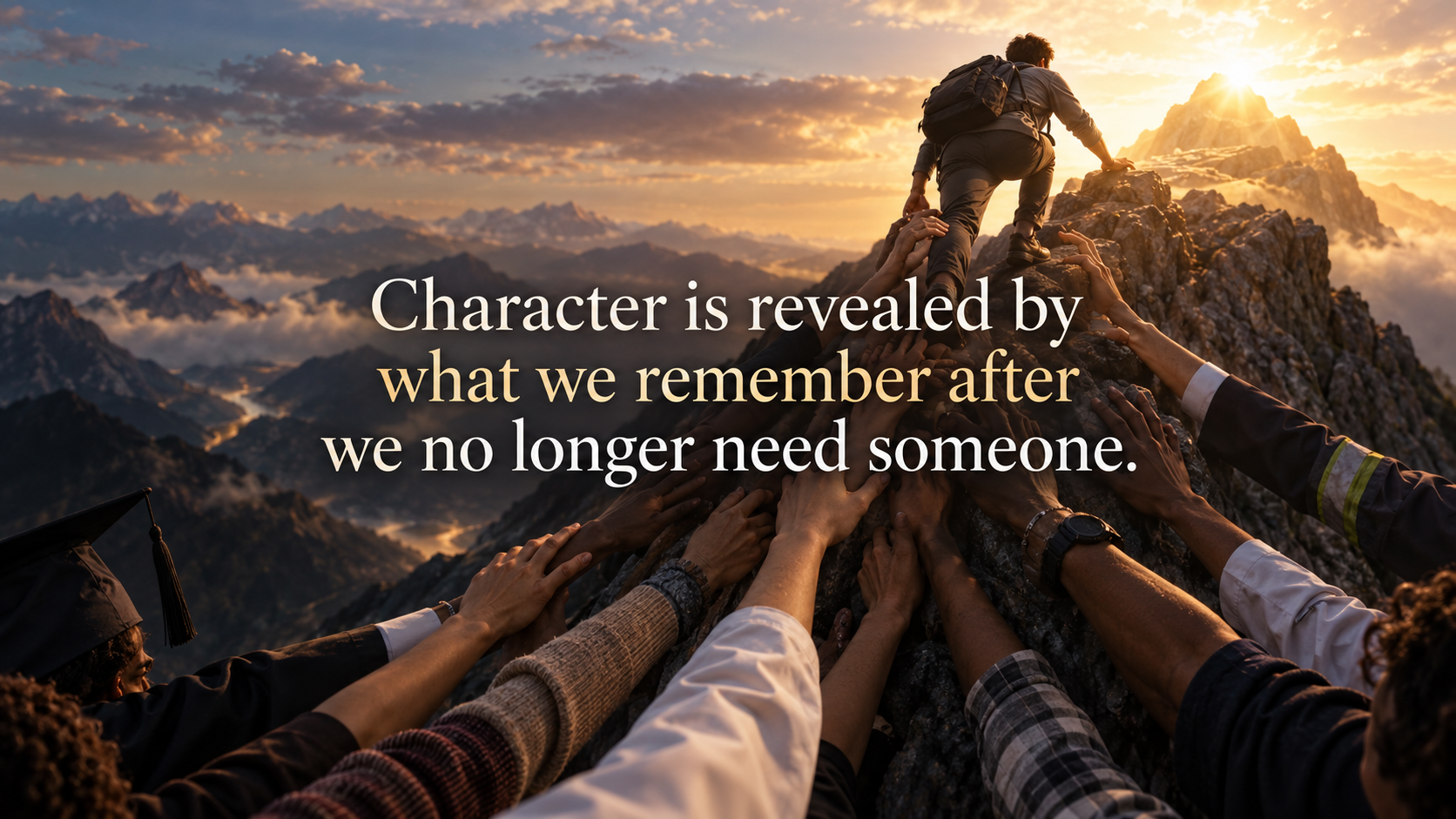
A man spends years helping a younger colleague find his feet. He answers calls at odd hours, opens what doors he can, and never once asks for anything back. Time passes. The younger man succeeds. One day somebody mentions the person who once helped him. He smiles politely and says, ‘Oh yes, I knew him once.’
Nobody lied. Nothing was stolen. A history was simply edited down to half a sentence.
There comes a point when something simply ends. No drama, no revenge, only clarity. Trust can survive disagreement, distance, disappointment and even long periods of silence, but deliberate betrayal destroys it. Once something fundamental has been broken, pretending that nothing has changed helps nobody.
Betrayal, though, is only one form of a much larger human problem, and the deeper issue is usually gratitude.
We tend to treat gratitude as a matter of manners. Someone does something for us, we say thank you, and the account is considered settled. But an attitude of gratitude is a good deal larger than politeness. It is a way of understanding one’s own life, and it begins with an obvious fact that most of us manage to forget: none of us arrived where we are entirely through our own effort.
Along the way, people teach us and correct us, open doors we could not have opened, offer chances we could not have created for ourselves, or turn up at the moment when their presence matters. Some contributions change the direction of a life. Others amount to a single sentence still remembered four decades later. Parents, siblings, teachers, classmates, friends, bosses, colleagues, neighbours, strangers and people from whom our paths eventually separated may all have played a part. The size of the contribution is not the important thing. The ability to remember it is.
Before any of us could speak, somebody had already given up a great deal on our behalf. A woman carried us inside her body for nine months and then risked her life to deliver us, and for most of human history that risk was very far from theoretical. Around that beginning were parents or caregivers taking on responsibilities that would continue for years, earning, feeding, protecting, worrying, sacrificing and doing whatever was necessary to keep a child alive and give that child a future.
What followed were years of labour that children rarely notice while it is being done. The earning and the feeding. The illnesses nursed through the night. The education paid for, the personal desires postponed, the responsibilities that had no end date.
No infant on earth survives alone. Every achievement any of us lists, and every confident opinion we hold about how life ought to be lived, rests on years of care given before we were capable of noticing it was being given. Nothing we could offer equals care of that order. The only thing worth anything here is remembering, and saying so while the people concerned are still alive to hear it.
That is why I consider an attitude of gratitude among the highest of human virtues. It encompasses so many others within it: humility, loyalty, decency, memory, acknowledgement and respect for what we have received from others.
There is something deeply grounding about looking back over the road behind you and asking one plain question: Who helped me get here? The question is not about who made me successful or who deserves the credit. It is about who added something, however small, that made the road easier, clearer or possible at all. Sometimes the honest answer includes a person who rejected us, dismissed us or let us go, since an ending that felt like a wound at the time may have been the thing that cleared the space for whatever came next.
None of this needs to be sentimental, and none of it creates a debt.
Helping someone does not purchase their loyalty, and teaching someone gives us no ownership over their future. Kindness entitles nobody to permanent agreement, admiration or closeness, and the moment generosity turns into an invoice it has stopped being generosity. A person may receive our help and later disagree with us completely. They may leave, grow in another direction, build another life, or decide the relationship has run its course. That is not ingratitude. That is simply a life taking its own shape.
Ingratitude begins somewhere quite different. It begins when history gets rewritten because acknowledgement has become inconvenient, and it shows itself most clearly in people who grow so impressed by where they have arrived that they start believing they travelled there alone. Help that once mattered is downgraded to something insignificant, guidance is minimised or denied, and opportunities are quietly reinterpreted as inevitabilities until the contribution of others has vanished from the story altogether. That kind of erasure is not bad manners. It reveals how a person sees the world.
An attitude of gratitude does the opposite. It keeps achievement in proportion, so that a successful person still recalls the beginner they once were, and whoever now teaches has not lost sight of the people who taught them.
This has mattered to me for as long as I can remember. Even as a boy I felt a need to acknowledge anyone who had done something for me, and over the years I have gone back to people decades later just to say that what they once did was remembered. More often than not they had forgotten it themselves, which is exactly why it was worth saying. A good act does not lose its value because the person who performed it no longer remembers performing it.
This way of looking at life changes how we understand broken trust as well. A relationship can end without becoming a war, and a person can lose their place in our life without being turned into an enemy. Forgiveness need not mean renewed access, and understanding somebody’s weakness is not an obligation to invite that weakness back into one’s house. There are doors that can stay closed for good with nothing but quiet behind them.
Here is where nonduality stops being philosophy and becomes something you can actually use. If existence is one, expressed through countless forms, then the apparent separateness between one person and another is not the final truth about either of them. Ego makes that separation feel absolute, and entitlement, fear and delusion take turns defending it. The obsession with ‘me’ and ‘mine’ is what makes it possible to use another human being as though their experience had nothing to do with our own, and out of that imagined separateness come exploitation, ingratitude and betrayal.
Gratitude weakens the illusion, because to be grateful is to recognise relationship. Something reached us through another person. Their hand may have been a small one in the story of our life, but it was still a hand.
That recognition binds us to nobody forever. A relationship may end, trust may disappear permanently, two people may never speak again, and none of it requires us to deny what was once good, or to pretend that what happened afterwards did not happen. Both truths stand together perfectly well. A person can have helped us and later hurt us, or occupied a central place in our life and forfeited it entirely.
Gratitude does not falsify the present. It simply refuses to falsify the past, and that may be its greatest strength. A grateful person has no need to romanticise anybody. Such a person only declines to let disappointment reach back through their own history and erase every good thing that came before it. Remembering something without clinging to it, and moving on without rewriting the record, is a quieter form of strength than most people give it credit for.
People have come to me at very different points in their lives. Some needed nothing more than a little guidance or encouragement. Others came when they felt utterly rejected, broken or alone, and a few spoke openly of wanting to harm themselves. I gave them whatever time, attention or counsel I could, and never asked for anything back. That was never a transaction. I mention it only because ‘Your friend forever’ was never intended as a pleasant phrase at the bottom of a page. It was meant literally.
A relationship can end. Trust can end. A place once occupied in somebody’s life can vanish permanently. The truth that connects us does not.
That is why, when the time came to name this blog in February 2014, I did not go looking for something clever. I chose the Sanskrit for ‘your friend forever’, Tavamithram Sarvada, and I meant it without a single condition attached. Not friendship on condition of agreement, and not friendship only while it remains convenient. Nothing held in reserve, and no dependence on how anyone chooses to behave. Friendship with conditions attached is not friendship. It is a deal. That was the principle I began with, and after all these years I see no reason to revise it.
No Mantras, No Prayers, No Fasting – Just 3 Hours to Smash Illusion and Gain the Supreme Truth!
I am not saying this. KRISHNA SAYS IT IN THE SRIMAD BHAGAVAD GITA.
All worries, fears, stress, anger, envy, and every negative force that can block, weaken, or destroy your chance of living a truly beautiful and fulfilling life will be crushed to smithereens and pulverised to dust.
With soothing sound, captivating visuals, and clear English text to follow along.
Please let me be honest, my dear brothers and sisters, I find it utterly saddening that so many people have been convinced that the Srimad Bhagavad Gita is “too difficult to comprehend” and that without a “good guru” they can never learn it.
In Shloka SBG 9:02, Bhagavan Krishna clearly says that this knowledge is not only VERY EASY, but also it is also VERY EASY TO PRACTISE and it is EVERLASTING. All it takes is the small effort of sitting down and reading a simple translation of the 700 Shlokas. In fact, I must have read this supreme scripture over a thousand times, and I never tire of it. The same applies to every genuine seeker. You cannot read it once and expect to fully grasp it. But at the very least, read it, listen to it, or go through it ONCE BEFORE YOU DIE!
As part of my SBG for ALL Mission, here is my humble offering: a three-hour guided study of this life-changing scripture, a true gift to humanity.
Experience this once, and the weight of your illusions will collapse into nothing.
Please, take this opportunity. Whatever you think it is worth, COMPLETE IT. Do it at least for your brother’s sake. You can thank me later 🙂
Break Free from Emotional Baggage with This Transformative Two-Word Mantra
Are you tired of being stuck in repetitive emotional patterns, haunted by your past, and overwhelmed by regret? This powerful new video dives into a life-changing concept that blends spiritual clarity, emotional resilience, and mental discipline through the use of two deceptively simple yet profound mantras: “So what?” and “What next?”.
Rooted in Vedanta, and enriched by a personal journey of spiritual transformation, this message is a wake-up call for those ready to reclaim their power. Whether you’re on the path of self-inquiry, seeking personal development, or aiming to cultivate a growth mindset, this video offers direct and practical tools to help you move forward.
Let go of self-pity, stop dwelling on the past, and embrace conscious living. The time to transform your inner world is now.
“It brings me immense joy to announce the launch of my new YouTube channel, Timeless Vedanta – a space dedicated solely to sharing the pure essence of Advaita Vedanta in a clear, rational, and practical manner.
“In today’s world, which is saturated with noise, confusion, and often superficial spirituality, there is a deep hunger among thoughtful seekers – especially young minds – for clarity and truth. Timeless Vedanta is a space to gain such understanding
“This channel is not about religion, dogma, or blind belief. It is about direct exploration, deep inquiry, and the timeless truth of non-duality – the understanding that your innermost Self is not separate from the reality that pervades all existence.
What You Can Expect:
Thought-provoking explorations of the Srimad Bhagavad Gita, Upanishads, and Brahma Sutras
Connections between Vedantic thought and Western philosophies, including Spinozism and Stoicism
Simple, logical explanations of profound topics such as consciousness, existence, and the nature of reality
A firm rejection of superstition, ritualism, and unnecessary complexity
Content that encourages critical thinking, self-reflection, and most importantly, direct understanding
Why “Timeless Vedanta”?
Because truth does not age. It is not bound by culture, belief, or time. The teachings of Vedanta, when stripped of layers of tradition and theological interpretation, reveal a science of consciousness that is as relevant today as it was thousands of years ago.
This channel is open to people of all cultural and religious backgrounds who have an open mind and a sincere desire to seek clarity.
This channel is an invitation to rediscover that wisdom, to see clearly, and to live freely.
📌 Subscribe to Timeless Vedanta today 🔔 Turn on notifications so you never miss an update 💬 Join the conversation, share your thoughts, and grow with a community of sincere seekers
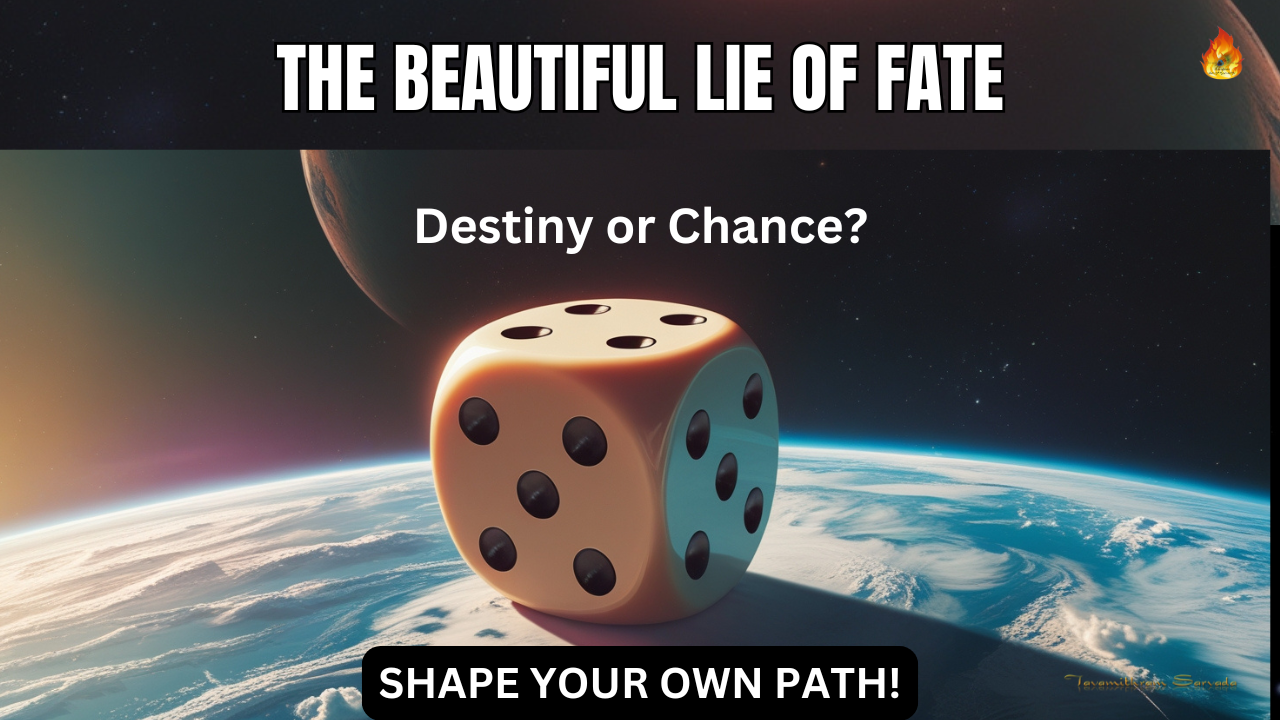
Unravelling the Illusion of Fate in a Stochastic Universe
Many people believe there’s a ‘grand plan’ behind everything—a higher power or force shaping events through fate, destiny, or divine will. This belief often leads us to surrender a significant portion of our mental capacity and autonomy to things we cannot fully prove: unseen beings, sacred books, religious intermediaries, and abstract concepts. But what if this comforting story is merely a creation we’ve been telling ourselves for centuries? Even more troubling is that such beliefs breed a sense of entitlement, creating divisions among individuals, fostering inequality, envy, jealousy, and belligerence—forces that ultimately damage lives, relationships, and our natural world.
In this short presentation, I confront the illusion of fate head-on. Let us examine the stochastic nature of existence—not through superstition or sentiment, but through reason, science, and Vedanta. From the genetic lottery you were born into, to the subtle conditioning shaped by environment and epigenetics, you’ll see how much of your life has just happened. No blueprint. No cosmic purpose. No invisible puppeteer.
Let us question why religions and mythologies have always tried to impose order upon chaos, and why fatalism is just another form of resignation. I present Karma not as divine justice, but simply as cause and effect. Actions and consequences, not punishments and rewards.
And yet, this isn’t a descent into nihilism. Far from it.
To embrace randomness is to reject the passive comfort of fate and to step into clarity. Life doesn’t need a script to have meaning. Meaning arises not from predestination, but from conscious living in an unpredictable world.
This presentation is for the quietly curious, the disillusioned believer, the sceptic, the philosopher—and anyone ready to ask: What if chance isn’t your enemy, but your liberation?
Haven’t you completed the Srimad Bhagavad Gita yet? Here is your solution:
“When you KNOW, you don’t need to BELIEVE.” – Tavamithram Sarvada
What if everything you believe about yourself, your identity, your desires, and your fears is nothing but an illusion? What if the very essence of who you are lies beyond the mind, the ego, and even the concept of “I”?
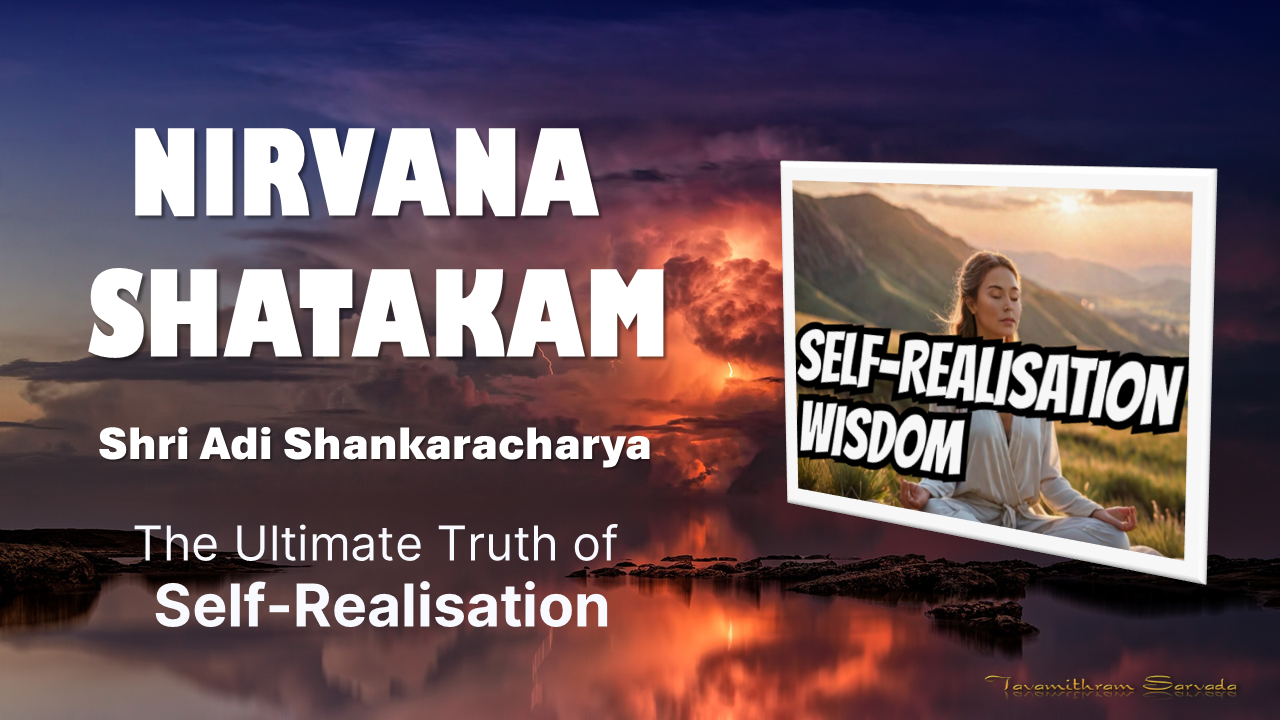
Enter the Nirvana Shatakam, a profound composition by the 8-year-old spiritual prodigy, Adi Shankaracharya. In just six Shlokas, this masterpiece dismantles every label, every belief, and every ritual you’ve ever clung to. It doesn’t just challenge your worldview; it obliterates it.
Imagine a young boy wandering the Himalayas, confronted by a sage who asks, “Who are you?” His response? A declaration so radical, so fearless, that it strips away every falsehood and points directly to the ultimate truth: “I am Shiva. I am pure consciousness.”
This isn’t just philosophy. This isn’t just spirituality. This is a call to awaken – to see beyond the illusions of identity, religion, and dogma. It’s a challenge to let go of everything you think you know and embrace the infinite truth of your being.
Are you ready to question everything? Are you ready to discover who you truly are? Watch the video now and let the Nirvana Shatakam guide you to the ultimate liberation.
Main Tavamithram Channel
Timeless Vedanta Channel
Continue the enquiry
If the question “Who am I?” has become more than an intellectual curiosity, continue with Modern Rishi. It is a space for deeper enquiry into identity, the mind, Self-knowledge, Vedanta, discipline and living with clarity in the world.
India is witnessing an alarming rise in suicides among young men, many of whom feel trapped in toxic relationships, crushed by societal pressures, and ignored by the legal system. They suffer in silence, battling emotional turmoil with no real support. But what if they knew that strength is a choice, and weakness is not a compulsion?
In this video, we will look at the real reason behind emotional suffering—how unchecked emotions shroud intelligence, making it impossible to perceive situations clearly. We will see why men must reclaim their inner strength, break free from despair, and learn to master their minds instead of succumbing to hopelessness.
The primary cause of mental suffering was the inability to perceive situations with detachment, instead of viewing them through the distorting lens of emotion. This emotional entanglement prevented individuals from coming to terms with reality, trapping them in cycles of distress and confusion. When emotions took control, they completely obscured intelligence, making rational thought and objective decision-making nearly impossible.
What You’ll Learn in This Video: -Why young men are struggling and what’s fueling the crisis -How toxic relationships and emotional weakness lead to mental destruction -The powerful wisdom from the Srimad Bhagavad Gita that can save lives -Real-life examples of resilience that prove strength is a choice, not an accident
If you are a young man feeling lost, disrespected, or emotionally broken—this message is for you. If you know someone who is suffering, share this with them. There is a way forward, and it starts with mastering your emotions and taking control of your life.
💪 Watch Now & Take the First Step Towards Strength! 💪
DON’T DELAY. LISTEN TO THIS TODAY!
The Complete Srimad Bhagavad Gita – Explained Simply | No Confusion, Only Clarity!
What if everything you worship, think, and perceive is not the ultimate truth?
The Kenopanishad shakes the very foundation of our understanding by revealing that Brahman—the ultimate reality—is not what the senses perceive, nor what the mind can grasp. It is that by which all perception happens, yet remains beyond perception itself.
I am pleased to share my English explanation of the Kenopanishad, now available on the new Vedanta channel, Timeless Vedanta. This Upanishad is a profound text that explores the nature of ultimate reality, the limitations of perception, and the essence of Brahman—the supreme truth that is beyond the grasp of the senses and intellect.
This video presents a clear and insightful analysis of the Kenopanishad, encouraging deeper reflection and self-inquiry. Watch, learn, and break free from blind beliefs to embrace the wisdom of Vedanta.
Your engagement helps spread the knowledge of Advaita Vedanta and enables more seekers to benefit from these ancient yet ever-relevant teachings.
Summary of the Kenopanishad
The Kenopanishad from the Sama Veda’s Talavakara Brahmana is a profound exploration of Brahman, the ultimate reality that transcends sensory perception and intellectual comprehension. It is structured into four sections, addressing the nature of consciousness, the limitations of the mind and senses, and the necessity of realisation beyond mere knowledge.
I. The Nature of Brahman
The text begins with fundamental inquiries: What is the force behind the mind, speech, and senses? What enables perception and cognition? The answer given is that Brahman is the unseen power that enables all faculties yet remains beyond their grasp.
Brahman is the “ear of the ear, the mind of the mind, the speech of speech, the life of life, and the eye of the eye.”
The wise attain immortality by renouncing identification with the senses and realising this truth.
Brahman is beyond thought, speech, and sight, yet it is that by which the mind thinks, speech expresses, and the eyes see.
“Nedam-yadidam-upaasate” – That which is worshipped as an object is not Brahman; the real Brahman is that which enables perception itself.
II. The Paradox of Knowing Brahman
The Upanishad asserts that Brahman is not fully knowable, nor is it completely unknown. It is beyond dualistic comprehension:
If one thinks, “I know Brahman,” they have only a partial understanding.
Brahman is known by those who realise they do not fully know and remains unknown to those who think they know it completely.
True knowledge of Brahman leads to immortality, strength, and ultimate fulfilment.
III. The Parable of the Gods and Brahman’s Revelation
The Upanishad illustrates the ignorance of the gods through a symbolic story:
After a great victory, the gods (Agni, Vayu, and Indra) assume their triumph is solely their own.
Brahman appears as an unknown Yaksha (divine being) to humble them.
Agni, the fire god, fails to burn a blade of grass; Vayu, the wind god, fails to lift it—revealing their limited power.
Indra, seeking answers, meets Uma (Parvati), the embodiment of wisdom, who reveals that their victory was due to Brahman alone.
Indra, being the first to realise this, is praised above the other gods.
IV. The Flash of Realisation
Brahman is realised like a lightning flash or a blink of an eye—sudden and beyond conceptualisation.
The seeker must meditate on Brahman as “Tadvana” (the most desirable).
Austerity, self-restraint, and righteous action serve as the foundation for realisation.
One who attains this knowledge becomes established in Brahman, free from ignorance, confusion, suffering, and Karma
The Kenopanishad asserts that Brahman is the essence of all experience but cannot be objectified. It must be known intuitively, not intellectually. The Upanishad leads the seeker away from external worship to direct self-inquiry, revealing that the ultimate truth is not in what is perceived but in that which enables perception itself.
Many seekers struggle with the concept of the Self, often expressing confusion and frustration over their inability to “connect” with it. I’ve heard people saying things like, “I feel the disconnect with my own self,” and so forth. The fact is that such statements are logically flawed. Why? Because the Self is not something to be seen or grasped—it can only be realised. CONTINUE READING AND WATCHING THE VIDEO ON SUBSTACK.
ID used to identify users for 24 hours after last activity
24 hours
_gat
Used to monitor number of Google Analytics server requests when using Google Tag Manager
1 minute
_gac_
Contains information related to marketing campaigns of the user. These are shared with Google AdWords / Google Ads when the Google Ads and Google Analytics accounts are linked together.
90 days
__utma
ID used to identify users and sessions
2 years after last activity
__utmt
Used to monitor number of Google Analytics server requests
10 minutes
__utmb
Used to distinguish new sessions and visits. This cookie is set when the GA.js javascript library is loaded and there is no existing __utmb cookie. The cookie is updated every time data is sent to the Google Analytics server.
30 minutes after last activity
__utmc
Used only with old Urchin versions of Google Analytics and not with GA.js. Was used to distinguish between new sessions and visits at the end of a session.
End of session (browser)
__utmz
Contains information about the traffic source or campaign that directed user to the website. The cookie is set when the GA.js javascript is loaded and updated when data is sent to the Google Anaytics server
6 months after last activity
__utmv
Contains custom information set by the web developer via the _setCustomVar method in Google Analytics. This cookie is updated every time new data is sent to the Google Analytics server.
2 years after last activity
__utmx
Used to determine whether a user is included in an A / B or Multivariate test.
18 months
_ga
ID used to identify users
2 years
_gali
Used by Google Analytics to determine which links on a page are being clicked
30 seconds
_ga_
ID used to identify users
2 years
Marketing cookies are used to follow visitors to websites. The intention is to show ads that are relevant and engaging to the individual user.
A video-sharing platform for users to upload, view, and share videos across various genres and topics.
Registers a unique ID to keep statistics of what videos from YouTube the user has seen.
Session
DEVICE_INFO
Used to detect if the visitor has accepted the marketing category in the cookie banner. This cookie is necessary for GDPR-compliance of the website.
179 days
LOGIN_INFO
This cookie is used to play YouTube videos embedded on the website.
2 years
VISITOR_PRIVACY_METADATA
Youtube visitor privacy metadata cookie
180 days
GPS
Registers a unique ID on mobile devices to enable tracking based on geographical GPS location.
1 day
VISITOR_INFO1_LIVE
Tries to estimate the users' bandwidth on pages with integrated YouTube videos. Also used for marketing
179 days
PREF
This cookie stores your preferences and other information, in particular preferred language, how many search results you wish to be shown on your page, and whether or not you wish to have Google’s SafeSearch filter turned on.