
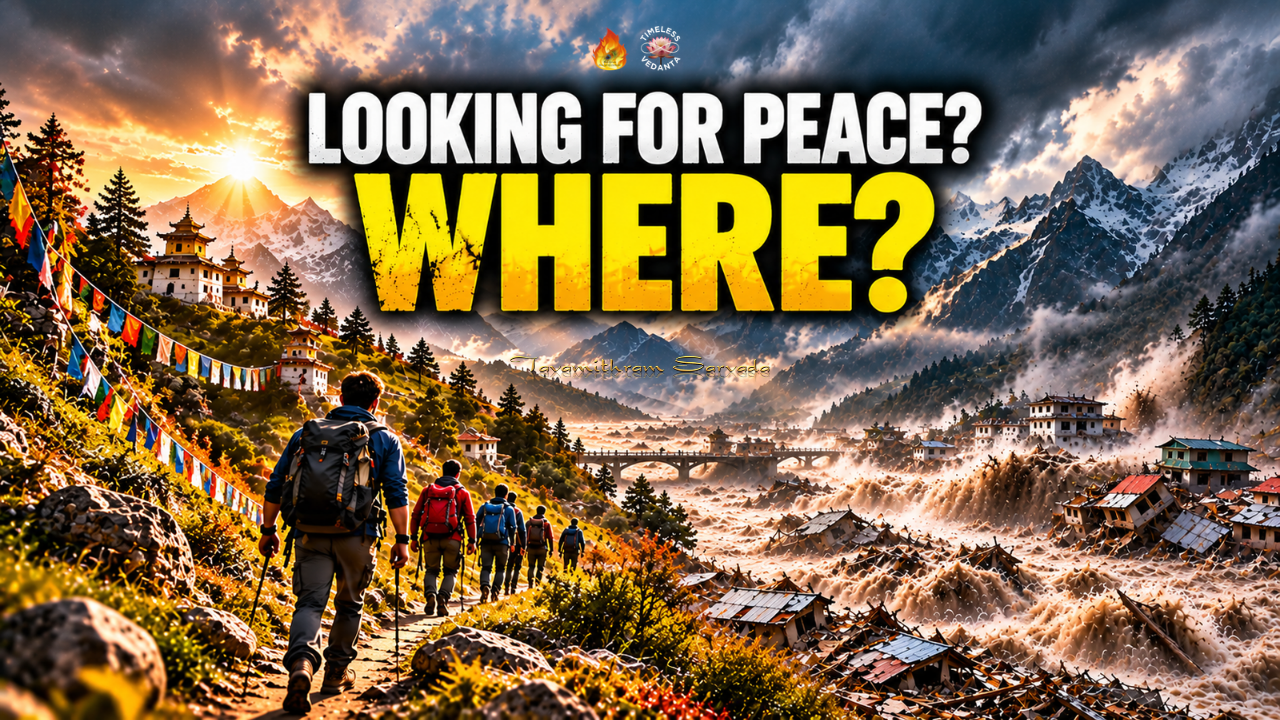
The recent tragedy in Nepal has saddened me deeply, and I want to say why.
Among those who died were people who had done well in life, with careers, families, responsibilities and plans for the future. Some had crossed continents to be at that particular place and in the presence of a particular person. Then, in a single terrible moment, their lives ended. Each of them leaves behind husbands, wives, children, parents and friends whose lives will never be the same.
I do not say this to judge those who travelled. Their deaths raise a more fundamental question for me: what were they looking for?
Peace? Moksha? Divine grace? Enlightenment? The presence of a holy person?
And where does the idea come from that such things are located in a place or possessed by someone, and that we must travel to receive them?
The Brahma Sutras, one of the foundational texts of Vedanta, open with the words “Athato Brahma Jijnasa”, which mean “Now, therefore, the enquiry into Brahman.”
The word that matters most to me there is “enquiry”.
The sutra does not send us across mountains or oceans, and it does not suggest that another human being holds something we lack and can hand it over. It asks us to enquire.
I would apply that same attitude to peace.
Before travelling thousands of kilometres in search of it, we might ask: peace of what?
If the answer is peace of mind, where exactly is the disturbance?
And if it is in the mind, why are we so sure the remedy lies somewhere else?
That is the question I examine in this video, offered as an enquiry to follow rather than a doctrine to accept.
