‘GOD’ KILLS

The title is shocking, isnโ€™t it?

An important world religion declares, โ€˜The wages of sin is death.โ€™ Yet death does not end the story. Judgement follows, and then an eternal existence in heaven or hell.

So the threat reaches beyond your earthly life. Death does not release you from an authority that claims the right to punish you.

The punishment is described in horrifying detail: a lake of burning sulphur, fire, agony. Elsewhere, skin is burnt away and replaced with fresh skin so that it can be burnt again. The skin is restored so that the suffering can continue.

โ€˜God killsโ€™ is a shocking title, but an eternity of deliberately sustained agony should disturb us far more.

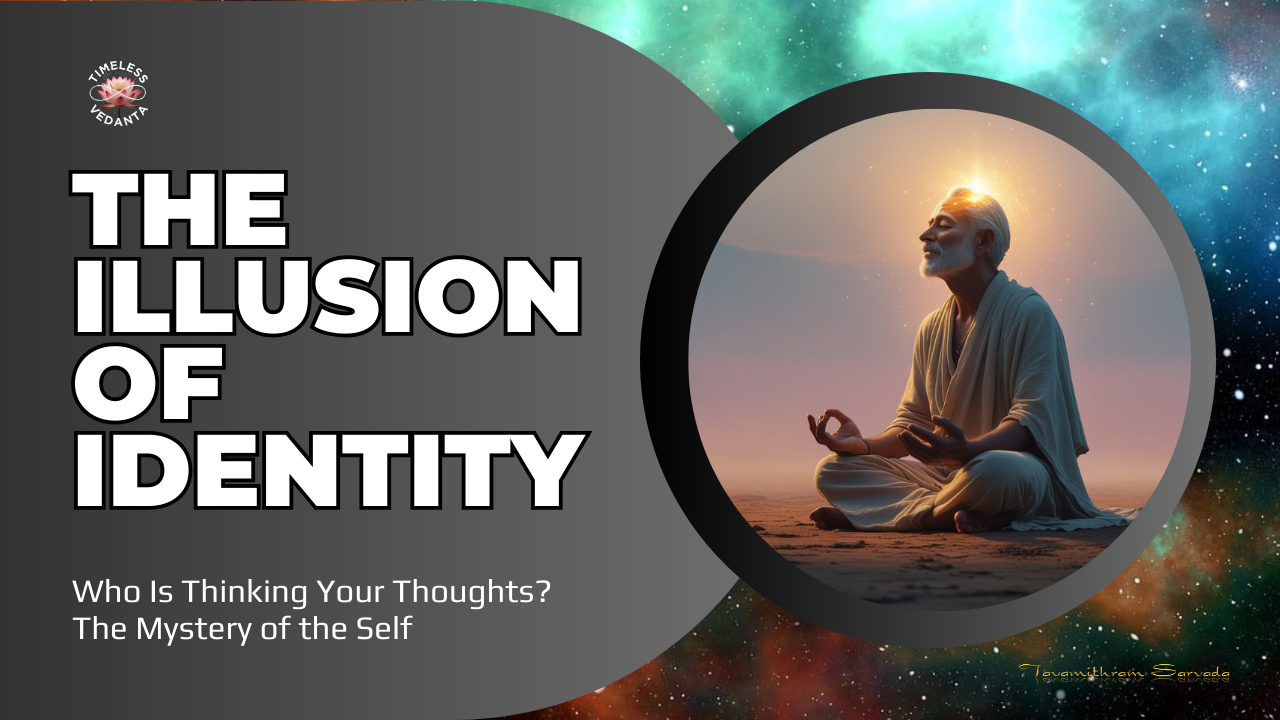
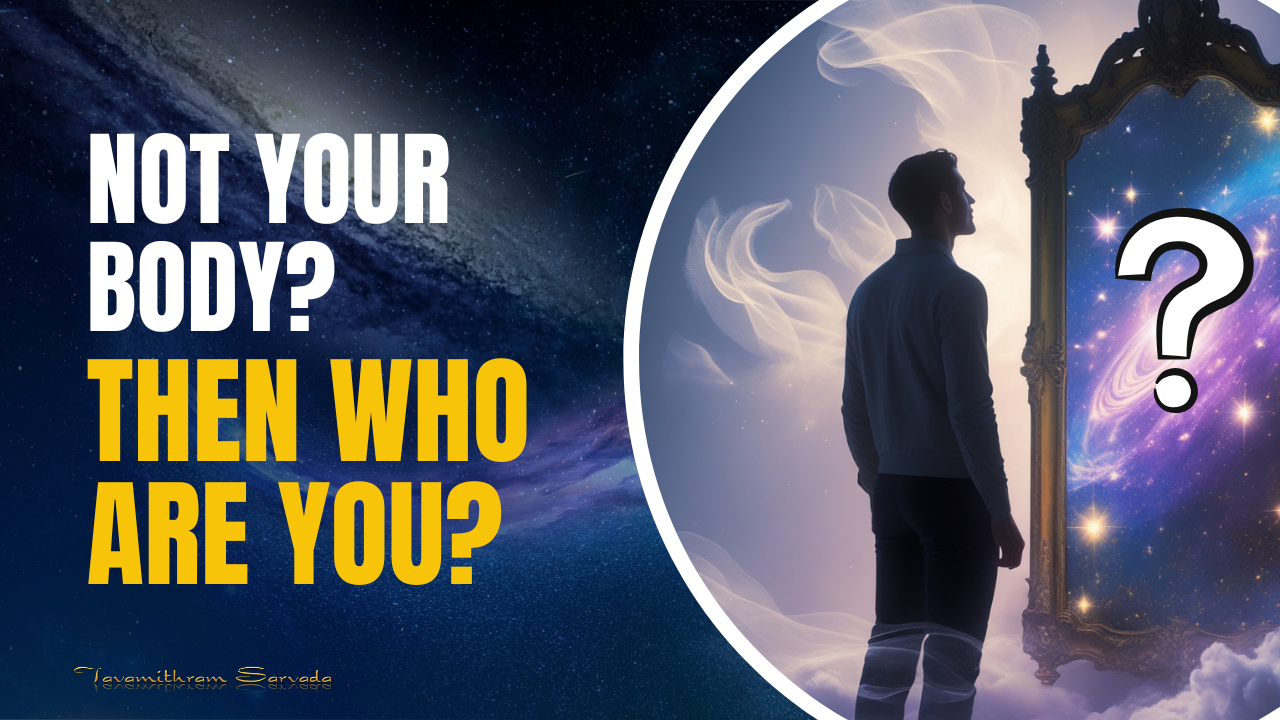
Before I accept any of this, though, one question has to come first: who exactly is this โ€˜youโ€™?

Is it your body, your mind, your personality, your memories, your name? Or a separate, invisible โ€˜soulโ€™ supposedly lodged somewhere inside you? What dies, what survives, and what experiences the punishment? If the body has perished, whose skin is being burnt? If another body is supplied, what makes its occupant the same person?

The torment is described in vivid detail. But who is being tormented?

On the understanding I will set out here, the answer is no one.

Vedanta puts that identity at the centre of the enquiry, and what it points to overturns the premise that someone survives death to be punished. You were never born and you will never die. Your body was born, it changes, and it will die. But is that changing body the whole of what you are? You have watched your thoughts change, your preferences change, your understanding change, even the story you tell about yourself change. What do you mean by the โ€˜Iโ€™ to which you attribute all these changes?

The Atman is not a collection of separate entities distributed among individual bodies. โ€˜My soulโ€™, โ€˜your soulโ€™, โ€˜his soulโ€™: we carry the language of possession into the very enquiry that calls our separateness into question. The one all-pervading whole is known as Atman, Param Brahma or Krishna. The whole is present in each cell. Bodies arise within the whole, last for a while and disappear. Their appearance does not create the whole, and their disappearance does not destroy it.

The ego identifies with a particular body, a name, a history and a position in the world, and builds its claims around that identification: this is me, this is mine, this must continue. Now project that same separate โ€˜meโ€™ into eternity, carrying its account of rewards and punishments, forever anxious about what will happen to it. The enquiry into what that โ€˜meโ€™ actually is has not even begun.

This brings us to Krishnaโ€™s birth, and to what โ€˜unbornโ€™ actually means. Krishna says in Shloka 2:12 of the Srimad Bhagavad Gita: โ€œThere never was a time when I did not exist, nor you, nor all these kings. We will also never cease to exist.โ€ Krishna personifies the whole. On what day could the whole have begun? Where could it have appeared, when nothing existed outside it and nothing preceded it? The human form in the story has a birth. What Krishna personifies has none. Yet we celebrate his birthday year after year and overlook the understanding he represents. The Srimad Bhagavad Gita directs our attention to the unborn and imperishable, which weapons cannot cut and fire cannot burn.

Now return to the threats of death and burning. How do you kill what was never born and does not die? How do you burn what fire cannot touch? You cannot settle these questions by moving casually between body, mind, ego and an undefined โ€˜soulโ€™, calling each of them โ€˜youโ€™ whenever it suits the argument. First establish what you are talking about.

If you donโ€™t know what you mean by โ€˜youโ€™, you simply donโ€™t know what youโ€™re talking about, and youโ€™re just wasting your time talking mumbo jumbo.

In the non-dual Vedanta I teach, there is no separate divine ruler who needs your praise, takes offence at your absence from a temple and prepares an everlasting torture chamber. There is ignorance of our own nature, identification with the changing body and mind, and the attachment, fear and suffering that grow around them. Understanding addresses that ignorance.

This matters for how we live now. Think of being desperately attached to an outcome. You must succeed, someone must approve of you, a relationship must continue, a plan must work, circumstances must change exactly as you demand. Soon the mere possibility of disappointment feels like a threat to your entire existence. You rehearse disasters, argue with people who are not in the room and suffer tomorrowโ€™s imagined humiliation today. Then, with your attention consumed by fear, you try to decide what to do. How clearly can you see?

Non-attachment loosens that grip. You can say, โ€˜All right, what I fear may happen. Let me look at it.โ€™ What would it actually mean? What could you do? Which options have you overlooked because you were so busy demanding a different outcome? Your ability to act intelligently begins to return. The problem may still be difficult and may still demand effort, but now you can give it your full attention. Acceptance makes room for a considered response.

Much of the heaven and hell we experience takes shape in our own minds, in anticipation, resentment, craving, comparison, wounded pride and the insistence that life must conform to our expectations. We carry that torment through the day and then search the sky for its author.

The same failure to enquire shows in the outward performance of religion. Stories are repeated, and the performance carries on. What have we understood? The Puranas and Itihasas are full of metaphor, and metaphor demands thought. If we take every image literally and stop enquiring, we keep the performance and lose the understanding it was meant to prompt.

In my reading, Hanuman represents the mind and its extraordinary potential when properly directed. What have we learnt about the mind by building an enormous statue in a foreign land? Worship that disturbs residential neighbourhoods and pollutes rivers, our own and pristine ones in Western countries alike, shows little understanding of the all-pervading whole. We take the imagery literally, overlook what it symbolises and turn it into noisy public spectacle in other peopleโ€™s neighbourhoods, places so quiet that one can hear a pin drop. The people whose peace we disturb belong to that whole, and so does the water. Our conduct reveals what our ceremonies have actually taught us.

Great truths were given to us as metaphors. Many have taken them literally and built cults and senseless traditions out of them, carried those to foreign lands, and made a mockery of our people, our nation and, through our failure to understand it, the supreme philosophy of non-dual Vedanta.

And among those so eager to defend the Srimad Bhagavad Gita, how many have read it from beginning to end? People invoke its authority, repeat familiar phrases and swear upon it, while reading the text itself stays a task for some indefinitely postponed future. All I ask, to begin with, is that you read it once.

I understand one obstacle. In certain editions a few lines are surrounded by pages of commentary, and before the reader has met the complete argument, the first reading already feels like a monumental undertaking. So begin with a clear translation or interpretation and meet the whole text. Return to the difficult passages afterwards, turn to commentary when you are ready, and read it again as your understanding grows. That is the purpose of my work on The Ever-Relevant Gita and Bhagavad Gita in Clear English. I want that first reading to be within reach.


The Ever-Relevant Gita: A Present-Day Rendering in English

I must have read the Srimad Bhagavad Gita over a thousand times, yet reading it again can still prompt fresh thoughts, ideas and more clarity. A situation in my life brings a question into focus, and words I have read countless times suddenly carry a meaning I had missed. That takes attention and participation. Repeating โ€˜I am the Atmanโ€™ without examining what you mean achieves very little. Announcing โ€˜I was never bornโ€™ without understanding it achieves no more. Any sentence can turn into an empty slogan. The enquiry asks more of you.

So here is my invitation. Read the Srimad Bhagavad Gita once, completely, then examine the โ€˜Iโ€™ you have been referring to. When you say โ€˜my bodyโ€™, what do you mean by โ€˜myโ€™? When you say โ€˜my mindโ€™, what distinction are you making? When you say โ€˜I am afraid of dyingโ€™, what exactly are you afraid of losing? Give these questions the attention you have given to predictions of your punishment, and examine the identity on which someone elseโ€™s account of your eternal fate depends before you accept it.

The opening threat was death, and then came suffering without end. Both were addressed to โ€˜youโ€™. But who is this โ€˜youโ€™?

Most believers have never asked. Not knowing what they mean by โ€˜Iโ€™, they split reality into โ€˜meโ€™ and โ€˜Godโ€™, then tremble before the other half of a division they made themselves. They bring offerings, fast, chant and parade through the streets, all to bribe an unknown judge into sparing them. That judge threatens to kill them, and they worship him for it.

โ€˜God killsโ€™ is true only in the mind of someone who has cut themselves off from the whole. A frightened ego invents an executioner and spends a lifetime begging him for mercy. You are the whole. Your awareness is limitless. It can never become an object of your perception, because anything you perceive has a form, and anything with a form has a beginning and an end. The same goes for anything you think of: it is an object too, never the subject. So what you are has no form, no beginning and no end. No one is coming to burn you, and there is no one to be burnt. There is only the whole, and you have been too busy grovelling to notice that you are it.

The greatest Vedantic advice is not to believe someone or something, nor to fear a being who threatens to kill and punish you forever, but to enquire until you realise what you mean by โ€˜Iโ€™.

advaita vedanta ancient wisdom Bhagavad Gita bhagavad gita 2.65 bhagavad gita 2:62 Bhagavad Gita 2:63 bhagavad gita 2:66 bhagavad gita 2:67 bhagavad gita shlokas bhagavad gita translations bhakti marga bhgavad gita 2:64 CALM MIND Consciousness Enlightenment gita gita shlokas gita translation gnyana marga hinduism inner peace Karma karma marga Krishna learn bhagavad gita learn by heart bhagavad gita meditation mindfulness Nonduality Oneness Philosophy Reality sanatana dharma sanskrit Self-Discovery self-realization spirituality Spiritual journey Spiritual wisdom srimad bhagavad gita Srimad Bhagavad Gita 2:60 study bhagavad gita Transcendence vedanta vedic dharma

Do This AT LEAST ONCE in Your Lifetime – Only 3 Hours!

No Mantras, No Prayers, No Fasting – Just 3 Hours to Smash Illusion and Gain the Supreme Truth!

I am not saying this. KRISHNA SAYS IT IN THE SRIMAD BHAGAVAD GITA.

All worries, fears, stress, anger, envy, and every negative force that can block, weaken, or destroy your chance of living a truly beautiful and fulfilling life will be crushed to smithereens and pulverised to dust.

With soothing sound, captivating visuals, and clear English text to follow along.

Please let me be honest, my dear brothers and sisters, I find it utterly saddening that so many people have been convinced that the Srimad Bhagavad Gita is โ€œtoo difficult to comprehendโ€ and that without a โ€œgood guruโ€ they can never learn it.

In Shloka SBG 9:02, Bhagavan Krishna clearly says that this knowledge is not only VERY EASY, but also it is also VERY EASY TO PRACTISE and it is EVERLASTING. All it takes is the small effort of sitting down and reading a simple translation of the 700 Shlokas. In fact, I must have read this supreme scripture over a thousand times, and I never tire of it. The same applies to every genuine seeker. You cannot read it once and expect to fully grasp it. But at the very least, read it, listen to it, or go through it ONCE BEFORE YOU DIE!

As part of my SBG for ALL Mission, here is my humble offering: a three-hour guided study of this life-changing scripture, a true gift to humanity.

Experience this once, and the weight of your illusions will collapse into nothing.

Please, take this opportunity. Whatever you think it is worth, COMPLETE IT. Do it at least for your brotherโ€™s sake. You can thank me later ๐Ÿ™‚

JAI SHRI KRISHNA.

Caste Discrimination vs. Bhagavad Gita Teachings: A Deep Dive

What the Bhagavad Gita Says vs. What Society Believes: Shloka SBG 5:18 in 12 Languages

Caste-based discrimination continues to divide society, often in the name of religion. But what do important scriptures of Vedanta say? Find out where the term ‘caste’ is supposed to have originated.

This video presents Srimad Bhagavad Gita 5:18, a Shloka that affirms the spiritual equality of all beings. It is rendered in 12 languages to emphasise the message of oneness that transcends boundaries of caste, language, culture, or nation.

This is not about personal identity but about truth. Let us return to what the Srimad Bhagavad Gita truly teaches, that the same divine presence dwells equally in all.

๐Ÿ•‰๏ธ Watch the video, reflect, and share it with those who still believe caste is sanctioned by Vedanta.

If you still havenโ€™t studied, read, or heard the Srimad Bhagavad Gita, hereโ€™s your chance. JUST THREE HOURS TO ABSOLUTE MENTAL CLARITY AND TOTAL FREEDOM from fear, false beliefs, confusion, directionlessness, and mental slavery to bizarre ideas or imaginary beings.

The audiobook below, presented as a YouTube video, is my offering to you, because I genuinely care and I don’t want anything in return.

I donโ€™t sell dr*gs, lies, delusions, or dreams. I share the grand panacea for life’s problems, free of charge. Whether you accept it or not, the choice is yours.

The Complete Srimad Bhagavad Gita – Explained Simply | No Confusion, Only Clarity!

Stuck? Escape Regret. Get the Life You Deserve

Break Free from Emotional Baggage with This Transformative Two-Word Mantra

Are you tired of being stuck in repetitive emotional patterns, haunted by your past, and overwhelmed by regret? This powerful new video dives into a life-changing concept that blends spiritual clarity, emotional resilience, and mental discipline through the use of two deceptively simple yet profound mantras: โ€œSo what?โ€ and โ€œWhat next?โ€.

Rooted in Vedanta, and enriched by a personal journey of spiritual transformation, this message is a wake-up call for those ready to reclaim their power. Whether you’re on the path of self-inquiry, seeking personal development, or aiming to cultivate a growth mindset, this video offers direct and practical tools to help you move forward.

Let go of self-pity, stop dwelling on the past, and embrace conscious living. The time to transform your inner world is now.

Timeless Vedanta – Don’t Believe. KNOW!

Introducing โ€œTimeless Vedantaโ€ – A Channel Dedicated to Non-Dual Wisdom

The Timeless Vedanta Channel on YouTube

Dear Readers,

“It brings me immense joy to announce the launch of my new YouTube channel, Timeless Vedanta – a space dedicated solely to sharing the pure essence of Advaita Vedanta in a clear, rational, and practical manner.

“In today’s world, which is saturated with noise, confusion, and often superficial spirituality, there is a deep hunger among thoughtful seekers – especially young minds – for clarity and truth. Timeless Vedanta is a space to gain such understanding

“This channel is not about religion, dogma, or blind belief. It is about direct exploration, deep inquiry, and the timeless truth of non-duality – the understanding that your innermost Self is not separate from the reality that pervades all existence.

What You Can Expect:

  • Thought-provoking explorations of the Srimad Bhagavad Gita, Upanishads, and Brahma Sutras
  • Connections between Vedantic thought and Western philosophies, including Spinozism and Stoicism
  • Simple, logical explanations of profound topics such as consciousness, existence, and the nature of reality
  • A firm rejection of superstition, ritualism, and unnecessary complexity
  • Content that encourages critical thinking, self-reflection, and most importantly, direct understanding

Why โ€œTimeless Vedantaโ€?

Because truth does not age. It is not bound by culture, belief, or time. The teachings of Vedanta, when stripped of layers of tradition and theological interpretation, reveal a science of consciousness that is as relevant today as it was thousands of years ago.

This channel is open to people of all cultural and religious backgrounds who have an open mind and a sincere desire to seek clarity.

This channel is an invitation to rediscover that wisdom, to see clearly, and to live freely.


๐Ÿ“Œ Subscribe to Timeless Vedanta today
๐Ÿ”” Turn on notifications so you never miss an update
๐Ÿ’ฌ Join the conversation, share your thoughts, and grow with a community of sincere seekers

Born by Chance, Fooled by Belief

READ AND WATCH THE VIDEO ON SUBSTACK.

JOIN MY SUBSTACK – IT IS FREE.

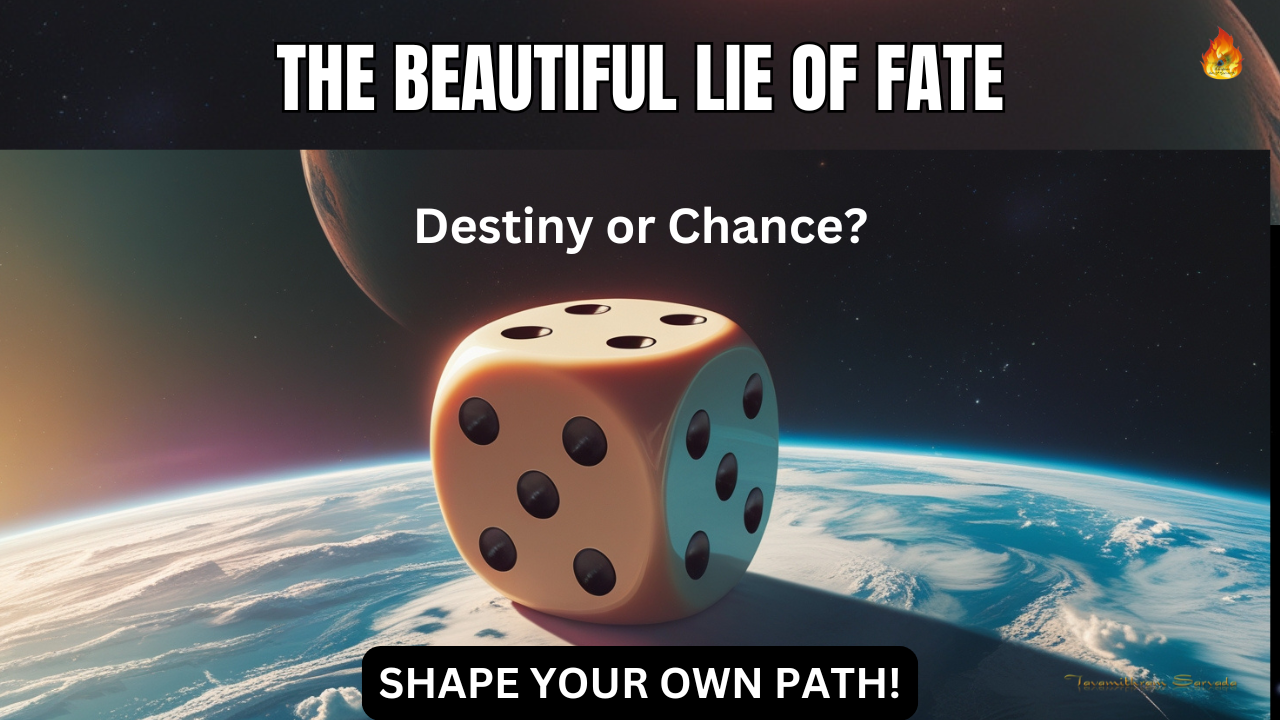
Unravelling the Illusion of Fate in a Stochastic Universe

Many people believe thereโ€™s a โ€˜grand planโ€™ behind everythingโ€”a higher power or force shaping events through fate, destiny, or divine will. This belief often leads us to surrender a significant portion of our mental capacity and autonomy to things we cannot fully prove: unseen beings, sacred books, religious intermediaries, and abstract concepts. But what if this comforting story is merely a creation we’ve been telling ourselves for centuries? Even more troubling is that such beliefs breed a sense of entitlement, creating divisions among individuals, fostering inequality, envy, jealousy, and belligerenceโ€”forces that ultimately damage lives, relationships, and our natural world.

In this short presentation, I confront the illusion of fate head-on. Let us examine the stochastic nature of existenceโ€”not through superstition or sentiment, but through reason, science, and Vedanta. From the genetic lottery you were born into, to the subtle conditioning shaped by environment and epigenetics, youโ€™ll see how much of your life has just happened. No blueprint. No cosmic purpose. No invisible puppeteer.

Let us question why religions and mythologies have always tried to impose order upon chaos, and why fatalism is just another form of resignation. I present Karma not as divine justice, but simply as cause and effect. Actions and consequences, not punishments and rewards.

And yet, this isnโ€™t a descent into nihilism. Far from it.

To embrace randomness is to reject the passive comfort of fate and to step into clarity. Life doesnโ€™t need a script to have meaning. Meaning arises not from predestination, but from conscious living in an unpredictable world.

This presentation is for the quietly curious, the disillusioned believer, the sceptic, the philosopherโ€”and anyone ready to ask: What if chance isnโ€™t your enemy, but your liberation?

Haven’t you completed the Srimad Bhagavad Gita yet? Here is your solution:

The Complete Srimad Bhagavad Gita – Explained Simply | No Confusion, Only Clarity!

Men in Crisis: The Hidden Struggles No One Talks About

READ ON SUBSTACK

India is witnessing an alarming rise in suicides among young men, many of whom feel trapped in toxic relationships, crushed by societal pressures, and ignored by the legal system. They suffer in silence, battling emotional turmoil with no real support. But what if they knew that strength is a choice, and weakness is not a compulsion?

In this video, we will look at the real reason behind emotional sufferingโ€”how unchecked emotions shroud intelligence, making it impossible to perceive situations clearly. We will see why men must reclaim their inner strength, break free from despair, and learn to master their minds instead of succumbing to hopelessness.

The primary cause of mental suffering was the inability to perceive situations with detachment, instead of viewing them through the distorting lens of emotion. This emotional entanglement prevented individuals from coming to terms with reality, trapping them in cycles of distress and confusion. When emotions took control, they completely obscured intelligence, making rational thought and objective decision-making nearly impossible.

What Youโ€™ll Learn in This Video:
-Why young men are struggling and whatโ€™s fueling the crisis
-How toxic relationships and emotional weakness lead to mental destruction
-The powerful wisdom from the Srimad Bhagavad Gita that can save lives
-Real-life examples of resilience that prove strength is a choice, not an accident

If you are a young man feeling lost, disrespected, or emotionally brokenโ€”this message is for you. If you know someone who is suffering, share this with them. There is a way forward, and it starts with mastering your emotions and taking control of your life.

๐Ÿ’ช Watch Now & Take the First Step Towards Strength! ๐Ÿ’ช

DON’T DELAY. LISTEN TO THIS TODAY!

The Complete Srimad Bhagavad Gita – Explained Simply | No Confusion, Only Clarity!

How to Destroy the Illusion of False EGO in 5 Minutes?

Subscribe to my Substack. It is FREE.

Can an Eye See Itself? Understanding the Nature of the Self

[This is a continuation of the post โ€œNot Your Body? Quick Tips to Discover Your True Self!โ€]

Many seekers struggle with the concept of the Self, often expressing confusion and frustration over their inability to “connect” with it. Iโ€™ve heard people saying things like, โ€œI feel the disconnect with my own self,โ€ and so forth. The fact is that such statements are logically flawed. Why? Because the Self is not something to be seen or graspedโ€”it can only be realised. CONTINUE READING AND WATCHING THE VIDEO ON SUBSTACK.

Not Your Body? Quick Tips to Discover Your True Self!

Join my SUBSTACK. It is FREE.

The Illusion of โ€˜Meโ€™: Why Youโ€™re Not Your Body

In some major religions, creation is described as a divine actโ€”’god’ creating humans in โ€˜hisโ€™ own image and forming the universe in six days, resting on the seventh. But what does it mean to be made in โ€˜godโ€™sโ€™ image? Is it about the physical form, or something deeper? From the largest of stars to the tiniest creatures on Earth, everything is a conglomeration of atomsโ€”physical objects perceived through names and forms. Yet, identifying solely with these forms traps us in illusion, much like the prisoners in Socratesโ€™ โ€˜Allegory of the Caveโ€™, who mistook shadows for reality. READ AND WATCH THE SHORT VIDEO ON SUBSTACK

Bhaja Govindam on the Timeless Vedanta Channel

Bhaja Govindam: The Song That Will Transform Your Life

Most people listen to or recite Bhaja Govindam without grasping its true essenceโ€”but this profound composition by Shri Adi Shankara is far profound than what most people might think. It is a bold call to awaken from ignorance, starting with the striking words, โ€œO Fool,โ€ and leading to a life of wisdom and responsibility.

In this video, The Bhaja Govindam Song on the new Timeless Vedanta YouTube Channel, I unravel the deeper meaning of each Shloka, providing an English translation alongside a downloadable PDF with the original Sanskrit, transliteration, and translation.

Bhaja Govindam is not about blind beliefs or meaningless rituals but about attaining SELF-knowledge (Atmagnyaana), freeing the mind from delusions, and embracing Vedantic clarity. This understanding is vital in todayโ€™s world, where distractions pull us away from truth.

Watch the video, explore this timeless wisdom, and pair it with The Ever-Relevant Gita: A Present-Day Renderingโ€”together, they will bring you clarity, peace, and a truly fulfilling life.