Are You Ready to Call Yourself a Modern Rishi?

The Modern Rishi does not escape life, but transcends illusion.

For many years I have said that Vedanta is not blind belief, ritual repetition, personality worship or spiritual entertainment. It exists to produce clarity. It helps us examine what we have assumed, see the forces that shape our thinking, and recognise what is real beneath inherited identity, fear and conditioning.

The Modern Rishi Movement is the next step in that work.

It is for people who question what others repeat, who examine what others merely believe, and who would rather face an uncomfortable truth than live inside a convenient illusion.

This movement is not for everyone.

If you repeat mantras daily without ever asking what they mean, you will find nothing here. If you prefer inherited belief to direct understanding, or want another guru to follow, another personality to worship, another comforting system to tell you what to think, look elsewhere. And if you are unwilling to question your own assumptions, identities, loyalties and conclusions, you are not ready for this yet.

A mantra is not a mechanical refuge from thought. A teaching memorised while life continues unchanged has achieved nothing. The words of Vedanta and the Srimad Bhagavad Gita have to be examined and understood before they can mean anything at all. They exist to transform perception, bring clarity to action and free the mind from confusion.

Who is a Modern Rishi?

A Modern Rishi lives fully in the world without being ruled by its noise, acts with awareness rather than reaction, and values truth above emotional convenience.

There is no withdrawal from responsibility here. The Modern Rishi works, creates, leads, protects and serves, but is not imprisoned by status, praise, fear, ideology or the demand for approval. Divisions of gender, religion, nationality, class and wealth are recognised as conditions of human life, not as the truth of what one is.

None of this means passivity, detachment or indifference to suffering. It means living with greater attention, discipline, courage and compassion.

Why this movement now?

Information has never been more abundant. Clarity is still rare.

People inherit beliefs before they are capable of examining them. They are taught whom to admire, whom to fear, what to defend and what must never be questioned. Political identity, religious identity, social labels, media narratives and group loyalty colour perception until people can no longer separate what they see from what they have been trained to see.

The Modern Rishi Movement begins with the willingness to examine that colouring. It asks:

What do I actually know?
What have I only repeated?
What has shaped the person I take myself to be?
Am I seeing clearly, or through filters handed to me?

How Tavamithram Led to the Modern Rishi Movement

Through Tavamithram, I have presented Vedanta and the Srimad Bhagavad Gita as instruments of understanding and freedom, never of religious authority or blind faith.

The Modern Rishi Movement carries that work into a wider space. It examines perception, identity, social conditioning, inherited belief and intellectual courage, and how these forces shape the way we think, react and live. Its foundation is Vedanta; what it addresses is life as it is lived now.

The movement formally begins on 15 August 2026. Until then, the new Modern Rishi site will introduce its vision, principles, films and reflections.

Are you ready?

You do not need to agree with me, accept a doctrine or surrender your intelligence to anyone. You do need to be willing to look. Question what you have inherited, investigate what you repeat, and examine whether your convictions arise from understanding or from conditioning.

If you are ready for that, enter.

Two ‘Mantras’ to Destroy Negative Karma and Start Afresh

Life is too precious. Nothing and no one is worth wasting your time on in life.

Discover simple steps to navigate even the most challenging times in life.

No matter how tough or daunting your situation might be, the first step is to come to terms with it – at least temporarily.

This acceptance allows your intellect to push your emotions aside and function fully, enabling you to come up with a solution.

General George S. Patton said, “Accept the challenges so that you can feel the exhilaration of victory.”

In the video presentation ‘So What? What Next?’, I explain two simple two-word ‘Mantras’ that can greatly help overcome the delusion caused by a sense of entitlement and the tendency to avoid troubles and risks.And in the other titled ‘Reset Karma’, I explain simple ways to change unfavourable patterns in life to more favourable ones.

It is primarily one’s sense of entitlement, ingrained since childhood, that often becomes a significant barrier to success. Believing they deserve only the best and most comfortable things in life, individuals can become morally weakened when faced with challenges. This mental block prevents them from recognising their own capabilities.

No matter how tough or daunting your situation might be, the first step is to come to terms with it, at least temporarily. This acceptance allows your intellect to function fully, pushing emotions aside and enabling you to find a solution. Whatever the situation, even if someone is facing a life-or-death scenario, they need to come out of denial, accept the truth, and start thinking rationally about what they can do to survive. Doing so removes the greatest obstacles in the form of fear, anger, or any other destructive emotions.

Forget the Heart, First Heal the Mind!

Beyond Prayers and Miracles – The Rational Path to Self-Realisation

Transform Your Life with Vedanta, The Science of all Sciences

WATCH THIS AND CLEAR YOUR HEAD OF ALL UNWANTED STUFF:

When ignorance becomes the norm, entire masses of people can be easily swayed to firmly believe the unreal to be real. The crucial factor in society that enables a select few to manipulate their minds is the ignorance of the masses, which basically stems from blind beliefs that numb their brains, and sheer laziness to make a move to get out of ignorance.

People come to my blog, watch some of my videos, and ask me what they should do to change their lives. Almost everyone wants instant solutions, and they are even willing to pay for shortcuts! One should not overlook the fact that even the act of going to a religious place and praying for what one wants is a form of seeking shortcuts.

But the truth is that everything has a price, and everything is part of the never-ending cause-and-effect chain. Asking someone or ‘god’ to give them what they want could only mean that the so-called ‘god’ changes his plans to suit the needs of the one praying. So, what about the others? Do their lives get destroyed because someone else prayed and got things done by ‘god’ to do things their way? Really? So, what happens when two entities at war with each other pray to the same ‘god’? Who do you think ‘god’ will bless with special favours?!

How many people really dare to make massive changes in their lives, have the courage to travel around, experience and learn more, and evolve? Krishna says in Shloka SBG 7:19, “Therefore, after innumerable births, the one who has perfected his or her wisdom, understanding fully My universal reality, surrenders to Me and such an individual is very rare.”

So, with a default state of mind of wanting to maintain the status quo, people tend to look for easy ways out, shortcuts, middlemen, and women who can help them achieve success through the short path, which is a form of corruption or fraud. It is because people want something without really working for it.

When did Krishna say in the Srimad Bhagavad Gita to go to his temples, perform meaningless rites and rituals with the mammary milk of poor voiceless animals, sing songs in His praise, chant Mantras the whole day, and do nothing else? The clear instruction in the second chapter is that you only have the right to work, but never to claim its results. The results of your actions should never be your motive, but at the same time, you should not be attached to inaction.

Then why do people perform religious rites to fulfill personal desires?

Vedanta and the Srimad Bhagavad Gita

Shloka 18:66 of the Srimad Bhagavad Gita does not mean that one should have blind belief in Krishna.

Krishna says in SBG 18:66, “Giving up all your ideas of righteousness or religion, take complete refuge in Me. I will liberate you from all sinful reactions. Do not fear.”

It means, “Give up all the nonsensical ideas you might have in the name of religion, and by adopting the logical analysis and reasoning provided throughout until the 18th chapter, become one with Krishna.”

The entire purpose of the Srimad Bhagavad Gita is to guide people to shed their false beliefs and take to a rational study of truth. The process is very simple with three stages:

  1. Sidhaanta – A Question, Idea, Concept, or Theory
  2. Saadhana – The means to study, including reading, listening, researching, analysing, debating, etc.
  3. Siddhi – Final understanding, internalisation, and experience, known as Anubhava in Sanskrit.

Scientists don’t believe anything without evidence, do they? Remember that Vedanta is the science of all sciences.

Reason and Logic in the Srimad Bhagavad Gita

The Srimad Bhagavad Gita talks about reason and logic and NEVER about belief.

SBG 13:4 states, “Great sages have sung about the absolute truth in various ways. They have stated the truth in Vedic hymns and have described it in the Brahma Sutras through reason and logic with unambiguous evidence.”

Shloka SBG 4:34 says, “Acquire knowledge through reverence to teachers who have known the Truth, serve them and ask them questions until all of them are answered. The wise who know the Truth will teach it to you.”

Definition of Religion

Religion is a system of beliefs, practices, and values often centred around the worship of a higher power or divine beings. It typically involves rituals, moral guidelines, and a community of followers who share the same belief and faith.

Did you find anything related to reason, rationality, science, inquiry, or logic in this definition?

Vedanta: The Pinnacle of Vedic Studies

Vedanta is the highest point of Vedic studies – right from the basic Karma Kaanda, Upaasana Kaanda to the Gnyaana Kaanda of the Upanishads.

If you are interested in changing your life COMPLETELY and are willing to clear your mind of all the unfounded beliefs you have been trained by your elders to blindly believe, please feel free to contact me.

I do not talk about miracles performed by some man in a cave, one with a long beard, or another with fuzzy hair. Out here, it is pure Advaita Vedanta – Nondual Vedanta, and the compact and best manual for attaining the highest understanding of the nondual, all-pervading SELF is the Srimad Bhagavad Gita.

A real shift to Vedanta is a complete change with no traces of illogical or irrational ideas sticking in the mind in the name of belief, ‘aastha’, religion, or whatever.

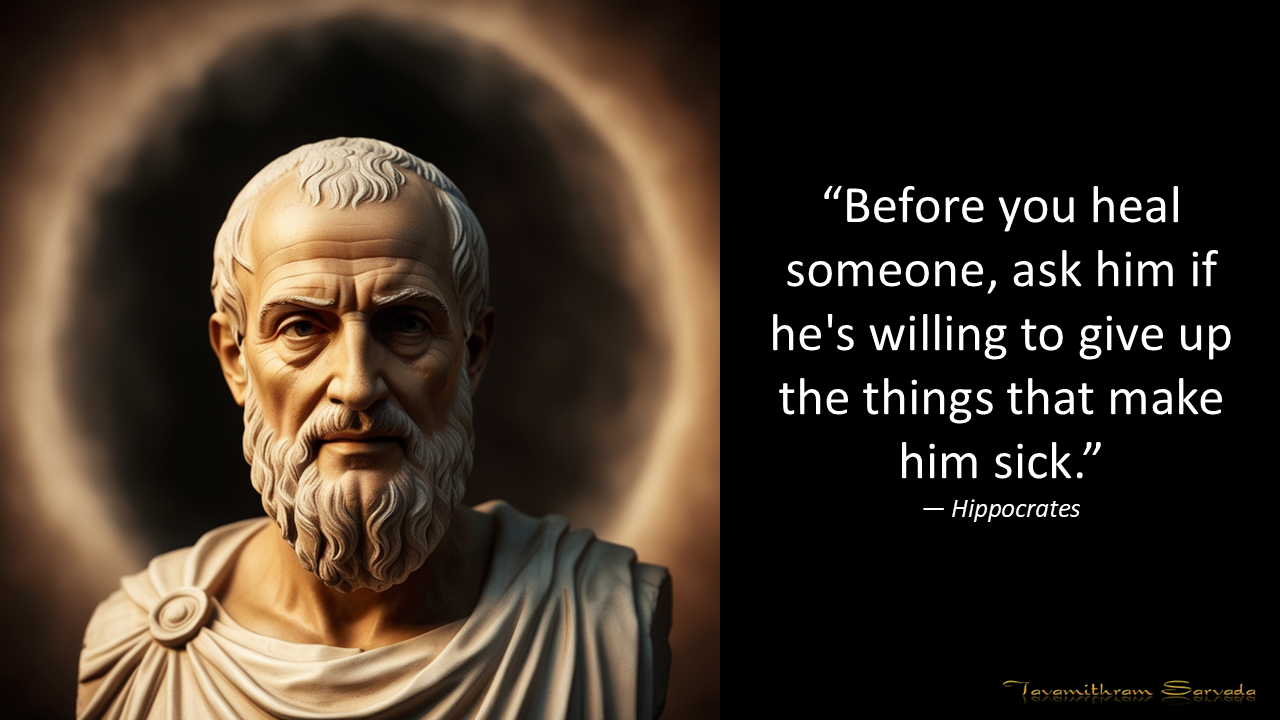
“Before you heal someone, ask him if he’s willing to give up the things that make him sick,” said Hippocrates. Just as baseless beliefs can be likened to mental diseases, one must be willing to abandon them to achieve true healing and enlightenment. Therefore, start with a clean slate.

SBG 4:38 Shri Krishna says: “There is certainly nothing more purifying than knowledge. He who is perfect in Yoga finds it in the Self in due course of time.”

Does Choosing Superstition Over Spiritual Evolution Cause Man’s Suffering?

Who or what is it that causes suffering?

Shattering Illusions: The Rational and Logical Path to Spiritual Enlightenment

In this enlightening video, we delve into the profound teachings of Krishna as presented in Shloka 13.4 or 13.5 of the Srimad Bhagavad Gita. Krishna emphasises that the truth is articulated through Vedic hymns and the Brahmasutras with reason and logic, leaving no room for blind belief or unquestioned acceptance.

Explore why genuine understanding and research are vital for spiritual growth. Watch this video titled “No Blind Belief but Reason and Logic” (Video 93 of the Hundred Logos Calls series) to gain insights into the importance of questioning and seeking knowledge.

Religious divisions often stem from differing beliefs, yet the Srimad Bhagavad Gita transcends such systems by not enforcing or even recommending blind belief. Krishna encourages reflective thinking and personal choice, urging us to seek deeper wisdom and live with a sense of duty, free from attachment.

Explore how spiritual evolution is about acquiring true knowledge, not performing meaningless rituals. Learn to apply the teachings of Vedanta to your life for genuine transformation.

Embrace the wisdom of the Srimad Bhagavad Gita and start your journey towards spiritual evolution.

Stay blessed.

Jai Shri Krishna.

The Belief Paradox: Revealing the Root of ALL Conflicts

Find out the birthplace of all disagreements, conflicts, riots, social upheavals, violence, and even genocides, and learn how Vedanta is the perfect solution.

Watch on Substack

Subscribe to my Substack. It’s FREE!

Click on the image below!

The Belief Paradox