Trapped by Tradition: What Monkeys Teach Us About Blind Conformity

JOIN MY SUBSTACK – IT IS FREE

This video sheds light on an intriguing experiment that reveals deep insights into human behaviour and the importance of questioning established norms. The story serves as a powerful metaphor for how traditions and social customs can become…READ ON SUBSTACK AND WATCH THE VIDEO

Two ‘Mantras’ to Destroy Negative Karma and Start Afresh

Life is too precious. Nothing and no one is worth wasting your time on in life.

Discover simple steps to navigate even the most challenging times in life.

No matter how tough or daunting your situation might be, the first step is to come to terms with it – at least temporarily.

This acceptance allows your intellect to push your emotions aside and function fully, enabling you to come up with a solution.

General George S. Patton said, “Accept the challenges so that you can feel the exhilaration of victory.”

In the video presentation ‘So What? What Next?’, I explain two simple two-word ‘Mantras’ that can greatly help overcome the delusion caused by a sense of entitlement and the tendency to avoid troubles and risks.And in the other titled ‘Reset Karma’, I explain simple ways to change unfavourable patterns in life to more favourable ones.

It is primarily one’s sense of entitlement, ingrained since childhood, that often becomes a significant barrier to success. Believing they deserve only the best and most comfortable things in life, individuals can become morally weakened when faced with challenges. This mental block prevents them from recognising their own capabilities.

No matter how tough or daunting your situation might be, the first step is to come to terms with it, at least temporarily. This acceptance allows your intellect to function fully, pushing emotions aside and enabling you to find a solution. Whatever the situation, even if someone is facing a life-or-death scenario, they need to come out of denial, accept the truth, and start thinking rationally about what they can do to survive. Doing so removes the greatest obstacles in the form of fear, anger, or any other destructive emotions.

From Stagnation to Success: Mastering Negative Karmic Inertia

Shattering All Blockades in Life

Understanding the Three Gunas: A Path to Self-Improvement

Understanding the three Gunas explained in the Srimad Bhagavad Gita offers profound insights into human behaviour and consciousness. These three fundamental qualitiesโ€”Sattva (goodness), Rajas (passion), and Tamas (ignorance)โ€”shape our thoughts, actions, and overall life experience. Among these, the Tamasa Guna, which embodies indolence, laziness, lethargy, negativity, and pessimism, often acts as a significant impediment to personal growth and productivity. I refer to this as ‘Negative Karmic Inertia.’

Much like maintaining a good hormonal balance is crucial for physical health, achieving a harmonious balance of the three Gunas is essential for a fulfilling and enriching life. By understanding and managing our Guna levels, we can enhance our self-awareness and work towards self-improvement. The real transformation happens within, even if the knowledge and inspiration come from external sources.

The Role of Tamasa Guna

Excessive Tamas is like a heavy weight that chains a person to the ground, preventing any positive change and perpetuating a state of lethargy and inertia. It not only affects one’s behaviour but also distorts one’s ability to rationalise and make sound decisions. A person overwhelmed by Tamas might find themselves stuck in a cycle of inaction and negativity, unable to break free and achieve their true potential.

The Three Gunas explained in the Bhagavad Gita

The Srimad Bhagavad Gita provides a detailed explanation of the three Gunas and their effects on individuals:

SBG 14:5 – “The three Gunas or qualities are Sattva, which is the quality of goodness; Rajas, which is the quality of passion; and Tamas, which is the quality of ignorance; O mighty-armed one. They are born of Prakriti which is Nature. These qualities bind very fast the immutable embodied Self in the body.”

SBG 14:6 – “Of these, Sattva, which, due to its purity, is luminous and healthy, frees a person of all Karmic reactions. Those of this Guna are attached to knowledge and to happiness, O sinless one.”

SBG 14:7 – “You should know Rajas to be the Guna or nature of passion, which is the source of desire and attachment. O Arjuna, it binds fast to the embodied Self by attachment to action.”

SBG 14:8 – “Tamas is born of ignorance and deludes all embodied beings. O Arjuna, this results in the binding of the embodied soul by negligence, sleep and laziness!”

SBG 14:9 – “O Arjuna, Sattva binds one to happiness, Rajas to action, while Tamas shrouds knowledge and binds one to idiocy.”

SBG 14:10 – “O descendant of Bharata (Arjuna), Sattva prevails over Rajas and Tamas, while Rajas manifests itself by overpowering Sattva and Tamas; and Tamas manifests itself by subduing Sattva and Rajas.”

SBG 14:11 – “When the light of wisdom shines through every sense in this body, it may be known that Sattva is predominant.”

SBG 14:12 – “When greed, endeavour for material gains, restlessness and longing arise; Rajas is predominant, O Arjuna.”

SBG 14:13 – “The presence of illusion, darkness, recklessness and delusion in a person indicate the predominance of Tamas in them, O Arjuna.”

Overcoming Negative Karmic Inertia

Many people struggle with feelings of demotivation and an inability to achieve their goals. This internal blockage often stems from an excess of the Tamasa Guna. Conversely, those driven by an excessive Rajas Guna might find themselves aggressive and even harmful in their pursuit of desires.

Managing Rajas

SBG 3:36-37: Arjuna asks Krishna: What prompts a man to perform sinful deeds, O descendant of Vrshni? Why does he commit such acts even without desiring to do them, as if he were forced?

Shri Bhagavan Krishna replies: Lust and anger are born out of the material nature called Rajoguna, which is insatiable and prompts man to commit sin. You must know that this is the greatest enemy in a manโ€™s spiritual life.

Understanding one’s Guna ratio is akin to a doctor diagnosing a patient: it allows for targeted self-improvement. By identifying and addressing the predominant Guna that is out of balance, individuals can work on the specific areas needed to overcome unwanted situations in life.

Self-Study and Introspection

The path to self-improvement begins with self-study and introspection. Rather than casting blame on external factors, it is crucial to look within and understand the internal dynamics that drive our behaviour. By doing so, we can achieve a harmonious balance of the Gunas, leading to a more pleasant, enriching, and fulfilling life.

Finally, the knowledge of the three Gunas offers a powerful tool for self-awareness and personal growth. By recognising the influence of Tamas and working to balance it with Sattva and Rajas, we can overcome negative karmic inertia and realise our true potential. The journey to self-improvement is an inward one, and the key to success lies in understanding and managing the forces within us.

Reflect on your own Guna ratio, identify the areas that need attention, and take the necessary steps to bring balance and harmony into your life. Embrace the power of self-awareness and let it guide you towards a brighter, more fulfilling future.

If you truly want to change your life, it is you who must change, for the world will not bend to your will.

โ€œWho looks outside dreams; who looks inside awakes.” – Carl Jung

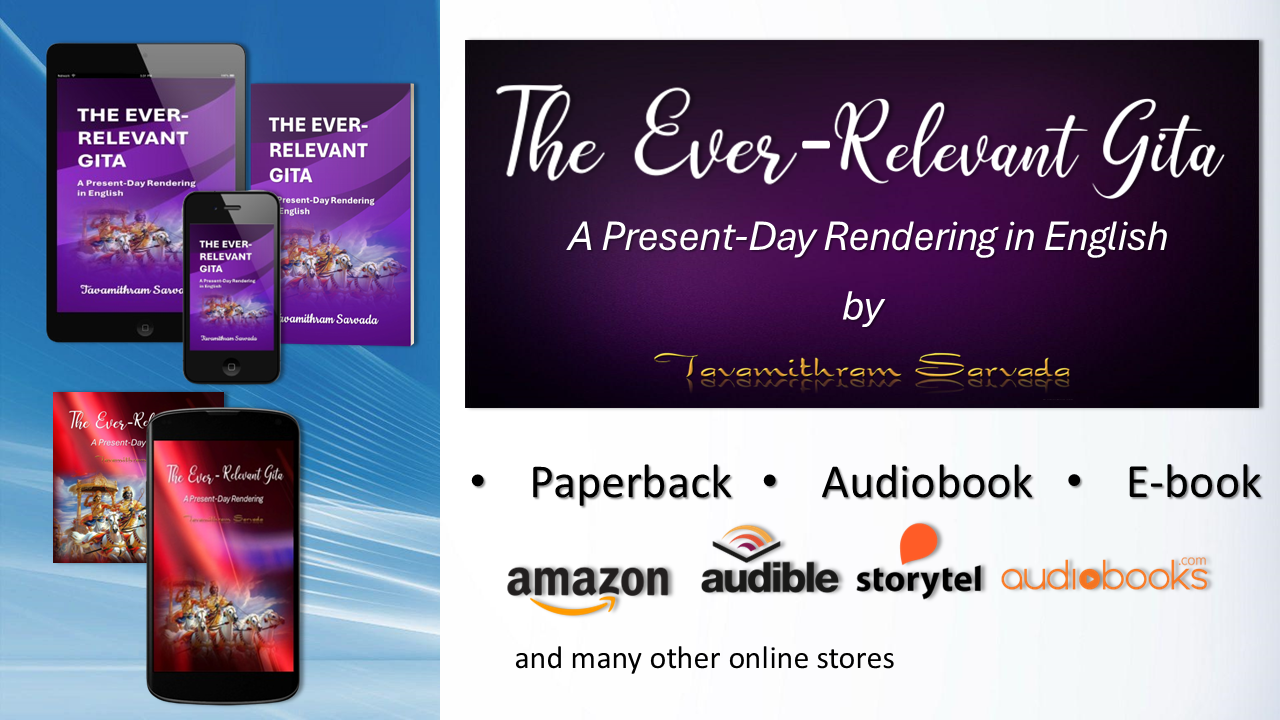
The Ever-Relevant Gita: A Present-Day Rendering

Embracing the Blissful Journey: The Ever-Relevant Gita – A Present-Day Rendering by Tavamithram Sarvada

Now available in various online store fronts, such as: Amazonย International,ย IN,ย DE,ย UK,ย AU,ย NL,ย CA,ย FR,ย ES,ย PL,ย IT,ย BR,ย MX

*The paperback version is not available on Amazon India.

Part 1: Preface and Introduction + Chapters 1-6

The preface and introduction lay the foundation for your exploration. Don't be tempted to skip these initial chapters; they are the compass guiding you through the intricate terrain of the Gita's philosophy. Understand the core teachings, and you'll find yourself motivated to delve deeper, perhaps into the rich Bhashyams or commentaries of Shri Adi Shankara and other great teachers.

Part 2: Chapters 7-12

As you progress through these chapters, absorb the profound insights that unfold. The clarity of understanding achieved in the earlier sections becomes the stepping stone for an even more profound comprehension of Krishna's teachings.

Part 3: Chapters 13-18 + Outro

The culmination of your journey awaits in the final chapters. The outro ties the threads together, offering a comprehensive view of the Gita's timeless wisdom. This concluding section is not to be missed; it holds the key to empowerment and self-confidence.

Namaste Seekers,

Embark on a profound journey into the timeless wisdom of the Srimad Bhagavad Gita with ‘The Ever-Relevant Gita: A Present-day Rendering by Tavamithram Sarvada.’ Below, I’ll elucidate the profound significance of this work and its potential to illuminate the path to self-realisation.

In a fast-paced world fraught with complexities, the solace found in ancient wisdom often remains unexplored. 'The Ever-Relevant Gita – A Present-day Rendering by Tavamithram Sarvada’ endeavours to bridge this gap, bringing forth the profound teachings of the Srimad Bhagavad Gita to everyone, irrespective of age, background, or familiarity with ancient scriptures.

Dispelling Myths and Misconceptions

The main challenge involves dispelling misconceptions that surround the Srimad Bhagavad Gitaโ€”misconceptions about its perceived depth, religious connotations, and its relevance limited to the elderly or devout individuals. In this modern interpretation, we untangle myths and present timeless wisdom in a manner that aligns with the sensibilities of the contemporary mind.

A Unique Approach: Audio, Video, and E-book Formats

Understanding the daunting nature of lengthy translations, a unique approach has been taken by creating easily digestible audio recordings of each chapter. These recordings allow listeners to absorb the essence of the Gita at their own pace, breaking down barriers that often deter individuals from exploring this ageless scripture.

Beyond presentation, this initiative is a call to embark on a blissful journey of self-discovery. In my life, which has been shaped by numerous challenges and life-altering situations, the importance of a well-trained instinct and a balanced mindset has become crystal clear to me. A clear understanding of the fundamental principles of the teachings in the Srimad Bhagavad Gita certainly plays a pivotal role in shaping attitudes, cultivating fearlessness, and fostering rational thinking during critical moments.

Practical Insights for Daily Application

The true power of the Srimad Bhagavad Gita lies in its application in everyday life. The focus is not merely on delivering a rendition or chanting Shlokas, but on providing practical insights that enable individuals to apply these teachings in their daily lives, leading to a more fulfilling and blissful existence.

In essence, the mission is to make the teachings of the Srimad Bhagavad Gita easily accessible, relatable, and applicable to everyone, fostering a deeper understanding of life's intricacies. Join me on this enlightening journey, and let's journey through the supreme scripture together.

Those who would like a promo code for a free download of the Audiobook version of the ‘The Ever-Relevant Gita – A Present-Day Rendering by Tavamithram Sarvada’ may email their request to tavamithramoffice@gmail.com

Jai Shri Krishna

What Lies Beyond โ€˜Youโ€™? The Ultimate Truth in Vedanta

Who Am I? Uncovering the Timeless Mystery of Self

Subscribe to my FREE SUBSTACK for insights on self-discovery, consciousness, and Vedanta. Join now and connect with fellow seekers on a deeper journey!

Click on the image below to go directly to my Substack, read the full post, and watch a video presentation.

Forget the Heart, First Heal the Mind!

Beyond Prayers and Miracles – The Rational Path to Self-Realisation

Transform Your Life with Vedanta, The Science of all Sciences

WATCH THIS AND CLEAR YOUR HEAD OF ALL UNWANTED STUFF:

When ignorance becomes the norm, entire masses of people can be easily swayed to firmly believe the unreal to be real. The crucial factor in society that enables a select few to manipulate their minds is the ignorance of the masses, which basically stems from blind beliefs that numb their brains, and sheer laziness to make a move to get out of ignorance.

People come to my blog, watch some of my videos, and ask me what they should do to change their lives. Almost everyone wants instant solutions, and they are even willing to pay for shortcuts! One should not overlook the fact that even the act of going to a religious place and praying for what one wants is a form of seeking shortcuts.

But the truth is that everything has a price, and everything is part of the never-ending cause-and-effect chain. Asking someone or ‘god’ to give them what they want could only mean that the so-called ‘god’ changes his plans to suit the needs of the one praying. So, what about the others? Do their lives get destroyed because someone else prayed and got things done by ‘god’ to do things their way? Really? So, what happens when two entities at war with each other pray to the same ‘god’? Who do you think ‘god’ will bless with special favours?!

How many people really dare to make massive changes in their lives, have the courage to travel around, experience and learn more, and evolve? Krishna says in Shloka SBG 7:19, “Therefore, after innumerable births, the one who has perfected his or her wisdom, understanding fully My universal reality, surrenders to Me and such an individual is very rare.”

So, with a default state of mind of wanting to maintain the status quo, people tend to look for easy ways out, shortcuts, middlemen, and women who can help them achieve success through the short path, which is a form of corruption or fraud. It is because people want something without really working for it.

When did Krishna say in the Srimad Bhagavad Gita to go to his temples, perform meaningless rites and rituals with the mammary milk of poor voiceless animals, sing songs in His praise, chant Mantras the whole day, and do nothing else? The clear instruction in the second chapter is that you only have the right to work, but never to claim its results. The results of your actions should never be your motive, but at the same time, you should not be attached to inaction.

Then why do people perform religious rites to fulfill personal desires?

Vedanta and the Srimad Bhagavad Gita

Shloka 18:66 of the Srimad Bhagavad Gita does not mean that one should have blind belief in Krishna.

Krishna says in SBG 18:66, “Giving up all your ideas of righteousness or religion, take complete refuge in Me. I will liberate you from all sinful reactions. Do not fear.”

It means, “Give up all the nonsensical ideas you might have in the name of religion, and by adopting the logical analysis and reasoning provided throughout until the 18th chapter, become one with Krishna.”

The entire purpose of the Srimad Bhagavad Gita is to guide people to shed their false beliefs and take to a rational study of truth. The process is very simple with three stages:

  1. Sidhaanta – A Question, Idea, Concept, or Theory
  2. Saadhana – The means to study, including reading, listening, researching, analysing, debating, etc.
  3. Siddhi – Final understanding, internalisation, and experience, known as Anubhava in Sanskrit.

Scientists don’t believe anything without evidence, do they? Remember that Vedanta is the science of all sciences.

Reason and Logic in the Srimad Bhagavad Gita

The Srimad Bhagavad Gita talks about reason and logic and NEVER about belief.

SBG 13:4 states, “Great sages have sung about the absolute truth in various ways. They have stated the truth in Vedic hymns and have described it in the Brahma Sutras through reason and logic with unambiguous evidence.”

Shloka SBG 4:34 says, “Acquire knowledge through reverence to teachers who have known the Truth, serve them and ask them questions until all of them are answered. The wise who know the Truth will teach it to you.”

Definition of Religion

Religion is a system of beliefs, practices, and values often centred around the worship of a higher power or divine beings. It typically involves rituals, moral guidelines, and a community of followers who share the same belief and faith.

Did you find anything related to reason, rationality, science, inquiry, or logic in this definition?

Vedanta: The Pinnacle of Vedic Studies

Vedanta is the highest point of Vedic studies – right from the basic Karma Kaanda, Upaasana Kaanda to the Gnyaana Kaanda of the Upanishads.

If you are interested in changing your life COMPLETELY and are willing to clear your mind of all the unfounded beliefs you have been trained by your elders to blindly believe, please feel free to contact me.

I do not talk about miracles performed by some man in a cave, one with a long beard, or another with fuzzy hair. Out here, it is pure Advaita Vedanta – Nondual Vedanta, and the compact and best manual for attaining the highest understanding of the nondual, all-pervading SELF is the Srimad Bhagavad Gita.

A real shift to Vedanta is a complete change with no traces of illogical or irrational ideas sticking in the mind in the name of belief, ‘aastha’, religion, or whatever.

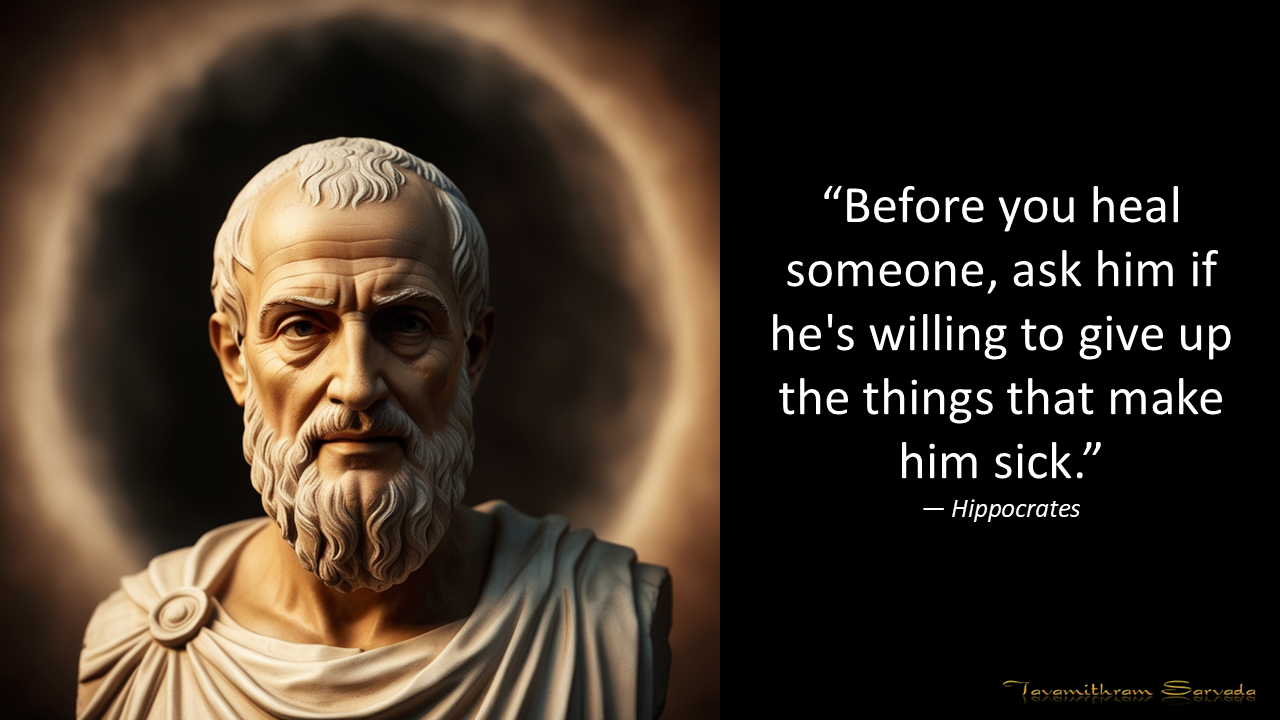
“Before you heal someone, ask him if he’s willing to give up the things that make him sick,” said Hippocrates. Just as baseless beliefs can be likened to mental diseases, one must be willing to abandon them to achieve true healing and enlightenment. Therefore, start with a clean slate.

SBG 4:38 Shri Krishna says: “There is certainly nothing more purifying than knowledge. He who is perfect in Yoga finds it in the Self in due course of time.”


Conscious Conversations: Deep Dives into Tavamithram’s Insights (AI)

Podcast Discussions on Tavamithram’s Posts on Vedantic Wisdom and Philosophy

Welcome to this new segment, where engaging discussions delve into the insightful and thought-provoking posts on this blog by Tavamithram. These conversations explore the teachings of Vedanta, highlighting how Tavamithram’s unique interpretations challenge mainstream beliefs and offer profound wisdom validated by ancient scriptures.

This interactive dialogue aims to make complex philosophical concepts accessible and engaging, encouraging you to delve deeper into the transformative knowledge shared on this blog. Clicking on the titles of each podcast takes you to the relevant post on this blog.

The Secret to Eternal Youth โ€“ The V.E.V.ย Journey

The Belief Paradox


Beyond the Herd


The ‘Usher’ reveals it all


‘White Blood’ – Hypocrisy to the core!

Why me – เคฎเฅˆเค‚ เคนเฅ€ เค•เฅเคฏเฅ‹เค‚ – เฎจเฎพเฎฉเฏ เฎเฎฉเฏ?

Understanding Destiny through the Srimad Bhagavad Gita

Every morning can be treated as a new Janma (birth), carrying forward the thoughts and mindset from the previous day, thus continuing life patterns. Changing oneโ€™s life for the better is not difficult if one understands the natural principle of cause and effect and works towards acquiring the knowledge of the all-pervading Self, Brahman, or Krishna. As long as one thinks of Krishna as a separate entity, they will have expectations, which naturally lead to disappointments. Krishna is everywhere, in all beings, and is existence itself. Rise above dualitym accept responsibility and make the necessary course corrections in life. The Srimad Bhagavad Gita clearly states that the path of knowledge is the highest. Check out Shloka SBG 4:37-38.

To illustrate these concepts, I created three videos in three different languages using easy-to-understand analogies. When I made the Hindi video, one of our family members, Mr. Anupam Agarwal helped me in reviewing the Hindi script. Special thanks to him.

Additionally, I offer my latest book, ‘The Ever-Relevant Gita: A Present-Day Rendering’. This book can answer almost all possible questions one might have about destiny, karma, dharma, Krishna, birth, life, and death.

Embracing the Path of Knowledge

It is an irrefutable fact that everyone possesses some degree of a personality trait called narcissism. The degree of narcissism in a person separates a normal individual from someone who needs professional help. Even a small amount of narcissism can push a person towards feelings of entitlement, selfishness, and the typical ‘Why me?’ question. Oneโ€™s own answer to this question is usually based on self-pity and a sense of being a victim of others, external forces, or misfortune.

People who care to set aside their narcissistic traits, however small and insignificant, and their feelings of victimhood, can find not just an answer to the ‘Why me?’ question but a permanent solution to it.

The following presentation analyses the ‘Why me?’ question, the principle of cause and effect, and ways to carve out a clearer, better, enjoyable, and enriching destiny with the help of teachings from the Srimad Bhagavad Gita.

May peace reign in your heart, mind, and soul, and may your life be blessed with an abundance of Divine Grace.

Jai Shri Krishna

Watch the video in the language of your choice, reflect, and take action.

WHITE BLOOD -Milk, Tradition, and Compassion: Rethinking Our Choices

The Hypocrisy of Animal Fat in Tirupati Laddus

HYPOCRISY TO THE CORE!

Podcast (Please read and play the Podcast for a better understanding of the topic)

I was appalled and, at the same time, amused by the news of animal fat being found in the laddus sold in Tirupati!

Animal fats can be categorised as milk fats, rendered fats, and fish oils (marine oils). The main representative of milk fats is the fat from cow’s milk (milk fat, butter fat, butter oil). All other milks are of almost no importance as far as their fats are concerned.

As a pure vegan, I can say that this is another case of typical Indian hypocrisy. Many people, blinded by traditions, complain about animal fat but consume ghee. Where do they think that fat comes from? From plants? Ghee comes from the secretion, often containing pus, of bovine animals, which secrete it for their own young ones and not for fully grown adults of a different species!

Is there any other species that drinks mammary secretions in adulthood? Not even bulls do. And more so from another species! Indians are accustomed to a lot of nonsense in the name of ridiculous traditions. This stems from a lack of knowledge.

People don’t have time to spend three hours reading a copy of the Srimad Bhagavad Gita and reflecting on the supreme knowledge it offers, but when it comes to following family traditions blindly, they do so without asking a single question!

In Chapter 1, Arjuna talks about family traditions being lost, and Krishna does not even consider it something worth discussing. In Chapter 4, Krishna tells Arjuna in so many words to ask questions and get answers. He never advocated blindly following meaningless traditions.

Krishna, in Shloka SBG 9:26 says:
เคชเคคเฅเคฐเค‚ เคชเฅเคทเฅเคชเค‚ เคซเคฒเค‚ เคคเฅ‹เคฏเค‚ เคฏเฅ‹ เคฎเฅ‡ เคญเค•เฅเคคเฅเคฏเคพ เคชเฅเคฐเคฏเคšเฅเค›เคคเคฟ |
เคคเคฆเคนเค‚ เคญเค•เฅเคคเฅเคฏเฅเคชเคนเฅƒเคคเคฎเคถเฅเคจเคพเคฎเคฟ เคชเฅเคฐเคฏเคคเคพเคคเฅเคฎเคจเคƒ || เฅฏ เฅจเฅฌ ||
patram pushpam phalam toyam
yo me bhaktyaa prayacchati
tadaham bhaktyu-pahritam-
ashnaami praya-taat-manaha (SBG 9:26)
“I accept whatever is offered to Me with devotion and a pure heart. It could be a leaf, a flower, a fruit or a little water.” HE DID NOT SAY: STEAL A CALF’S BABY FOOD AND POUR IT ON ME!

Have you ever considered the plight of the poor cows kept in horrifying conditions, their milk taken from them? When they deliver male calves, the poor little chaps are sent straight to the slaughterhouse to be killed and their tender meat used for something else, all because they will not give milk! And these vegetarians think they are absolved of all the brutal murders done to these animals just because their meaningless traditions tell them they should consume animal milk?

IF YOU STAY SILENT ABOUT A CRIME BEING COMMITTED, YOU ARE COMPLICIT IN IT.

Watch the videos below that I published some time ago, and help your conscience come out after being shrouded for so long under ignorance. That’s called evolution.

Ten things you should know about dairyโ€ฆ

All confused or pseudo-devotees of Krishna, please remember that YOU ARE THAT, and so is everything and every being!

No! No creature was created for you to steal its baby food or kill and eat it!

SBG 13:27 (or 28 in some editions)
เคธเคฎเค‚ เคธเคฐเฅเคตเฅ‡เคทเฅ เคญเฅ‚เคคเฅ‡เคทเฅ เคคเคฟเคทเฅเค เคจเฅเคคเค‚ เคชเคฐเคฎเฅ‡เคถเฅเคตเคฐเคฎเฅ |
เคตเคฟเคจเคถเฅเคฏเคคเฅเคธเฅเคตเคตเคฟเคจเคถเฅเคฏเคจเฅเคคเค‚ เคฏเคƒ เคชเคถเฅเคฏเคคเคฟ เคธ เคชเคถเฅเคฏเคคเคฟ || เฅงเฅฉ เฅจเฅญ ||
samam sarveshu bhooteshu
tisht-hantam parameshvaram
vinashyatsva-vinashyantam
yah pashyati sa pashyati
(SBG 13:27)
The person who truly sees is the one who sees the Paramatma or Supreme Self, existing equally in all beings โ€“ the unperishing within the perishing.

The All-pervading SELF – YOU!

There was a man called ‘Agyani’, who ‘lost himself’ and set out to ‘find himself’!

Don’t waste your time looking for yourself outside your subjective awareness! That is impossible! Contemplate yourself! Because that is the path towards Atmagnyaana – the Highest Achievement possible!

Faith vs. Reason – Christianity vs. Vedanta

Unveiling the Shocking Truth: Christianity vs. Vedanta – Faith or Reason?

We live in a world filled with diverse beliefs and philosophies, in which, the quest for truth remains a constant journey. This video, “The Shocking Truth: Christianity vs. Vedanta – Faith or Reason?” takes you on an enlightening exploration of two profound world-views that have shaped human thought and spirituality for centuries.

The Clash of Faith and Reason

Christianity and Vedanta offer distinct paths to understanding the nature of existence, the divine, and our place in the cosmos. While Christianity is rooted in faith and belief in a personal God, Vedanta emphasises knowledge and SELF-realisation, guiding seekers towards the ultimate truth of oneness with Brahman.

What to Expect in the Video

This thought-provoking video, is a discussion on the core principles of both Christianity and Vedanta, comparing and contrasting their teachings. We discuss the concept of duality versus non-duality, the role of reason and logic in spiritual pursuit, and the historical context that has shaped these traditions.

The Mahavakya or grand statement “Aham Brahmasmi” (“I am Brahman”) from the Brihadaryanaka Upanishad is a powerful representation of the Vedantic experience of unity and self-realisation. This Mahavakya can be used as a gateway to begin understanding the profound insights of Vedanta.

Stay Connected

Don’t forget to like, share, and subscribe to the Tavamithram Sarvada blog and YouTube channel for more posts and videos on philosophy, spirituality, and self-discovery. Follow this blog for updates and more enlightening content.

Embark on this journey with me and uncover the shocking truth that lies at the intersection of faith and reason.