Atma Bodha: A Complete English Rendering of the 68 Shlokas

Many people spend years looking for guidance, blessings, secret methods, special experiences, and spiritual personalities to follow but somehow never take the small step of reading the texts that actually contain the teaching.

The Srimad Bhagavad Gita, at least a few of the principal Upanishads, Nirvana Shatkam, and Atma Bodha are not hidden. They are freely available. They do not require theatrical devotion, emotional dependence, or loyalty to a personality. They require a serious mind.

Atma Bodha, said to have been composed by Shri Adi Shankaracharya about 1400 years ago, is short enough to be read in about half an hour. Yet, if approached with an open mind, it can give extraordinary clarity. Its purpose is not to create a believer. Its purpose is to remove confusion and delusional beliefs, including religious ones.

This is where the tragedy begins. When people do not study, they become vulnerable. They throng around charlatans wearing flowing robes and posing as godmen and godwomen, who propagate their own tales and create dependency instead of clarity. Belief is then treated as something to be proud of, even when there is no evidence, no reasoning, and no direct understanding. People even risk their lives for such beliefs.

This habit does not remain private. Adults inject these beliefs into the minds of innocent children and call it culture, tradition, or faith. Worse still, children are taught that believing what they are told, even when there is no evidence, no reasoning, and no direct understanding, is itself a great virtue. The child is not trained to enquire. The child is trained to accept.

Vedanta, the rational path of enquiry, does not ask for any kind of belief.

Vedanta points towards realisation. The seeker is guided towards removing ignorance, false identification, confusion, and dependence on second-hand claims. The Srimad Bhagavad Gita states this directly in SBG 9:02:

Krishna says: โ€œThis is the Royal science, the supremely holy and profound secret that can be experienced directly and with ease. It is very easy to practise and is everlasting.โ€

If this is so clear, why do people avoid it?

Because real knowledge demands responsibility. It does not allow a person to hide behind rituals, slogans, sectarian identities, or spiritual entertainment. It asks: Who are you, really? What are you taking yourself to be? What is changing? What is aware of change?

That is where Atma Bodha becomes important.

Shri Adi Shankaracharya did not come to strengthen superstition. He dismantled unfounded beliefs and guided seekers towards Brahman, the all-pervading Self. His Nirvana Shatkam, with only six Shlokas, cuts through identification with body, mind, senses, social role, and personal story. Atma Bodha expands that same clarity through sixty-eight Shlokas.

The 68 Shlokas of Atma Bodha, meaning instruction regarding the Self, may be understood in three movements.

1. Siddhanta: Shlokas 1 to 30

The first movement establishes the position. What is real, and what merely appears real? What is the Self, and what is only a passing condition mistaken for the Self?

Atma Bodha draws a firm line between the changeless Self and everything that changes. The body changes. The senses change. The mind changes. Thoughts, emotions, memories, roles, and identities change. None of these can be the final truth of the one who knows them.

Ignorance creates the error. The Atman is awareness itself, but through ignorance it is mistaken to be the body, the mind, the doer, the enjoyer, and the limited individual. The text uses examples such as a rope mistaken for a snake, bubbles in water, and space appearing divided by containers to show how error works.

Siddhanta is the principle, position, or theory, which is studied and analysed in the second movement, namely Sadhana, and brought to a conclusion in the third movement, namely Siddhi. Siddhanta is principally discrimination.

2. Sadhana: Shlokas 31 to 53

The second movement shows the practice. This is not ritualism or mechanical religious effort. It is the disciplined correction of vision.

The seeker repeatedly recognises that the Self is not the body, not the senses, not the mind, not memory, not personality, and not the narrative called โ€œIโ€, โ€œmeโ€, โ€œmyselfโ€, and โ€œmy lifeโ€.

Atma Bodha uses powerful analogies: a lamp revealing objects, a crystal appearing coloured by what is near it, the sun reflected in many waters, and the missing necklace already around oneโ€™s own neck. These are not decorative images. They show that the problem is not the absence of the Self, but the presence of error.

Sadhana removes that error through enquiry, reflection, and repeated recognition.

3. Siddhi: Shlokas 54 to 68

The final movement presents the result. When false identification is removed, the seeker no longer searches outward for the Self as if it were an object to be found.

The liberated one is described as free from mistaken identity, established in the all-pervading Self, stainless, complete, and no longer bound by body, mind, memory, social label, or personal story.

This is not the creation of a new state. It is not the acquisition of a spiritual possession. It is the ending of a mistake.

The search ends because the seeker understands why the search began.

Atma Bodha is therefore not merely a short text. It is a direct teaching manual. It does not give another belief to hold, another sect to join, or another personality to worship. It points to the error of false identification and shows how knowledge removes it.

This video is for those who want to approach Vedanta with clarity, seriousness, and direct enquiry.

For those who want the complete text, I have recorded a full English rendering of all sixty-eight Shlokas of Atma Bodha, with brief explanations where needed.

You may also read the post on Substack.

Donโ€™t believe. Know!

Continue the enquiry into the Self

Atma Bodha begins by separating the changeless Self from everything that changes. Modern Rishi continues that enquiry through the mind, identity, conditioning, ego, responsibility and the practical application of Vedanta in daily life.
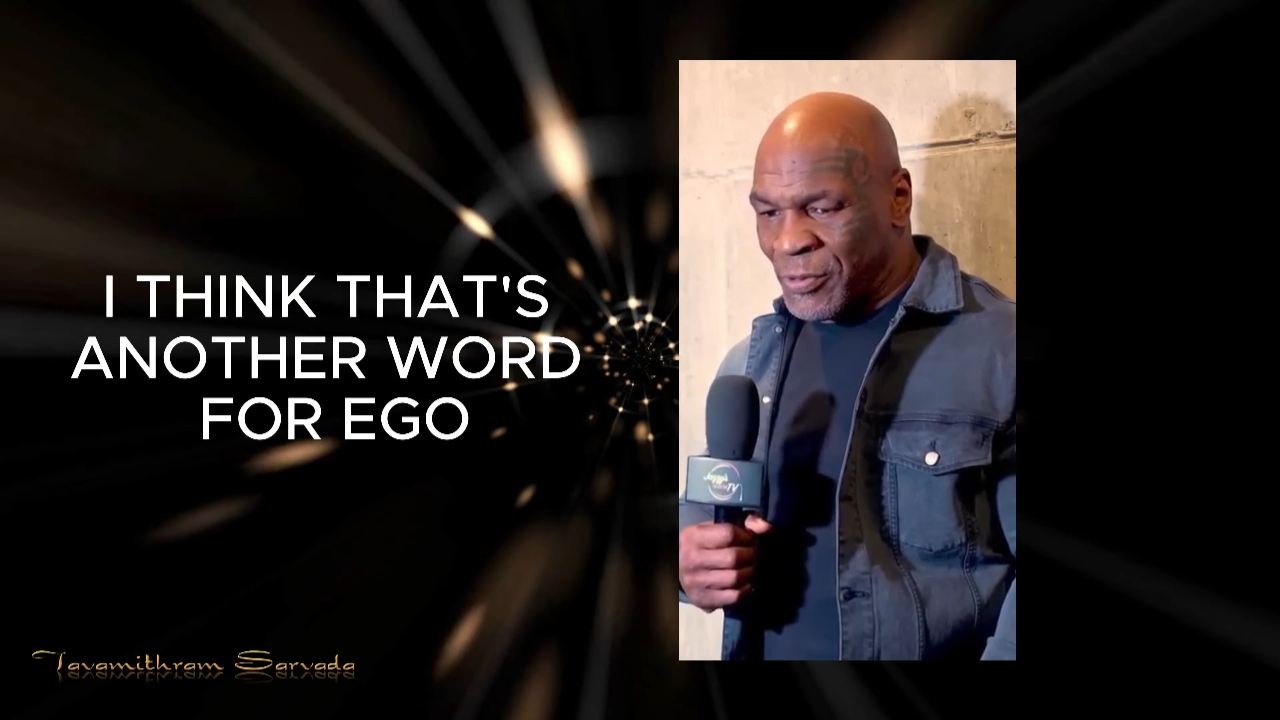

“LEGACY IS ANOTHER WORD FOR EGO” – MIKE TYSON

Embrace True Life Beyond Illusions

Join my Substack. IT IS FREE.

Assumptions about oneself and blind adherence to religious beliefs lead to the illusion of greatness, fake nobility, holiness, and grandeur.

Life is the greatest gift, unfolding in the present moment. As Mike Tyson wisely puts it… READ ON SUBSTACK

Are you that RARE Seeker?

In the timeless wisdom of the Srimad Bhagavad Gita, Bhagavan Krishna reveals a profound truth in Shloka SBG 7:03

เคฎเคจเฅเคทเฅเคฏเคพเคฃเคพเค‚ เคธเคนเคธเฅเคฐเฅ‡เคทเฅ เค•เคถเฅเคšเคฟเคฆเฅเคฏเคคเคคเคฟ เคธเคฟเคฆเฅเคงเคฏเฅ‡ |
เคฏเคคเคคเคพเคฎเคชเคฟ เคธเคฟเคฆเฅเคงเคพเคจเคพเค‚ เค•เคถเฅเคšเคฟเคจเฅเคฎเคพเค‚ เคตเฅ‡เคคเฅเคคเคฟ เคคเคคเฅเคคเฅเคตเคคเคƒ
manush-yaaNaam sahasreshu kash-chi-dyatati siddhaye
yatataa-mapi siddhaa-naam kash-chinmaam vetti tattvataha (SBG 7:03)”

“Out of thousands of men, hardly one tries to achieve perfection in Self-realisation and among those trying so hard to do so, there is hardly one who achieves perfection in Self-realisation and among those who do achieve Self-realisation, there is hardly one who truly knows Me.”

This revelation highlights a stark reality: the path to true SELF-realisation is trodden by only a few, and among those few, even fewer truly comprehend the essence of the Divine.

Reflecting on this, it’s remarkable to consider the efforts of Shri Adi Shankaracharya, my prime human spiritual guru. In the timeless ‘NirvaaNa Shatakam,’ he encapsulated profound truths in merely six Shlokas. Yet, he journeyed across Bharata Varsha (India) by foot, enlightening kings and commoners alike with the supreme knowledge of Vedanta. Why such an arduous endeavour? The answer lies in the pervasive ignorance that clouds human intellect.

One who has not achieved mental clarityโ€”being confused, scared, worried, stuck in a belief system, or a mental slave to someoneโ€”usually flashes the victim card at the drop of a hat. In contrast, one who is sincerely seeking treats all experiences as learning opportunities. Simply put, I am extremely thankful to all those who cheated, hurt, insulted, or tried to harm me in the past. Without them, I might not have had sufficient fuel to propel my ship to the heights of bliss I have managed to create for myself in any given situation.

For ten years, yes, TEN YEARS, I have dedicated myself to this blog, sharing the rational philosophy of Vedanta. Many have visited, gained some insights, made minor life changes, and moved on. Some, however, have exhibited a shocking lack of courtesy and decency, demanding answers without a trace of respect. Here’s a recent example on my contact page from an Indian person living in the USA: “Can you break your fast completely second day of Navratri if you canโ€™t do it or donโ€™t have proper items is it a sin. Can I break my fast for Navratri or did I already break it before 8 by eating fruits and ate food after 9 pm doing aarti.” No greeting, no politenessโ€”just a blunt demand for an answer, coupled with a disregard for the language theyโ€™re using, which is the main language of the country they are living in! This is the impression these people create of Indians. And what am I supposed to say to such a query? Is this a typical โ€˜Indianโ€™ way of interacting with people? I canโ€™t even discern what this person wants from me!

Well, on October 11th, 2024, two of this blog’s sincere and senior-most followers (senior not in terms of age but in years of association with this blog and my mission), along with my oldest and most trusted friend, and I had an online meeting to discuss Atma, Anatma, and the Mahavakya ‘Pragnyaanam Brahma’. The joy of engaging with such true seekers is simply indescribable, contrasting sharply with the frustration of dealing with blind believers who spread nonsense without understanding even the basics of Vedanta.

If the idea of discussing Vedanta resonates with you, if you wish to free yourself from the shackles of intellect-numbing belief systems, if you desire to live a life that is peaceful and blissful, and if you feel a genuine pull towards Vedanta, you may write to me and express your interest in joining our next online discussion. You can always go through the posts on this blog and watch videos on the Tavamithram YouTube channel. For the rest, feel free to continue on your current pathโ€”no pressure, no problem.

Seekers, let’s continue seeking Truth together.


Does Choosing Superstition Over Spiritual Evolution Cause Man’s Suffering?

Who or what is it that causes suffering?

Shattering Illusions: The Rational and Logical Path to Spiritual Enlightenment

In this enlightening video, we delve into the profound teachings of Krishna as presented in Shloka 13.4 or 13.5 of the Srimad Bhagavad Gita. Krishna emphasises that the truth is articulated through Vedic hymns and the Brahmasutras with reason and logic, leaving no room for blind belief or unquestioned acceptance.

Explore why genuine understanding and research are vital for spiritual growth. Watch this video titled “No Blind Belief but Reason and Logic” (Video 93 of the Hundred Logos Calls series) to gain insights into the importance of questioning and seeking knowledge.

Religious divisions often stem from differing beliefs, yet the Srimad Bhagavad Gita transcends such systems by not enforcing or even recommending blind belief. Krishna encourages reflective thinking and personal choice, urging us to seek deeper wisdom and live with a sense of duty, free from attachment.

Explore how spiritual evolution is about acquiring true knowledge, not performing meaningless rituals. Learn to apply the teachings of Vedanta to your life for genuine transformation.

Embrace the wisdom of the Srimad Bhagavad Gita and start your journey towards spiritual evolution.

Stay blessed.

Jai Shri Krishna.

Equality among all Living Beings

It’s disheartening to encounter individuals who, out of ignorance, insult the most ancient and unparalleled scientific and rational philosophy known to humanity. This regrettable state of affairs isn’t limited to the general masses; even so-called educated individuals contribute to it.

Ignorance lies at the heart of these insults directed at Sanatana Dharma, which culminates in the supreme knowledge and experience of the All-Pervading Self, Brahman, or Krishna.

Instead of mere recitation of Shlokas from the Srimad Bhagavad Gita, it’s far more meaningful for seekers to start by reading a simple translation of this scripture to grasp the profound nondual philosophy it imparts. Unfortunately, the ignorance prevalent among the masses makes it convenient for certain individuals to exploit this by creating ‘Krishna cults’ that prey on people’s gullibility.

In reality, there are no castes or inequalities among living beings before Krishna, as all are equally Divine.