The Deepest Betrayal Begins When Gratitude Becomes Inconvenient

A man spends years helping a younger colleague find his feet. He answers calls at odd hours, opens what doors he can, and never once asks for anything back. Time passes. The younger man succeeds. One day somebody mentions the person who once helped him. He smiles politely and says, ‘Oh yes, I knew him once.’

Nobody lied. Nothing was stolen. A history was simply edited down to half a sentence.

There comes a point when something simply ends. No drama, no revenge, only clarity. Trust can survive disagreement, distance, disappointment and even long periods of silence, but deliberate betrayal destroys it. Once something fundamental has been broken, pretending that nothing has changed helps nobody.

Betrayal, though, is only one form of a much larger human problem, and the deeper issue is usually gratitude.

We tend to treat gratitude as a matter of manners. Someone does something for us, we say thank you, and the account is considered settled. But an attitude of gratitude is a good deal larger than politeness. It is a way of understanding one’s own life, and it begins with an obvious fact that most of us manage to forget: none of us arrived where we are entirely through our own effort.

Along the way, people teach us and correct us, open doors we could not have opened, offer chances we could not have created for ourselves, or turn up at the moment when their presence matters. Some contributions change the direction of a life. Others amount to a single sentence still remembered four decades later. Parents, siblings, teachers, classmates, friends, bosses, colleagues, neighbours, strangers and people from whom our paths eventually separated may all have played a part. The size of the contribution is not the important thing. The ability to remember it is.

A reflection on gratitude and the people who contribute to our journey through life

Before any of us could speak, somebody had already given up a great deal on our behalf. A woman carried us inside her body for nine months and then risked her life to deliver us, and for most of human history that risk was very far from theoretical. Around that beginning were parents or caregivers taking on responsibilities that would continue for years, earning, feeding, protecting, worrying, sacrificing and doing whatever was necessary to keep a child alive and give that child a future.

What followed were years of labour that children rarely notice while it is being done. The earning and the feeding. The illnesses nursed through the night. The education paid for, the personal desires postponed, the responsibilities that had no end date.

No infant on earth survives alone. Every achievement any of us lists, and every confident opinion we hold about how life ought to be lived, rests on years of care given before we were capable of noticing it was being given. Nothing we could offer equals care of that order. The only thing worth anything here is remembering, and saying so while the people concerned are still alive to hear it.

That is why I consider an attitude of gratitude among the highest of human virtues. It encompasses so many others within it: humility, loyalty, decency, memory, acknowledgement and respect for what we have received from others.

There is something deeply grounding about looking back over the road behind you and asking one plain question: Who helped me get here? The question is not about who made me successful or who deserves the credit. It is about who added something, however small, that made the road easier, clearer or possible at all. Sometimes the honest answer includes a person who rejected us, dismissed us or let us go, since an ending that felt like a wound at the time may have been the thing that cleared the space for whatever came next.

None of this needs to be sentimental, and none of it creates a debt.

Helping someone does not purchase their loyalty, and teaching someone gives us no ownership over their future. Kindness entitles nobody to permanent agreement, admiration or closeness, and the moment generosity turns into an invoice it has stopped being generosity. A person may receive our help and later disagree with us completely. They may leave, grow in another direction, build another life, or decide the relationship has run its course. That is not ingratitude. That is simply a life taking its own shape.

Ingratitude begins somewhere quite different. It begins when history gets rewritten because acknowledgement has become inconvenient, and it shows itself most clearly in people who grow so impressed by where they have arrived that they start believing they travelled there alone. Help that once mattered is downgraded to something insignificant, guidance is minimised or denied, and opportunities are quietly reinterpreted as inevitabilities until the contribution of others has vanished from the story altogether. That kind of erasure is not bad manners. It reveals how a person sees the world.

An attitude of gratitude does the opposite. It keeps achievement in proportion, so that a successful person still recalls the beginner they once were, and whoever now teaches has not lost sight of the people who taught them.

This has mattered to me for as long as I can remember. Even as a boy I felt a need to acknowledge anyone who had done something for me, and over the years I have gone back to people decades later just to say that what they once did was remembered. More often than not they had forgotten it themselves, which is exactly why it was worth saying. A good act does not lose its value because the person who performed it no longer remembers performing it.

This way of looking at life changes how we understand broken trust as well. A relationship can end without becoming a war, and a person can lose their place in our life without being turned into an enemy. Forgiveness need not mean renewed access, and understanding somebody’s weakness is not an obligation to invite that weakness back into one’s house. There are doors that can stay closed for good with nothing but quiet behind them.

Here is where nonduality stops being philosophy and becomes something you can actually use. If existence is one, expressed through countless forms, then the apparent separateness between one person and another is not the final truth about either of them. Ego makes that separation feel absolute, and entitlement, fear and delusion take turns defending it. The obsession with ‘me’ and ‘mine’ is what makes it possible to use another human being as though their experience had nothing to do with our own, and out of that imagined separateness come exploitation, ingratitude and betrayal.

Gratitude weakens the illusion, because to be grateful is to recognise relationship. Something reached us through another person. Their hand may have been a small one in the story of our life, but it was still a hand.

That recognition binds us to nobody forever. A relationship may end, trust may disappear permanently, two people may never speak again, and none of it requires us to deny what was once good, or to pretend that what happened afterwards did not happen. Both truths stand together perfectly well. A person can have helped us and later hurt us, or occupied a central place in our life and forfeited it entirely.

Gratitude does not falsify the present. It simply refuses to falsify the past, and that may be its greatest strength. A grateful person has no need to romanticise anybody. Such a person only declines to let disappointment reach back through their own history and erase every good thing that came before it. Remembering something without clinging to it, and moving on without rewriting the record, is a quieter form of strength than most people give it credit for.

People have come to me at very different points in their lives. Some needed nothing more than a little guidance or encouragement. Others came when they felt utterly rejected, broken or alone, and a few spoke openly of wanting to harm themselves. I gave them whatever time, attention or counsel I could, and never asked for anything back. That was never a transaction. I mention it only because ‘Your friend forever’ was never intended as a pleasant phrase at the bottom of a page. It was meant literally.

A relationship can end. Trust can end. A place once occupied in somebody’s life can vanish permanently. The truth that connects us does not.

That is why, when the time came to name this blog in February 2014, I did not go looking for something clever. I chose the Sanskrit for ‘your friend forever’, Tavamithram Sarvada, and I meant it without a single condition attached. Not friendship on condition of agreement, and not friendship only while it remains convenient. Nothing held in reserve, and no dependence on how anyone chooses to behave. Friendship with conditions attached is not friendship. It is a deal. That was the principle I began with, and after all these years I see no reason to revise it.

Your friend forever.

Your Life, Your Movie – A Profound Revelation

You Are The Director of Your Life

What if the secret to a truly fulfilling life has been right before your eyes all along? What if the simple shift in perspective presented in this video could transform the way you experience life itself?

I invite you to watch Your Life, Your Movie, a powerful presentation that could change the way you approach your existence. Drawing from my time in the world of cinema as a stuntman and actor, I have come to see life through the lens of filmmaking—where the real magic is not in the final product but in the journey of creation. The same principle applies to our lives. Too often, we get caught up in chasing a distant outcome, forgetting that the most enriching moments happen in the process.

In this video, I reveal an essential truth—one that can dissolve stress, regret, and the perpetual longing for a future that never truly arrives. Whether it’s making a film, preparing a meal, or working on any meaningful endeavour, the joy is found in the doing, not just in the result.

Have you ever wondered why even the most successful people continue striving, barely pausing to celebrate their achievements? It’s because the destination is fleeting, but the journey is where life happens. The challenge, however, is that most people struggle to remain present. They either dwell on the past or project themselves into an uncertain future, missing the richness of the Now.

This presentation draws on timeless wisdom, personal experiences, and profound insights to guide you toward a simple yet transformative realisation. If you can grasp and implement this one secret, it could redefine your entire outlook on life.

Are you ready to shift your perspective?

‘Watch Your Life, Your Movie’ and discover the truth for yourself.

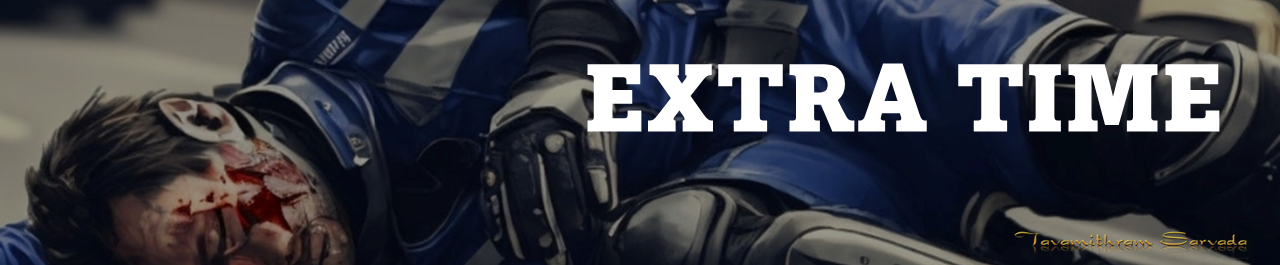
The Day I Nearly Died: My Journey of Survival, Gratitude, and Realisation

(This post is a sequel to an earlier post of mine, titled “The Two Truths of Life.”)

Life is a series of unpredictable events, but nothing could have prepared me for the day I nearly died. In my latest video, I delve into the harrowing moments of a life-threatening ordeal that forever changed my perspective on existence. It’s a story of blood, pain, and sheer willpower, where my presence of mind and unwavering attitude were the only things standing between me and the end.

As I lay there, soaked in blood and teetering on the edge of oblivion, a powerful mantra my father had taught me echoed in my mind: “What next?” This simple yet profound question became my lifeline, guiding me to take the crucial steps that ultimately saved my life.

Through this experience, I have come to deeply appreciate every breath and heartbeat, celebrating life in every moment. My brush with death has instilled in me an immense gratitude for the simple act of living, and I want to share this journey with you.

Join me in my video as I recount this incredible story of survival and gratitude. Discover how facing the unthinkable can transform one’s outlook on life, and perhaps, find inspiration to cherish every moment you have.

In this video, I share my experience and my approach towards life and managing situations. It will greatly help people who are currently in challenging situations by helping them create a shift in the way they think and perceive life.

Watch the full video to experience my journey of survival and learn the invaluable lessons that came with it.

Nirvana Shatakam – Shri Adi Shankaracharya

Fate and Time: The Tragic Story of Mike Lynch

In my latest video, I delve into the poignant and impactful story of Mike Lynch, a man whose life and career were marked by remarkable achievements and profound challenges. Despite his success, Lynch’s life took a tragic turn with his untimely death while on his yacht—a stark reminder of how swiftly fate can alter our course.

In this video, I offer an introspective look at Lynch’s journey, touching on the themes of fate, the passage of time, and the importance of living fully in the present. I explore how Lynch’s story serves as a powerful lesson about the unpredictable nature of life and the significance of embracing each moment with gratitude and responsibility.

Join me as I unravel the elements of Lynch’s life and legacy, and reflect on the crucial lessons we can learn from his experiences. Don’t miss this opportunity to gain insight into how to navigate life’s uncertainties with grace and mindfulness.

The Virtue Code into the Religion of Humanity

The Religion of Humanity stands as the greatest among all, emphasising the value of compassion and unity. Any organised religion that adopts a ‘holier-than-thou’ stance may be regarded as a cult, urging wise individuals to distance themselves from such ideologies.

It highlights the essence of unity, compassion, and empathy that form the foundation of our collective human experience. This philosophy fosters an inclusive approach that embraces every individual and cultivates genuine understanding and acceptance among diverse perspectives.

Introduction

This is a quick journey through the realm of different virtues, in which, we will uncover the secrets to shaping our character, nurturing meaningful relationships, and cultivating overall well-being. Let us explore 24 different virtues that hold the key to a purposeful existence, as we brace ourselves to unravel their profound power and unveil the two remarkable factors that encompass all 24 of them.

The 24 Virtues – A Tapestry of Life

Imagine a tapestry woven with threads of acceptance, assertiveness, authenticity, caring, cleanliness, commitment, compassion, confidence, consideration, cooperation, courage, creativity, detachment, determination, dignity, forgiveness, generosity, gentleness, honesty, humility, integrity, kindness, patience, and responsibility. Each virtue paints a vibrant stroke on the canvas of our lives, influencing our journey in unique ways.

Unleashing the Power Within

Within each of us lies a wellspring of untapped potential waiting to be unleashed. These virtues hold the key to unlocking that dormant power, propelling us towards a life rich with purpose and fulfillment.

As we embrace these qualities, their transformative influence awakens the dormant hero within us, emboldening us to embark on a remarkable quest of self-discovery.

The Profound Impact of Virtues

Venturing further into our exploration, we discover the profound impact that these virtues have on our personal growth, relationships, and overall well-being. Like nourishment for the soul, these virtues cultivate a fertile ground where kindness blossoms, confidence soars, and empathy flourishes. They form the bedrock of our character, shaping us into the best version of ourselves. Arriving at the two Crucial Factors: Through our devoted commitment to embracing and embodying these virtues, we gradually uncover the two essential elements that encompass all of them. These two remarkable factors serve as the compass that guides us on our virtuous journey, leading us into a life brimming with purpose and significance.

Revealing the Illuminating Truth

With eager anticipation, I unveil the two factors illuminating the truth that lies at the heart of the 24 virtues. They are Gratitude and Enthusiasm. They emerge as the twin forces that infuse our lives with immeasurable joy, resilience, and fulfillment. Furthermore, they ignite the spark of passion within us, allowing us to embrace life’s challenges with unwavering zest and appreciate its countless blessings.

Embracing the Radiance of Gratitude and Enthusiasm

Imagine a world where gratitude becomes the lens through which we view the world, where every moment is infused with a profound sense of appreciation. Picture the sheer wonder that would ensue if every individual wholeheartedly appreciated the preciousness of their own existence, valued the abundant gifts generously provided by nature, and cherished the smallest acts of kindness bestowed upon them by others! Imagine the boundless energy and vitality that would invigorate one’s life by approaching every endeavour with gratitude and enthusiasm. Enthusiasm, like a vibrant flame, propels us forward, charging our pursuits with boundless energy and unshakeable determination. When we wholeheartedly embrace these two transformative qualities, all 24 virtues blossom effortlessly within us, radiating through our thoughts, actions, and relationships.

Embark on Your Extraordinary Journey

Life and the philosophy of life are far simpler than many people make them out to be. As you continue on your personal odyssey, I sincerely invite you to permanently embrace the life-altering power of gratitude and enthusiasm. Let gratitude be your constant companion, revealing the hidden treasures and remarkable beauty that surround you. Imbue each step with gratitude and enthusiasm, igniting the fires of passion and purpose within your soul.

Pave your path with Gratitude and Enthusiasm, and you will discover the extraordinary life ahead that awaits you – a life of a responsible soul, where every moment becomes a radiant testament to the power of the human spirit.

Stay blessed.

The ‘noble’ thief – Gratitude and the salt metaphor

Gratitude and the salt metaphor

Recently, a person known to me who used to stay and eat at my home at least two to three days a week, suddenly turned hostile towards me and considered me his enemy. I am sure that he would never have experienced in is entire life,  the kind of respect and love that he received from us. Then what went wrong? The only possible reason could have been that he did not get enough attention from other people when I was around. He could not stand the fact that a younger person like me could be better than him at so many things. It made him jealous and the evil feeling of envy blinded him and wiped the spirit of Dharma from his mind. It is this recent painful experience with this elderly man that has inspired me to narrate the following story that my father told me when I was a young boy. May God forgive the poor ignorant man and all others like him.

The ‘noble’ thief

That was the time, many centuries ago when Dharma was practised by everyone in Bharat Varsh, no matter what profession one was engaged in. Strangely enough, even robbers of that age followed Dharma just as hunters and butchers too did. A few centuries ago, there lived a professional thief in a South Indian town. One evening, he left for work usual. He had already narrowed down on the house that he wished to burgle that night. He was a seasoned and a well experienced thief who had never been caught until then.

It was pitch dark and he walked towards the target house. It was a mansion inDieb1 which lived a wealthy businessman with his family. He stealthily moved around the mansion to find a way to sneak into it.  The cook who worked in the mansion had forgotten to shut one of the kitchen windows that night and the thief spotted it. He deftly slipped past the guards and made his way into the house through the open kitchen window.  An expert thief that he was, he could open the iron safe without much difficulty and he filled his bag with the booty consisting of gold jewellery and coins, diamonds and other precious stones.

He tiptoed back to the kitchen in order to escape though the window there. He entered the kitchen which was not all that dark thanks to the moonlight through the window. He saw a jar close to the window.
Jar02 It looked like a jar  to store sugar. As he was a bit stressed out, he felt like having some sugar to get some instantaneous energy. So he climbed up the window and as he was about to exit, he put his hand into the jar and collected from the contents whatever he could and he jumped out. As he landed on the ground he put into his mouth whatever he had taken from the jar. To his utter dismay, he realised that it was not sugar, but it was salt. He spat it out and looked around to see if there was a well in order to find some water to clear is mouth and throat.

Once he felt fine, he looked at his booty bag and looked at the mansion. His conscience told him that his Dharma did not permit him to steal from a family of which he had consumed salt. So the thief went to main door where the guards saw him and pounced upon him. The rich businessman was woken due to the melee and went out to find out what was happening. He was appalled to see the huge booty bag containing the wealth stolen from him, which was snatched away from the thief by the guards. The thief fell at the feet of the businessman and asked for pardon. He told him that as he consumed  salt in the mansion, his Dharma prevented him from stealing and hence he, instead of running away, would like to return the loot to the owner. The businessman was not at all surprised, because what the thief said was totally in accordance with the high moral values that prevailed during the classical age in Bharat Varsh (India) much before it was invaded, conquered, looted and its true essence diluted.

Even until this day, there are many who have an inborn sense of gratitude to those who help them or to those in whose houses, they have eaten or rather, consumed salt. Consuming salt (Namak in Hindi or Uppu in Tamil) from someone amounted to  making a commitment of loyalty towards that person or family. A person would never go against someone whose salt one has consumed. Even ancient Hebrews believed that they were bound to God by a covenant of salt.  Salt has been used as a metaphor because of its great importance in food. Of what use is  the most exotic dish and how could one relish it without that humble pinch of pure white salt?

Many animals particularly dogs, have a deep sense of gratitude. Unfortunately some humans disregard this divine quality which forms the basis of any relationship. People need to be grateful to each other. Gratitude need not be limited only to people whose salt one has consumed but it also needs to be shown to people who love us, or those who have been kind to us, have lent us an ear, have given us a piece of advice or even have given us a few minutes of their time on the planet. Gratitude towards one’s parents, teachers, siblings, cousins, spouses, colleagues, friends, employers, employees and others gives us a wonderful feeling of being modest and this alone is sufficient to help us reap positive Karma.

I express my sincere gratitude to my family, friends, teachers, to all those who love me, teach me, are kind to me, to those who have helped me and above all, to Bhagavan Krishna for protecting me and for magnanimously allowing me to continue to exist on the planet.