Kenopanishad – The Path Beyond Perception

CLICK HERE TO READ THE POST ON SUBSTACK

What if everything you worship, think, and perceive is not the ultimate truth?

The Kenopanishad shakes the very foundation of our understanding by revealing that Brahman—the ultimate reality—is not what the senses perceive, nor what the mind can grasp. It is that by which all perception happens, yet remains beyond perception itself.

I am pleased to share my English explanation of the Kenopanishad, now available on the new Vedanta channel, Timeless Vedanta. This Upanishad is a profound text that explores the nature of ultimate reality, the limitations of perception, and the essence of Brahman—the supreme truth that is beyond the grasp of the senses and intellect.

This video presents a clear and insightful analysis of the Kenopanishad, encouraging deeper reflection and self-inquiry. Watch, learn, and break free from blind beliefs to embrace the wisdom of Vedanta.

Your engagement helps spread the knowledge of Advaita Vedanta and enables more seekers to benefit from these ancient yet ever-relevant teachings.

Summary of the Kenopanishad

The Kenopanishad from the Sama Veda’s Talavakara Brahmana is a profound exploration of Brahman, the ultimate reality that transcends sensory perception and intellectual comprehension. It is structured into four sections, addressing the nature of consciousness, the limitations of the mind and senses, and the necessity of realisation beyond mere knowledge.

I. The Nature of Brahman

The text begins with fundamental inquiries: What is the force behind the mind, speech, and senses? What enables perception and cognition? The answer given is that Brahman is the unseen power that enables all faculties yet remains beyond their grasp.

  • Brahman is the “ear of the ear, the mind of the mind, the speech of speech, the life of life, and the eye of the eye.”
  • The wise attain immortality by renouncing identification with the senses and realising this truth.
  • Brahman is beyond thought, speech, and sight, yet it is that by which the mind thinks, speech expresses, and the eyes see.
  • “Nedam-yadidam-upaasate” – That which is worshipped as an object is not Brahman; the real Brahman is that which enables perception itself.

II. The Paradox of Knowing Brahman

The Upanishad asserts that Brahman is not fully knowable, nor is it completely unknown. It is beyond dualistic comprehension:

  • If one thinks, “I know Brahman,” they have only a partial understanding.
  • Brahman is known by those who realise they do not fully know and remains unknown to those who think they know it completely.
  • True knowledge of Brahman leads to immortality, strength, and ultimate fulfilment.

III. The Parable of the Gods and Brahman’s Revelation

The Upanishad illustrates the ignorance of the gods through a symbolic story:

  • After a great victory, the gods (Agni, Vayu, and Indra) assume their triumph is solely their own.
  • Brahman appears as an unknown Yaksha (divine being) to humble them.
  • Agni, the fire god, fails to burn a blade of grass; Vayu, the wind god, fails to lift it—revealing their limited power.
  • Indra, seeking answers, meets Uma (Parvati), the embodiment of wisdom, who reveals that their victory was due to Brahman alone.
  • Indra, being the first to realise this, is praised above the other gods.

IV. The Flash of Realisation

  • Brahman is realised like a lightning flash or a blink of an eye—sudden and beyond conceptualisation.
  • The seeker must meditate on Brahman as “Tadvana” (the most desirable).
  • Austerity, self-restraint, and righteous action serve as the foundation for realisation.
  • One who attains this knowledge becomes established in Brahman, free from ignorance, confusion, suffering, and Karma

The Kenopanishad asserts that Brahman is the essence of all experience but cannot be objectified. It must be known intuitively, not intellectually. The Upanishad leads the seeker away from external worship to direct self-inquiry, revealing that the ultimate truth is not in what is perceived but in that which enables perception itself.

Click here for the complete text of the Kenopanishad in English

📌 Watch, like, and share the video.
📌 Subscribe to the channel, Timeless Vedanta, for more timeless teachings.

First Achieve and Then Let Go!

Sour Grapes and Self-Pity – Escaping Life’s Responsibilities

JOIN MY SUBSTACK. IT IS FREE.

In my journey of counselling and guiding individuals over the last decade through my Tavamithram blog, I have encountered numerous men and women who, after interactions with me, emerged more courageous, fearless, and self-confident. There have been a couple of young women who imbibed the knowledge I imparted so well that they did things requiring extensive courage—actions that would make a regular man think not just twice but three times. However, there are exceptions. Despite receiving extensive personal counselling, some individuals persist in wallowing in self-pity, which is something I always try to nip in the bud. This phenomenon, especially among young men, often manifests as existential rhetoric and disillusionment with worldly pursuits. This certainly does not sound even fundamentally manly to me. CONTINUE READING ON SUBSTACK.

The Ever-Relevant Gita: A Present-Day Rendering

Embracing the Blissful Journey: The Ever-Relevant Gita – A Present-Day Rendering by Tavamithram Sarvada

Now available in various online store fronts, such as: Amazon InternationalINDEUKAUNLCAFRESPLITBRMX

*The paperback version is not available on Amazon India.

Part 1: Preface and Introduction + Chapters 1-6

The preface and introduction lay the foundation for your exploration. Don't be tempted to skip these initial chapters; they are the compass guiding you through the intricate terrain of the Gita's philosophy. Understand the core teachings, and you'll find yourself motivated to delve deeper, perhaps into the rich Bhashyams or commentaries of Shri Adi Shankara and other great teachers.

Part 2: Chapters 7-12

As you progress through these chapters, absorb the profound insights that unfold. The clarity of understanding achieved in the earlier sections becomes the stepping stone for an even more profound comprehension of Krishna's teachings.

Part 3: Chapters 13-18 + Outro

The culmination of your journey awaits in the final chapters. The outro ties the threads together, offering a comprehensive view of the Gita's timeless wisdom. This concluding section is not to be missed; it holds the key to empowerment and self-confidence.

Namaste Seekers,

Embark on a profound journey into the timeless wisdom of the Srimad Bhagavad Gita with ‘The Ever-Relevant Gita: A Present-day Rendering by Tavamithram Sarvada.’ Below, I’ll elucidate the profound significance of this work and its potential to illuminate the path to self-realisation.

In a fast-paced world fraught with complexities, the solace found in ancient wisdom often remains unexplored. 'The Ever-Relevant Gita – A Present-day Rendering by Tavamithram Sarvada’ endeavours to bridge this gap, bringing forth the profound teachings of the Srimad Bhagavad Gita to everyone, irrespective of age, background, or familiarity with ancient scriptures.

Dispelling Myths and Misconceptions

The main challenge involves dispelling misconceptions that surround the Srimad Bhagavad Gita—misconceptions about its perceived depth, religious connotations, and its relevance limited to the elderly or devout individuals. In this modern interpretation, we untangle myths and present timeless wisdom in a manner that aligns with the sensibilities of the contemporary mind.

A Unique Approach: Audio, Video, and E-book Formats

Understanding the daunting nature of lengthy translations, a unique approach has been taken by creating easily digestible audio recordings of each chapter. These recordings allow listeners to absorb the essence of the Gita at their own pace, breaking down barriers that often deter individuals from exploring this ageless scripture.

Beyond presentation, this initiative is a call to embark on a blissful journey of self-discovery. In my life, which has been shaped by numerous challenges and life-altering situations, the importance of a well-trained instinct and a balanced mindset has become crystal clear to me. A clear understanding of the fundamental principles of the teachings in the Srimad Bhagavad Gita certainly plays a pivotal role in shaping attitudes, cultivating fearlessness, and fostering rational thinking during critical moments.

Practical Insights for Daily Application

The true power of the Srimad Bhagavad Gita lies in its application in everyday life. The focus is not merely on delivering a rendition or chanting Shlokas, but on providing practical insights that enable individuals to apply these teachings in their daily lives, leading to a more fulfilling and blissful existence.

In essence, the mission is to make the teachings of the Srimad Bhagavad Gita easily accessible, relatable, and applicable to everyone, fostering a deeper understanding of life's intricacies. Join me on this enlightening journey, and let's journey through the supreme scripture together.

Those who would like a promo code for a free download of the Audiobook version of the ‘The Ever-Relevant Gita – A Present-Day Rendering by Tavamithram Sarvada’ may email their request to tavamithramoffice@gmail.com

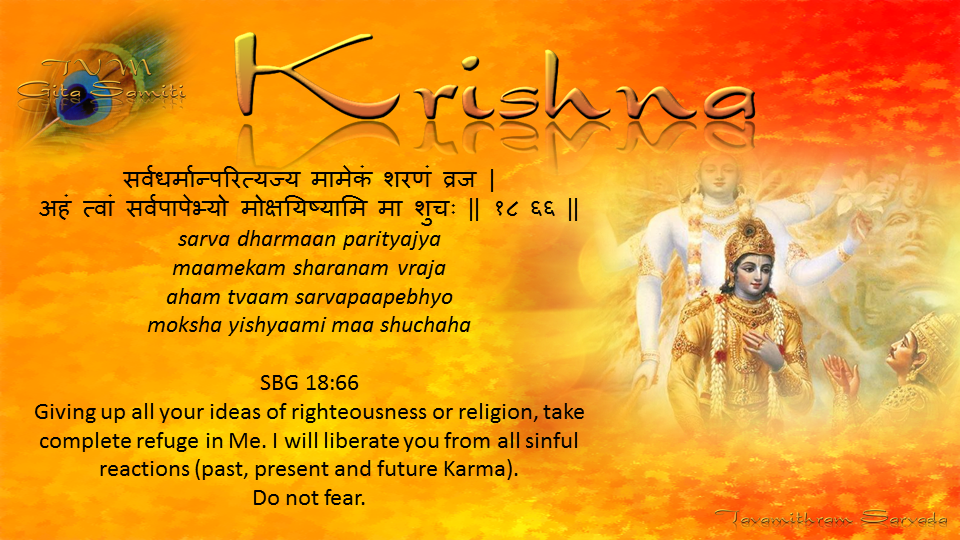
Jai Shri Krishna

Why me – मैं ही क्यों – நான் ஏன்?

Understanding Destiny through the Srimad Bhagavad Gita

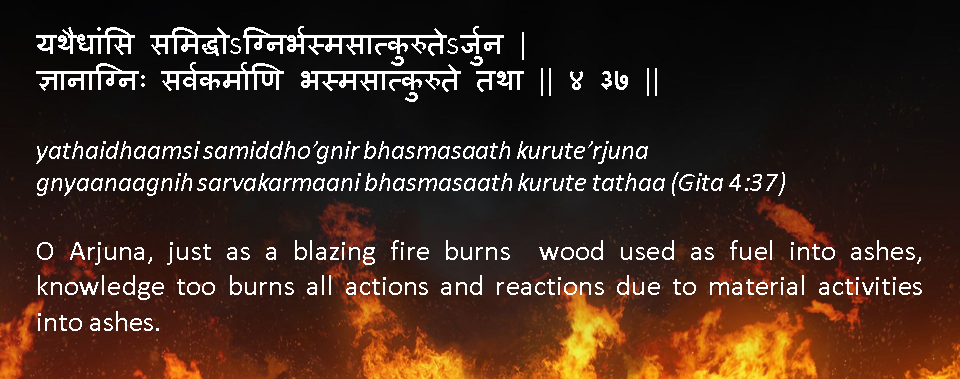
Every morning can be treated as a new Janma (birth), carrying forward the thoughts and mindset from the previous day, thus continuing life patterns. Changing one’s life for the better is not difficult if one understands the natural principle of cause and effect and works towards acquiring the knowledge of the all-pervading Self, Brahman, or Krishna. As long as one thinks of Krishna as a separate entity, they will have expectations, which naturally lead to disappointments. Krishna is everywhere, in all beings, and is existence itself. Rise above dualitym accept responsibility and make the necessary course corrections in life. The Srimad Bhagavad Gita clearly states that the path of knowledge is the highest. Check out Shloka SBG 4:37-38.

To illustrate these concepts, I created three videos in three different languages using easy-to-understand analogies. When I made the Hindi video, one of our family members, Mr. Anupam Agarwal helped me in reviewing the Hindi script. Special thanks to him.

Additionally, I offer my latest book, ‘The Ever-Relevant Gita: A Present-Day Rendering’. This book can answer almost all possible questions one might have about destiny, karma, dharma, Krishna, birth, life, and death.

Embracing the Path of Knowledge

It is an irrefutable fact that everyone possesses some degree of a personality trait called narcissism. The degree of narcissism in a person separates a normal individual from someone who needs professional help. Even a small amount of narcissism can push a person towards feelings of entitlement, selfishness, and the typical ‘Why me?’ question. One’s own answer to this question is usually based on self-pity and a sense of being a victim of others, external forces, or misfortune.

People who care to set aside their narcissistic traits, however small and insignificant, and their feelings of victimhood, can find not just an answer to the ‘Why me?’ question but a permanent solution to it.

The following presentation analyses the ‘Why me?’ question, the principle of cause and effect, and ways to carve out a clearer, better, enjoyable, and enriching destiny with the help of teachings from the Srimad Bhagavad Gita.

May peace reign in your heart, mind, and soul, and may your life be blessed with an abundance of Divine Grace.

Jai Shri Krishna

Watch the video in the language of your choice, reflect, and take action.

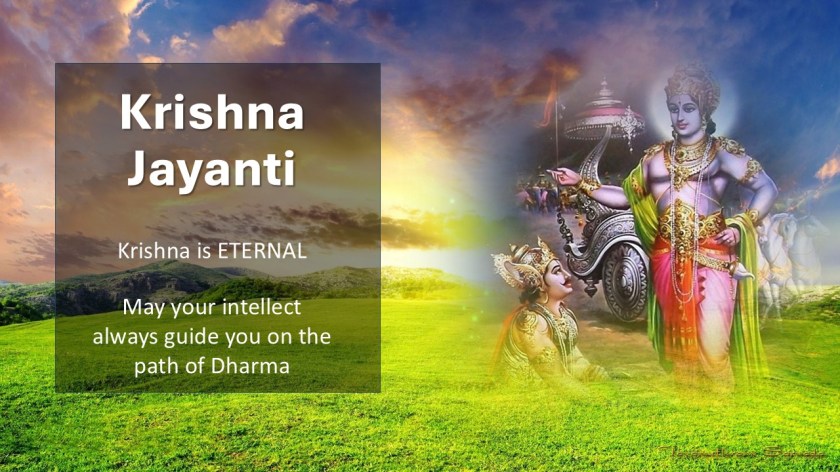
Krishna Jayanti – Janmashtami: Celebrating the Unborn and Eternal

Krishna Jayanti, or Janmashtami, marks the celebrated ‘birth’ of Bhagavan Shri Krishna, an event cherished across the globe. But how does this celebration reconcile with Krishna’s own words in the Srimad Bhagavad Gita, where he declares that He was never born, nor will He ever die?

Consider this profound Shloka:

नत्वेवाहं जातु नासं
न त्वं नेमे जनाधिपाः |
न चैव न भविष्यामः
सर्वे वयमतः परम् || २ १२ ||

na tvevaaham jaatu naasam
na tvam neme janaadhi-paaha
na chaiva na bhavishyaa-maha
sarve vayam-ataha param

SBG 2:12

“There never was a time when I did not exist, nor you, nor all these kings. We will also never cease to exist.”

In this Shloka, Krishna emphasises the eternal nature of the Atman. The physical birth and death that we observe are but mere transitions in the infinite existence of the SELF. Krishna, as the Supreme Being, transcends these limitations of time and space.

Arjuna, puzzled by this concept, continues with his questions and, in Chapter 4, asks Krishna as follows:

अर्जुन उवाच |
अपरं भवतो जन्म परं जन्म विवस्वतः |
कथमेतद्विजानीयां त्वमादौ प्रोक्तवानिति || ४ ४ ||

arjuna uvaacha
aparam bhavatho janma
param janma vivasvathaha
katham-etha-dhvijaa-niiyaam
tva-maadhau proktavaa-nithi

SBG 4:04

Arjuna said: “Your birth was after the birth of Vivasvaan. How should I understand when You say that You taught this Yoga to him?”

To this, Krishna responds, illuminating the mystery of His divine nature:

श्रीभगवानुवाच |
बहूनि मे व्यतीतानि जन्मानि तव चार्जुन |
तान्यहं वेद सर्वाणि न त्वं वेत्थ परंतप || ४ ५ ||

sri bhagavan uvaacha
bahuuni me vyatii-taani
janmaani tava-chaarjuna
taan-yaham veda sarvaaNi
na tvam vettha parantapa

SBG 4:05

Sri Krishna said: “Many births of mine as well as yours have passed. I know all of them, but you don’t, O Parantapa (Arjuna – destroyer of enemies).”

Here, Krishna acknowledges the cyclical nature of birth and rebirth, highlighting that while He is aware of all His incarnations, Arjuna remains unaware.

Krishna then reveals the ultimate truth of His existence:

अजोऽपि सन्नव्ययात्मा
भूतानामीश्वरोऽपि सन् |
प्रकृतिं स्वामधिष्ठाय
संभवाम्यात्ममायया || ४ ६ ||

ajo ‘pi san-navya-yaathma
bhuuthaanaa-miishvaro ‘pi san
prakrthim svaa-madhisht-haaya
sambhavaa-myaathma-maayayaa

SBG 4:06

“Though I am unborn and imperishable, and although I am the Bhagavan of all beings, I do incarnate by my own Maya or My Divine Energy.”

Krishna’s ‘birth’ is not conventional; it is a divine descent, an incarnation born of His own will and energy, symbolising the emergence of pure intellect after dispelling layers and layers of ignorance. Krishna Jayanti, while celebrating His appearance, also invites us to reflect on the deeper spiritual truths He embodies.

In this short video I’ve created, I delve into the essence of Krishna Janmashtami and how embracing these teachings can transform your life and lead to enduring bliss:
At the end of the short video, I have translated Shloka SBG 2:12 into six Indian languages apart from English.

It is crucial to remember that taking scriptural texts literally can lead one astray from the true path of Self-Realisation, potentially fostering rigid belief systems or cult-like thinking. The Srimad Bhagavad Gita offers profound wisdom—absorb its philosophy, and use it to cultivate a life of fulfilment and spiritual growth.

A ‘disclaimer’ from Srimad Bhagavatam (not Srimad Bhagavad Gita)

Canto 12, Chapter 3, Shloka 14
Shloka 12:3:14 Srimad Bhagavatam

कथा इमास्ते कथिता महीयसां
विताय लोकेषु यशः परेयुषाम् ।
विज्ञानवैराग्यविवक्षया विभो
वचोविभूतीर्न तु पारमार्थ्यम् ॥ १२.३.१४॥

kathaa imaaste kathita mahiiyasaam
vitaaya lokeshu yashah pareyushaam
vignyaana-vairaagya-vivakshayaa vibho
vachovibhootiirna tu paaramaartham

Shukadeva Gosvami spoke: O mighty King Parikshith, I have shared with you the accounts of these illustrious kings, whose fame and great deeds echoed worldwide before their departure. However, my fundamental intention has always been to impart the wisdom of the transcendental and the path of renunciation. Although the stories of kings embellish these narratives with grandeur and opulence, they, in and of themselves, do not represent the ultimate essence of knowledge.

Feel free to explore the resources I offer to sincere seekers on this journey.
Srimad Bhagavad Gita Resources

Jai Shri Krishna

Amritabindu Upanishad on Substack

The MIND – Man’s Greatest Tool

*SUBSCRIBE TO MY SUBSTACK – IT’S FREE*

Learning to use the MIND as a Churning Stick to realise your TRUE DIVINE SELF!

The Amritabindu Upanishad, part of the Krishna Yajur Veda, is a concise and powerful text for true seekers of spiritual wisdom. CONTINUE ON SUBSTACK


Treat Insults and Setbacks as ‘ROCKET FUEL’

Shatter the Cycle: BURN and RESET your Karma!


The Ever-Relevant Gita: A Present-Day Rendering’

FREE PROMO CODES: LIMITED OFFER

The Greatest Gift to Yourself for 2024 and the Future

Nonduality #Vedanta #SelfDiscovery #Consciousness #Spirituality #TruthSeeker”

Anger – your greatest ally?

Harness Your Rage and Redefine Your Reality

TheTriple ‘Z’ 

What if I told you that anger isn’t something to be feared or suppressed, but rather a powerful force that, when harnessed wisely, can drive incredible change in your life?

Well, some people are happy with their lives, not so happy, sad, or even sick of their lives. If everything is going well, and you are happy, just continue doing what you are doing and living the way you are. I don’t propagate the ideas of ‘good and bad’ or ‘right and wrong,’ which I consider dogmatic. Common sense alone tells us that something is good and right if it makes us happy and in no way harms our health, surroundings, nature, or others.

However, many are unhappy, dissatisfied, depressed, weak, or scared and would like to change their lives for the better. For those who genuinely want to make changes, however big or small, here are some steps you might want to follow:

  1. Identifying the Problems

Write down what you don’t like about your current situation, whether it’s your appearance, living circumstances, work, mindset, or any other area of your life. Be as specific as possible. I have given some easy and practical hacks in my video titled ‘Shatter the Cycle: BURN and RESET your Karma!’

  1. Setting Clear Goals

Next, think about what you want to achieve. What does your ideal self look like? How do you want to feel or think differently? Write down these goals so that you have a clear target to aim for. Be absolutely specific and describe your ideal self in detail.

  1. Execution

Once you’ve identified your problems and set your goals, begin outlining the steps or strategies needed to achieve them. This might involve altering your habits, seeking guidance, or acquiring new skills. Concentrate on taking small, manageable actions that will steadily progress you towards your objectives.

By breaking it down into these steps, you’ll have a clearer path to follow, making it easier to track your progress and stay motivated along the way.

Sitting alone, fretting, fuming, or complaining will only lead to self-pity, and that will ensure that your life stays exactly the way it is now, if not worse.

A Personal Story of Transformation

Thirty years ago, during a 48-hour self-imposed retreat, I conceived and meticulously crafted ‘Project KR’, where I defined and redefined exactly how I wanted my life to unfold.

Almost everything I described in Project KR has been happening so far. This includes the realisation of far-fetched aims, such as meeting with Queen Elizabeth II, and many other things that would have seemed impossible at that time.

I must emphasise that the goals and strategies I outlined in my playbook, which I boldly committed to nearly 30 years ago – defying all conventional thought processes and career planning – have not only materialised but have done so with astonishing precision, even in the finer details. Keep in mind, Rhonda Byrne’s ‘The Secret’ hadn’t even been written back then!

Likely Source of My Determination

My determination likely stemmed from the intense anger I harboured due to the wrongs inflicted upon me by others, which I now recognise as a result of my own naïveté or even foolishness. It’s often said that necessity is the mother of invention, and my ‘necessity,’ or rather my overwhelming drive to transform my life, was so powerful that I was able to create possibilities out of seemingly nothing.

The Triple ‘Z’: Zeal, Zest, and Zing

Around the time I embarked on my 48-hour self-reflection, I was teaching French at several management colleges. I closely observed the mindsets of my students, aged 18 to 20. Among them, only a few exhibited a profound, intense drive to set ambitious goals, achieve them, and pursue a more fulfilling life. This further reinforced my belief that not everyone possesses a high level of drive. While this isn’t inherently wrong, it can result in either a lacklustre future or a life devoid of Zeal, Zest, and Zing – qualities I was highly driven to attain and live my life to the fullest, which I had almost lost in some major accidents earlier.

In the biographies of many great individuals I’ve read, one common thread stands out: they never blamed others for their circumstances. Instead, they took full responsibility, charted their own paths, and forged ahead with determination.

Final Thoughts:

Some people write to me saying that they want to improve their lives, looks, happiness, relationships, etc., but are unable to achieve them.

My question to them is, “Who is stopping you?”

Treat Insults and Setbacks as ‘ROCKET FUEL’

Shatter the Cycle: BURN and RESET your Karma!


The Ever-Relevant Gita: A Present-Day Rendering’

Nonduality #Vedanta #SelfDiscovery #Consciousness #Spirituality #TruthSeeker”

Shatter the Cycle: BURN and RESET your Karma!

Break Free from Fate and Change Your Life Instantly

Karma Hacks

The concept of karma, often misunderstood or shrouded in superstition, is essentially about the patterns and outcomes in our lives that are heavily influenced by our own attitudes, actions, and reactions. Here’s a simplified breakdown of how Karma functions and impacts our lives and even those of our descendants:


The Ever-Relevant Gita: A Present-Day Rendering’

FREE PROMO CODES: LIMITED OFFER

The Greatest Gift to Yourself for 2024 and the Future

Nonduality #Vedanta #SelfDiscovery #Consciousness #Spirituality #TruthSeeker”

Does Choosing Superstition Over Spiritual Evolution Cause Man’s Suffering?

Who or what is it that causes suffering?

Shattering Illusions: The Rational and Logical Path to Spiritual Enlightenment

In this enlightening video, we delve into the profound teachings of Krishna as presented in Shloka 13.4 or 13.5 of the Srimad Bhagavad Gita. Krishna emphasises that the truth is articulated through Vedic hymns and the Brahmasutras with reason and logic, leaving no room for blind belief or unquestioned acceptance.

Explore why genuine understanding and research are vital for spiritual growth. Watch this video titled “No Blind Belief but Reason and Logic” (Video 93 of the Hundred Logos Calls series) to gain insights into the importance of questioning and seeking knowledge.

Religious divisions often stem from differing beliefs, yet the Srimad Bhagavad Gita transcends such systems by not enforcing or even recommending blind belief. Krishna encourages reflective thinking and personal choice, urging us to seek deeper wisdom and live with a sense of duty, free from attachment.

Explore how spiritual evolution is about acquiring true knowledge, not performing meaningless rituals. Learn to apply the teachings of Vedanta to your life for genuine transformation.

Embrace the wisdom of the Srimad Bhagavad Gita and start your journey towards spiritual evolution.

Stay blessed.

Jai Shri Krishna.