Blind Belief: The Lazy Man’s presumed ‘Shortcut to Spirituality’

Vedanta ‘MIND LAUNDRY’

The other day, I was speaking with an old friend when the conversation turned to the tragic stampede at the Kumbh Mela in February 2025 and the official reports highlighting severe faecal contamination in the very waters where thousands had taken ‘holy’ dips. My friend took offence at my remarks and became almost aggressive and confrontational. He insisted that people have the right to their beliefs and that I had no business questioning them.

I want to highlight two important points here:

  1. My friend, like many others, fails to recognise that while he demands respect for people’s beliefs, there are also those who do not subscribe to such beliefs—and they, too, have a right to their views.
  2. My argument was never about belief itself, but about the reckless endangerment of thousands of lives and the pollution of a river they themselves deem ‘holy’ with faecal contamination!

The issue with my friend remains unresolved! So, my old friend is willing to risk our friendship over this thing called belief! Christopher Hitchens rightly said that religion poisons everything.

The most crucial point, however, is that in Advaita Vedanta, the highest attainment on the Vedic path known as Sanatana Dharma, there is no concept of belief. It is a path of knowledge, direct experience, and realisation, not blind faith.

Yet, many continue to follow irrational beliefs and rituals without questioning their origins or validity. These inherited practices are often carried out simply because they are part of tradition, with little thought given to their purpose. How often do people stop to ask: “Why am I doing this?” “Does it make sense?”

To encourage critical thinking and deeper reflection, I am reposting two videos that examine the absurdity of beliefs and rituals. These videos challenge the notion that faith alone is enough, exposing how unquestioned traditions shape societies and hinder individuals from seeking true knowledge.

Vedanta emphasises reason and self-inquiry. Instead of surrendering to superstition, one must strive to understand reality as it is, not as it is imagined or dictated by blind faith. True wisdom lies in breaking free from irrational dogmas and seeing the world with clarity.

Unfortunately, as laziness is easier and more comfortable than using our brains and thinking critically, most people prefer the easier route of blindly believing things rather than questioning, studying, and researching.

I invite you to watch these videos with an open mind and reflect on the impact of unquestioned beliefs in your own life.

Newspaper article regarding the pollution of the river Ganga:
“High levels of faecal coliform (microbes from human and animal excreta) were found in river water in which people took holy dip during Maha Kumbh in Prayagraj of Uttar Pradesh, according to a report submitted to the National Green Tribunal by the Central Pollution Control Board.”
https://newsth.live/8g6mIp

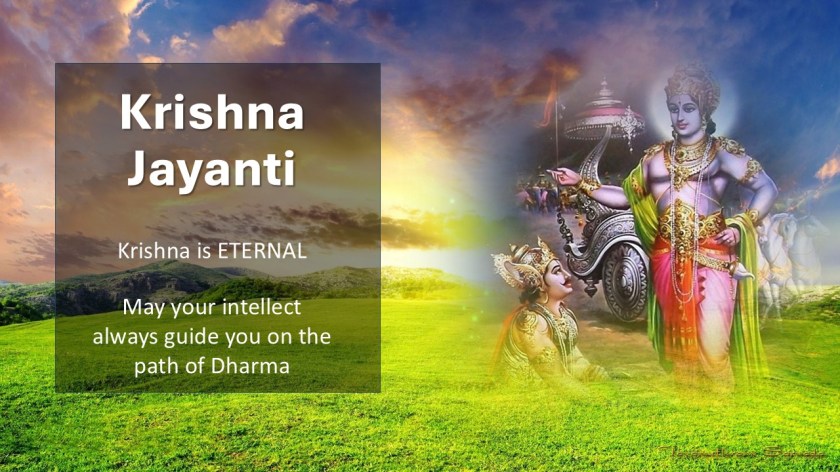
Krishna Jayanti – Janmashtami: Celebrating the Unborn and Eternal

Krishna Jayanti, or Janmashtami, marks the celebrated ‘birth’ of Bhagavan Shri Krishna, an event cherished across the globe. But how does this celebration reconcile with Krishna’s own words in the Srimad Bhagavad Gita, where he declares that He was never born, nor will He ever die?

Consider this profound Shloka:

नत्वेवाहं जातु नासं
न त्वं नेमे जनाधिपाः |
न चैव न भविष्यामः
सर्वे वयमतः परम् || २ १२ ||

na tvevaaham jaatu naasam
na tvam neme janaadhi-paaha
na chaiva na bhavishyaa-maha
sarve vayam-ataha param

SBG 2:12

“There never was a time when I did not exist, nor you, nor all these kings. We will also never cease to exist.”

In this Shloka, Krishna emphasises the eternal nature of the Atman. The physical birth and death that we observe are but mere transitions in the infinite existence of the SELF. Krishna, as the Supreme Being, transcends these limitations of time and space.

Arjuna, puzzled by this concept, continues with his questions and, in Chapter 4, asks Krishna as follows:

अर्जुन उवाच |
अपरं भवतो जन्म परं जन्म विवस्वतः |
कथमेतद्विजानीयां त्वमादौ प्रोक्तवानिति || ४ ४ ||

arjuna uvaacha
aparam bhavatho janma
param janma vivasvathaha
katham-etha-dhvijaa-niiyaam
tva-maadhau proktavaa-nithi

SBG 4:04

Arjuna said: “Your birth was after the birth of Vivasvaan. How should I understand when You say that You taught this Yoga to him?”

To this, Krishna responds, illuminating the mystery of His divine nature:

श्रीभगवानुवाच |
बहूनि मे व्यतीतानि जन्मानि तव चार्जुन |
तान्यहं वेद सर्वाणि न त्वं वेत्थ परंतप || ४ ५ ||

sri bhagavan uvaacha
bahuuni me vyatii-taani
janmaani tava-chaarjuna
taan-yaham veda sarvaaNi
na tvam vettha parantapa

SBG 4:05

Sri Krishna said: “Many births of mine as well as yours have passed. I know all of them, but you don’t, O Parantapa (Arjuna – destroyer of enemies).”

Here, Krishna acknowledges the cyclical nature of birth and rebirth, highlighting that while He is aware of all His incarnations, Arjuna remains unaware.

Krishna then reveals the ultimate truth of His existence:

अजोऽपि सन्नव्ययात्मा
भूतानामीश्वरोऽपि सन् |
प्रकृतिं स्वामधिष्ठाय
संभवाम्यात्ममायया || ४ ६ ||

ajo ‘pi san-navya-yaathma
bhuuthaanaa-miishvaro ‘pi san
prakrthim svaa-madhisht-haaya
sambhavaa-myaathma-maayayaa

SBG 4:06

“Though I am unborn and imperishable, and although I am the Bhagavan of all beings, I do incarnate by my own Maya or My Divine Energy.”

Krishna’s ‘birth’ is not conventional; it is a divine descent, an incarnation born of His own will and energy, symbolising the emergence of pure intellect after dispelling layers and layers of ignorance. Krishna Jayanti, while celebrating His appearance, also invites us to reflect on the deeper spiritual truths He embodies.

In this short video I’ve created, I delve into the essence of Krishna Janmashtami and how embracing these teachings can transform your life and lead to enduring bliss:
At the end of the short video, I have translated Shloka SBG 2:12 into six Indian languages apart from English.

It is crucial to remember that taking scriptural texts literally can lead one astray from the true path of Self-Realisation, potentially fostering rigid belief systems or cult-like thinking. The Srimad Bhagavad Gita offers profound wisdom—absorb its philosophy, and use it to cultivate a life of fulfilment and spiritual growth.

A ‘disclaimer’ from Srimad Bhagavatam (not Srimad Bhagavad Gita)

Canto 12, Chapter 3, Shloka 14
Shloka 12:3:14 Srimad Bhagavatam

कथा इमास्ते कथिता महीयसां
विताय लोकेषु यशः परेयुषाम् ।
विज्ञानवैराग्यविवक्षया विभो
वचोविभूतीर्न तु पारमार्थ्यम् ॥ १२.३.१४॥

kathaa imaaste kathita mahiiyasaam
vitaaya lokeshu yashah pareyushaam
vignyaana-vairaagya-vivakshayaa vibho
vachovibhootiirna tu paaramaartham

Shukadeva Gosvami spoke: O mighty King Parikshith, I have shared with you the accounts of these illustrious kings, whose fame and great deeds echoed worldwide before their departure. However, my fundamental intention has always been to impart the wisdom of the transcendental and the path of renunciation. Although the stories of kings embellish these narratives with grandeur and opulence, they, in and of themselves, do not represent the ultimate essence of knowledge.

Feel free to explore the resources I offer to sincere seekers on this journey.
Srimad Bhagavad Gita Resources

Jai Shri Krishna

Free Downloads – Quick Reference Shlokas from the Bhagavad Gita

Shlokas for different situations

I am happy to share with you, six insightful and transformative downloadable PDFs, each addressing a crucial aspect of personal growth and spiritual development. These resources are designed to help you navigate life’s challenges with wisdom and grace:

  1. Krishna: The Divine Father and Mother – Explore Krishna’s nurturing and protective aspects, embodying both paternal and maternal love.
  2. KILL Fear and Anger – Learn practical techniques to overcome fear and anger, transforming these negative emotions into sources of strength.
  3. Remove Demotivation – Discover effective strategies to reignite your passion and drive, helping you stay motivated in all aspects of life.
  4. Handling Temptation – Gain insights into resisting temptations and making choices that align with your highest values and goals.
  5. Fighting Laziness – Equip yourself with tools and tips to combat laziness and cultivate a proactive and energetic mindset.
  6. How to Become Dear to Krishna? – Uncover the steps and practices to deepen your relationship with Krishna, fostering a sense of closeness and devotion.

Download these PDFs now to embark on a journey of self-improvement and spiritual enlightenment.