First Achieve and Then Let Go!

Sour Grapes and Self-Pity – Escaping Life’s Responsibilities

JOIN MY SUBSTACK. IT IS FREE.

In my journey of counselling and guiding individuals over the last decade through my Tavamithram blog, I have encountered numerous men and women who, after interactions with me, emerged more courageous, fearless, and self-confident. There have been a couple of young women who imbibed the knowledge I imparted so well that they did things requiring extensive courage—actions that would make a regular man think not just twice but three times. However, there are exceptions. Despite receiving extensive personal counselling, some individuals persist in wallowing in self-pity, which is something I always try to nip in the bud. This phenomenon, especially among young men, often manifests as existential rhetoric and disillusionment with worldly pursuits. This certainly does not sound even fundamentally manly to me. CONTINUE READING ON SUBSTACK.

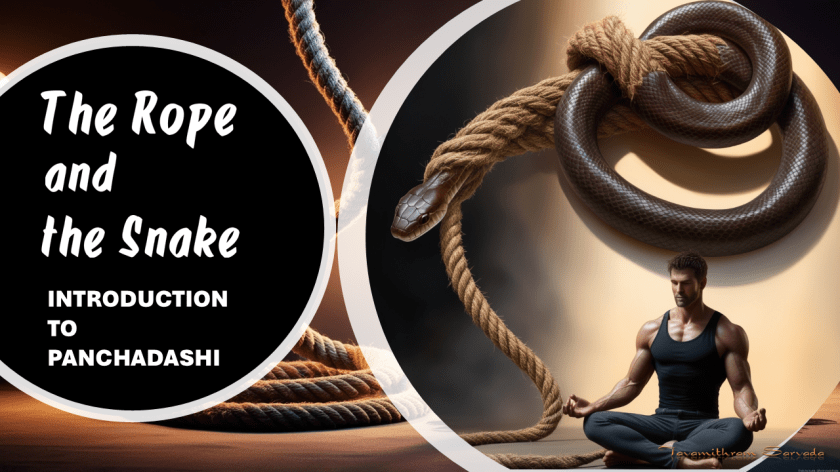
Is it a rope? Is it a snake?

Subscribing to Tavamithram’s Vedanta Wisdom Chronicles on Substack is FREE.

The Illusion of Reality

What if everything you perceive as reality is just an illusion shaped by your mind? In the ancient teachings of Advaita Vedanta, the analogy of the rope and snake is a powerful tool used to illustrate this profound truth. Imagine seeing a rope in dim light and mistaking it for a snake. Your fear and reactions are real, but the snake is not. The rope never ceases to be a rope, just as the ultimate reality never changes, despite our misconceptions. READ MORE

The Ever-Relevant Gita: A Present-Day Rendering

Embracing the Blissful Journey: The Ever-Relevant Gita – A Present-Day Rendering by Tavamithram Sarvada

Now available in various online store fronts, such as: Amazon InternationalINDEUKAUNLCAFRESPLITBRMX

*The paperback version is not available on Amazon India.

Part 1: Preface and Introduction + Chapters 1-6

The preface and introduction lay the foundation for your exploration. Don't be tempted to skip these initial chapters; they are the compass guiding you through the intricate terrain of the Gita's philosophy. Understand the core teachings, and you'll find yourself motivated to delve deeper, perhaps into the rich Bhashyams or commentaries of Shri Adi Shankara and other great teachers.

Part 2: Chapters 7-12

As you progress through these chapters, absorb the profound insights that unfold. The clarity of understanding achieved in the earlier sections becomes the stepping stone for an even more profound comprehension of Krishna's teachings.

Part 3: Chapters 13-18 + Outro

The culmination of your journey awaits in the final chapters. The outro ties the threads together, offering a comprehensive view of the Gita's timeless wisdom. This concluding section is not to be missed; it holds the key to empowerment and self-confidence.

Namaste Seekers,

Embark on a profound journey into the timeless wisdom of the Srimad Bhagavad Gita with ‘The Ever-Relevant Gita: A Present-day Rendering by Tavamithram Sarvada.’ Below, I’ll elucidate the profound significance of this work and its potential to illuminate the path to self-realisation.

In a fast-paced world fraught with complexities, the solace found in ancient wisdom often remains unexplored. 'The Ever-Relevant Gita – A Present-day Rendering by Tavamithram Sarvada’ endeavours to bridge this gap, bringing forth the profound teachings of the Srimad Bhagavad Gita to everyone, irrespective of age, background, or familiarity with ancient scriptures.

Dispelling Myths and Misconceptions

The main challenge involves dispelling misconceptions that surround the Srimad Bhagavad Gita—misconceptions about its perceived depth, religious connotations, and its relevance limited to the elderly or devout individuals. In this modern interpretation, we untangle myths and present timeless wisdom in a manner that aligns with the sensibilities of the contemporary mind.

A Unique Approach: Audio, Video, and E-book Formats

Understanding the daunting nature of lengthy translations, a unique approach has been taken by creating easily digestible audio recordings of each chapter. These recordings allow listeners to absorb the essence of the Gita at their own pace, breaking down barriers that often deter individuals from exploring this ageless scripture.

Beyond presentation, this initiative is a call to embark on a blissful journey of self-discovery. In my life, which has been shaped by numerous challenges and life-altering situations, the importance of a well-trained instinct and a balanced mindset has become crystal clear to me. A clear understanding of the fundamental principles of the teachings in the Srimad Bhagavad Gita certainly plays a pivotal role in shaping attitudes, cultivating fearlessness, and fostering rational thinking during critical moments.

Practical Insights for Daily Application

The true power of the Srimad Bhagavad Gita lies in its application in everyday life. The focus is not merely on delivering a rendition or chanting Shlokas, but on providing practical insights that enable individuals to apply these teachings in their daily lives, leading to a more fulfilling and blissful existence.

In essence, the mission is to make the teachings of the Srimad Bhagavad Gita easily accessible, relatable, and applicable to everyone, fostering a deeper understanding of life's intricacies. Join me on this enlightening journey, and let's journey through the supreme scripture together.

Those who would like a promo code for a free download of the Audiobook version of the ‘The Ever-Relevant Gita – A Present-Day Rendering by Tavamithram Sarvada’ may email their request to tavamithramoffice@gmail.com

Jai Shri Krishna

What Lies Beyond ‘You’? The Ultimate Truth in Vedanta

Who Am I? Uncovering the Timeless Mystery of Self

Subscribe to my FREE SUBSTACK for insights on self-discovery, consciousness, and Vedanta. Join now and connect with fellow seekers on a deeper journey!

Click on the image below to go directly to my Substack, read the full post, and watch a video presentation.

Beyond the Herd: Unmasking the Myths of Group Belonging

Why Tavamithram is Never Aligned to Any Particular Group, Ashram, Agama, Paddhathi, Sects, Subsects, Guru, Swamy, Dress Code, Traditions, Religion etc.

Please read the post before listening to the podcast discussing the post

Throughout my life, I have observed a significant connection between beliefs, the desire to belong to groups, and the thirst for knowledge and self-confidence. My personal attitude has always been to stand alone. It’s crucial to clarify that my reluctance to belong to groups should not be mistaken for hubris. I simply prefer solitude, as my strong ideas often diverge from the majority, who are frequently swept away by traditions—something Krishna himself admonishes even before the conclusion of Chapter 2 in the Srimad Bhagavad Gita.

To illustrate the extent to which I go to avoid belonging to a group, let me share anLeonardo_Phoenix_a_dramatic_highcontrast_cinematic_photograph_3 example from my past. Many years ago, I was a motorcycle stuntman in Indian films, doubling for lead stars and performing death-defying stunts. In the film industry, numerous unions exist for various trades, including actors, directors, make-up artists, dancers, photographers, and others. Naturally, there was also a union for stuntmen, and I was expected to join. However, I refused to be tied down by group membership, choosing instead to remain independent. Consequently, I willingly accepted a penalty of twenty-five per cent of my earnings for not being a member. Despite this, I chose to pay the penalty each time I earned money performing stunts.

I’ve observed that individuals who are rather low on self-confidence or a sense of personal substance usually seek strength in numbers by joining groups. Being part of a group provides reassurance and a sense of belonging. Within these groups, members usually share common beliefs or philosophies, forming the basis of their unity. However, I think that belonging to a group compels individuals to adopt the group’s ideology, limiting their ability to think and act independently. I prefer the freedom to think for myself and analyse matters in my own way. Groups typically consist of like-minded individuals, which signifies a lack of diverse thought. This, in turn, stifles intellectual development and curtails opportunities for new ideas to emerge.

As an ardent learner, I find great fascination in encountering people whose ideas challenge my own, compelling me to think outside the box. This is the essence of personal evolution.

It’s essential to clarify that I do not hold beliefs in the conventional sense; instead, I possess perspectives. I have unwavering trust in my intelligence, intellect, and experiences, considering myself a keen learner in every situation I encounter.

While belonging to a group can provide a sense of security, it can also hinder personal growth and self-discovery. True self-confidence emerges from understanding and standing firm in one’s perspectives, even when they diverge from the prevailing norms of a group. By cultivating self-awareness and introspection, individuals can develop a stronger, more authentic sense of self. I am not suggesting anything against groups; rather, I strongly advocate for retaining one’s freedom to question, think, and express oneself.

Among the most detrimental effects groups can have on intellectual development is the deification of central figures, often referred to as Gurus or Babas. The story of the 24 Gurus of Sage Dattatreya aims to dismantle the false notion of being tethered to a single guru, suggesting that anything and everything that helps dispel ignorance can be considered a guru. To quote Shri Ramana Maharshi: “Your own Self-Realisation is the greatest service you can render the world.”

In Shloka SBG 2:45, Krishna instructs Arjuna: “Vedic literature deals with subjects that fall under the three Gunas. O Arjuna, you should rise above the three, be free from dualities, always remain in Sattva or goodness, and be established in the Self.”

A true teacher should guide individuals to clear their ignorance and advance towards the ultimate goal of Atma-gnyaana, or knowledge of the Self. However, how many truly do this? Many, adorned in flowing robes and sporting long beards, strut about like proud peacocks, claiming to possess all knowledge.

It is indeed disheartening to witness children and youth from families not converted to foreign religions being lured into the illusory world of meaningless beliefs, rites, and rituals.

I conclude this post with Shlokas SBG 4:37 and 38

37: “Just as a blazing fire burns firewood into ashes, O Arjuna, knowledge burns all actions and reactions into ashes.” 

38: “There is certainly nothing more purifying than knowledge. He who is perfect in Yoga finds it in the Self in due course of time.”

May you stay abundantly blessed.


Jai Shri Krishna

Embracing Vitality: The Real Measure of Age

Age Is Just a Number!

DIET – EXERCISE – ATTITUDE

In our culture, age often comes with preconceived notions and limitations. However, the concept that age is merely a number, challenges these views, highlighting that vitality and well-being are not solely defined by how many years we’ve lived.

Click on the image to watch the YouTube #shorts video

Think of your body as a vehicle. Just as a car requires regular maintenance to function optimally, our bodies need consistent care to stay in peak condition. This involves more than just physical fitness—it encompasses a balanced diet, mental wellness, and a positive outlook on life.

Prioritising health and fitness ensures that our ‘vehicle’ runs smoothly and efficiently, allowing us to live fully and energetically. It’s not about our chronological age but about how we maintain our health and approach life’s challenges.

Adopting this perspective means recognising that it’s never too late to improve your health. Whether you’re in your 30s, 50s, or beyond, making positive lifestyle changes can lead to a more vibrant and fulfilling life.

I got my son interested in fitness when he was in his early teens, and now that he’s turned 20, it’s clear that he’s been bitten by the fitness bug. It’s truly wonderful to see a young person, whether male or female, building their physique early in life.

For Indians, this can be especially important, as we often have a disadvantage compared to some other races when it comes to building muscle easily. And when I say muscle, I’m not talking about the kind of bulk a bodybuilder might have—I mean the muscle strength that everyone needs, regardless of age.

The best approach is to start early in life, but if you haven’t, make it a top priority and start today. Consult a fitness coach or find guidance online, and follow through with dedication.

Ultimately, our well-being is shaped by our choices and attitudes, not just the passage of time. By focusing on self-care and embracing a proactive approach to health, we can enjoy a dynamic and enriching life, no matter our age.

-Go VEGAN
-Exercise Regularly
-Adopt a Mindful Lifestyle

Erase, Eject, Evolve!

Instant Liberation from Toxic Beliefs and Fears!

Simply study these two posts and notice how you feel at the end of them. Please follow the order in which the two posts are given for the best experience. (The posts will open in new tabs.)

Pathetic people and their pathetic lives

I can understand the lives of people, whose forefathers had converted to foreign religions either due to fear, greed, or whatever reason. But what about those whose forefathers faced it all, stood tall, protected the Vedic Sanatana Dharma, and passed it on so that the present generation could benefit from the highest knowledge of Vedanta?

How pathetic can such a huge number of people be, to not put in at least minimal efforts to study the Srimad Bhagavad Gita, which is called ….READ ON

A Mind-Bending Voyage

This experience confirmed a profound truth: what we call reality is shaped entirely by our perception. When I was a child, my world seemed vast. As an adult, returning to that same world, it appeared small and contained. The reality I perceived at 11 was not an absolute truth—it was a reflection of my limited perception at that time. READ ON

From Frustration to Fulfilment

The Essential Guide to Overcoming Life’s Unfavourable Situations

*SUBSCRIBE TO MY SUBSTACK – IT’S FREE*

Breaking Free from the Cycle

Many of us find ourselves stuck in a cycle of complaining, brooding, and feeling generally dissatisfied with our circumstances. Whether it’s our job, relationships, or personal achievements, the tendency to ruminate on what’s wrong can be overwhelming. And yet, despite the temporary relief we might find in venting to a friend or relative, we often wake up the next day only to repeat the same routine, with nothing having changed. The question then arises: how can we expect change when we continue to do the same thing?

The Unproductive Cycle of Complaints

Complaining and brooding are natural human responses to dissatisfaction. It’s almost instinctual to express our frustrations when things don’t go as planned. However, these actions rarely lead to meaningful change. Instead, they often serve as a temporary release, a way to momentarily ease the pressure without addressing the underlying issues. As a result, we remain stuck in the same unfavourable situation, repeating the cycle day after day.

To break free from this cycle, it’s crucial to take a different approach—one rooted in clarity and action. The key lies in defining your problems and goals with precision. Let me take you back to my childhood to illustrate this point.

As a young boy, I was naturally curious and had a mechanical aptitude that drove me to understand how things worked. I was always eager to get to the bottom of things, refusing to accept anything at face value without clear evidence. When I was reprimanded by elders or teachers for my behaviour, I didn’t just accept the scolding. Instead, I wanted to know what I had done wrong and, more importantly, what I should do right. However, my requests for guidance were often met with silence or a cold stare, leaving me with unanswered questions.

This experience taught me a vital lesson: in any situation, if something is wrong, it’s essential to ask, “What is right?” This principle can be applied to any area of life:

  1. If you’re dissatisfied with your job, ask: What is my ideal job?
  2. If you don’t like your life, ask yourself: What would my ideal life look like?
  3. If you’re unhappy in a relationship, ask: What is the ideal relationship I want?

The Three-Step Approach to Change

Once you’ve asked these questions, the next step is to define your situation clearly. Here’s a practical approach:

  1. Identify What You Don’t Like and Why: Be specific about what bothers you. Is it the long hours at work, the lack of appreciation, or perhaps a feeling of being stuck? Understand the root cause of your dissatisfaction.

  2. Create a Clear Vision of What You Want: Visualise your ideal situation in detail. What does your perfect job look like? What qualities define your ideal relationship? Be as specific as possible, down to the finest details.

  3. Develop a Plan to Achieve Your Vision: Identify the steps you need to take to move from your current situation to your ideal one. This might involve learning new skills, making lifestyle changes, or even having difficult conversations. The key is to take actionable steps that lead you closer to your goal.

The Danger of Temporary Fixes

Many people, when faced with an unfavourable situation, seek quick fixes to ease their minds temporarily. Whether it’s pouring out your woes to a friend, closing your eyes and sitting under a tree or in a religious place, or even turning to substances, these methods offer only momentary relief. They don’t address the core issues and often lead to more frustration when the problem inevitably resurfaces.

Please always remember that if someone truly wants something, they will find a way to get it. Consider alcohol and substance addicts or those addicted to gambling—they always manage to obtain what they crave. If you feel you’ve been working hard with no improvement in your life, instead of adopting a victim or ‘poor me’ attitude, try to view it from another perspective. Perhaps your efforts are insufficient, misdirected, or lack proper direction.

Summing up and Learning to Take Control of Your Life

If you’re unhappy with your current situation, don’t waste time complaining or seeking temporary distractions. Instead, follow the steps I’ve outlined:

  1. Define your issue clearly.
  2. Visualise your ideal situation.
  3. Take actionable steps to achieve your vision.

By doing so, you’ll find that you have the power to transform your life into something truly fulfilling. These steps may seem simple, but they are profoundly effective—I speak from experience.

Never forget that many people don’t know exactly what they want. Complaining and feeling depressed require less effort than reflecting and strategising, which is why slipping into self-pity is so easy. For anything good and positive to materialise, there must first be a clear image in the mind. So, the next time you feel the urge to complain or brood, make sure you know exactly what you want.

Real change begins with a clear definition of your goals and a commitment to taking action.

A Mind-Bending Voyage

Experience the Vastness and Awesomeness of Existence

Reality, Perception, and the Awakening of Consciousness

*SUBSCRIBE TO MY SUBSTACK – IT’S FREE*

*Please listen to the audio or read the post before watching the video.

After a decade away, I found myself standing once more in front of the house where I had lived until I was 11. This was the place where my sister and I used to walk to school, hand in hand, through green fields, joyfully crossing a small brook along the way. But as I stood there, I was struck by how different everything seemed. The street that once seemed so long and wide now appeared short and narrow. The house, which I remembered as spacious, looked small. The distance to my school, which had once felt like a great journey, now seemed trivial.

What had happened? When I left Poona, I was 11 years old. Now, I was 21. I had grown taller, and my perspective had shifted. The distances and proportions I held in my mind were relative to my height and understanding as a child.

This experience confirmed a profound truth: what we call reality is shaped entirely by our perception. When I was a child, my world seemed vast. As an adult, returning to that same world, it appeared small and contained. The reality I perceived at 11 was not an absolute truth—it was a reflection of my limited perception at that time.

This realisation extends far beyond childhood memories. It speaks to the very nature of our existence and the limitations we impose upon ourselves. Those who are deluded into believing they are merely their bodies, confined by irrational religious beliefs and paralysed by the fear of defying some ‘heavenly figure’, are trapped in a narrow reality. Their consciousness is limited, their minds blocked by layers of fear, dogma, and superstition.

But imagine if they could step out of these mental prisons—if they could free themselves from the beliefs that restrict their consciousness and their ability to think freely. They would rise above these illusions and delusions, and experience the ultimate truth of their existence: the realisation of their true SELF as subjective awareness, which is formless and, once not mentally limited to the body, is all-pervading.

This is the essence of the awakening journey—transcending the childish beliefs, religions, cults, and sects that confine us, and attaining the highest state of understanding. It is a journey from the narrow confines of perception to the boundless expanses of consciousness.

Take this fascinating virtual flight through space to the end of the observable universe and back. As you do, realise the vastness and awesomeness of existence. Let it inspire you to rise above the illusions that bind you and to reach for that highest state of awareness where the ultimate truth resides, far beyond the constructs of human beliefs.

Amritabindu Upanishad on Substack

The MIND – Man’s Greatest Tool

*SUBSCRIBE TO MY SUBSTACK – IT’S FREE*

Learning to use the MIND as a Churning Stick to realise your TRUE DIVINE SELF!

The Amritabindu Upanishad, part of the Krishna Yajur Veda, is a concise and powerful text for true seekers of spiritual wisdom. CONTINUE ON SUBSTACK


Treat Insults and Setbacks as ‘ROCKET FUEL’

Shatter the Cycle: BURN and RESET your Karma!


The Ever-Relevant Gita: A Present-Day Rendering’

FREE PROMO CODES: LIMITED OFFER

The Greatest Gift to Yourself for 2024 and the Future

Nonduality #Vedanta #SelfDiscovery #Consciousness #Spirituality #TruthSeeker”