The Shy Yellow Rose

“Rose is a rose is a rose is a rose.”

Click HERE to go to my Substack. Join it. It’s FREE!

My daily routine in our garden, filled with various vibrant flowers, involves a heartfelt ritual of inspecting the plants, seeking out new buds, and admiring the blossoms. I often pause to touch…. CONTINUE READING ON SUBSTACK 

02 Overcoming Fear: Stoic Resilience and Vedantic Enlightenment

What is Fear?

Dive into the profound wisdom of Stoicism and Vedanta to overcome fear and build inner resilience. In this video, we explore practical techniques and timeless teachings from these ancient philosophies that guide us in facing our fears with courage and clarity. Discover how understanding the nature of fear and applying these insights can lead to a life of greater peace and strength.

What You’ll Learn:

  • The Stoic perspective on fear and its management
  • Vedantic teachings on transcending fear through self-realisation
  • Practical steps to cultivate resilience and calm in the face of fear
  • Quotes and insights from Marcus Aurelius, Epictetus, and the Bhagavad Gita

Key Quotes:

“Men are disturbed not by things, but by the view they take of them.” – Epictetus
“The moment you fear, you are nobody.” – Swami Vivekananda

Topics Covered:

  • Understanding the nature of fear
  • Stoic technique of ‘premeditatio malorum’ (premeditation of evils)
  • Vedantic view of the eternal, unchanging self
  • Strategies for mental and emotional preparation

Stadt your journey towards inner peace and emotional resilience with the timeless wisdom of Stoicism and Vedanta. Watch now to learn how to transcend fear and embrace a life of purpose and strength.

Meditation: A Pathway to Intelligent Thinking, Emotional Balance and Mental Power

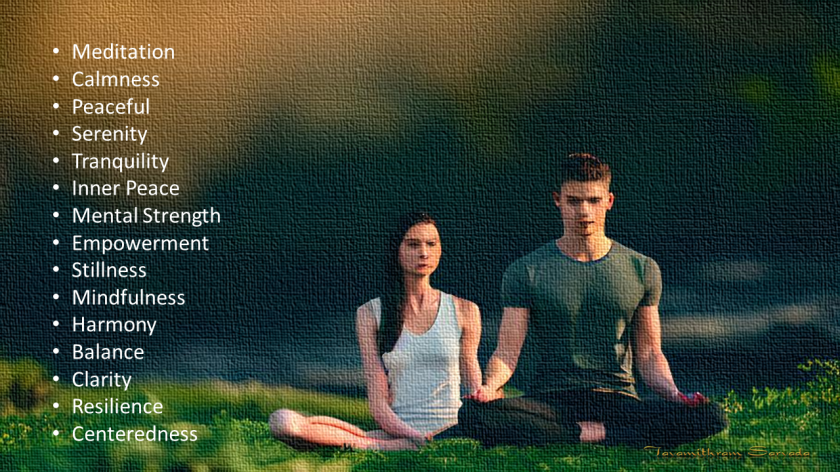
Meditation is a powerful practice that holds immense importance in our fast-paced and often chaotic lives. It provides a sanctuary for the mind, allowing us to step away from the constant stream of thoughts and emotions that can overwhelm us. By dedicating time to meditation, we cultivate a sense of inner peace and clarity. A calm mind becomes more receptive to intelligent and rational thinking. It enables us to make better decisions, respond to challenges with composure, and approach life with a deeper understanding.

One of the initial steps towards achieving a peaceful mind is learning to disconnect from our emotions. Emotions can cloud our judgment and lead to impulsive reactions. Through meditation, we learn to observe our thoughts and feelings without getting entangled in them. By creating this mental distance, we become better equipped to navigate life’s complexities with a level-headed approach.

Mantras are invaluable tools in the journey of calming the mind. These ancient, sacred sounds or words have a profound impact on our consciousness. Repetition of mantras during meditation can help quieten the mental chatter and instil a sense of tranquillity. The vibration and rhythm of mantras empower the mind, making it more resilient and focused. As we delve deeper into meditation with mantras, we unlock the potential to access higher states of awareness and find our true selves amidst the noise of the world.

Take the help of meditation and Mantras to calm your mind and invoke Divine Power and Energy into you to start your journey to Inner Peace, Bliss, and Self-Realisation.

Below are some of my meditation videos which you watch or play, and to help you in your meditation. Please use headphones for a more personal experience.
‘If’ by Rudyard Kipling -‘Talk with KINGS and Walk with CROWDS’

Only for Self-Respecting, strong and fearless REAL MEN (Women may also draw inspiration from this poem)

‘IF’ by Rudyard Kipling

Maintaining a calm and composed mind is the first and foremost step towards facing and handling the toughest of challenges.

A ‘Stithapragnya’ or a Yogi with a steady mind

SBG 2:54-57

SBG 2:53 When your mind is no longer wavering or perplexed but is steady in Samaadhi (in Bhagavan) or in self-realisation, you will attain Yoga.
—————————————————
SBG 2:54 Arjuna said:
What is a man, O Keshava (Bhagavan Krishna), who is steady in Samaadhi or Self-realisation called? How does such a man talk? How does he sit and how does he walk?
——————————————————
SBG 2:55 Shree Bhagavan Krishna said:
One who gives up all desires of the mind, O Partha (Arjuna), and when one has a purified mind and is in a pure state of the soul, he is called a ‘Stithapragnya”or a man of steady consciousness.
—————————————————
SBG 2:56 He who is not agitated or disturbed despite the threefold miseries, is also not euphoric when he has comforts and is free from attachment, fear, and anger, is a sage with a steady mind.
Note:
The threefold miseries are, a. miseries that stem from the mind and body, b. miseries caused by other beings, and c. miseries caused by natural calamities and catastrophes over which no one has control

————————————————
SBG 2:57 He who is free from attachment and neither rejoices when he achieves good nor hates evil has steady wisdom and perfect knowledge.
————————————————
READ THE SRIMAD BHAGAVAD GITA.
Search Tavamithram on Amazon.

#srimadbhagavadgita #bhagavadgita #bhagvatgita #stithapragnya #bhagwadgita #krishna #rudyardkipling #kipling #sanatanadharma #karma #dharma #hinduism #righteousness #bhakti #devotion #vishnu #mahabharata #bookshome1 #india #bharat #peaceofmind #courage #fearlessness #calmmind