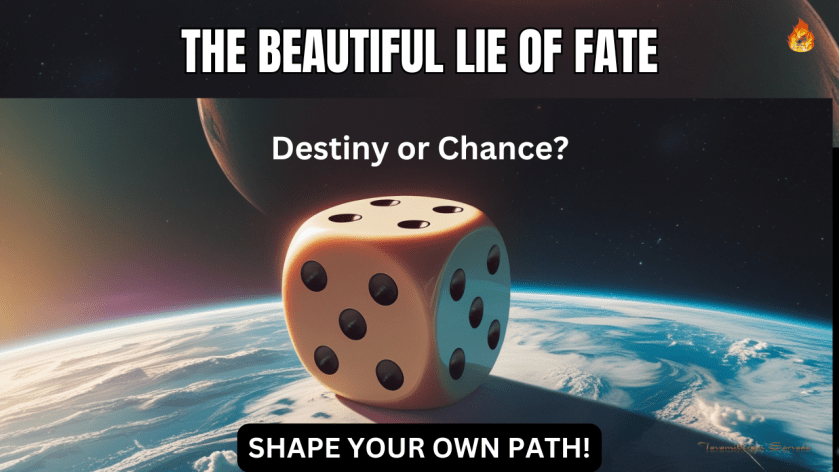
Unravelling the Illusion of Fate in a Stochastic Universe
Many people believe there’s a ‘grand plan’ behind everything—a higher power or force shaping events through fate, destiny, or divine will. This belief often leads us to surrender a significant portion of our mental capacity and autonomy to things we cannot fully prove: unseen beings, sacred books, religious intermediaries, and abstract concepts. But what if this comforting story is merely a creation we’ve been telling ourselves for centuries? Even more troubling is that such beliefs breed a sense of entitlement, creating divisions among individuals, fostering inequality, envy, jealousy, and belligerence—forces that ultimately damage lives, relationships, and our natural world.
In this short presentation, I confront the illusion of fate head-on. Let us examine the stochastic nature of existence—not through superstition or sentiment, but through reason, science, and Vedanta. From the genetic lottery you were born into, to the subtle conditioning shaped by environment and epigenetics, you’ll see how much of your life has just happened. No blueprint. No cosmic purpose. No invisible puppeteer.
Let us question why religions and mythologies have always tried to impose order upon chaos, and why fatalism is just another form of resignation. I present Karma not as divine justice, but simply as cause and effect. Actions and consequences, not punishments and rewards.
And yet, this isn’t a descent into nihilism. Far from it.
To embrace randomness is to reject the passive comfort of fate and to step into clarity. Life doesn’t need a script to have meaning. Meaning arises not from predestination, but from conscious living in an unpredictable world.
This presentation is for the quietly curious, the disillusioned believer, the sceptic, the philosopher—and anyone ready to ask: What if chance isn’t your enemy, but your liberation?
Haven’t you completed the Srimad Bhagavad Gita yet? Here is your solution:
You’ve been told what to think. You’ve been conditioned to accept, obey, and conform. But what if everything you believe—everything you rely on—has been carefully placed there to keep you from seeing the truth?
What if the world around you isn’t what it seems?
This isn’t just another talk. It’s an experience—one that might shake the very foundation of what you think is real. But be warned: once you step through this door, there is no going back.
What if everything you worship, think, and perceive is not the ultimate truth?
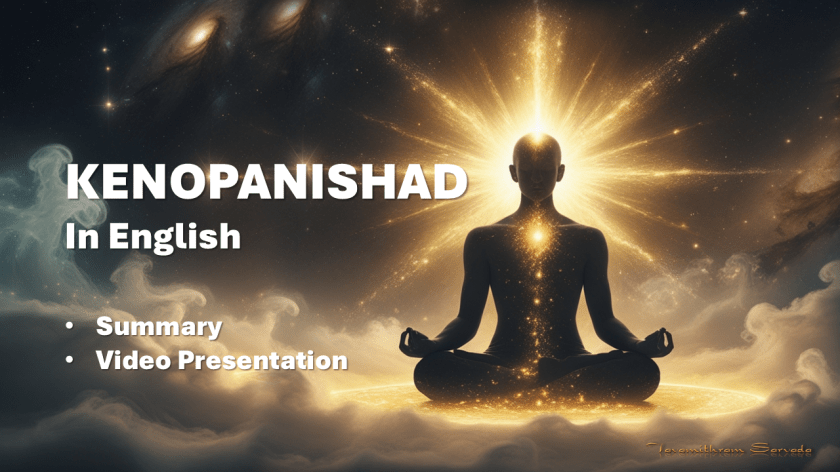
The Kenopanishad shakes the very foundation of our understanding by revealing that Brahman—the ultimate reality—is not what the senses perceive, nor what the mind can grasp. It is that by which all perception happens, yet remains beyond perception itself.
I am pleased to share my English explanation of the Kenopanishad, now available on the new Vedanta channel, Timeless Vedanta. This Upanishad is a profound text that explores the nature of ultimate reality, the limitations of perception, and the essence of Brahman—the supreme truth that is beyond the grasp of the senses and intellect.
This video presents a clear and insightful analysis of the Kenopanishad, encouraging deeper reflection and self-inquiry. Watch, learn, and break free from blind beliefs to embrace the wisdom of Vedanta.
Your engagement helps spread the knowledge of Advaita Vedanta and enables more seekers to benefit from these ancient yet ever-relevant teachings.
Summary of the Kenopanishad
The Kenopanishad from the Sama Veda’s Talavakara Brahmana is a profound exploration of Brahman, the ultimate reality that transcends sensory perception and intellectual comprehension. It is structured into four sections, addressing the nature of consciousness, the limitations of the mind and senses, and the necessity of realisation beyond mere knowledge.
I. The Nature of Brahman
The text begins with fundamental inquiries: What is the force behind the mind, speech, and senses? What enables perception and cognition? The answer given is that Brahman is the unseen power that enables all faculties yet remains beyond their grasp.
Brahman is the “ear of the ear, the mind of the mind, the speech of speech, the life of life, and the eye of the eye.”
The wise attain immortality by renouncing identification with the senses and realising this truth.
Brahman is beyond thought, speech, and sight, yet it is that by which the mind thinks, speech expresses, and the eyes see.
“Nedam-yadidam-upaasate” – That which is worshipped as an object is not Brahman; the real Brahman is that which enables perception itself.
II. The Paradox of Knowing Brahman
The Upanishad asserts that Brahman is not fully knowable, nor is it completely unknown. It is beyond dualistic comprehension:
If one thinks, “I know Brahman,” they have only a partial understanding.
Brahman is known by those who realise they do not fully know and remains unknown to those who think they know it completely.
True knowledge of Brahman leads to immortality, strength, and ultimate fulfilment.
III. The Parable of the Gods and Brahman’s Revelation
The Upanishad illustrates the ignorance of the gods through a symbolic story:
After a great victory, the gods (Agni, Vayu, and Indra) assume their triumph is solely their own.
Brahman appears as an unknown Yaksha (divine being) to humble them.
Agni, the fire god, fails to burn a blade of grass; Vayu, the wind god, fails to lift it—revealing their limited power.
Indra, seeking answers, meets Uma (Parvati), the embodiment of wisdom, who reveals that their victory was due to Brahman alone.
Indra, being the first to realise this, is praised above the other gods.
IV. The Flash of Realisation
Brahman is realised like a lightning flash or a blink of an eye—sudden and beyond conceptualisation.
The seeker must meditate on Brahman as “Tadvana” (the most desirable).
Austerity, self-restraint, and righteous action serve as the foundation for realisation.
One who attains this knowledge becomes established in Brahman, free from ignorance, confusion, suffering, and Karma
The Kenopanishad asserts that Brahman is the essence of all experience but cannot be objectified. It must be known intuitively, not intellectually. The Upanishad leads the seeker away from external worship to direct self-inquiry, revealing that the ultimate truth is not in what is perceived but in that which enables perception itself.
*The paperback version is not available on Amazon India.
Part 1: Preface and Introduction + Chapters 1-6
The preface and introduction lay the foundation for your exploration. Don't be tempted to skip these initial chapters; they are the compass guiding you through the intricate terrain of the Gita's philosophy. Understand the core teachings, and you'll find yourself motivated to delve deeper, perhaps into the rich Bhashyams or commentaries of Shri Adi Shankara and other great teachers.
Part 2: Chapters 7-12
As you progress through these chapters, absorb the profound insights that unfold. The clarity of understanding achieved in the earlier sections becomes the stepping stone for an even more profound comprehension of Krishna's teachings.
Part 3: Chapters 13-18 + Outro
The culmination of your journey awaits in the final chapters. The outro ties the threads together, offering a comprehensive view of the Gita's timeless wisdom. This concluding section is not to be missed; it holds the key to empowerment and self-confidence.
Namaste Seekers,
Embark on a profound journey into the timeless wisdom of the Srimad Bhagavad Gita with ‘The Ever-Relevant Gita: A Present-day Rendering by Tavamithram Sarvada.’ Below, I’ll elucidate the profound significance of this work and its potential to illuminate the path to self-realisation.
In a fast-paced world fraught with complexities, the solace found in ancient wisdom often remains unexplored. 'The Ever-Relevant Gita – A Present-day Rendering by Tavamithram Sarvada’ endeavours to bridge this gap, bringing forth the profound teachings of the Srimad Bhagavad Gita to everyone, irrespective of age, background, or familiarity with ancient scriptures.
Dispelling Myths and Misconceptions
The main challenge involves dispelling misconceptions that surround the Srimad Bhagavad Gita—misconceptions about its perceived depth, religious connotations, and its relevance limited to the elderly or devout individuals. In this modern interpretation, we untangle myths and present timeless wisdom in a manner that aligns with the sensibilities of the contemporary mind.
A Unique Approach: Audio, Video, and E-book Formats
Understanding the daunting nature of lengthy translations, a unique approach has been taken by creating easily digestible audio recordings of each chapter. These recordings allow listeners to absorb the essence of the Gita at their own pace, breaking down barriers that often deter individuals from exploring this ageless scripture.
Beyond presentation, this initiative is a call to embark on a blissful journey of self-discovery. In my life, which has been shaped by numerous challenges and life-altering situations, the importance of a well-trained instinct and a balanced mindset has become crystal clear to me. A clear understanding of the fundamental principles of the teachings in the Srimad Bhagavad Gita certainly plays a pivotal role in shaping attitudes, cultivating fearlessness, and fostering rational thinking during critical moments.
Practical Insights for Daily Application
The true power of the Srimad Bhagavad Gita lies in its application in everyday life. The focus is not merely on delivering a rendition or chanting Shlokas, but on providing practical insights that enable individuals to apply these teachings in their daily lives, leading to a more fulfilling and blissful existence.
In essence, the mission is to make the teachings of the Srimad Bhagavad Gita easily accessible, relatable, and applicable to everyone, fostering a deeper understanding of life's intricacies. Join me on this enlightening journey, and let's journey through the supreme scripture together.
Those who would like a promo code for a free download of the Audiobook version of the ‘The Ever-Relevant Gita – A Present-Day Rendering by Tavamithram Sarvada’ may email their request to tavamithramoffice@gmail.com
Subscribe to my FREE SUBSTACK for insights on self-discovery, consciousness, and Vedanta. Join now and connect with fellow seekers on a deeper journey!
Click on the image below to go directly to my Substack, read the full post, and watch a video presentation.
Why Tavamithram is Never Aligned to Any Particular Group, Ashram, Agama, Paddhathi, Sects, Subsects, Guru, Swamy, Dress Code, Traditions, Religion etc.
Please read the post before listening to the podcast discussing the post
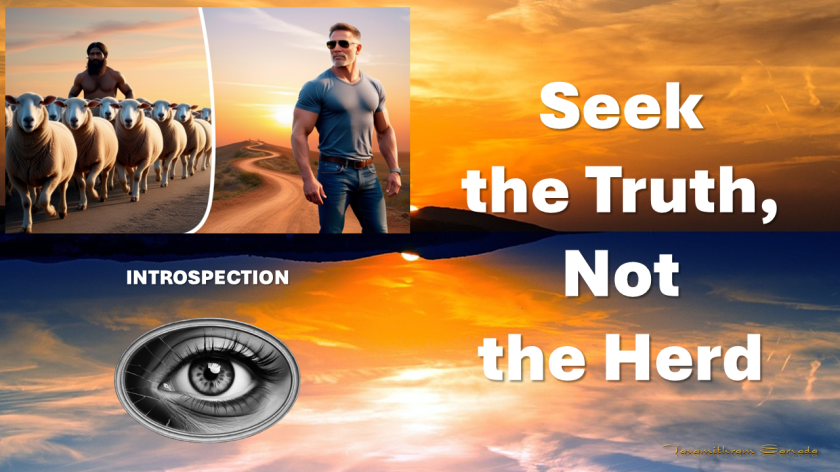
Throughout my life, I have observed a significant connection between beliefs, the desire to belong to groups, and the thirst for knowledge and self-confidence. My personal attitude has always been to stand alone. It’s crucial to clarify that my reluctance to belong to groups should not be mistaken for hubris. I simply prefer solitude, as my strong ideas often diverge from the majority, who are frequently swept away by traditions—something Krishna himself admonishes even before the conclusion of Chapter 2 in the Srimad Bhagavad Gita.
To illustrate the extent to which I go to avoid belonging to a group, let me share an example from my past. Many years ago, I was a motorcycle stuntman in Indian films, doubling for lead stars and performing death-defying stunts. In the film industry, numerous unions exist for various trades, including actors, directors, make-up artists, dancers, photographers, and others. Naturally, there was also a union for stuntmen, and I was expected to join. However, I refused to be tied down by group membership, choosing instead to remain independent. Consequently, I willingly accepted a penalty of twenty-five per cent of my earnings for not being a member. Despite this, I chose to pay the penalty each time I earned money performing stunts.
I’ve observed that individuals who are rather low on self-confidence or a sense of personal substance usually seek strength in numbers by joining groups. Being part of a group provides reassurance and a sense of belonging. Within these groups, members usually share common beliefs or philosophies, forming the basis of their unity. However, I think that belonging to a group compels individuals to adopt the group’s ideology, limiting their ability to think and act independently. I prefer the freedom to think for myself and analyse matters in my own way. Groups typically consist of like-minded individuals, which signifies a lack of diverse thought. This, in turn, stifles intellectual development and curtails opportunities for new ideas to emerge.
As an ardent learner, I find great fascination in encountering people whose ideas challenge my own, compelling me to think outside the box. This is the essence of personal evolution.
It’s essential to clarify that I do not hold beliefs in the conventional sense; instead, I possess perspectives. I have unwavering trust in my intelligence, intellect, and experiences, considering myself a keen learner in every situation I encounter.
While belonging to a group can provide a sense of security, it can also hinder personal growth and self-discovery. True self-confidence emerges from understanding and standing firm in one’s perspectives, even when they diverge from the prevailing norms of a group. By cultivating self-awareness and introspection, individuals can develop a stronger, more authentic sense of self. I am not suggesting anything against groups; rather, I strongly advocate for retaining one’s freedom to question, think, and express oneself.
Among the most detrimental effects groups can have on intellectual development is the deification of central figures, often referred to as Gurus or Babas. The story of the 24 Gurus of Sage Dattatreya aims to dismantle the false notion of being tethered to a single guru, suggesting that anything and everything that helps dispel ignorance can be considered a guru. To quote Shri Ramana Maharshi: “Your own Self-Realisation is the greatest service you can render the world.”
In Shloka SBG 2:45, Krishna instructs Arjuna: “Vedic literature deals with subjects that fall under the three Gunas. O Arjuna, you should rise above the three, be free from dualities, always remain in Sattva or goodness, and be established in the Self.”
A true teacher should guide individuals to clear their ignorance and advance towards the ultimate goal of Atma-gnyaana, or knowledge of the Self. However, how many truly do this? Many, adorned in flowing robes and sporting long beards, strut about like proud peacocks, claiming to possess all knowledge.
It is indeed disheartening to witness children and youth from families not converted to foreign religions being lured into the illusory world of meaningless beliefs, rites, and rituals.
Please watch this short video, and then read the post below, or listen to the audio.
Evolution is the natural order of life. Just as a pupa transforms into a beautiful butterfly, everything in nature is in a constant state of change and growth. This transformation is not just necessary but inevitable, driven by the forces of nature to improve, adapt, and thrive.
However, some choose to resist this natural process, clinging to outdated ways of thinking, strange beliefs in the name of religion, lost positions or property, former relationships, and old ways of being. This resistance is a denial of life’s fundamental principle—growth. By refusing to evolve, they remain stagnant, living in a state of delusion. In doing so, they waste the precious resources that nature provides, occupying space without contributing to the flow of progress.
Just as the butterfly’s emergence from its chrysalis is a testament to the power of transformation, so too should we embrace our own potential for growth. To resist evolution is to deny the very essence of life. By choosing to evolve, we not only fulfil our purpose but also honour the natural world that supports us.
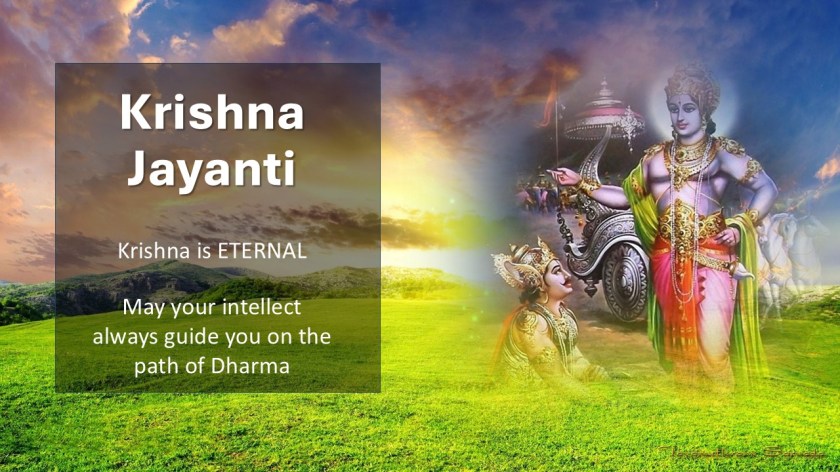
Krishna Jayanti, or Janmashtami, marks the celebrated ‘birth’ of Bhagavan Shri Krishna, an event cherished across the globe. But how does this celebration reconcile with Krishna’s own words in the Srimad Bhagavad Gita, where he declares that He was never born, nor will He ever die?
Consider this profound Shloka:
नत्वेवाहं जातु नासं न त्वं नेमे जनाधिपाः | न चैव न भविष्यामः सर्वे वयमतः परम् || २ १२ ||
na tvevaaham jaatu naasam na tvam neme janaadhi-paaha na chaiva na bhavishyaa-maha sarve vayam-ataha param SBG 2:12
“There never was a time when I did not exist, nor you, nor all these kings. We will also never cease to exist.”
In this Shloka, Krishna emphasises the eternal nature of the Atman. The physical birth and death that we observe are but mere transitions in the infinite existence of the SELF. Krishna, as the Supreme Being, transcends these limitations of time and space.
Arjuna, puzzled by this concept, continues with his questions and, in Chapter 4, asks Krishna as follows:
अर्जुन उवाच | अपरं भवतो जन्म परं जन्म विवस्वतः | कथमेतद्विजानीयां त्वमादौ प्रोक्तवानिति || ४ ४ ||
Arjuna said: “Your birth was after the birth of Vivasvaan. How should I understand when You say that You taught this Yoga to him?”
To this, Krishna responds, illuminating the mystery of His divine nature:
श्रीभगवानुवाच | बहूनि मे व्यतीतानि जन्मानि तव चार्जुन | तान्यहं वेद सर्वाणि न त्वं वेत्थ परंतप || ४ ५ ||
sri bhagavan uvaacha bahuuni me vyatii-taani janmaani tava-chaarjuna taan-yaham veda sarvaaNi na tvam vettha parantapa SBG 4:05
Sri Krishna said: “Many births of mine as well as yours have passed. I know all of them, but you don’t, O Parantapa (Arjuna – destroyer of enemies).”
Here, Krishna acknowledges the cyclical nature of birth and rebirth, highlighting that while He is aware of all His incarnations, Arjuna remains unaware.
Krishna then reveals the ultimate truth of His existence:
अजोऽपि सन्नव्ययात्मा भूतानामीश्वरोऽपि सन् | प्रकृतिं स्वामधिष्ठाय संभवाम्यात्ममायया || ४ ६ ||
ajo ‘pi san-navya-yaathma bhuuthaanaa-miishvaro ‘pi san prakrthim svaa-madhisht-haaya sambhavaa-myaathma-maayayaa SBG 4:06
“Though I am unborn and imperishable, and although I am the Bhagavan of all beings, I do incarnate by my own Maya or My Divine Energy.”
Krishna’s ‘birth’ is not conventional; it is a divine descent, an incarnation born of His own will and energy, symbolising the emergence of pure intellect after dispelling layers and layers of ignorance. Krishna Jayanti, while celebrating His appearance, also invites us to reflect on the deeper spiritual truths He embodies.
In this short video I’ve created, I delve into the essence of Krishna Janmashtami and how embracing these teachings can transform your life and lead to enduring bliss: At the end of the short video, I have translated Shloka SBG 2:12 into six Indian languages apart from English.
It is crucial to remember that taking scriptural texts literally can lead one astray from the true path of Self-Realisation, potentially fostering rigid belief systems or cult-like thinking. The Srimad Bhagavad Gita offers profound wisdom—absorb its philosophy, and use it to cultivate a life of fulfilment and spiritual growth.
A ‘disclaimer’ from Srimad Bhagavatam (not Srimad Bhagavad Gita)
“Shukadeva Gosvami spoke: O mighty King Parikshith, I have shared with you the accounts of these illustrious kings, whose fame and great deeds echoed worldwide before their departure. However, my fundamental intention has always been to impart the wisdom of the transcendental and the path of renunciation. Although the stories of kings embellish these narratives with grandeur and opulence, they, in and of themselves, do not represent the ultimate essence of knowledge.“
Many of us find ourselves stuck in a cycle of complaining, brooding, and feeling generally dissatisfied with our circumstances. Whether it’s our job, relationships, or personal achievements, the tendency to ruminate on what’s wrong can be overwhelming. And yet, despite the temporary relief we might find in venting to a friend or relative, we often wake up the next day only to repeat the same routine, with nothing having changed. The question then arises: how can we expect change when we continue to do the same thing?
The Unproductive Cycle of Complaints
Complaining and brooding are natural human responses to dissatisfaction. It’s almost instinctual to express our frustrations when things don’t go as planned. However, these actions rarely lead to meaningful change. Instead, they often serve as a temporary release, a way to momentarily ease the pressure without addressing the underlying issues. As a result, we remain stuck in the same unfavourable situation, repeating the cycle day after day.
To break free from this cycle, it’s crucial to take a different approach—one rooted in clarity and action. The key lies in defining your problems and goals with precision. Let me take you back to my childhood to illustrate this point.
As a young boy, I was naturally curious and had a mechanical aptitude that drove me to understand how things worked. I was always eager to get to the bottom of things, refusing to accept anything at face value without clear evidence. When I was reprimanded by elders or teachers for my behaviour, I didn’t just accept the scolding. Instead, I wanted to know what I had done wrong and, more importantly, what I should do right. However, my requests for guidance were often met with silence or a cold stare, leaving me with unanswered questions.
This experience taught me a vital lesson: in any situation, if something is wrong, it’s essential to ask, “What is right?” This principle can be applied to any area of life:
If you’re dissatisfied with your job, ask: What is my ideal job?
If you don’t like your life, ask yourself: What would my ideal life look like?
If you’re unhappy in a relationship, ask: What is the ideal relationship I want?
The Three-Step Approach to Change
Once you’ve asked these questions, the next step is to define your situation clearly. Here’s a practical approach:
Identify What You Don’t Like and Why: Be specific about what bothers you. Is it the long hours at work, the lack of appreciation, or perhaps a feeling of being stuck? Understand the root cause of your dissatisfaction.
Create a Clear Vision of What You Want
: Visualise your ideal situation in detail. What does your perfect job look like? What qualities define your ideal relationship? Be as specific as possible, down to the finest details.
Develop a Plan to Achieve Your Vision
: Identify the steps you need to take to move from your current situation to your ideal one. This might involve learning new skills, making lifestyle changes, or even having difficult conversations. The key is to take actionable steps that lead you closer to your goal.
The Danger of Temporary Fixes
Many people, when faced with an unfavourable situation, seek quick fixes to ease their minds temporarily. Whether it’s pouring out your woes to a friend, closing your eyes and sitting under a tree or in a religious place, or even turning to substances, these methods offer only momentary relief. They don’t address the core issues and often lead to more frustration when the problem inevitably resurfaces.
Please always remember that if someone truly wants something, they will find a way to get it. Consider alcohol and substance addicts or those addicted to gambling—they always manage to obtain what they crave. If you feel you’ve been working hard with no improvement in your life, instead of adopting a victim or ‘poor me’ attitude, try to view it from another perspective. Perhaps your efforts are insufficient, misdirected, or lack proper direction.
Summing up and Learning to Take Control of Your Life
If you’re unhappy with your current situation, don’t waste time complaining or seeking temporary distractions. Instead, follow the steps I’ve outlined:
Define your issue clearly.
Visualise your ideal situation.
Take actionable steps to achieve your vision.
By doing so, you’ll find that you have the power to transform your life into something truly fulfilling. These steps may seem simple, but they are profoundly effective—I speak from experience.
Never forget that many people don’t know exactly what they want. Complaining and feeling depressed require less effort than reflecting and strategising, which is why slipping into self-pity is so easy. For anything good and positive to materialise, there must first be a clear image in the mind. So, the next time you feel the urge to complain or brood, make sure you know exactly what you want.
Real change begins with a clear definition of your goals and a commitment to taking action.
*Please listen to the audio or read the post before watching the video.
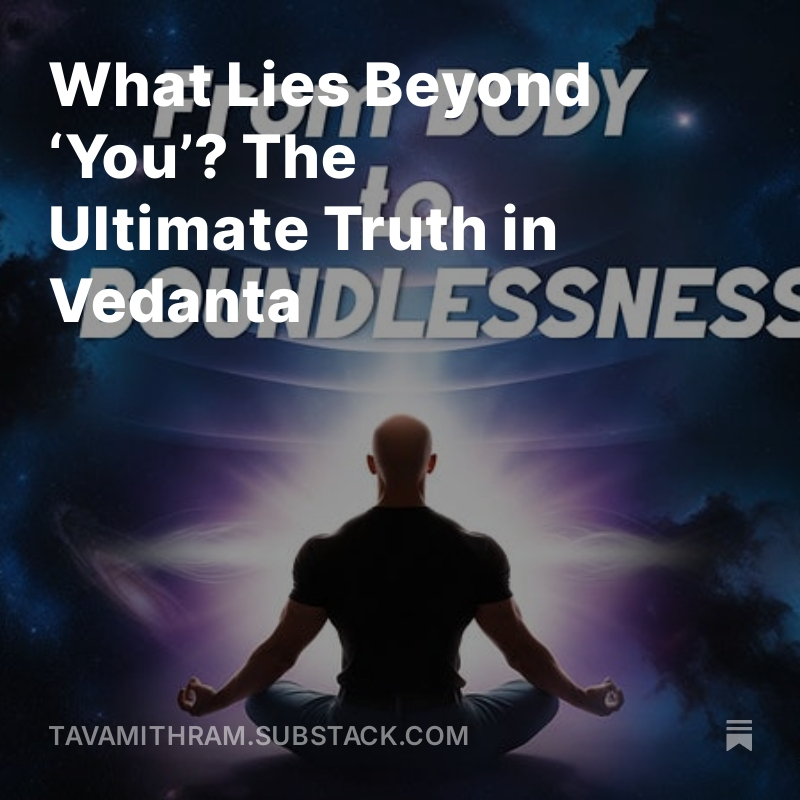
After a decade away, I found myself standing once more in front of the house where I had lived until I was 11. This was the place where my sister and I used to walk to school, hand in hand, through green fields, joyfully crossing a small brook along the way. But as I stood there, I was struck by how different everything seemed. The street that once seemed so long and wide now appeared short and narrow. The house, which I remembered as spacious, looked small. The distance to my school, which had once felt like a great journey, now seemed trivial.
What had happened? When I left Poona, I was 11 years old. Now, I was 21. I had grown taller, and my perspective had shifted. The distances and proportions I held in my mind were relative to my height and understanding as a child.
This experience confirmed a profound truth: what we call reality is shaped entirely by our perception. When I was a child, my world seemed vast. As an adult, returning to that same world, it appeared small and contained. The reality I perceived at 11 was not an absolute truth—it was a reflection of my limited perception at that time.
This realisation extends far beyond childhood memories. It speaks to the very nature of our existence and the limitations we impose upon ourselves. Those who are deluded into believing they are merely their bodies, confined by irrational religious beliefs and paralysed by the fear of defying some ‘heavenly figure’, are trapped in a narrow reality. Their consciousness is limited, their minds blocked by layers of fear, dogma, and superstition.
But imagine if they could step out of these mental prisons—if they could free themselves from the beliefs that restrict their consciousness and their ability to think freely. They would rise above these illusions and delusions, and experience the ultimate truth of their existence: the realisation of their true SELF as subjective awareness, which is formless and, once not mentally limited to the body, is all-pervading.
This is the essence of the awakening journey—transcending the childish beliefs, religions, cults, and sects that confine us, and attaining the highest state of understanding. It is a journey from the narrow confines of perception to the boundless expanses of consciousness.
Take this fascinating virtual flight through space to the end of the observable universe and back. As you do, realise the vastness and awesomeness of existence. Let it inspire you to rise above the illusions that bind you and to reach for that highest state of awareness where the ultimate truth resides, far beyond the constructs of human beliefs.



 example from my past. Many years ago, I was a motorcycle stuntman in Indian films, doubling for lead stars and performing death-defying stunts. In the film industry, numerous unions exist for various trades, including actors, directors, make-up artists, dancers, photographers, and others. Naturally, there was also a union for stuntmen, and I was expected to join. However, I refused to be tied down by group membership, choosing instead to remain independent. Consequently, I willingly accepted a penalty of twenty-five per cent of my earnings for not being a member. Despite this, I chose to pay the penalty each time I earned money performing stunts.


 Tavamithram Sarvada