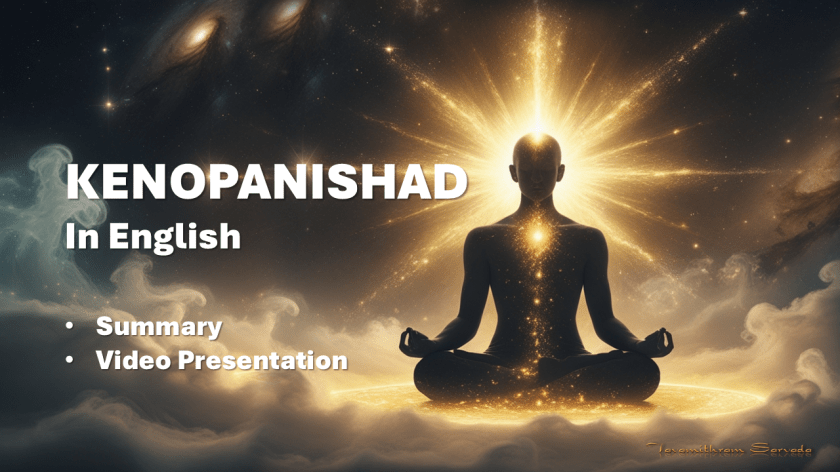
Kenopanishad – The Path Beyond Perception

CLICK HERE TO READ THE POST ON SUBSTACK

What if everything you worship, think, and perceive is not the ultimate truth?

The Kenopanishad shakes the very foundation of our understanding by revealing that Brahman—the ultimate reality—is not what the senses perceive, nor what the mind can grasp. It is that by which all perception happens, yet remains beyond perception itself.

I am pleased to share my English explanation of the Kenopanishad, now available on the new Vedanta channel, Timeless Vedanta. This Upanishad is a profound text that explores the nature of ultimate reality, the limitations of perception, and the essence of Brahman—the supreme truth that is beyond the grasp of the senses and intellect.

This video presents a clear and insightful analysis of the Kenopanishad, encouraging deeper reflection and self-inquiry. Watch, learn, and break free from blind beliefs to embrace the wisdom of Vedanta.

Your engagement helps spread the knowledge of Advaita Vedanta and enables more seekers to benefit from these ancient yet ever-relevant teachings.

Summary of the Kenopanishad

The Kenopanishad from the Sama Veda’s Talavakara Brahmana is a profound exploration of Brahman, the ultimate reality that transcends sensory perception and intellectual comprehension. It is structured into four sections, addressing the nature of consciousness, the limitations of the mind and senses, and the necessity of realisation beyond mere knowledge.

I. The Nature of Brahman

The text begins with fundamental inquiries: What is the force behind the mind, speech, and senses? What enables perception and cognition? The answer given is that Brahman is the unseen power that enables all faculties yet remains beyond their grasp.

  • Brahman is the “ear of the ear, the mind of the mind, the speech of speech, the life of life, and the eye of the eye.”
  • The wise attain immortality by renouncing identification with the senses and realising this truth.
  • Brahman is beyond thought, speech, and sight, yet it is that by which the mind thinks, speech expresses, and the eyes see.
  • “Nedam-yadidam-upaasate” – That which is worshipped as an object is not Brahman; the real Brahman is that which enables perception itself.

II. The Paradox of Knowing Brahman

The Upanishad asserts that Brahman is not fully knowable, nor is it completely unknown. It is beyond dualistic comprehension:

  • If one thinks, “I know Brahman,” they have only a partial understanding.
  • Brahman is known by those who realise they do not fully know and remains unknown to those who think they know it completely.
  • True knowledge of Brahman leads to immortality, strength, and ultimate fulfilment.

III. The Parable of the Gods and Brahman’s Revelation

The Upanishad illustrates the ignorance of the gods through a symbolic story:

  • After a great victory, the gods (Agni, Vayu, and Indra) assume their triumph is solely their own.
  • Brahman appears as an unknown Yaksha (divine being) to humble them.
  • Agni, the fire god, fails to burn a blade of grass; Vayu, the wind god, fails to lift it—revealing their limited power.
  • Indra, seeking answers, meets Uma (Parvati), the embodiment of wisdom, who reveals that their victory was due to Brahman alone.
  • Indra, being the first to realise this, is praised above the other gods.

IV. The Flash of Realisation

  • Brahman is realised like a lightning flash or a blink of an eye—sudden and beyond conceptualisation.
  • The seeker must meditate on Brahman as “Tadvana” (the most desirable).
  • Austerity, self-restraint, and righteous action serve as the foundation for realisation.
  • One who attains this knowledge becomes established in Brahman, free from ignorance, confusion, suffering, and Karma

The Kenopanishad asserts that Brahman is the essence of all experience but cannot be objectified. It must be known intuitively, not intellectually. The Upanishad leads the seeker away from external worship to direct self-inquiry, revealing that the ultimate truth is not in what is perceived but in that which enables perception itself.

Click here for the complete text of the Kenopanishad in English

📌 Watch, like, and share the video.
📌 Subscribe to the channel, Timeless Vedanta, for more timeless teachings.

How to Destroy the Illusion of False EGO in 5 Minutes?

Subscribe to my Substack. It is FREE.

Can an Eye See Itself? Understanding the Nature of the Self

[This is a continuation of the post “Not Your Body? Quick Tips to Discover Your True Self!”]

Many seekers struggle with the concept of the Self, often expressing confusion and frustration over their inability to “connect” with it. I’ve heard people saying things like, “I feel the disconnect with my own self,” and so forth. The fact is that such statements are logically flawed. Why? Because the Self is not something to be seen or grasped—it can only be realised. CONTINUE READING AND WATCHING THE VIDEO ON SUBSTACK.

What Lies Beyond ‘You’? The Ultimate Truth in Vedanta

Who Am I? Uncovering the Timeless Mystery of Self

Subscribe to my FREE SUBSTACK for insights on self-discovery, consciousness, and Vedanta. Join now and connect with fellow seekers on a deeper journey!

Click on the image below to go directly to my Substack, read the full post, and watch a video presentation.

Shattering Beliefs: The Ultimate Truth of Atman and Brahman

Unveiling the Truth: Why You Should Question Everything

This video presentation delves into profound philosophical questions through an engaging Q&A discussion. This session is designed to ignite your curiosity and challenge your understanding of reality, consciousness, and the nature of the self. This video is a must-watch if you’ve ever wondered about the deeper meanings behind ancient scriptures or the true essence of existence.

Learning Through Analogies

We explore various analogies to shed light on complex concepts. Imagine understanding the nature of consciousness through the metaphor of a wave in the ocean, a fire igniting under the right conditions, or the space within a pot. These simple yet powerful illustrations can transform your perception and deepen your insight into non-duality and the oneness of all existence.

The Importance of Inquiry

In the pursuit of knowledge, it is crucial to study, observe, analyse, and experience rather than simply accept interpretations handed down by others. The masses often prefer to listen passively rather than actively engage with the material. This passive acceptance can lead to misunderstandings and superficial knowledge. True understanding comes from questioning, probing, and seeking clarity.

As Krishna states in Shloka 4:38 of the Srimad Bhagavad Gita, “There is certainly nothing more purifying than knowledge. He who is perfect in Yoga finds it in the Self in due course of time.” This Shloka highlights the transformative power of true knowledge and its role in achieving a peaceful state of mind.

The Path to Clarity

Clarity is essential for inner peace and spiritual growth. By challenging assumptions and seeking to understand the fundamental truths, we can attain a deeper level of clarity. This journey requires patience, dedication, and a willingness to go beyond surface-level interpretations.

Why This Video is Essential

This video is not just another lecture; it’s an invitation to embark on a journey of discovery. The discussion is designed to make you think critically and inspire you to seek your own answers. I present ideas that can change the way you view the world and your place within it.

Don’t Miss Out

Join this enlightening discussion and take the first step towards true knowledge. Watch the video now and start questioning everything you thought you knew.

Stay curious, stay engaged, and remember: the journey to knowledge and clarity is the path to true peace and enlightenment.

ALSO READ THIS AND WATCH THE VIDEO
What is Atma?

From Frustration to Fulfilment

The Essential Guide to Overcoming Life’s Unfavourable Situations

*SUBSCRIBE TO MY SUBSTACK – IT’S FREE*

Breaking Free from the Cycle

Many of us find ourselves stuck in a cycle of complaining, brooding, and feeling generally dissatisfied with our circumstances. Whether it’s our job, relationships, or personal achievements, the tendency to ruminate on what’s wrong can be overwhelming. And yet, despite the temporary relief we might find in venting to a friend or relative, we often wake up the next day only to repeat the same routine, with nothing having changed. The question then arises: how can we expect change when we continue to do the same thing?

The Unproductive Cycle of Complaints

Complaining and brooding are natural human responses to dissatisfaction. It’s almost instinctual to express our frustrations when things don’t go as planned. However, these actions rarely lead to meaningful change. Instead, they often serve as a temporary release, a way to momentarily ease the pressure without addressing the underlying issues. As a result, we remain stuck in the same unfavourable situation, repeating the cycle day after day.

To break free from this cycle, it’s crucial to take a different approach—one rooted in clarity and action. The key lies in defining your problems and goals with precision. Let me take you back to my childhood to illustrate this point.

As a young boy, I was naturally curious and had a mechanical aptitude that drove me to understand how things worked. I was always eager to get to the bottom of things, refusing to accept anything at face value without clear evidence. When I was reprimanded by elders or teachers for my behaviour, I didn’t just accept the scolding. Instead, I wanted to know what I had done wrong and, more importantly, what I should do right. However, my requests for guidance were often met with silence or a cold stare, leaving me with unanswered questions.

This experience taught me a vital lesson: in any situation, if something is wrong, it’s essential to ask, “What is right?” This principle can be applied to any area of life:

  1. If you’re dissatisfied with your job, ask: What is my ideal job?
  2. If you don’t like your life, ask yourself: What would my ideal life look like?
  3. If you’re unhappy in a relationship, ask: What is the ideal relationship I want?

The Three-Step Approach to Change

Once you’ve asked these questions, the next step is to define your situation clearly. Here’s a practical approach:

  1. Identify What You Don’t Like and Why: Be specific about what bothers you. Is it the long hours at work, the lack of appreciation, or perhaps a feeling of being stuck? Understand the root cause of your dissatisfaction.

  2. Create a Clear Vision of What You Want: Visualise your ideal situation in detail. What does your perfect job look like? What qualities define your ideal relationship? Be as specific as possible, down to the finest details.

  3. Develop a Plan to Achieve Your Vision: Identify the steps you need to take to move from your current situation to your ideal one. This might involve learning new skills, making lifestyle changes, or even having difficult conversations. The key is to take actionable steps that lead you closer to your goal.

The Danger of Temporary Fixes

Many people, when faced with an unfavourable situation, seek quick fixes to ease their minds temporarily. Whether it’s pouring out your woes to a friend, closing your eyes and sitting under a tree or in a religious place, or even turning to substances, these methods offer only momentary relief. They don’t address the core issues and often lead to more frustration when the problem inevitably resurfaces.

Please always remember that if someone truly wants something, they will find a way to get it. Consider alcohol and substance addicts or those addicted to gambling—they always manage to obtain what they crave. If you feel you’ve been working hard with no improvement in your life, instead of adopting a victim or ‘poor me’ attitude, try to view it from another perspective. Perhaps your efforts are insufficient, misdirected, or lack proper direction.

Summing up and Learning to Take Control of Your Life

If you’re unhappy with your current situation, don’t waste time complaining or seeking temporary distractions. Instead, follow the steps I’ve outlined:

  1. Define your issue clearly.
  2. Visualise your ideal situation.
  3. Take actionable steps to achieve your vision.

By doing so, you’ll find that you have the power to transform your life into something truly fulfilling. These steps may seem simple, but they are profoundly effective—I speak from experience.

Never forget that many people don’t know exactly what they want. Complaining and feeling depressed require less effort than reflecting and strategising, which is why slipping into self-pity is so easy. For anything good and positive to materialise, there must first be a clear image in the mind. So, the next time you feel the urge to complain or brood, make sure you know exactly what you want.

Real change begins with a clear definition of your goals and a commitment to taking action.

A Mind-Bending Voyage

Experience the Vastness and Awesomeness of Existence

Reality, Perception, and the Awakening of Consciousness

*SUBSCRIBE TO MY SUBSTACK – IT’S FREE*

*Please listen to the audio or read the post before watching the video.

After a decade away, I found myself standing once more in front of the house where I had lived until I was 11. This was the place where my sister and I used to walk to school, hand in hand, through green fields, joyfully crossing a small brook along the way. But as I stood there, I was struck by how different everything seemed. The street that once seemed so long and wide now appeared short and narrow. The house, which I remembered as spacious, looked small. The distance to my school, which had once felt like a great journey, now seemed trivial.

What had happened? When I left Poona, I was 11 years old. Now, I was 21. I had grown taller, and my perspective had shifted. The distances and proportions I held in my mind were relative to my height and understanding as a child.

This experience confirmed a profound truth: what we call reality is shaped entirely by our perception. When I was a child, my world seemed vast. As an adult, returning to that same world, it appeared small and contained. The reality I perceived at 11 was not an absolute truth—it was a reflection of my limited perception at that time.

This realisation extends far beyond childhood memories. It speaks to the very nature of our existence and the limitations we impose upon ourselves. Those who are deluded into believing they are merely their bodies, confined by irrational religious beliefs and paralysed by the fear of defying some ‘heavenly figure’, are trapped in a narrow reality. Their consciousness is limited, their minds blocked by layers of fear, dogma, and superstition.

But imagine if they could step out of these mental prisons—if they could free themselves from the beliefs that restrict their consciousness and their ability to think freely. They would rise above these illusions and delusions, and experience the ultimate truth of their existence: the realisation of their true SELF as subjective awareness, which is formless and, once not mentally limited to the body, is all-pervading.

This is the essence of the awakening journey—transcending the childish beliefs, religions, cults, and sects that confine us, and attaining the highest state of understanding. It is a journey from the narrow confines of perception to the boundless expanses of consciousness.

Take this fascinating virtual flight through space to the end of the observable universe and back. As you do, realise the vastness and awesomeness of existence. Let it inspire you to rise above the illusions that bind you and to reach for that highest state of awareness where the ultimate truth resides, far beyond the constructs of human beliefs.

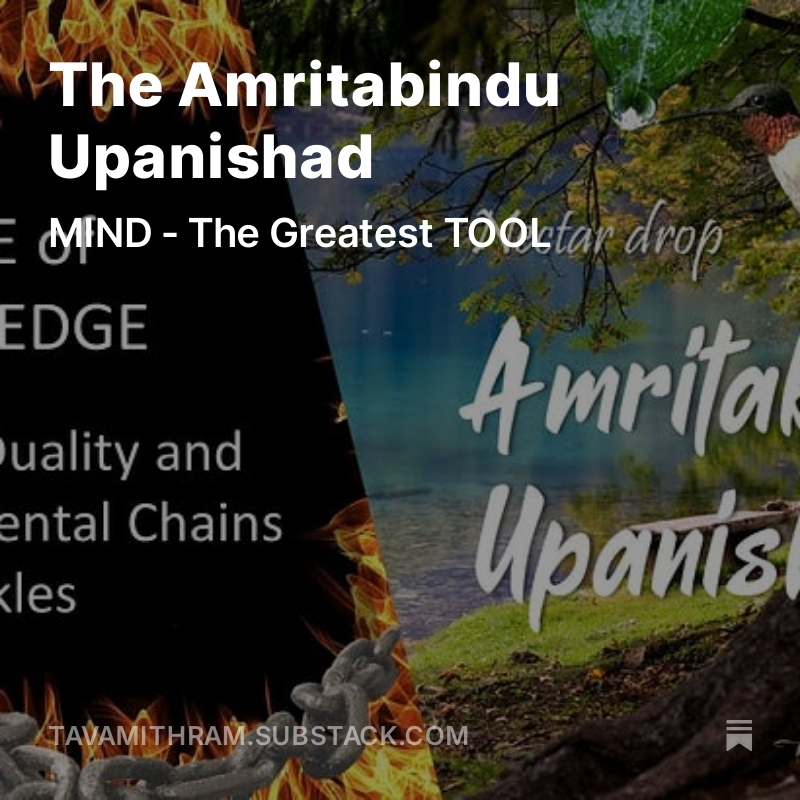
Amritabindu Upanishad on Substack

The MIND – Man’s Greatest Tool

*SUBSCRIBE TO MY SUBSTACK – IT’S FREE*

Learning to use the MIND as a Churning Stick to realise your TRUE DIVINE SELF!

The Amritabindu Upanishad, part of the Krishna Yajur Veda, is a concise and powerful text for true seekers of spiritual wisdom. CONTINUE ON SUBSTACK


Treat Insults and Setbacks as ‘ROCKET FUEL’

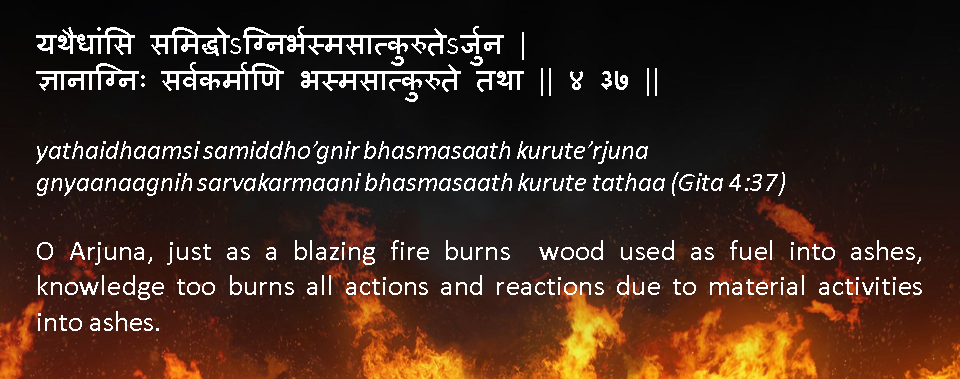
Shatter the Cycle: BURN and RESET your Karma!


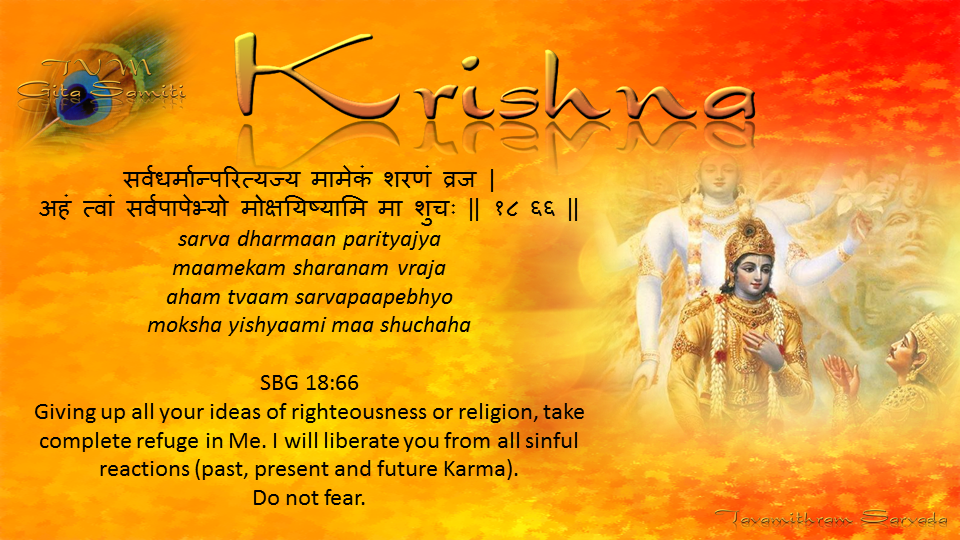
The Ever-Relevant Gita: A Present-Day Rendering’

FREE PROMO CODES: LIMITED OFFER

The Greatest Gift to Yourself for 2024 and the Future

Nonduality #Vedanta #SelfDiscovery #Consciousness #Spirituality #TruthSeeker”

Anger – your greatest ally?

Harness Your Rage and Redefine Your Reality

TheTriple ‘Z’ 

What if I told you that anger isn’t something to be feared or suppressed, but rather a powerful force that, when harnessed wisely, can drive incredible change in your life?

Well, some people are happy with their lives, not so happy, sad, or even sick of their lives. If everything is going well, and you are happy, just continue doing what you are doing and living the way you are. I don’t propagate the ideas of ‘good and bad’ or ‘right and wrong,’ which I consider dogmatic. Common sense alone tells us that something is good and right if it makes us happy and in no way harms our health, surroundings, nature, or others.

However, many are unhappy, dissatisfied, depressed, weak, or scared and would like to change their lives for the better. For those who genuinely want to make changes, however big or small, here are some steps you might want to follow:

  1. Identifying the Problems

Write down what you don’t like about your current situation, whether it’s your appearance, living circumstances, work, mindset, or any other area of your life. Be as specific as possible. I have given some easy and practical hacks in my video titled ‘Shatter the Cycle: BURN and RESET your Karma!’

  1. Setting Clear Goals

Next, think about what you want to achieve. What does your ideal self look like? How do you want to feel or think differently? Write down these goals so that you have a clear target to aim for. Be absolutely specific and describe your ideal self in detail.

  1. Execution

Once you’ve identified your problems and set your goals, begin outlining the steps or strategies needed to achieve them. This might involve altering your habits, seeking guidance, or acquiring new skills. Concentrate on taking small, manageable actions that will steadily progress you towards your objectives.

By breaking it down into these steps, you’ll have a clearer path to follow, making it easier to track your progress and stay motivated along the way.

Sitting alone, fretting, fuming, or complaining will only lead to self-pity, and that will ensure that your life stays exactly the way it is now, if not worse.

A Personal Story of Transformation

Thirty years ago, during a 48-hour self-imposed retreat, I conceived and meticulously crafted ‘Project KR’, where I defined and redefined exactly how I wanted my life to unfold.

Almost everything I described in Project KR has been happening so far. This includes the realisation of far-fetched aims, such as meeting with Queen Elizabeth II, and many other things that would have seemed impossible at that time.

I must emphasise that the goals and strategies I outlined in my playbook, which I boldly committed to nearly 30 years ago – defying all conventional thought processes and career planning – have not only materialised but have done so with astonishing precision, even in the finer details. Keep in mind, Rhonda Byrne’s ‘The Secret’ hadn’t even been written back then!

Likely Source of My Determination

My determination likely stemmed from the intense anger I harboured due to the wrongs inflicted upon me by others, which I now recognise as a result of my own naïveté or even foolishness. It’s often said that necessity is the mother of invention, and my ‘necessity,’ or rather my overwhelming drive to transform my life, was so powerful that I was able to create possibilities out of seemingly nothing.

The Triple ‘Z’: Zeal, Zest, and Zing

Around the time I embarked on my 48-hour self-reflection, I was teaching French at several management colleges. I closely observed the mindsets of my students, aged 18 to 20. Among them, only a few exhibited a profound, intense drive to set ambitious goals, achieve them, and pursue a more fulfilling life. This further reinforced my belief that not everyone possesses a high level of drive. While this isn’t inherently wrong, it can result in either a lacklustre future or a life devoid of Zeal, Zest, and Zing – qualities I was highly driven to attain and live my life to the fullest, which I had almost lost in some major accidents earlier.

In the biographies of many great individuals I’ve read, one common thread stands out: they never blamed others for their circumstances. Instead, they took full responsibility, charted their own paths, and forged ahead with determination.

Final Thoughts:

Some people write to me saying that they want to improve their lives, looks, happiness, relationships, etc., but are unable to achieve them.

My question to them is, “Who is stopping you?”

Treat Insults and Setbacks as ‘ROCKET FUEL’

Shatter the Cycle: BURN and RESET your Karma!


The Ever-Relevant Gita: A Present-Day Rendering’

Nonduality #Vedanta #SelfDiscovery #Consciousness #Spirituality #TruthSeeker”

Shatter the Cycle: BURN and RESET your Karma!

Break Free from Fate and Change Your Life Instantly

Karma Hacks

The concept of karma, often misunderstood or shrouded in superstition, is essentially about the patterns and outcomes in our lives that are heavily influenced by our own attitudes, actions, and reactions. Here’s a simplified breakdown of how Karma functions and impacts our lives and even those of our descendants:


The Ever-Relevant Gita: A Present-Day Rendering’

FREE PROMO CODES: LIMITED OFFER

The Greatest Gift to Yourself for 2024 and the Future

Nonduality #Vedanta #SelfDiscovery #Consciousness #Spirituality #TruthSeeker”