Do This AT LEAST ONCE in Your Lifetime – Only 3 Hours!

No Mantras, No Prayers, No Fasting – Just 3 Hours to Smash Illusion and Gain the Supreme Truth!

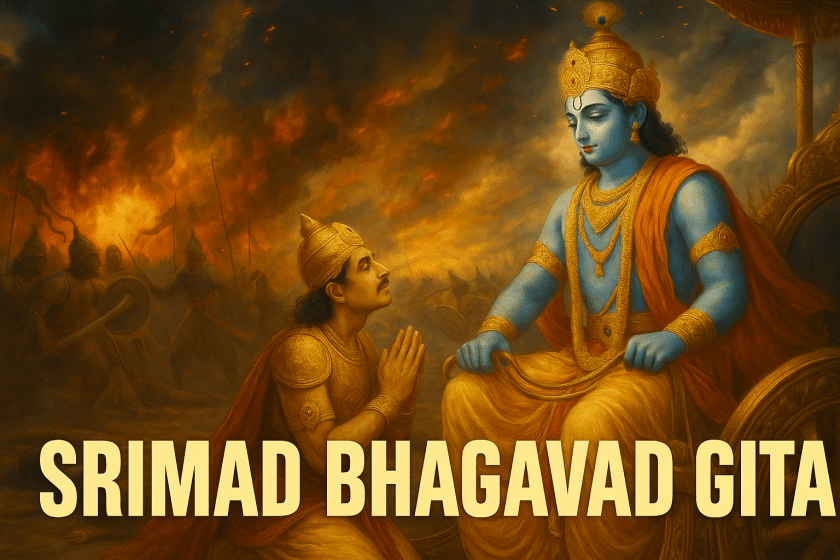
I am not saying this. KRISHNA SAYS IT IN THE SRIMAD BHAGAVAD GITA.

All worries, fears, stress, anger, envy, and every negative force that can block, weaken, or destroy your chance of living a truly beautiful and fulfilling life will be crushed to smithereens and pulverised to dust.

With soothing sound, captivating visuals, and clear English text to follow along.

Please let me be honest, my dear brothers and sisters, I find it utterly saddening that so many people have been convinced that the Srimad Bhagavad Gita is “too difficult to comprehend” and that without a “good guru” they can never learn it.

In Shloka SBG 9:02, Bhagavan Krishna clearly says that this knowledge is not only VERY EASY, but also it is also VERY EASY TO PRACTISE and it is EVERLASTING. All it takes is the small effort of sitting down and reading a simple translation of the 700 Shlokas. In fact, I must have read this supreme scripture over a thousand times, and I never tire of it. The same applies to every genuine seeker. You cannot read it once and expect to fully grasp it. But at the very least, read it, listen to it, or go through it ONCE BEFORE YOU DIE!

As part of my SBG for ALL Mission, here is my humble offering: a three-hour guided study of this life-changing scripture, a true gift to humanity.

Experience this once, and the weight of your illusions will collapse into nothing.

Please, take this opportunity. Whatever you think it is worth, COMPLETE IT. Do it at least for your brother’s sake. You can thank me later 🙂

JAI SHRI KRISHNA.

Experience the Bhagavad Gita: A Dynamic Approach

Now Is the Time. Experience the Srimad Bhagavad Gita Like Never Before!

It is rather ironic that in India, people solemnly place their hand on the Srimad Bhagavad Gita in a court of law and swear to speak the truth, yet many of them have never read it, let alone truly understood its message. How strange it is that a civilisation that produced the world’s most brilliant text on life, ethics, detachment, work, and clarity, treats it like a prop or a ritual object, rather than the supreme manual for life that it truly is.

This is why I, Tavamithram Sarvada, have taken it upon myself to make the Srimad Bhagavad Gita easily available, accessible, and comprehensible to all, not by mystifying it, but by bringing it to life.
And here is a rendition like no other.

🎙️ Each Shloka Delivered Powerfully, Not Sung Dully

Most recitations of the Gita are delivered in a monotonous and emotionless chant, often with all 700 Shlokas sung in a single flat tune. But remember that the scenario is that of war, and to ensure the energy and power apart from the wisdom the Bhagavad Gita imparts, I came to the conclusion that it needs to be delivered dramatically and powerfully.

With a background in acting and a deep grounding in Vedanta, I have delivered each Shloka with the tone, expression, and intensity its meaning calls for. This is not a performance – it is a sacred transmission, infused with clarity, emotion, and strength.

Each Shloka appears on-screen in Sanskrit, accompanied by its romanised transliteration, English transliteration, and meaning. Whether or not you understand Sanskrit, this immersive experience will draw you into the battlefield of Kurukshetra and place you right beside Arjuna and at the feet of Bhagavan Shri Krishna, both mentally and spiritually.

📽️ Why This Matters Now

In an age of confusion, disconnection, and identity crisis, the Srimad Bhagavad Gita remains the most powerful antidote to fear, sorrow, and indecision. But you must listen to it, not once, not just as a ritual, but as if your life depended on it.

Because in many ways, it does.

💡 Don’t Believe. Know!

This is the spirit of Timeless Vedanta, and this is your invitation to listen to the Srimad Bhagavad Gita as never before. There is no concept of belief in Vedanta as it is in organised religions. It is purely about realisation. Don’t leave this life without having at least heard the full message of Bhagavan Krishna.

If you haven’t yet read or heard the Srimad Bhagavad Gita even once in your life, start today. You owe it to yourself.

🎧 Now is the time. Experience the Srimad Bhagavad Gita, like never before!

👇🏼 Watch the full video here:

The Srimad Bhagavad Gita Explained Simply In English

SrimadBhagavadGita #BhagavadGitaRecitation #GitaWithMeaning #TimelessVedanta #Don’tBelieveKnow #SanskritGita #GitaForEveryone #PowerfulRecitation #ArjunaKrishna #SpiritualAwakening

Born by Chance, Fooled by Belief

READ AND WATCH THE VIDEO ON SUBSTACK.

JOIN MY SUBSTACK – IT IS FREE.

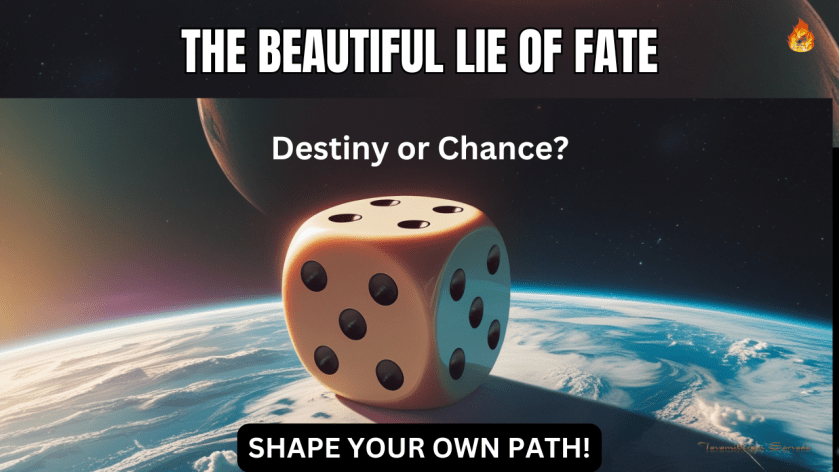
Unravelling the Illusion of Fate in a Stochastic Universe

Many people believe there’s a ‘grand plan’ behind everything—a higher power or force shaping events through fate, destiny, or divine will. This belief often leads us to surrender a significant portion of our mental capacity and autonomy to things we cannot fully prove: unseen beings, sacred books, religious intermediaries, and abstract concepts. But what if this comforting story is merely a creation we’ve been telling ourselves for centuries? Even more troubling is that such beliefs breed a sense of entitlement, creating divisions among individuals, fostering inequality, envy, jealousy, and belligerence—forces that ultimately damage lives, relationships, and our natural world.

In this short presentation, I confront the illusion of fate head-on. Let us examine the stochastic nature of existence—not through superstition or sentiment, but through reason, science, and Vedanta. From the genetic lottery you were born into, to the subtle conditioning shaped by environment and epigenetics, you’ll see how much of your life has just happened. No blueprint. No cosmic purpose. No invisible puppeteer.

Let us question why religions and mythologies have always tried to impose order upon chaos, and why fatalism is just another form of resignation. I present Karma not as divine justice, but simply as cause and effect. Actions and consequences, not punishments and rewards.

And yet, this isn’t a descent into nihilism. Far from it.

To embrace randomness is to reject the passive comfort of fate and to step into clarity. Life doesn’t need a script to have meaning. Meaning arises not from predestination, but from conscious living in an unpredictable world.

This presentation is for the quietly curious, the disillusioned believer, the sceptic, the philosopher—and anyone ready to ask: What if chance isn’t your enemy, but your liberation?

Haven’t you completed the Srimad Bhagavad Gita yet? Here is your solution:

The Complete Srimad Bhagavad Gita – Explained Simply | No Confusion, Only Clarity!

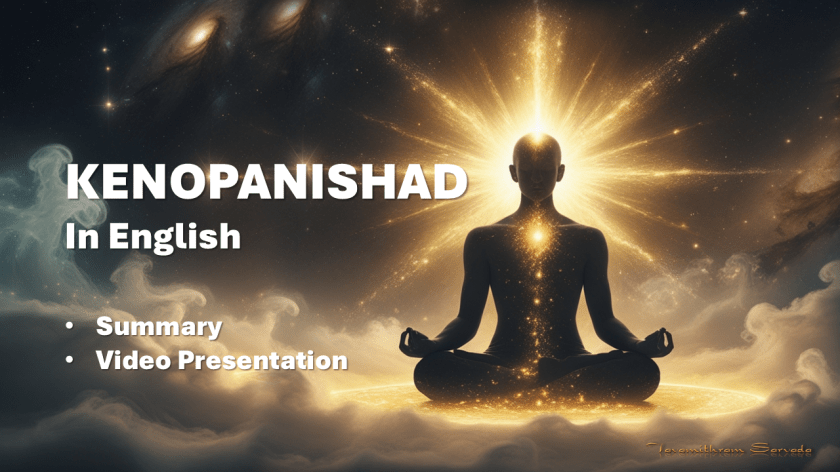
Kenopanishad – The Path Beyond Perception

CLICK HERE TO READ THE POST ON SUBSTACK

What if everything you worship, think, and perceive is not the ultimate truth?

The Kenopanishad shakes the very foundation of our understanding by revealing that Brahman—the ultimate reality—is not what the senses perceive, nor what the mind can grasp. It is that by which all perception happens, yet remains beyond perception itself.

I am pleased to share my English explanation of the Kenopanishad, now available on the new Vedanta channel, Timeless Vedanta. This Upanishad is a profound text that explores the nature of ultimate reality, the limitations of perception, and the essence of Brahman—the supreme truth that is beyond the grasp of the senses and intellect.

This video presents a clear and insightful analysis of the Kenopanishad, encouraging deeper reflection and self-inquiry. Watch, learn, and break free from blind beliefs to embrace the wisdom of Vedanta.

Your engagement helps spread the knowledge of Advaita Vedanta and enables more seekers to benefit from these ancient yet ever-relevant teachings.

Summary of the Kenopanishad

The Kenopanishad from the Sama Veda’s Talavakara Brahmana is a profound exploration of Brahman, the ultimate reality that transcends sensory perception and intellectual comprehension. It is structured into four sections, addressing the nature of consciousness, the limitations of the mind and senses, and the necessity of realisation beyond mere knowledge.

I. The Nature of Brahman

The text begins with fundamental inquiries: What is the force behind the mind, speech, and senses? What enables perception and cognition? The answer given is that Brahman is the unseen power that enables all faculties yet remains beyond their grasp.

  • Brahman is the “ear of the ear, the mind of the mind, the speech of speech, the life of life, and the eye of the eye.”
  • The wise attain immortality by renouncing identification with the senses and realising this truth.
  • Brahman is beyond thought, speech, and sight, yet it is that by which the mind thinks, speech expresses, and the eyes see.
  • “Nedam-yadidam-upaasate” – That which is worshipped as an object is not Brahman; the real Brahman is that which enables perception itself.

II. The Paradox of Knowing Brahman

The Upanishad asserts that Brahman is not fully knowable, nor is it completely unknown. It is beyond dualistic comprehension:

  • If one thinks, “I know Brahman,” they have only a partial understanding.
  • Brahman is known by those who realise they do not fully know and remains unknown to those who think they know it completely.
  • True knowledge of Brahman leads to immortality, strength, and ultimate fulfilment.

III. The Parable of the Gods and Brahman’s Revelation

The Upanishad illustrates the ignorance of the gods through a symbolic story:

  • After a great victory, the gods (Agni, Vayu, and Indra) assume their triumph is solely their own.
  • Brahman appears as an unknown Yaksha (divine being) to humble them.
  • Agni, the fire god, fails to burn a blade of grass; Vayu, the wind god, fails to lift it—revealing their limited power.
  • Indra, seeking answers, meets Uma (Parvati), the embodiment of wisdom, who reveals that their victory was due to Brahman alone.
  • Indra, being the first to realise this, is praised above the other gods.

IV. The Flash of Realisation

  • Brahman is realised like a lightning flash or a blink of an eye—sudden and beyond conceptualisation.
  • The seeker must meditate on Brahman as “Tadvana” (the most desirable).
  • Austerity, self-restraint, and righteous action serve as the foundation for realisation.
  • One who attains this knowledge becomes established in Brahman, free from ignorance, confusion, suffering, and Karma

The Kenopanishad asserts that Brahman is the essence of all experience but cannot be objectified. It must be known intuitively, not intellectually. The Upanishad leads the seeker away from external worship to direct self-inquiry, revealing that the ultimate truth is not in what is perceived but in that which enables perception itself.

Click here for the complete text of the Kenopanishad in English

📌 Watch, like, and share the video.
📌 Subscribe to the channel, Timeless Vedanta, for more timeless teachings.

Not Your Body? Quick Tips to Discover Your True Self!

Join my SUBSTACK. It is FREE.

The Illusion of ‘Me’: Why You’re Not Your Body

In some major religions, creation is described as a divine act—’god’ creating humans in ‘his’ own image and forming the universe in six days, resting on the seventh. But what does it mean to be made in ‘god’s’ image? Is it about the physical form, or something deeper? From the largest of stars to the tiniest creatures on Earth, everything is a conglomeration of atoms—physical objects perceived through names and forms. Yet, identifying solely with these forms traps us in illusion, much like the prisoners in Socrates’ ‘Allegory of the Cave’, who mistook shadows for reality. READ AND WATCH THE SHORT VIDEO ON SUBSTACK

Bhaja Govindam on the Timeless Vedanta Channel

Bhaja Govindam: The Song That Will Transform Your Life

Most people listen to or recite Bhaja Govindam without grasping its true essence—but this profound composition by Shri Adi Shankara is far profound than what most people might think. It is a bold call to awaken from ignorance, starting with the striking words, “O Fool,” and leading to a life of wisdom and responsibility.

In this video, The Bhaja Govindam Song on the new Timeless Vedanta YouTube Channel, I unravel the deeper meaning of each Shloka, providing an English translation alongside a downloadable PDF with the original Sanskrit, transliteration, and translation.

Bhaja Govindam is not about blind beliefs or meaningless rituals but about attaining SELF-knowledge (Atmagnyaana), freeing the mind from delusions, and embracing Vedantic clarity. This understanding is vital in today’s world, where distractions pull us away from truth.

Watch the video, explore this timeless wisdom, and pair it with The Ever-Relevant Gita: A Present-Day Rendering—together, they will bring you clarity, peace, and a truly fulfilling life.

The Three Secrets to Vitality, Strength, and a Clear Mind

What if I told you that transforming your life doesn’t require monumental effort, drastic sacrifices, or years of trial and error? What if the key to living with strength, vitality, and an unshakable sense of peace lies in three simple but life-changing choices?

These aren’t steps or stages, nor are they tied to any belief system or ritual. They are timeless principles, practical, and accessible to anyone willing to take charge of their life.

In an age where distractions, stress, and unhealthy habits dominate, it’s easy to feel overwhelmed. But imagine waking up each day with energy coursing through your body, clarity in your mind, and a conscience free of weight. That’s not just a possibility; it’s within your reach.

Curious to know more? Explore how three essential pillars can lead you to a healthier, stronger, and more peaceful you. The path is simpler than you think—and the destination is life-changing.

Watch the videos below.

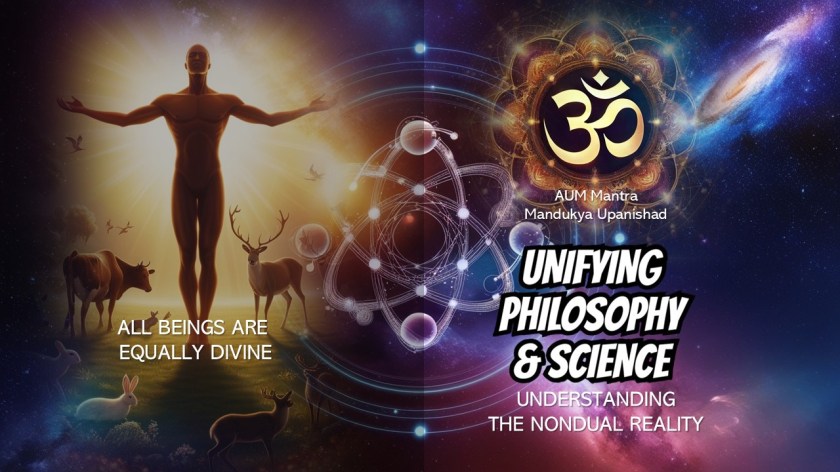
The Ultimate Science: How Vedanta Bridges Spirituality and Science

Join my Substack. IT IS FREE!

Learning to Understand the Mysteries of the Universe – Ancient Vedantic Wisdom Meets Modern Science

In this day and age, with scientific advancements revolutionising every field, it’s increasingly challenging to accept traditional narratives like ‘god’ creating man in his image or crafting the universe in six days and so on. Such beliefs often lead to the perplexing question: who created ‘god’? This inquiry spirals into an infinite regress, providing no satisfying answers.

However,…CONTINUE READING

From Unfounded Beliefs to Clarity Through Vedanta

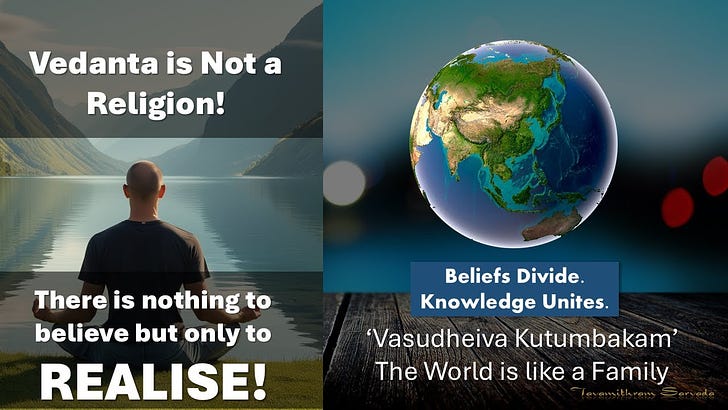
Beliefs Divide, Vedanta Unites!

JOIN MY SUBSTACK – IT’S FREE

Religion often relies on beliefs without evidence, creating divisions and control through fear and greed.

In contrast, Vedanta, the pinnacle of spiritual understanding from the Indian subcontinent, promotes unity and true knowledge, urging individuals to rise above dualistic beliefs and introspect for deeper understanding. READ ON SUBSTACK

From Stagnation to Success: Mastering Negative Karmic Inertia

Shattering All Blockades in Life

Understanding the Three Gunas: A Path to Self-Improvement

Understanding the three Gunas explained in the Srimad Bhagavad Gita offers profound insights into human behaviour and consciousness. These three fundamental qualities—Sattva (goodness), Rajas (passion), and Tamas (ignorance)—shape our thoughts, actions, and overall life experience. Among these, the Tamasa Guna, which embodies indolence, laziness, lethargy, negativity, and pessimism, often acts as a significant impediment to personal growth and productivity. I refer to this as ‘Negative Karmic Inertia.’

Much like maintaining a good hormonal balance is crucial for physical health, achieving a harmonious balance of the three Gunas is essential for a fulfilling and enriching life. By understanding and managing our Guna levels, we can enhance our self-awareness and work towards self-improvement. The real transformation happens within, even if the knowledge and inspiration come from external sources.

The Role of Tamasa Guna

Excessive Tamas is like a heavy weight that chains a person to the ground, preventing any positive change and perpetuating a state of lethargy and inertia. It not only affects one’s behaviour but also distorts one’s ability to rationalise and make sound decisions. A person overwhelmed by Tamas might find themselves stuck in a cycle of inaction and negativity, unable to break free and achieve their true potential.

The Three Gunas explained in the Bhagavad Gita

The Srimad Bhagavad Gita provides a detailed explanation of the three Gunas and their effects on individuals:

SBG 14:5 – “The three Gunas or qualities are Sattva, which is the quality of goodness; Rajas, which is the quality of passion; and Tamas, which is the quality of ignorance; O mighty-armed one. They are born of Prakriti which is Nature. These qualities bind very fast the immutable embodied Self in the body.”

SBG 14:6 – “Of these, Sattva, which, due to its purity, is luminous and healthy, frees a person of all Karmic reactions. Those of this Guna are attached to knowledge and to happiness, O sinless one.”

SBG 14:7 – “You should know Rajas to be the Guna or nature of passion, which is the source of desire and attachment. O Arjuna, it binds fast to the embodied Self by attachment to action.”

SBG 14:8 – “Tamas is born of ignorance and deludes all embodied beings. O Arjuna, this results in the binding of the embodied soul by negligence, sleep and laziness!”

SBG 14:9 – “O Arjuna, Sattva binds one to happiness, Rajas to action, while Tamas shrouds knowledge and binds one to idiocy.”

SBG 14:10 – “O descendant of Bharata (Arjuna), Sattva prevails over Rajas and Tamas, while Rajas manifests itself by overpowering Sattva and Tamas; and Tamas manifests itself by subduing Sattva and Rajas.”

SBG 14:11 – “When the light of wisdom shines through every sense in this body, it may be known that Sattva is predominant.”

SBG 14:12 – “When greed, endeavour for material gains, restlessness and longing arise; Rajas is predominant, O Arjuna.”

SBG 14:13 – “The presence of illusion, darkness, recklessness and delusion in a person indicate the predominance of Tamas in them, O Arjuna.”

Overcoming Negative Karmic Inertia

Many people struggle with feelings of demotivation and an inability to achieve their goals. This internal blockage often stems from an excess of the Tamasa Guna. Conversely, those driven by an excessive Rajas Guna might find themselves aggressive and even harmful in their pursuit of desires.

Managing Rajas

SBG 3:36-37: Arjuna asks Krishna: What prompts a man to perform sinful deeds, O descendant of Vrshni? Why does he commit such acts even without desiring to do them, as if he were forced?

Shri Bhagavan Krishna replies: Lust and anger are born out of the material nature called Rajoguna, which is insatiable and prompts man to commit sin. You must know that this is the greatest enemy in a man’s spiritual life.

Understanding one’s Guna ratio is akin to a doctor diagnosing a patient: it allows for targeted self-improvement. By identifying and addressing the predominant Guna that is out of balance, individuals can work on the specific areas needed to overcome unwanted situations in life.

Self-Study and Introspection

The path to self-improvement begins with self-study and introspection. Rather than casting blame on external factors, it is crucial to look within and understand the internal dynamics that drive our behaviour. By doing so, we can achieve a harmonious balance of the Gunas, leading to a more pleasant, enriching, and fulfilling life.

Finally, the knowledge of the three Gunas offers a powerful tool for self-awareness and personal growth. By recognising the influence of Tamas and working to balance it with Sattva and Rajas, we can overcome negative karmic inertia and realise our true potential. The journey to self-improvement is an inward one, and the key to success lies in understanding and managing the forces within us.

Reflect on your own Guna ratio, identify the areas that need attention, and take the necessary steps to bring balance and harmony into your life. Embrace the power of self-awareness and let it guide you towards a brighter, more fulfilling future.

If you truly want to change your life, it is you who must change, for the world will not bend to your will.

“Who looks outside dreams; who looks inside awakes.” – Carl Jung