Forget the Heart, First Heal the Mind!

Beyond Prayers and Miracles – The Rational Path to Self-Realisation

Transform Your Life with Vedanta, The Science of all Sciences

WATCH THIS AND CLEAR YOUR HEAD OF ALL UNWANTED STUFF:

When ignorance becomes the norm, entire masses of people can be easily swayed to firmly believe the unreal to be real. The crucial factor in society that enables a select few to manipulate their minds is the ignorance of the masses, which basically stems from blind beliefs that numb their brains, and sheer laziness to make a move to get out of ignorance.

People come to my blog, watch some of my videos, and ask me what they should do to change their lives. Almost everyone wants instant solutions, and they are even willing to pay for shortcuts! One should not overlook the fact that even the act of going to a religious place and praying for what one wants is a form of seeking shortcuts.

But the truth is that everything has a price, and everything is part of the never-ending cause-and-effect chain. Asking someone or ‘god’ to give them what they want could only mean that the so-called ‘god’ changes his plans to suit the needs of the one praying. So, what about the others? Do their lives get destroyed because someone else prayed and got things done by ‘god’ to do things their way? Really? So, what happens when two entities at war with each other pray to the same ‘god’? Who do you think ‘god’ will bless with special favours?!

How many people really dare to make massive changes in their lives, have the courage to travel around, experience and learn more, and evolve? Krishna says in Shloka SBG 7:19, “Therefore, after innumerable births, the one who has perfected his or her wisdom, understanding fully My universal reality, surrenders to Me and such an individual is very rare.”

So, with a default state of mind of wanting to maintain the status quo, people tend to look for easy ways out, shortcuts, middlemen, and women who can help them achieve success through the short path, which is a form of corruption or fraud. It is because people want something without really working for it.

When did Krishna say in the Srimad Bhagavad Gita to go to his temples, perform meaningless rites and rituals with the mammary milk of poor voiceless animals, sing songs in His praise, chant Mantras the whole day, and do nothing else? The clear instruction in the second chapter is that you only have the right to work, but never to claim its results. The results of your actions should never be your motive, but at the same time, you should not be attached to inaction.

Then why do people perform religious rites to fulfill personal desires?

Vedanta and the Srimad Bhagavad Gita

Shloka 18:66 of the Srimad Bhagavad Gita does not mean that one should have blind belief in Krishna.

Krishna says in SBG 18:66, “Giving up all your ideas of righteousness or religion, take complete refuge in Me. I will liberate you from all sinful reactions. Do not fear.”

It means, “Give up all the nonsensical ideas you might have in the name of religion, and by adopting the logical analysis and reasoning provided throughout until the 18th chapter, become one with Krishna.”

The entire purpose of the Srimad Bhagavad Gita is to guide people to shed their false beliefs and take to a rational study of truth. The process is very simple with three stages:

  1. Sidhaanta – A Question, Idea, Concept, or Theory
  2. Saadhana – The means to study, including reading, listening, researching, analysing, debating, etc.
  3. Siddhi – Final understanding, internalisation, and experience, known as Anubhava in Sanskrit.

Scientists don’t believe anything without evidence, do they? Remember that Vedanta is the science of all sciences.

Reason and Logic in the Srimad Bhagavad Gita

The Srimad Bhagavad Gita talks about reason and logic and NEVER about belief.

SBG 13:4 states, “Great sages have sung about the absolute truth in various ways. They have stated the truth in Vedic hymns and have described it in the Brahma Sutras through reason and logic with unambiguous evidence.”

Shloka SBG 4:34 says, “Acquire knowledge through reverence to teachers who have known the Truth, serve them and ask them questions until all of them are answered. The wise who know the Truth will teach it to you.”

Definition of Religion

Religion is a system of beliefs, practices, and values often centred around the worship of a higher power or divine beings. It typically involves rituals, moral guidelines, and a community of followers who share the same belief and faith.

Did you find anything related to reason, rationality, science, inquiry, or logic in this definition?

Vedanta: The Pinnacle of Vedic Studies

Vedanta is the highest point of Vedic studies – right from the basic Karma Kaanda, Upaasana Kaanda to the Gnyaana Kaanda of the Upanishads.

If you are interested in changing your life COMPLETELY and are willing to clear your mind of all the unfounded beliefs you have been trained by your elders to blindly believe, please feel free to contact me.

I do not talk about miracles performed by some man in a cave, one with a long beard, or another with fuzzy hair. Out here, it is pure Advaita Vedanta – Nondual Vedanta, and the compact and best manual for attaining the highest understanding of the nondual, all-pervading SELF is the Srimad Bhagavad Gita.

A real shift to Vedanta is a complete change with no traces of illogical or irrational ideas sticking in the mind in the name of belief, ‘aastha’, religion, or whatever.

“Before you heal someone, ask him if he’s willing to give up the things that make him sick,” said Hippocrates. Just as baseless beliefs can be likened to mental diseases, one must be willing to abandon them to achieve true healing and enlightenment. Therefore, start with a clean slate.

SBG 4:38 Shri Krishna says: “There is certainly nothing more purifying than knowledge. He who is perfect in Yoga finds it in the Self in due course of time.”

Conscious Conversations: Deep Dives into Tavamithram’s Insights (AI)

Podcast Discussions on Tavamithram’s Posts on Vedantic Wisdom and Philosophy

Welcome to this new segment, where engaging discussions delve into the insightful and thought-provoking posts on this blog by Tavamithram. These conversations explore the teachings of Vedanta, highlighting how Tavamithram’s unique interpretations challenge mainstream beliefs and offer profound wisdom validated by ancient scriptures.

This interactive dialogue aims to make complex philosophical concepts accessible and engaging, encouraging you to delve deeper into the transformative knowledge shared on this blog. Clicking on the titles of each podcast takes you to the relevant post on this blog.

The Secret to Eternal Youth – The V.E.V. Journey

The Belief Paradox


Beyond the Herd


The ‘Usher’ reveals it all


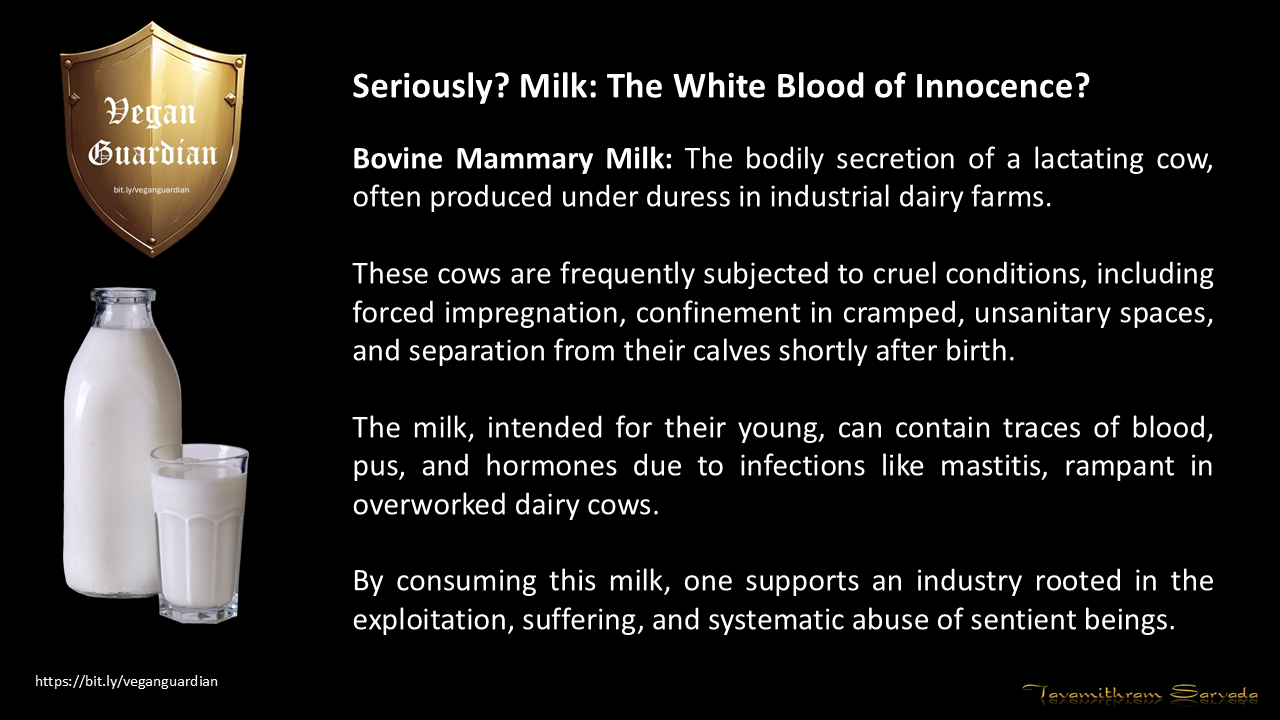
‘White Blood’ – Hypocrisy to the core!

Why me – मैं ही क्यों – நான் ஏன்?

Understanding Destiny through the Srimad Bhagavad Gita

Every morning can be treated as a new Janma (birth), carrying forward the thoughts and mindset from the previous day, thus continuing life patterns. Changing one’s life for the better is not difficult if one understands the natural principle of cause and effect and works towards acquiring the knowledge of the all-pervading Self, Brahman, or Krishna. As long as one thinks of Krishna as a separate entity, they will have expectations, which naturally lead to disappointments. Krishna is everywhere, in all beings, and is existence itself. Rise above dualitym accept responsibility and make the necessary course corrections in life. The Srimad Bhagavad Gita clearly states that the path of knowledge is the highest. Check out Shloka SBG 4:37-38.

To illustrate these concepts, I created three videos in three different languages using easy-to-understand analogies. When I made the Hindi video, one of our family members, Mr. Anupam Agarwal helped me in reviewing the Hindi script. Special thanks to him.

Additionally, I offer my latest book, ‘The Ever-Relevant Gita: A Present-Day Rendering’. This book can answer almost all possible questions one might have about destiny, karma, dharma, Krishna, birth, life, and death.

Embracing the Path of Knowledge

It is an irrefutable fact that everyone possesses some degree of a personality trait called narcissism. The degree of narcissism in a person separates a normal individual from someone who needs professional help. Even a small amount of narcissism can push a person towards feelings of entitlement, selfishness, and the typical ‘Why me?’ question. One’s own answer to this question is usually based on self-pity and a sense of being a victim of others, external forces, or misfortune.

People who care to set aside their narcissistic traits, however small and insignificant, and their feelings of victimhood, can find not just an answer to the ‘Why me?’ question but a permanent solution to it.

The following presentation analyses the ‘Why me?’ question, the principle of cause and effect, and ways to carve out a clearer, better, enjoyable, and enriching destiny with the help of teachings from the Srimad Bhagavad Gita.

May peace reign in your heart, mind, and soul, and may your life be blessed with an abundance of Divine Grace.

Jai Shri Krishna

Watch the video in the language of your choice, reflect, and take action.

WHITE BLOOD -Milk, Tradition, and Compassion: Rethinking Our Choices

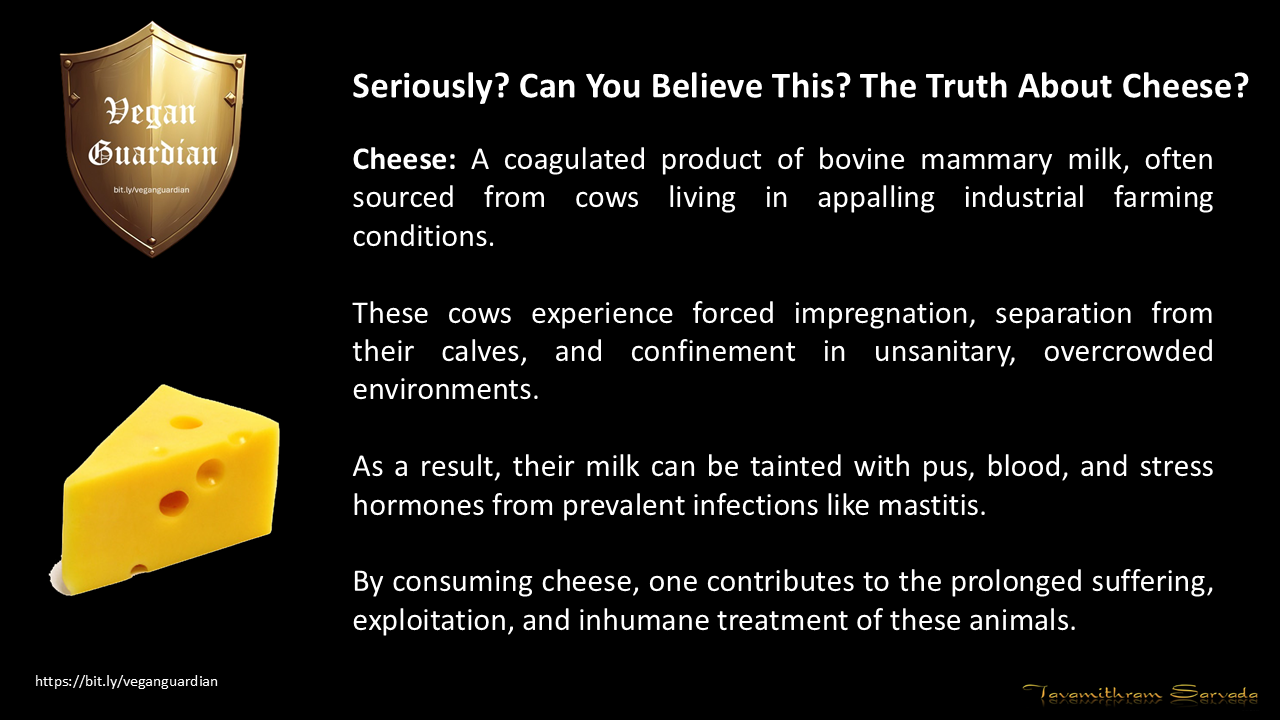
The Hypocrisy of Animal Fat in Tirupati Laddus

HYPOCRISY TO THE CORE!

Podcast (Please read and play the Podcast for a better understanding of the topic)

I was appalled and, at the same time, amused by the news of animal fat being found in the laddus sold in Tirupati!

Animal fats can be categorised as milk fats, rendered fats, and fish oils (marine oils). The main representative of milk fats is the fat from cow’s milk (milk fat, butter fat, butter oil). All other milks are of almost no importance as far as their fats are concerned.

As a pure vegan, I can say that this is another case of typical Indian hypocrisy. Many people, blinded by traditions, complain about animal fat but consume ghee. Where do they think that fat comes from? From plants? Ghee comes from the secretion, often containing pus, of bovine animals, which secrete it for their own young ones and not for fully grown adults of a different species!

Is there any other species that drinks mammary secretions in adulthood? Not even bulls do. And more so from another species! Indians are accustomed to a lot of nonsense in the name of ridiculous traditions. This stems from a lack of knowledge.

People don’t have time to spend three hours reading a copy of the Srimad Bhagavad Gita and reflecting on the supreme knowledge it offers, but when it comes to following family traditions blindly, they do so without asking a single question!

In Chapter 1, Arjuna talks about family traditions being lost, and Krishna does not even consider it something worth discussing. In Chapter 4, Krishna tells Arjuna in so many words to ask questions and get answers. He never advocated blindly following meaningless traditions.

Krishna, in Shloka SBG 9:26 says:
पत्रं पुष्पं फलं तोयं यो मे भक्त्या प्रयच्छति |
तदहं भक्त्युपहृतमश्नामि प्रयतात्मनः || ९ २६ ||
patram pushpam phalam toyam
yo me bhaktyaa prayacchati
tadaham bhaktyu-pahritam-
ashnaami praya-taat-manaha (SBG 9:26)
“I accept whatever is offered to Me with devotion and a pure heart. It could be a leaf, a flower, a fruit or a little water.” HE DID NOT SAY: STEAL A CALF’S BABY FOOD AND POUR IT ON ME!

Have you ever considered the plight of the poor cows kept in horrifying conditions, their milk taken from them? When they deliver male calves, the poor little chaps are sent straight to the slaughterhouse to be killed and their tender meat used for something else, all because they will not give milk! And these vegetarians think they are absolved of all the brutal murders done to these animals just because their meaningless traditions tell them they should consume animal milk?

IF YOU STAY SILENT ABOUT A CRIME BEING COMMITTED, YOU ARE COMPLICIT IN IT.

Watch the videos below that I published some time ago, and help your conscience come out after being shrouded for so long under ignorance. That’s called evolution.

Ten things you should know about dairy…

All confused or pseudo-devotees of Krishna, please remember that YOU ARE THAT, and so is everything and every being!

No! No creature was created for you to steal its baby food or kill and eat it!

SBG 13:27 (or 28 in some editions)
समं सर्वेषु भूतेषु तिष्ठन्तं परमेश्वरम् |
विनश्यत्स्वविनश्यन्तं यः पश्यति स पश्यति || १३ २७ ||
samam sarveshu bhooteshu
tisht-hantam parameshvaram
vinashyatsva-vinashyantam
yah pashyati sa pashyati
(SBG 13:27)
The person who truly sees is the one who sees the Paramatma or Supreme Self, existing equally in all beings – the unperishing within the perishing.

The All-pervading SELF – YOU!

There was a man called ‘Agyani’, who ‘lost himself’ and set out to ‘find himself’!

Don’t waste your time looking for yourself outside your subjective awareness! That is impossible! Contemplate yourself! Because that is the path towards Atmagnyaana – the Highest Achievement possible!

Faith vs. Reason – Christianity vs. Vedanta

Unveiling the Shocking Truth: Christianity vs. Vedanta – Faith or Reason?

We live in a world filled with diverse beliefs and philosophies, in which, the quest for truth remains a constant journey. This video, “The Shocking Truth: Christianity vs. Vedanta – Faith or Reason?” takes you on an enlightening exploration of two profound world-views that have shaped human thought and spirituality for centuries.

The Clash of Faith and Reason

Christianity and Vedanta offer distinct paths to understanding the nature of existence, the divine, and our place in the cosmos. While Christianity is rooted in faith and belief in a personal God, Vedanta emphasises knowledge and SELF-realisation, guiding seekers towards the ultimate truth of oneness with Brahman.

What to Expect in the Video

This thought-provoking video, is a discussion on the core principles of both Christianity and Vedanta, comparing and contrasting their teachings. We discuss the concept of duality versus non-duality, the role of reason and logic in spiritual pursuit, and the historical context that has shaped these traditions.

The Mahavakya or grand statement “Aham Brahmasmi” (“I am Brahman”) from the Brihadaryanaka Upanishad is a powerful representation of the Vedantic experience of unity and self-realisation. This Mahavakya can be used as a gateway to begin understanding the profound insights of Vedanta.

Stay Connected

Don’t forget to like, share, and subscribe to the Tavamithram Sarvada blog and YouTube channel for more posts and videos on philosophy, spirituality, and self-discovery. Follow this blog for updates and more enlightening content.

Embark on this journey with me and uncover the shocking truth that lies at the intersection of faith and reason.

Shattering Beliefs: The Ultimate Truth of Atman and Brahman

Unveiling the Truth: Why You Should Question Everything

This video presentation delves into profound philosophical questions through an engaging Q&A discussion. This session is designed to ignite your curiosity and challenge your understanding of reality, consciousness, and the nature of the self. This video is a must-watch if you’ve ever wondered about the deeper meanings behind ancient scriptures or the true essence of existence.

Learning Through Analogies

We explore various analogies to shed light on complex concepts. Imagine understanding the nature of consciousness through the metaphor of a wave in the ocean, a fire igniting under the right conditions, or the space within a pot. These simple yet powerful illustrations can transform your perception and deepen your insight into non-duality and the oneness of all existence.

The Importance of Inquiry

In the pursuit of knowledge, it is crucial to study, observe, analyse, and experience rather than simply accept interpretations handed down by others. The masses often prefer to listen passively rather than actively engage with the material. This passive acceptance can lead to misunderstandings and superficial knowledge. True understanding comes from questioning, probing, and seeking clarity.

As Krishna states in Shloka 4:38 of the Srimad Bhagavad Gita, “There is certainly nothing more purifying than knowledge. He who is perfect in Yoga finds it in the Self in due course of time.” This Shloka highlights the transformative power of true knowledge and its role in achieving a peaceful state of mind.

The Path to Clarity

Clarity is essential for inner peace and spiritual growth. By challenging assumptions and seeking to understand the fundamental truths, we can attain a deeper level of clarity. This journey requires patience, dedication, and a willingness to go beyond surface-level interpretations.

Why This Video is Essential

This video is not just another lecture; it’s an invitation to embark on a journey of discovery. The discussion is designed to make you think critically and inspire you to seek your own answers. I present ideas that can change the way you view the world and your place within it.

Don’t Miss Out

Join this enlightening discussion and take the first step towards true knowledge. Watch the video now and start questioning everything you thought you knew.

Stay curious, stay engaged, and remember: the journey to knowledge and clarity is the path to true peace and enlightenment.

ALSO READ THIS AND WATCH THE VIDEO
What is Atma?

From Frustration to Fulfilment

The Essential Guide to Overcoming Life’s Unfavourable Situations

*SUBSCRIBE TO MY SUBSTACK – IT’S FREE*

Breaking Free from the Cycle

Many of us find ourselves stuck in a cycle of complaining, brooding, and feeling generally dissatisfied with our circumstances. Whether it’s our job, relationships, or personal achievements, the tendency to ruminate on what’s wrong can be overwhelming. And yet, despite the temporary relief we might find in venting to a friend or relative, we often wake up the next day only to repeat the same routine, with nothing having changed. The question then arises: how can we expect change when we continue to do the same thing?

The Unproductive Cycle of Complaints

Complaining and brooding are natural human responses to dissatisfaction. It’s almost instinctual to express our frustrations when things don’t go as planned. However, these actions rarely lead to meaningful change. Instead, they often serve as a temporary release, a way to momentarily ease the pressure without addressing the underlying issues. As a result, we remain stuck in the same unfavourable situation, repeating the cycle day after day.

To break free from this cycle, it’s crucial to take a different approach—one rooted in clarity and action. The key lies in defining your problems and goals with precision. Let me take you back to my childhood to illustrate this point.

As a young boy, I was naturally curious and had a mechanical aptitude that drove me to understand how things worked. I was always eager to get to the bottom of things, refusing to accept anything at face value without clear evidence. When I was reprimanded by elders or teachers for my behaviour, I didn’t just accept the scolding. Instead, I wanted to know what I had done wrong and, more importantly, what I should do right. However, my requests for guidance were often met with silence or a cold stare, leaving me with unanswered questions.

This experience taught me a vital lesson: in any situation, if something is wrong, it’s essential to ask, “What is right?” This principle can be applied to any area of life:

  1. If you’re dissatisfied with your job, ask: What is my ideal job?
  2. If you don’t like your life, ask yourself: What would my ideal life look like?
  3. If you’re unhappy in a relationship, ask: What is the ideal relationship I want?

The Three-Step Approach to Change

Once you’ve asked these questions, the next step is to define your situation clearly. Here’s a practical approach:

  1. Identify What You Don’t Like and Why: Be specific about what bothers you. Is it the long hours at work, the lack of appreciation, or perhaps a feeling of being stuck? Understand the root cause of your dissatisfaction.

  2. Create a Clear Vision of What You Want: Visualise your ideal situation in detail. What does your perfect job look like? What qualities define your ideal relationship? Be as specific as possible, down to the finest details.

  3. Develop a Plan to Achieve Your Vision: Identify the steps you need to take to move from your current situation to your ideal one. This might involve learning new skills, making lifestyle changes, or even having difficult conversations. The key is to take actionable steps that lead you closer to your goal.

The Danger of Temporary Fixes

Many people, when faced with an unfavourable situation, seek quick fixes to ease their minds temporarily. Whether it’s pouring out your woes to a friend, closing your eyes and sitting under a tree or in a religious place, or even turning to substances, these methods offer only momentary relief. They don’t address the core issues and often lead to more frustration when the problem inevitably resurfaces.

Please always remember that if someone truly wants something, they will find a way to get it. Consider alcohol and substance addicts or those addicted to gambling—they always manage to obtain what they crave. If you feel you’ve been working hard with no improvement in your life, instead of adopting a victim or ‘poor me’ attitude, try to view it from another perspective. Perhaps your efforts are insufficient, misdirected, or lack proper direction.

Summing up and Learning to Take Control of Your Life

If you’re unhappy with your current situation, don’t waste time complaining or seeking temporary distractions. Instead, follow the steps I’ve outlined:

  1. Define your issue clearly.
  2. Visualise your ideal situation.
  3. Take actionable steps to achieve your vision.

By doing so, you’ll find that you have the power to transform your life into something truly fulfilling. These steps may seem simple, but they are profoundly effective—I speak from experience.

Never forget that many people don’t know exactly what they want. Complaining and feeling depressed require less effort than reflecting and strategising, which is why slipping into self-pity is so easy. For anything good and positive to materialise, there must first be a clear image in the mind. So, the next time you feel the urge to complain or brood, make sure you know exactly what you want.

Real change begins with a clear definition of your goals and a commitment to taking action.

A Mind-Bending Voyage

Experience the Vastness and Awesomeness of Existence

Reality, Perception, and the Awakening of Consciousness

*SUBSCRIBE TO MY SUBSTACK – IT’S FREE*

*Please listen to the audio or read the post before watching the video.

After a decade away, I found myself standing once more in front of the house where I had lived until I was 11. This was the place where my sister and I used to walk to school, hand in hand, through green fields, joyfully crossing a small brook along the way. But as I stood there, I was struck by how different everything seemed. The street that once seemed so long and wide now appeared short and narrow. The house, which I remembered as spacious, looked small. The distance to my school, which had once felt like a great journey, now seemed trivial.

What had happened? When I left Poona, I was 11 years old. Now, I was 21. I had grown taller, and my perspective had shifted. The distances and proportions I held in my mind were relative to my height and understanding as a child.

This experience confirmed a profound truth: what we call reality is shaped entirely by our perception. When I was a child, my world seemed vast. As an adult, returning to that same world, it appeared small and contained. The reality I perceived at 11 was not an absolute truth—it was a reflection of my limited perception at that time.

This realisation extends far beyond childhood memories. It speaks to the very nature of our existence and the limitations we impose upon ourselves. Those who are deluded into believing they are merely their bodies, confined by irrational religious beliefs and paralysed by the fear of defying some ‘heavenly figure’, are trapped in a narrow reality. Their consciousness is limited, their minds blocked by layers of fear, dogma, and superstition.

But imagine if they could step out of these mental prisons—if they could free themselves from the beliefs that restrict their consciousness and their ability to think freely. They would rise above these illusions and delusions, and experience the ultimate truth of their existence: the realisation of their true SELF as subjective awareness, which is formless and, once not mentally limited to the body, is all-pervading.

This is the essence of the awakening journey—transcending the childish beliefs, religions, cults, and sects that confine us, and attaining the highest state of understanding. It is a journey from the narrow confines of perception to the boundless expanses of consciousness.

Take this fascinating virtual flight through space to the end of the observable universe and back. As you do, realise the vastness and awesomeness of existence. Let it inspire you to rise above the illusions that bind you and to reach for that highest state of awareness where the ultimate truth resides, far beyond the constructs of human beliefs.

The Journey Within: Exploring Vedanta and Self-Realisation

From Illusion to Insight

Click HERE to go to my Substack. Join it. It’s FREE!

Exploring the Depths of Vedanta

Ever since I began my blog and YouTube channel in 2014, my mission has been to inspire individuals to delve deeper into the profound teachings of the Srimad Bhagavad Gita and Vedanta. These ancient philosophies offer timeless wisdom that can guide us towards self-realisation and inner peace.

In our modern world, it’s easy to get lost in the noise and distractions of daily life. However, the teachings of Vedanta provide a path to clarity and understanding. By focusing on the principles of unity and non-duality, we can transcend superficial differences and connect with our true selves.

One of the most powerful aspects of Vedanta is its emphasis on inquiry and the pursuit of knowledge. This philosophy encourages us to ask questions and seek deeper truths, fostering personal growth and mental clarity.

In my next video, I will be discussing these themes in greater detail, exploring how Vedanta can help us lead more meaningful and fulfilling lives. Stay tuned for insights and practical applications that can transform your perspective and approach to life.

Join me as we embark on this journey of self-discovery and enlightenment. Let’s explore the depths of Vedanta together!

Beyond the Veil of Illusion – Unveiling the Atman and Exposing the Claims of a ‘DEATH EXPERT’!

Unveiling the Ultimate Reality: Discover the Truth Behind Your Existence

Click HERE to go to my Substack. Join it. It’s FREE!

Have you ever found yourself pondering the nature of your existence, questioning the essence of who you are? Dive into a journey that promises to challenge your perceptions and reveal the profound truth hidden within your own being. Our latest video, “Beyond the Veil of Illusion: Unveiling the Atman and Exposing the Claims of a ‘DEATH EXPERT’!”, explores the depths of consciousness and the elusive concept of the Atman.

In this intriguing exploration, we delve into ancient wisdom and contemporary misconceptions, challenging common beliefs about the soul and self. The video introduces you to the fundamental principles of Vedanta and self-inquiry, drawing insights from revered texts like the Mandukya Upanishad and the Srimad Bhagavad Gita.

What if you could peel away the layers of illusion that obscure your true essence? Imagine discovering that the answers you seek are not in distant realms or spiritual leaders but within your very core.

Prepare to question everything you thought you knew about identity, existence, and the nature of reality. Why do some spiritual seekers chase after external validation when the truth lies within? How can understanding the Atman transform your perception of the world?

The video also takes a critical look at the claims made by so-called ‘death experts’ and spiritual mediums, challenging the prevalent myths about separate ‘souls’ or ‘atmas.’ Is it possible that these claims stem from a misunderstanding of what the Atman truly represents?

Join me on this enlightening journey to uncover the ultimate reality that transcends all illusions. Click the video below and embark on a path of self-discovery that might just change the way you see yourself and the world around you.