I am pleased to share a comprehensive resource for those dedicated to the pursuit of self-realisation through Advaita Vedanta. This collection of 45 videos, hosted on YouTube, serves as a guided journey to help you internalise the profound teachings of non-dual Vedanta, the pinnacle of all Vedic studies. Each video is thoughtfully designed to facilitate a smoother path towards the realisation of Atma-Gnyaana — the knowledge of your own true, all-pervading, and attributeless SELF, known as Brahman or Krishna.
For your convenience, I have compiled these videos into a single PDF index with clickable links, allowing you to easily access each video at your own pace.
May this resource inspire and aid you in your quest for self-awareness and enlightenment, freeing you from all fears and negative emotions. These emotions can only rob you of your most precious asset — time on this planet — without offering true happiness in return.
The Path of Knowledge has been accorded the highest status among all paths towards Self-Realisation: Shloka SBG 4:38
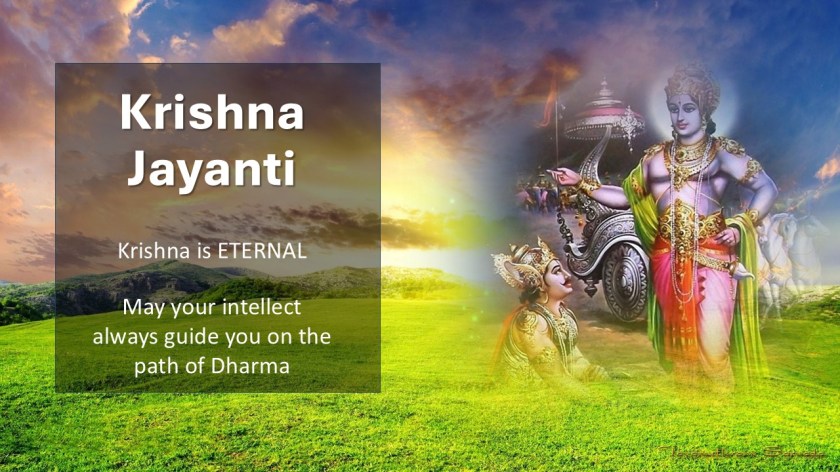
Krishna Jayanti, or Janmashtami, marks the celebrated ‘birth’ of Bhagavan Shri Krishna, an event cherished across the globe. But how does this celebration reconcile with Krishna’s own words in the Srimad Bhagavad Gita, where he declares that He was never born, nor will He ever die?
Consider this profound Shloka:
नत्वेवाहं जातु नासं न त्वं नेमे जनाधिपाः | न चैव न भविष्यामः सर्वे वयमतः परम् || २ १२ ||
na tvevaaham jaatu naasam na tvam neme janaadhi-paaha na chaiva na bhavishyaa-maha sarve vayam-ataha param SBG 2:12
“There never was a time when I did not exist, nor you, nor all these kings. We will also never cease to exist.”
In this Shloka, Krishna emphasises the eternal nature of the Atman. The physical birth and death that we observe are but mere transitions in the infinite existence of the SELF. Krishna, as the Supreme Being, transcends these limitations of time and space.
Arjuna, puzzled by this concept, continues with his questions and, in Chapter 4, asks Krishna as follows:
अर्जुन उवाच | अपरं भवतो जन्म परं जन्म विवस्वतः | कथमेतद्विजानीयां त्वमादौ प्रोक्तवानिति || ४ ४ ||
Arjuna said: “Your birth was after the birth of Vivasvaan. How should I understand when You say that You taught this Yoga to him?”
To this, Krishna responds, illuminating the mystery of His divine nature:
श्रीभगवानुवाच | बहूनि मे व्यतीतानि जन्मानि तव चार्जुन | तान्यहं वेद सर्वाणि न त्वं वेत्थ परंतप || ४ ५ ||
sri bhagavan uvaacha bahuuni me vyatii-taani janmaani tava-chaarjuna taan-yaham veda sarvaaNi na tvam vettha parantapa SBG 4:05
Sri Krishna said: “Many births of mine as well as yours have passed. I know all of them, but you don’t, O Parantapa (Arjuna – destroyer of enemies).”
Here, Krishna acknowledges the cyclical nature of birth and rebirth, highlighting that while He is aware of all His incarnations, Arjuna remains unaware.
Krishna then reveals the ultimate truth of His existence:
अजोऽपि सन्नव्ययात्मा भूतानामीश्वरोऽपि सन् | प्रकृतिं स्वामधिष्ठाय संभवाम्यात्ममायया || ४ ६ ||
ajo ‘pi san-navya-yaathma bhuuthaanaa-miishvaro ‘pi san prakrthim svaa-madhisht-haaya sambhavaa-myaathma-maayayaa SBG 4:06
“Though I am unborn and imperishable, and although I am the Bhagavan of all beings, I do incarnate by my own Maya or My Divine Energy.”
Krishna’s ‘birth’ is not conventional; it is a divine descent, an incarnation born of His own will and energy, symbolising the emergence of pure intellect after dispelling layers and layers of ignorance. Krishna Jayanti, while celebrating His appearance, also invites us to reflect on the deeper spiritual truths He embodies.
In this short video I’ve created, I delve into the essence of Krishna Janmashtami and how embracing these teachings can transform your life and lead to enduring bliss: At the end of the short video, I have translated Shloka SBG 2:12 into six Indian languages apart from English.
It is crucial to remember that taking scriptural texts literally can lead one astray from the true path of Self-Realisation, potentially fostering rigid belief systems or cult-like thinking. The Srimad Bhagavad Gita offers profound wisdom—absorb its philosophy, and use it to cultivate a life of fulfilment and spiritual growth.
A ‘disclaimer’ from Srimad Bhagavatam (not Srimad Bhagavad Gita)
“Shukadeva Gosvami spoke: O mighty King Parikshith, I have shared with you the accounts of these illustrious kings, whose fame and great deeds echoed worldwide before their departure. However, my fundamental intention has always been to impart the wisdom of the transcendental and the path of renunciation. Although the stories of kings embellish these narratives with grandeur and opulence, they, in and of themselves, do not represent the ultimate essence of knowledge.“


 Tavamithram Sarvada