Break Free from Emotional Baggage with This Transformative Two-Word Mantra
Are you tired of being stuck in repetitive emotional patterns, haunted by your past, and overwhelmed by regret? This powerful new video dives into a life-changing concept that blends spiritual clarity, emotional resilience, and mental discipline through the use of two deceptively simple yet profound mantras: “So what?” and “What next?”.
Rooted in Vedanta, and enriched by a personal journey of spiritual transformation, this message is a wake-up call for those ready to reclaim their power. Whether you’re on the path of self-inquiry, seeking personal development, or aiming to cultivate a growth mindset, this video offers direct and practical tools to help you move forward.
Let go of self-pity, stop dwelling on the past, and embrace conscious living. The time to transform your inner world is now.
Why Tavamithram is Never Aligned to Any Particular Group, Ashram, Agama, Paddhathi, Sects, Subsects, Guru, Swamy, Dress Code, Traditions, Religion etc.
Please read the post before listening to the podcast discussing the post
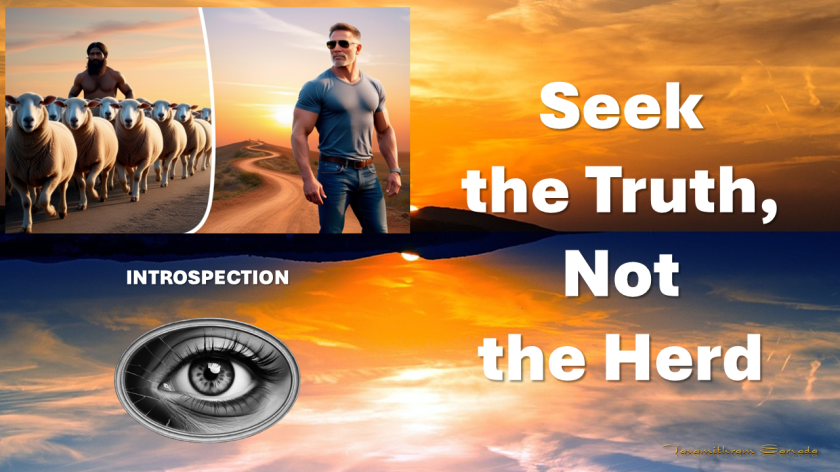
Throughout my life, I have observed a significant connection between beliefs, the desire to belong to groups, and the thirst for knowledge and self-confidence. My personal attitude has always been to stand alone. It’s crucial to clarify that my reluctance to belong to groups should not be mistaken for hubris. I simply prefer solitude, as my strong ideas often diverge from the majority, who are frequently swept away by traditions—something Krishna himself admonishes even before the conclusion of Chapter 2 in the Srimad Bhagavad Gita.
To illustrate the extent to which I go to avoid belonging to a group, let me share an example from my past. Many years ago, I was a motorcycle stuntman in Indian films, doubling for lead stars and performing death-defying stunts. In the film industry, numerous unions exist for various trades, including actors, directors, make-up artists, dancers, photographers, and others. Naturally, there was also a union for stuntmen, and I was expected to join. However, I refused to be tied down by group membership, choosing instead to remain independent. Consequently, I willingly accepted a penalty of twenty-five per cent of my earnings for not being a member. Despite this, I chose to pay the penalty each time I earned money performing stunts.
I’ve observed that individuals who are rather low on self-confidence or a sense of personal substance usually seek strength in numbers by joining groups. Being part of a group provides reassurance and a sense of belonging. Within these groups, members usually share common beliefs or philosophies, forming the basis of their unity. However, I think that belonging to a group compels individuals to adopt the group’s ideology, limiting their ability to think and act independently. I prefer the freedom to think for myself and analyse matters in my own way. Groups typically consist of like-minded individuals, which signifies a lack of diverse thought. This, in turn, stifles intellectual development and curtails opportunities for new ideas to emerge.
As an ardent learner, I find great fascination in encountering people whose ideas challenge my own, compelling me to think outside the box. This is the essence of personal evolution.
It’s essential to clarify that I do not hold beliefs in the conventional sense; instead, I possess perspectives. I have unwavering trust in my intelligence, intellect, and experiences, considering myself a keen learner in every situation I encounter.
While belonging to a group can provide a sense of security, it can also hinder personal growth and self-discovery. True self-confidence emerges from understanding and standing firm in one’s perspectives, even when they diverge from the prevailing norms of a group. By cultivating self-awareness and introspection, individuals can develop a stronger, more authentic sense of self. I am not suggesting anything against groups; rather, I strongly advocate for retaining one’s freedom to question, think, and express oneself.
Among the most detrimental effects groups can have on intellectual development is the deification of central figures, often referred to as Gurus or Babas. The story of the 24 Gurus of Sage Dattatreya aims to dismantle the false notion of being tethered to a single guru, suggesting that anything and everything that helps dispel ignorance can be considered a guru. To quote Shri Ramana Maharshi: “Your own Self-Realisation is the greatest service you can render the world.”
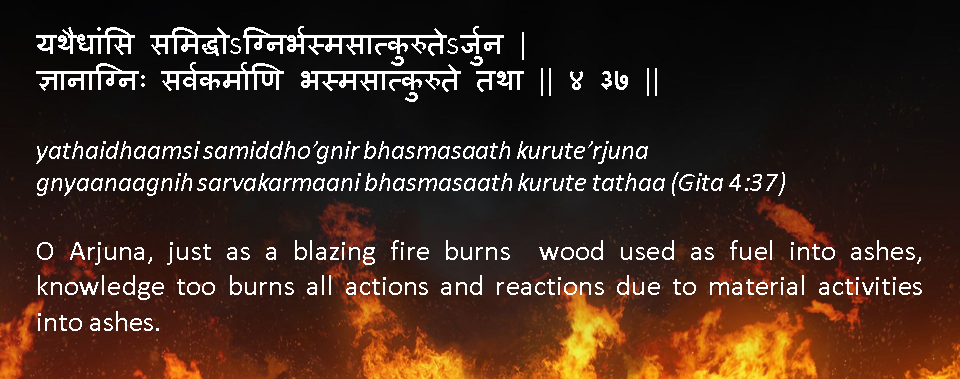
In Shloka SBG 2:45, Krishna instructs Arjuna: “Vedic literature deals with subjects that fall under the three Gunas. O Arjuna, you should rise above the three, be free from dualities, always remain in Sattva or goodness, and be established in the Self.”
A true teacher should guide individuals to clear their ignorance and advance towards the ultimate goal of Atma-gnyaana, or knowledge of the Self. However, how many truly do this? Many, adorned in flowing robes and sporting long beards, strut about like proud peacocks, claiming to possess all knowledge.
It is indeed disheartening to witness children and youth from families not converted to foreign religions being lured into the illusory world of meaningless beliefs, rites, and rituals.
Please watch this short video, and then read the post below, or listen to the audio.
Evolution is the natural order of life. Just as a pupa transforms into a beautiful butterfly, everything in nature is in a constant state of change and growth. This transformation is not just necessary but inevitable, driven by the forces of nature to improve, adapt, and thrive.
However, some choose to resist this natural process, clinging to outdated ways of thinking, strange beliefs in the name of religion, lost positions or property, former relationships, and old ways of being. This resistance is a denial of life’s fundamental principle—growth. By refusing to evolve, they remain stagnant, living in a state of delusion. In doing so, they waste the precious resources that nature provides, occupying space without contributing to the flow of progress.
Just as the butterfly’s emergence from its chrysalis is a testament to the power of transformation, so too should we embrace our own potential for growth. To resist evolution is to deny the very essence of life. By choosing to evolve, we not only fulfil our purpose but also honour the natural world that supports us.
What if I told you that anger isn’t something to be feared or suppressed, but rather a powerful force that, when harnessed wisely, can drive incredible change in your life?
Well, some people are happy with their lives, not so happy, sad, or even sick of their lives. If everything is going well, and you are happy, just continue doing what you are doing and living the way you are. I don’t propagate the ideas of ‘good and bad’ or ‘right and wrong,’ which I consider dogmatic. Common sense alone tells us that something is good and right if it makes us happy and in no way harms our health, surroundings, nature, or others.
However, many are unhappy, dissatisfied, depressed, weak, or scared and would like to change their lives for the better. For those who genuinely want to make changes, however big or small, here are some steps you might want to follow:
Identifying the Problems
Write down what you don’t like about your current situation, whether it’s your appearance, living circumstances, work, mindset, or any other area of your life. Be as specific as possible. I have given some easy and practical hacks in my video titled ‘Shatter the Cycle: BURN and RESET your Karma!’
Setting Clear Goals
Next, think about what you want to achieve. What does your ideal self look like? How do you want to feel or think differently? Write down these goals so that you have a clear target to aim for. Be absolutely specific and describe your ideal self in detail.
Execution
Once you’ve identified your problems and set your goals, begin outlining the steps or strategies needed to achieve them. This might involve altering your habits, seeking guidance, or acquiring new skills. Concentrate on taking small, manageable actions that will steadily progress you towards your objectives.
By breaking it down into these steps, you’ll have a clearer path to follow, making it easier to track your progress and stay motivated along the way.
Sitting alone, fretting, fuming, or complaining will only lead to self-pity, and that will ensure that your life stays exactly the way it is now, if not worse.
A Personal Story of Transformation
Thirty years ago, during a 48-hour self-imposed retreat, I conceived and meticulously crafted ‘Project KR’, where I defined and redefined exactly how I wanted my life to unfold.
Almost everything I described in Project KR has been happening so far. This includes the realisation of far-fetched aims, such as meeting with Queen Elizabeth II, and many other things that would have seemed impossible at that time.
I must emphasise that the goals and strategies I outlined in my playbook, which I boldly committed to nearly 30 years ago – defying all conventional thought processes and career planning – have not only materialised but have done so with astonishing precision, even in the finer details. Keep in mind, Rhonda Byrne’s ‘The Secret’ hadn’t even been written back then!
Likely Source of My Determination
My determination likely stemmed from the intense anger I harboured due to the wrongs inflicted upon me by others, which I now recognise as a result of my own naïveté or even foolishness. It’s often said that necessity is the mother of invention, and my ‘necessity,’ or rather my overwhelming drive to transform my life, was so powerful that I was able to create possibilities out of seemingly nothing.
The Triple ‘Z’: Zeal, Zest, and Zing
Around the time I embarked on my 48-hour self-reflection, I was teaching French at several management colleges. I closely observed the mindsets of my students, aged 18 to 20. Among them, only a few exhibited a profound, intense drive to set ambitious goals, achieve them, and pursue a more fulfilling life. This further reinforced my belief that not everyone possesses a high level of drive. While this isn’t inherently wrong, it can result in either a lacklustre future or a life devoid of Zeal, Zest, and Zing – qualities I was highly driven to attain and live my life to the fullest, which I had almost lost in some major accidents earlier.
In the biographies of many great individuals I’ve read, one common thread stands out: they never blamed others for their circumstances. Instead, they took full responsibility, charted their own paths, and forged ahead with determination.
Final Thoughts:
Some people write to me saying that they want to improve their lives, looks, happiness, relationships, etc., but are unable to achieve them.
Break Free from Fate and Change Your Life Instantly
Karma Hacks
The concept of karma, often misunderstood or shrouded in superstition, is essentially about the patterns and outcomes in our lives that are heavily influenced by our own attitudes, actions, and reactions. Here’s a simplified breakdown of how Karma functions and impacts our lives and even those of our descendants:


 example from my past. Many years ago, I was a motorcycle stuntman in Indian films, doubling for lead stars and performing death-defying stunts. In the film industry, numerous unions exist for various trades, including actors, directors, make-up artists, dancers, photographers, and others. Naturally, there was also a union for stuntmen, and I was expected to join. However, I refused to be tied down by group membership, choosing instead to remain independent. Consequently, I willingly accepted a penalty of twenty-five per cent of my earnings for not being a member. Despite this, I chose to pay the penalty each time I earned money performing stunts.


 Tavamithram Sarvada