“LEGACY IS ANOTHER WORD FOR EGO” – MIKE TYSON

Embrace True Life Beyond Illusions

Join my Substack. IT IS FREE.

Assumptions about oneself and blind adherence to religious beliefs lead to the illusion of greatness, fake nobility, holiness, and grandeur.

Life is the greatest gift, unfolding in the present moment. As Mike Tyson wisely puts it… READ ON SUBSTACK

From Stagnation to Success: Mastering Negative Karmic Inertia

Shattering All Blockades in Life

Understanding the Three Gunas: A Path to Self-Improvement

Understanding the three Gunas explained in the Srimad Bhagavad Gita offers profound insights into human behaviour and consciousness. These three fundamental qualities—Sattva (goodness), Rajas (passion), and Tamas (ignorance)—shape our thoughts, actions, and overall life experience. Among these, the Tamasa Guna, which embodies indolence, laziness, lethargy, negativity, and pessimism, often acts as a significant impediment to personal growth and productivity. I refer to this as ‘Negative Karmic Inertia.’

Much like maintaining a good hormonal balance is crucial for physical health, achieving a harmonious balance of the three Gunas is essential for a fulfilling and enriching life. By understanding and managing our Guna levels, we can enhance our self-awareness and work towards self-improvement. The real transformation happens within, even if the knowledge and inspiration come from external sources.

The Role of Tamasa Guna

Excessive Tamas is like a heavy weight that chains a person to the ground, preventing any positive change and perpetuating a state of lethargy and inertia. It not only affects one’s behaviour but also distorts one’s ability to rationalise and make sound decisions. A person overwhelmed by Tamas might find themselves stuck in a cycle of inaction and negativity, unable to break free and achieve their true potential.

The Three Gunas explained in the Bhagavad Gita

The Srimad Bhagavad Gita provides a detailed explanation of the three Gunas and their effects on individuals:

SBG 14:5 – “The three Gunas or qualities are Sattva, which is the quality of goodness; Rajas, which is the quality of passion; and Tamas, which is the quality of ignorance; O mighty-armed one. They are born of Prakriti which is Nature. These qualities bind very fast the immutable embodied Self in the body.”

SBG 14:6 – “Of these, Sattva, which, due to its purity, is luminous and healthy, frees a person of all Karmic reactions. Those of this Guna are attached to knowledge and to happiness, O sinless one.”

SBG 14:7 – “You should know Rajas to be the Guna or nature of passion, which is the source of desire and attachment. O Arjuna, it binds fast to the embodied Self by attachment to action.”

SBG 14:8 – “Tamas is born of ignorance and deludes all embodied beings. O Arjuna, this results in the binding of the embodied soul by negligence, sleep and laziness!”

SBG 14:9 – “O Arjuna, Sattva binds one to happiness, Rajas to action, while Tamas shrouds knowledge and binds one to idiocy.”

SBG 14:10 – “O descendant of Bharata (Arjuna), Sattva prevails over Rajas and Tamas, while Rajas manifests itself by overpowering Sattva and Tamas; and Tamas manifests itself by subduing Sattva and Rajas.”

SBG 14:11 – “When the light of wisdom shines through every sense in this body, it may be known that Sattva is predominant.”

SBG 14:12 – “When greed, endeavour for material gains, restlessness and longing arise; Rajas is predominant, O Arjuna.”

SBG 14:13 – “The presence of illusion, darkness, recklessness and delusion in a person indicate the predominance of Tamas in them, O Arjuna.”

Overcoming Negative Karmic Inertia

Many people struggle with feelings of demotivation and an inability to achieve their goals. This internal blockage often stems from an excess of the Tamasa Guna. Conversely, those driven by an excessive Rajas Guna might find themselves aggressive and even harmful in their pursuit of desires.

Managing Rajas

SBG 3:36-37: Arjuna asks Krishna: What prompts a man to perform sinful deeds, O descendant of Vrshni? Why does he commit such acts even without desiring to do them, as if he were forced?

Shri Bhagavan Krishna replies: Lust and anger are born out of the material nature called Rajoguna, which is insatiable and prompts man to commit sin. You must know that this is the greatest enemy in a man’s spiritual life.

Understanding one’s Guna ratio is akin to a doctor diagnosing a patient: it allows for targeted self-improvement. By identifying and addressing the predominant Guna that is out of balance, individuals can work on the specific areas needed to overcome unwanted situations in life.

Self-Study and Introspection

The path to self-improvement begins with self-study and introspection. Rather than casting blame on external factors, it is crucial to look within and understand the internal dynamics that drive our behaviour. By doing so, we can achieve a harmonious balance of the Gunas, leading to a more pleasant, enriching, and fulfilling life.

Finally, the knowledge of the three Gunas offers a powerful tool for self-awareness and personal growth. By recognising the influence of Tamas and working to balance it with Sattva and Rajas, we can overcome negative karmic inertia and realise our true potential. The journey to self-improvement is an inward one, and the key to success lies in understanding and managing the forces within us.

Reflect on your own Guna ratio, identify the areas that need attention, and take the necessary steps to bring balance and harmony into your life. Embrace the power of self-awareness and let it guide you towards a brighter, more fulfilling future.

If you truly want to change your life, it is you who must change, for the world will not bend to your will.

“Who looks outside dreams; who looks inside awakes.” – Carl Jung

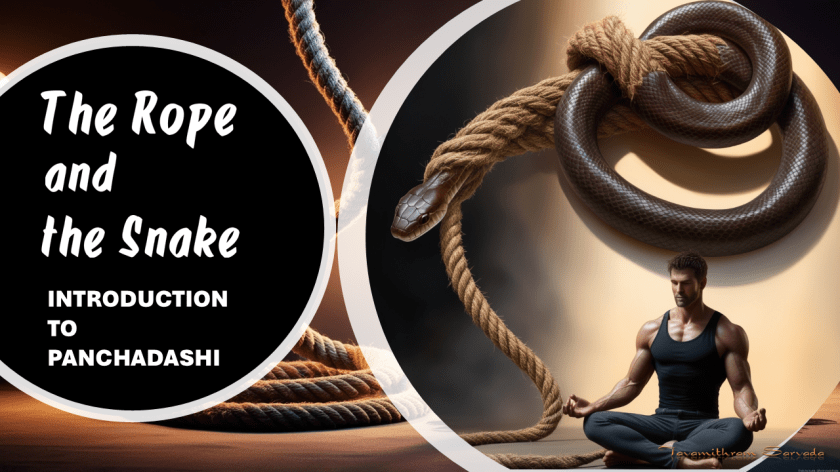
Is it a rope? Is it a snake?

Subscribing to Tavamithram’s Vedanta Wisdom Chronicles on Substack is FREE.

The Illusion of Reality

What if everything you perceive as reality is just an illusion shaped by your mind? In the ancient teachings of Advaita Vedanta, the analogy of the rope and snake is a powerful tool used to illustrate this profound truth. Imagine seeing a rope in dim light and mistaking it for a snake. Your fear and reactions are real, but the snake is not. The rope never ceases to be a rope, just as the ultimate reality never changes, despite our misconceptions. READ MORE

The Ever-Relevant Gita: A Present-Day Rendering

Embracing the Blissful Journey: The Ever-Relevant Gita – A Present-Day Rendering by Tavamithram Sarvada

Now available in various online store fronts, such as: Amazon InternationalINDEUKAUNLCAFRESPLITBRMX

*The paperback version is not available on Amazon India.

Part 1: Preface and Introduction + Chapters 1-6

The preface and introduction lay the foundation for your exploration. Don't be tempted to skip these initial chapters; they are the compass guiding you through the intricate terrain of the Gita's philosophy. Understand the core teachings, and you'll find yourself motivated to delve deeper, perhaps into the rich Bhashyams or commentaries of Shri Adi Shankara and other great teachers.

Part 2: Chapters 7-12

As you progress through these chapters, absorb the profound insights that unfold. The clarity of understanding achieved in the earlier sections becomes the stepping stone for an even more profound comprehension of Krishna's teachings.

Part 3: Chapters 13-18 + Outro

The culmination of your journey awaits in the final chapters. The outro ties the threads together, offering a comprehensive view of the Gita's timeless wisdom. This concluding section is not to be missed; it holds the key to empowerment and self-confidence.

Namaste Seekers,

Embark on a profound journey into the timeless wisdom of the Srimad Bhagavad Gita with ‘The Ever-Relevant Gita: A Present-day Rendering by Tavamithram Sarvada.’ Below, I’ll elucidate the profound significance of this work and its potential to illuminate the path to self-realisation.

In a fast-paced world fraught with complexities, the solace found in ancient wisdom often remains unexplored. 'The Ever-Relevant Gita – A Present-day Rendering by Tavamithram Sarvada’ endeavours to bridge this gap, bringing forth the profound teachings of the Srimad Bhagavad Gita to everyone, irrespective of age, background, or familiarity with ancient scriptures.

Dispelling Myths and Misconceptions

The main challenge involves dispelling misconceptions that surround the Srimad Bhagavad Gita—misconceptions about its perceived depth, religious connotations, and its relevance limited to the elderly or devout individuals. In this modern interpretation, we untangle myths and present timeless wisdom in a manner that aligns with the sensibilities of the contemporary mind.

A Unique Approach: Audio, Video, and E-book Formats

Understanding the daunting nature of lengthy translations, a unique approach has been taken by creating easily digestible audio recordings of each chapter. These recordings allow listeners to absorb the essence of the Gita at their own pace, breaking down barriers that often deter individuals from exploring this ageless scripture.

Beyond presentation, this initiative is a call to embark on a blissful journey of self-discovery. In my life, which has been shaped by numerous challenges and life-altering situations, the importance of a well-trained instinct and a balanced mindset has become crystal clear to me. A clear understanding of the fundamental principles of the teachings in the Srimad Bhagavad Gita certainly plays a pivotal role in shaping attitudes, cultivating fearlessness, and fostering rational thinking during critical moments.

Practical Insights for Daily Application

The true power of the Srimad Bhagavad Gita lies in its application in everyday life. The focus is not merely on delivering a rendition or chanting Shlokas, but on providing practical insights that enable individuals to apply these teachings in their daily lives, leading to a more fulfilling and blissful existence.

In essence, the mission is to make the teachings of the Srimad Bhagavad Gita easily accessible, relatable, and applicable to everyone, fostering a deeper understanding of life's intricacies. Join me on this enlightening journey, and let's journey through the supreme scripture together.

Those who would like a promo code for a free download of the Audiobook version of the ‘The Ever-Relevant Gita – A Present-Day Rendering by Tavamithram Sarvada’ may email their request to tavamithramoffice@gmail.com

Jai Shri Krishna

What Lies Beyond ‘You’? The Ultimate Truth in Vedanta

Who Am I? Uncovering the Timeless Mystery of Self

Subscribe to my FREE SUBSTACK for insights on self-discovery, consciousness, and Vedanta. Join now and connect with fellow seekers on a deeper journey!

Click on the image below to go directly to my Substack, read the full post, and watch a video presentation.

Why me – मैं ही क्यों – நான் ஏன்?

Understanding Destiny through the Srimad Bhagavad Gita

Every morning can be treated as a new Janma (birth), carrying forward the thoughts and mindset from the previous day, thus continuing life patterns. Changing one’s life for the better is not difficult if one understands the natural principle of cause and effect and works towards acquiring the knowledge of the all-pervading Self, Brahman, or Krishna. As long as one thinks of Krishna as a separate entity, they will have expectations, which naturally lead to disappointments. Krishna is everywhere, in all beings, and is existence itself. Rise above dualitym accept responsibility and make the necessary course corrections in life. The Srimad Bhagavad Gita clearly states that the path of knowledge is the highest. Check out Shloka SBG 4:37-38.

To illustrate these concepts, I created three videos in three different languages using easy-to-understand analogies. When I made the Hindi video, one of our family members, Mr. Anupam Agarwal helped me in reviewing the Hindi script. Special thanks to him.

Additionally, I offer my latest book, ‘The Ever-Relevant Gita: A Present-Day Rendering’. This book can answer almost all possible questions one might have about destiny, karma, dharma, Krishna, birth, life, and death.

Embracing the Path of Knowledge

It is an irrefutable fact that everyone possesses some degree of a personality trait called narcissism. The degree of narcissism in a person separates a normal individual from someone who needs professional help. Even a small amount of narcissism can push a person towards feelings of entitlement, selfishness, and the typical ‘Why me?’ question. One’s own answer to this question is usually based on self-pity and a sense of being a victim of others, external forces, or misfortune.

People who care to set aside their narcissistic traits, however small and insignificant, and their feelings of victimhood, can find not just an answer to the ‘Why me?’ question but a permanent solution to it.

The following presentation analyses the ‘Why me?’ question, the principle of cause and effect, and ways to carve out a clearer, better, enjoyable, and enriching destiny with the help of teachings from the Srimad Bhagavad Gita.

May peace reign in your heart, mind, and soul, and may your life be blessed with an abundance of Divine Grace.

Jai Shri Krishna

Watch the video in the language of your choice, reflect, and take action.

Faith vs. Reason – Christianity vs. Vedanta

Unveiling the Shocking Truth: Christianity vs. Vedanta – Faith or Reason?

We live in a world filled with diverse beliefs and philosophies, in which, the quest for truth remains a constant journey. This video, “The Shocking Truth: Christianity vs. Vedanta – Faith or Reason?” takes you on an enlightening exploration of two profound world-views that have shaped human thought and spirituality for centuries.

The Clash of Faith and Reason

Christianity and Vedanta offer distinct paths to understanding the nature of existence, the divine, and our place in the cosmos. While Christianity is rooted in faith and belief in a personal God, Vedanta emphasises knowledge and SELF-realisation, guiding seekers towards the ultimate truth of oneness with Brahman.

What to Expect in the Video

This thought-provoking video, is a discussion on the core principles of both Christianity and Vedanta, comparing and contrasting their teachings. We discuss the concept of duality versus non-duality, the role of reason and logic in spiritual pursuit, and the historical context that has shaped these traditions.

The Mahavakya or grand statement “Aham Brahmasmi” (“I am Brahman”) from the Brihadaryanaka Upanishad is a powerful representation of the Vedantic experience of unity and self-realisation. This Mahavakya can be used as a gateway to begin understanding the profound insights of Vedanta.

Stay Connected

Don’t forget to like, share, and subscribe to the Tavamithram Sarvada blog and YouTube channel for more posts and videos on philosophy, spirituality, and self-discovery. Follow this blog for updates and more enlightening content.

Embark on this journey with me and uncover the shocking truth that lies at the intersection of faith and reason.

From Frustration to Fulfilment

The Essential Guide to Overcoming Life’s Unfavourable Situations

*SUBSCRIBE TO MY SUBSTACK – IT’S FREE*

Breaking Free from the Cycle

Many of us find ourselves stuck in a cycle of complaining, brooding, and feeling generally dissatisfied with our circumstances. Whether it’s our job, relationships, or personal achievements, the tendency to ruminate on what’s wrong can be overwhelming. And yet, despite the temporary relief we might find in venting to a friend or relative, we often wake up the next day only to repeat the same routine, with nothing having changed. The question then arises: how can we expect change when we continue to do the same thing?

The Unproductive Cycle of Complaints

Complaining and brooding are natural human responses to dissatisfaction. It’s almost instinctual to express our frustrations when things don’t go as planned. However, these actions rarely lead to meaningful change. Instead, they often serve as a temporary release, a way to momentarily ease the pressure without addressing the underlying issues. As a result, we remain stuck in the same unfavourable situation, repeating the cycle day after day.

To break free from this cycle, it’s crucial to take a different approach—one rooted in clarity and action. The key lies in defining your problems and goals with precision. Let me take you back to my childhood to illustrate this point.

As a young boy, I was naturally curious and had a mechanical aptitude that drove me to understand how things worked. I was always eager to get to the bottom of things, refusing to accept anything at face value without clear evidence. When I was reprimanded by elders or teachers for my behaviour, I didn’t just accept the scolding. Instead, I wanted to know what I had done wrong and, more importantly, what I should do right. However, my requests for guidance were often met with silence or a cold stare, leaving me with unanswered questions.

This experience taught me a vital lesson: in any situation, if something is wrong, it’s essential to ask, “What is right?” This principle can be applied to any area of life:

  1. If you’re dissatisfied with your job, ask: What is my ideal job?
  2. If you don’t like your life, ask yourself: What would my ideal life look like?
  3. If you’re unhappy in a relationship, ask: What is the ideal relationship I want?

The Three-Step Approach to Change

Once you’ve asked these questions, the next step is to define your situation clearly. Here’s a practical approach:

  1. Identify What You Don’t Like and Why: Be specific about what bothers you. Is it the long hours at work, the lack of appreciation, or perhaps a feeling of being stuck? Understand the root cause of your dissatisfaction.

  2. Create a Clear Vision of What You Want: Visualise your ideal situation in detail. What does your perfect job look like? What qualities define your ideal relationship? Be as specific as possible, down to the finest details.

  3. Develop a Plan to Achieve Your Vision: Identify the steps you need to take to move from your current situation to your ideal one. This might involve learning new skills, making lifestyle changes, or even having difficult conversations. The key is to take actionable steps that lead you closer to your goal.

The Danger of Temporary Fixes

Many people, when faced with an unfavourable situation, seek quick fixes to ease their minds temporarily. Whether it’s pouring out your woes to a friend, closing your eyes and sitting under a tree or in a religious place, or even turning to substances, these methods offer only momentary relief. They don’t address the core issues and often lead to more frustration when the problem inevitably resurfaces.

Please always remember that if someone truly wants something, they will find a way to get it. Consider alcohol and substance addicts or those addicted to gambling—they always manage to obtain what they crave. If you feel you’ve been working hard with no improvement in your life, instead of adopting a victim or ‘poor me’ attitude, try to view it from another perspective. Perhaps your efforts are insufficient, misdirected, or lack proper direction.

Summing up and Learning to Take Control of Your Life

If you’re unhappy with your current situation, don’t waste time complaining or seeking temporary distractions. Instead, follow the steps I’ve outlined:

  1. Define your issue clearly.
  2. Visualise your ideal situation.
  3. Take actionable steps to achieve your vision.

By doing so, you’ll find that you have the power to transform your life into something truly fulfilling. These steps may seem simple, but they are profoundly effective—I speak from experience.

Never forget that many people don’t know exactly what they want. Complaining and feeling depressed require less effort than reflecting and strategising, which is why slipping into self-pity is so easy. For anything good and positive to materialise, there must first be a clear image in the mind. So, the next time you feel the urge to complain or brood, make sure you know exactly what you want.

Real change begins with a clear definition of your goals and a commitment to taking action.

A Mind-Bending Voyage

Experience the Vastness and Awesomeness of Existence

Reality, Perception, and the Awakening of Consciousness

*SUBSCRIBE TO MY SUBSTACK – IT’S FREE*

*Please listen to the audio or read the post before watching the video.

After a decade away, I found myself standing once more in front of the house where I had lived until I was 11. This was the place where my sister and I used to walk to school, hand in hand, through green fields, joyfully crossing a small brook along the way. But as I stood there, I was struck by how different everything seemed. The street that once seemed so long and wide now appeared short and narrow. The house, which I remembered as spacious, looked small. The distance to my school, which had once felt like a great journey, now seemed trivial.

What had happened? When I left Poona, I was 11 years old. Now, I was 21. I had grown taller, and my perspective had shifted. The distances and proportions I held in my mind were relative to my height and understanding as a child.

This experience confirmed a profound truth: what we call reality is shaped entirely by our perception. When I was a child, my world seemed vast. As an adult, returning to that same world, it appeared small and contained. The reality I perceived at 11 was not an absolute truth—it was a reflection of my limited perception at that time.

This realisation extends far beyond childhood memories. It speaks to the very nature of our existence and the limitations we impose upon ourselves. Those who are deluded into believing they are merely their bodies, confined by irrational religious beliefs and paralysed by the fear of defying some ‘heavenly figure’, are trapped in a narrow reality. Their consciousness is limited, their minds blocked by layers of fear, dogma, and superstition.

But imagine if they could step out of these mental prisons—if they could free themselves from the beliefs that restrict their consciousness and their ability to think freely. They would rise above these illusions and delusions, and experience the ultimate truth of their existence: the realisation of their true SELF as subjective awareness, which is formless and, once not mentally limited to the body, is all-pervading.

This is the essence of the awakening journey—transcending the childish beliefs, religions, cults, and sects that confine us, and attaining the highest state of understanding. It is a journey from the narrow confines of perception to the boundless expanses of consciousness.

Take this fascinating virtual flight through space to the end of the observable universe and back. As you do, realise the vastness and awesomeness of existence. Let it inspire you to rise above the illusions that bind you and to reach for that highest state of awareness where the ultimate truth resides, far beyond the constructs of human beliefs.

Amritabindu Upanishad on Substack

The MIND – Man’s Greatest Tool

*SUBSCRIBE TO MY SUBSTACK – IT’S FREE*

Learning to use the MIND as a Churning Stick to realise your TRUE DIVINE SELF!

The Amritabindu Upanishad, part of the Krishna Yajur Veda, is a concise and powerful text for true seekers of spiritual wisdom. CONTINUE ON SUBSTACK


Treat Insults and Setbacks as ‘ROCKET FUEL’

Shatter the Cycle: BURN and RESET your Karma!


The Ever-Relevant Gita: A Present-Day Rendering’

FREE PROMO CODES: LIMITED OFFER

The Greatest Gift to Yourself for 2024 and the Future

Nonduality #Vedanta #SelfDiscovery #Consciousness #Spirituality #TruthSeeker”