“Why on Earth” – Full Movie

“Why on Earth” is a powerful documentary available on Amazon Prime that takes viewers on a global journey to explore the profound connection between humans, animals, and our planet.

Featuring stunning and rarely seen footage, the film highlights the impact of deforestation and the illegal trade of threatened and endangered species. It focuses on the plight of iconic animals such as elephants, lions, sharks, and orangutans, revealing how these environmental issues affect their survival.

The documentary underscores the importance of caring for these magnificent creatures as a step towards healing our planet and fostering a better future for all living beings.

Through its eye-opening content, “Why on Earth” aims to inspire action and awareness about the urgent need for conservation efforts.

The film is directed by Katie Cleary and features Katie Cleary, Clint Eastwood, and others.

Watch the full film

Clint Eastwood, 94-year-old vegan actor legend, formulated one of the most important lessons of his life so far for the young generation:

“Don’t look for luxury in watches or bracelets, don’t look for luxury in villas or sailboats!

Luxury is laughter and friends, luxury is rain on your face, luxury is hugs and kisses.

Don’t look for luxury in shops, don’t look for it in gifts, don’t look for it in parties, don’t look for it in events!

Luxury is being loved by people, luxury is being respected, luxury is having your parents alive, luxury is being able to play with your grandchildren.

Luxury is what money can’t buy.”
(2024)

Holy Cow! Echoes of Despair

The Silent Cry of Bovine Suffering

The Unspoken Suffering: A Wake-Up Call for Compassionate Living

The daily rush drowns out a different kind of sound: the quiet cries of pain. Bovine animals, those once majestic creatures who grazed peacefully in our fields and fed our families, now endure a hidden world of suffering. We rush past it, oblivious to the silent desperation in their eyes, and to the echoes of their cries that go unnoticed in the corridors of human indifference.

For centuries, cows and their kin have been steadfast companions to humanity, serving not only as a source of nourishment but also, in a nation like Bharat or modern-day India, as symbols of reverence in pastoral cultures. However, right since the beginning of the 20th century, the landscape has shifted, and with it, the treatment of these gentle giants has taken a grim turn.

In the relentless pursuit of productivity, international milk industries have reduced cows to mere commodities, neglecting their intrinsic worth and relegating them to the confines of profit margins. The consequence? Once these noble creatures cease to produce milk, they are callously abandoned, left to wander the unforgiving Indian streets in search of sustenance. 

Whitewashing all the horrible things done to cows in the name of religious traditions is an even greater crime against nature. Where in the Srimad Bhagavad Gita does Krishna ask a devotee to pour milk on His ‘vigrahas’?

Picture the heartbreaking sight of aged cows, once cherished, now forced to scavenge for scraps, their proud stature diminished by neglect and apathy. It’s a stark reminder of our collective failure to uphold the values of compassion and empathy that lie at the core of our humanity. Many Indians accord cows the status of a mother because they ‘give’ milk. Would these same people send their own mothers to the streets to find food? Why is there such hypocrisy when it comes to bovine animals? Humans steal baby cow food and claim that the cow ‘gave’ them her milk? When did a cow ever ring the doorbell of a farmer and offer her milk for human consumption?! 

I personally use the term ‘white blood’ for mammary milk. You might want to Google the question, ‘Why is milk white?’

But there is hope, flickering like a candle in the darkness of indifference. Each of us holds the power to make a difference, however small, in the lives of these sentient beings. By choosing to embrace compassion and extend a helping hand to those in need, we can rewrite the narrative of suffering and create a world where kindness reigns supreme.

To those who champion vegetarianism as a symbol of purity and ethical living, I urge you to confront the uncomfortable truth: your consumption habits, albeit plant-based, still greatly contribute to the suffering of bovine animals. Watch the short video linked below to gain a deeper understanding of how your choices resonate far beyond your plates.

While this post focuses on the exploitation of bovine animals, it serves as a call to awaken compassion in the hearts of people for all living beings. Every living being has the right to live its full natural life.

When humans consume meat, dairy, or any other animal product, it is merely one drink, snack, or meal for them, but for the poor, voiceless animals, it is their whole life.

Being vegetarian alone does not absolve the consumer of being a part of the system of mass animal torture and slaughter. Going 100% Vegan is the only way and the highest stage in the process of human dietary evolution.

Let us not turn a blind eye to the suffering of our fellow beings. Let us stand united in our commitment to uphold the rights of all creatures, great and small. For in our collective compassion lies the promise of a brighter, more humane future for future generations.

NO! Meat and other animal products are not necessary for a healthy, disease-free, peaceful, and happy life. Research for yourself if you so wish, try, yes, at least try to emerge out of the cognitive dissonance that shrouds the intellect of masses, and leads them towards unimaginable diseases.

Watch the heart-rending short video below, as well as the other videos I have shared on this post, and take a step towards compassionate living. Together, we can make a difference.

Visit TVM Vegan to watch more informative videos on the subject.

If you care for your own health and that of your loved ones, please don’t miss the film ‘What the Health?’

‘Ma Ka Doodh’/’Mother’s Milk’: Rethinking the Milk Myth and Cultural Beliefs

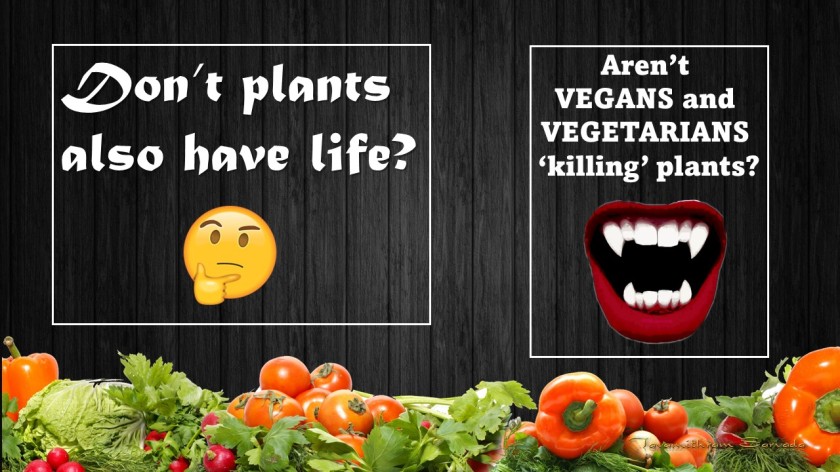
‘Don’t plants also have life?’ Debunking the ‘Plants Have Life’ Argument

Unveiling the Vegan Truth: Humans as Herbivores

Meat eaters frequently make absurd arguments to vegans and vegan activists, asking why they eat plants when they also have life.

Unfortunately, when faced with such inquiries, vegans and vegan activists often provide justifications that focus on plants lacking a central nervous system or experiencing pain differently from sentient beings. However, these defensive explanations can be easily challenged and refuted through intelligent debate.

The simple and clear response to the question of why it is acceptable for humans to consume plant-based foods lies in the fact that humans are inherently herbivorous creatures, and this is the natural order of things.

Introduction

In a world where veganism is often met with skepticism and misconceptions, it’s time to explore the inherent herbivorous nature of humans. In this brief presentation, my goal is to illuminate the reasons why adopting a plant-based lifestyle is not only a compassionate choice for the sake of animals but, more importantly, a vital step towards enhancing our own well-being. Through debunking prevalent arguments and exploring the associated health benefits, I aim to shed light on the significance of embracing a plant-based way of life.

Humans as Herbivores: Debunking Misconceptions

As I said earlier, one of the most common arguments against veganism is the notion that if plants and vegetables are considered living beings, then why should vegans, who claim to not hurt animals, eat them? While this argument may seem valid at first glance, a closer examination reveals the fundamental misunderstanding that humans, by nature, are herbivorous beings.

Upon examining the physical attributes of humans, we can identify resemblances to those found in other herbivorous animals. Notably, herbivores commonly possess ridged molars and flexible jaws that facilitate the efficient grinding of plant-based foods. Unlike carnivorous animals, humans generally have less prominent canines, and even when they are present, they are small and not crucial for food mastication.

Moreover, the length of our intestines serves as evidence supporting our herbivorous nature. Herbivorous animals typically possess longer intestines when compared to their carnivorous counterparts. This distinction arises from the requirement for a more extended digestive process and optimal nutrient extraction from plant-based diets.

The Natural State of Food Consumption

A simple method of discerning food suitable for human consumption is to consider whether a food item can be eaten in its natural form without the need for cooking, spicing, or other alterations. As you know, vegetables and fruits, for example, can be plucked directly from their respective plants or trees and consumed as intended by nature. On the other hand, consuming meat necessitates the killing of an innocent creature. It requires the skinning, washing, and cooking of the animal using various methods and spices to make it palatable.

Health Benefits of a Plant-Based Diet

Contrary to popular belief, a vegan diet can provide all the necessary nutrients for a healthy and thriving body. In fact, doctors often recommend a plant-based diet for various health conditions, let alone severe ones such as cancer. Research suggests that adopting a plant-based lifestyle can improve overall well-being, reduce the risk of chronic diseases, reverse ageing, and help overcome most health conditions.

Veterinary medications, such as antibiotics, growth hormones, and antiparasitic drugs, are employed in livestock animals for disease management and growth promotion.
Consuming the meat and other products of such animals may have adverse effects on the humans who consume them. By choosing a plant-based lifestyle, individuals can steer clear of these potential health hazards.

Embracing a Compassionate and Wholesome Life

The concept of “carnism,” popularised by Dr Melanie Joy in her book “Why We Love Dogs, Eat Pigs, and Wear Cows,” I sincerely recommend the book, sheds light on the prevailing ideology that supports the use and consumption of animal products. However, it is essential to question and challenge these societal norms. People often say, “Our parents and forefathers did it, and so we too will do it.” Well, haven’t such people heard the term ‘evolution’?

By adopting a vegan lifestyle, we not only practise kindness towards fellow inhabitants of the planet that belong to other species, but also prioritise our own health and well-being. It’s time to reclaim our herbivorous heritage and recognise the power of a plant-based diet in fostering a healthy, happy life.

In conclusion, embracing veganism goes beyond the realm of dietary choices. It represents a compassionate and mindful approach towards animals, the whole of nature, and our own health. By understanding our herbivorous nature, debunking misconceptions, and appreciating the multiple benefits of following a plant-based diet, we can pave the way for a better future, the one that our future generations deserve.

I’d like to end this presentation with some wise words of the Greek Middle Platonist philosopher, Plutarch, who lived about two millennia ago.

A human body in no way resembles those that were born for ravenousness; it has no hawk’s bill, no sharp talon, no roughness of teeth, no such strength of stomach or heat of digestion, as can be sufficient to convert or alter such heavy and fleshy fare.

But if you will contend that you were born with an inclination to such food as you now have a mind to eat, kill the animal yourself without the help of a chopping knife, mallet, or axe, as wolves, bears, and lions do, who kill and eat at once. Rend an ox with your teeth, worry a hog with your mouth, tear a lamb or a hare in pieces, and fall on and eat it alive as they do.

But if you would rather stay until what you eat is to become dead, and if you are loath to force a soul out of its body, why then, do you, against nature, eat an animate thing?

There is nobody that is willing to eat even a lifeless and dead thing even as it is; so they boil it, roast it, and alter it by fire and medicines, as it were, changing and quenching the slaughtered gore with thousands of sweet sauces, that the palate, being thereby deceived, may admit of such uncouth fare.”
― Plutarch

Love animals and protect them. The fact is that they are more useful to the ecosystem than we humans.

Love and respect Mother Nature.

Stay blessed.

Jai Shri Krishna.

It is truly heartening to see young people realise the benefits of plant-based foods and the increase in the number of vegan restaurants in various countries and cities.