

In the month of December 2002, a good friend of mine sent me a copy of this extraordinary speech by Mr. Narayana Murthy of Infosys. The speech touched my heart, as I agreed with everything that was said in it. That was the time when I had completed about two years in Europe. I must have sent the text of the speech to quite a few people in India in order to help them come out of the bubble that they have been mentally conditioned to live in by society and become more international in their attitude, thinking, outlook, and approach. I gather that this speech has been used in many management colleges in India too. The contents of the speech are simply phenomenal, as they come from a man who has experienced the reality of India and has also climbed great heights, carving a niche for himself in the international world of business as well as of philanthropy.
I suggest that you go through the text of the speech a few times, as I am positive that you will discover quite a few secrets to achieving great success and fulfillment in life. How I wish I had this knowledge when I was in my early twenties!
 There was an incident in my life when I used this speech of Mr. Narayana Murthy to save my life in Europe from being destroyed forever. It was the beginning of my career in Europe. I was working on a large project that I had secured from a major European business house. The order was one of the first decent orders I received after driving thousands of kilometres on marketing tours carrying product samples to various potential European customers in Central Europe.
The particular project was the second one with my Indian partner, whose job it was to source raw materials, manufacture the products, pack them, and ship them to me at the port of Hamburg. My partner is an intelligent, highly efficient, and honest person, but the problem was that at that time, he had never been out of India and had no idea of Europe or the quality standards followed in this part of the world. The shipments arrived from India, and to my utter dismay, the materials were rejected by my client because they did not match the requirements of the government tender.
The stress soon escalated, and I was sued by my European client. I was ordered by the tribunal to pay the client a huge amount of money as compensation for the poor-quality materials that were supplied by my partner in India. I had the choice of either running away from Europe or facing the situation like a real man and using the incident, which was a major fiasco, to turn everything around and change my life for the better. I took the next flight to India to meet with my team. My Indian business partner organised a team lunch, during which I first heard all that the team members had to say about the poor quality of materials supplied to me.
They came up with so many reasons, excuses, and justifications. Some of them even argued that there was nothing wrong with the materials and that my German client was stupid!
After lunch, I called everyone to me and gave them a talk. I started by speaking about Germany, its history, the devastation the nation underwent in WWII, and the poverty that the country was forced into as its entire infrastructure was destroyed in the war and because most of the men were dead.

The country was facing an incredibly bleak future. But thanks to the law-abiding nature, extreme sense of discipline and perfection, work philosophy, and high ethics that are ingrained in Germans, who according to me are true Karmayogis, although they do not know this about themselves, they not only rebuilt the country but soon became the envy of most of the world.
Their GDP rose to become the third highest in the world.

I then started speaking my heart out to the team members and said to them how fascinated I have always been about Germany, German standards, and their culture, and about how much I have learned from them.
I then told them that I was going to read out to them a speech given by Mr. Narayana Murthy, and that I expected them to listen to it carefully.
As I read the text of the speech, I spiked it with a lot of emotion, and I could see some were squirming uncomfortably due to certain truths about Indians that Mr. Narayana Murthy spoke about, while others appeared to be in total agreement with his words.
The result of the lunch meeting and my talk was perfect ‘Made in Germany’ quality products from the same workers in India. I went back to Germany, paid the compensation amount, and delivered the correct materials in place of the rejected ones.
The reward I received for my honesty and commitment was a sharp rise in my business, and I earned the reputation of being the most capable, reliable, and trustworthy Indian supplier of high-quality products. I could create a strong position for myself in the market out here in Europe. This went on for a number of years.
During my interaction with my partner and my team, there was one major hurdle that I had to cross after almost every sentence that I uttered. It was that they simply did not like it when I pointed out faults with them, with their work, or with what they said.
In my experience, I have always observed that Indians generally can’t take criticism. When someone points out a flaw in their work or passes a negative remark, they immediately go into self-protection or even self-pity mode and get upset and angry.
Whereas I, thanks to the teachings of my wonderful father, look at criticism from others as free information regarding something I did not know about myself.
I would never want to throw into the dustbin such vital information that comes to me from the head of another person for free. Learning from others is what we all do all through our lives, and therefore, it would only make more sense to learn from people or societies that have travelled a longer distance than we have, as this will save us time and effort. By doing so, we will not have to reinvent the wheel. I know that after coming to Europe my whole life, my mental attitude and so many other qualities of mine drastically changed for the better. However, this change in me should not be confused with the pseudo-westernisation that many young Indians suffer from.
Even after living in the heart of Europe for almost two decades, my family and I are highly patriotic Indians, Dharmic to the core, and we respect our own culture and traditions probably even more than many young Indian people who have never been outside of India.
If you are an Indian visitor to this site, I would suggest that you carefully read the text of Mr. Narayana Murthy’s speech, reread it whenever possible, and find ways to apply the philosophy in your work atmosphere and also in your life. You will soon see remarkable effects, including more drive, enthusiasm, and passion in you and in your team members.
Jai Shri Krishna
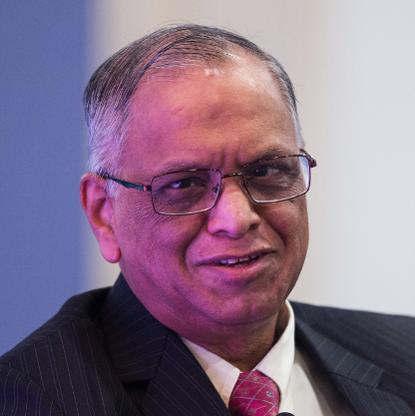 The complete text of the talk, Role of Western values in Contemporary Indian Society – delivered at the Lal Bahadur Shastri Institute of Management on October 02, 2002 by Chairman of the Board, Infosys Technologies Limited, Bangalore, India.
Ladies and gentlemen,
It is a pleasure to be here at the Lal Bahadur Shastri Institute of Management. Lal Bahadur Shastri was a man of strong values and he epitomized simple living. He was a freedom fighter and innovative administrator who contributed to nation building in full measure. It is indeed a matter of pride for me to be chosen for the Lal Bahadur Shastri Award for Public Administration and Management Sciences.
I thank the jury for this honor. When I got the invitation to speak here, I decided to speak on an important topic on which I have pondered for years – the role of Western values in contemporary Indian society. Coming from a company that is built on strong values, the topic is close to my heart. Moreover, an organization is representative of society, and some of the lessons that I have learnt are applicable in the national context. In fact, values drive progress and define quality of life in society.
The word community joins two Latin words com (“together” or “with”) and unus (“one”). A community, then, is both one and many. It is a unified multitude and not a mere group of people. As it is said in the Vedas: Man can live individually, but can survive only collectively. Hence, the challenge is to form a progressive community by balancing the interests of the individual and that of the society. To meet this, we need to develop a value system where people accept modest sacrifices for the common good. What is a value system? It is the protocol for behavior that enhances the trust, confidence and commitment of members of the community. It goes beyond the domain of legality – it is about decent and desirable behavior. Further, it includes putting the community interests ahead of your own. Thus, our collective survival and progress is predicated on sound values. There are two pillars of the cultural value system – loyalty to family and loyalty to community. One should not be in isolation to the other, because, successful societies are those which combine both harmoniously. It is in this context that I will discuss the role of Western values in contemporary Indian society. Some of you here might say that most of what I am going to discuss are actually Indian values in old ages, and not Western values.
I live in the present, not in the bygone era. Therefore, I have seen these values practiced primarily in the West and not in India. Hence, the title of the topic. I am happy as long as we practice these values – whether we call it Western or old Indian values. As an Indian, I am proud to be part of a culture, which has deep-rooted family values. We have tremendous loyalty to the family. For instance, parents make enormous sacrifices for their children. They support them until they can stand on their own two feet. On the other side, children consider it their duty to take care of aged parents. We believe: Mathru devo bhava – mother is God, and Pithru devo bhava – father is God. Further, brothers and sisters sacrifice for each other. In fact, the eldest brother or sister is respected by all the other siblings. As for marriage, it is held to be a sacred union – husband and wife are bonded, most often, for life. In joint families, the entire family works towards the welfare of the family. There is so much love and affection in our family life. This is the essence of Indian values and one of our key strengths. Our families act as a critical support mechanism for us. In fact, the credit to the success of Infosys goes, as much to the founders as to their families, for supporting them through the tough times.
Unfortunately, our attitude towards family life is not reflected in our attitude towards community behavior. From littering the streets to corruption to breaking of contractual obligations, we are apathetic to the common good. In the West – the US, Canada, Europe, Australia, New Zealand – individuals understand that they have to be responsible towards their community.
The primary difference between the West and us is that, there, people have a much better societal orientation. They care more for the society than we do. Further, they generally sacrifice more for the society than us. Quality of life is enhanced because of this. This is where we need to learn from the West.
I will talk about some of the lessons that we, Indians, can learn from the West. In the West, there is respect for the public good. For instance, parks free of litter, clean streets, public toilets free of graffiti – all these are instances of care for the public good. On the contrary, in India, we keep our houses clean and water our gardens everyday – but, when we go to a park, we do not think twice before littering the place. Corruption, as we see in India, is another example of putting the interest of oneself, and at best that of one’s family, above that of the society. Society is relatively corruption free in the West. For instance, it is very difficult to bribe a police officer into avoiding a speeding ticket. This is because of the individual’s responsible behavior towards the community as a whole. On the contrary, in India, corruption, tax evasion, cheating and bribery have eaten into our vitals. For instance, contractors bribe officials, and construct low-quality roads and bridges. The result is that society loses in the form of substandard defence equipment and infrastructure, and low-quality recruitment, just to name a few impediments. Unfortunately, this behavior is condoned by almost everyone. Apathy in solving community matters has held us back from making progress, which is otherwise within our reach. We see serious problems around us but do not try to solve them. We behave as if the problems do not exist or is somebody else’s. On the other hand, in the West, people solve societal problems proactively.
There are several examples of our apathetic attitude. For instance, all of us are aware of the problem of drought in India. More than 40 years ago, Dr. K. L. Rao – an irrigation expert, suggested creation of a water grid connecting all the rivers in North and South India, to solve this problem. Unfortunately, nothing has been done about this. The story of power shortage in Bangalore is another instance. In 1983, it was decided to build a thermal power plant to meet Bangalore’s power requirements. Unfortunately, we have still not started it. Further, the Milan subway in Bombay is in a deplorable state for the last 40 years, and no action has been taken.
To quote another example, considering the constant travel required in the software industry; five years ago, I had suggested a 240-page passport. This would eliminate frequent visits to the passport office. In fact, we are ready to pay for it. However, I am yet to hear from the Ministry of External Affairs on this. We, Indians, would do well to remember Thomas Hunter’s words: Idleness travels very slowly, and poverty soon overtakes it.
What could be the reason for all this? We were ruled by foreigners for over thousand years. Thus, we have always believed that public issues belonged to some foreign ruler and that we have no role in solving them. Moreover, we have lost the will to proactively solve our own problems. Thus, we have got used to just executing someone else’s orders. Borrowing Aristotle’s words: We are what we repeatedly do. Thus, having done this over the years, the decision-makers in our society are not trained for solving problems. Our decision makers look to somebody else to take decisions. Unfortunately, there is nobody to look up to, and this is the tragedy. Our intellectual arrogance has also not helped our society. I have traveled extensively, and in my experience, have not come across another society where people are as contemptuous of better societies as we are, with as little progress as we have achieved. Remember that arrogance breeds hypocrisy. No other society gloats so much about the past as we do, with as little current accomplishment.
Friends, this is not a new phenomenon, but at least a thousand years old. For instance, Al Barouni, the famous Arabic logician and traveler of the 10th century, who spent about 30 years in India from 997 AD to around 1027 AD, referred to this trait of Indians. According to him, during his visit, most Indian pundits considered it below their dignity even to hold arguments with him. In fact, on a few occasions when a pundit was willing to listen to him, and found his arguments to be very sound, he invariably asked Barouni: “Which Indian pundit taught these smart things”!
The most important attribute of a progressive society is respect for others who have accomplished more than they themselves have, and learn from them. Contrary to this, our leaders make us believe that other societies do not know anything! At the same time, every day in the newspapers, you will find numerous claims from our leaders that ours is the greatest nation. These people would do well to remember Thomas Carlyle’s words: The greatest of faults is to be conscious of none.
If we have to progress, we have to change this attitude, listen to people who have performed better than us, learn from them and perform better than them. Infosys is a good example of such an attitude. We continue to rationalize our failures. No other society has mastered this art as well as we have. Obviously, this is an excuse to justify our incompetence, corruption, and apathy. This attitude has to change. As Sir Josiah Stamp has said: It is easy to dodge our responsibilities, but we cannot dodge the consequences of dodging our responsibilities.
Another interesting attribute, which we Indians can learn from the West, is their accountability. Irrespective of your position, in the West, you are held accountable for what you do. However, in India, the more ‘important’ you are, the less answerable you are. For instance, a senior politician once declared that he ‘forgot’ to file his tax returns for 10 consecutive years – and he got away with it. To quote another instance, there are over 100 loss-making public sector units (central) in India. Nevertheless, I have not seen action taken for bad performance against top managers in these organizations. Dignity of labor is an integral part of the Western value system. In the West, each person is proud about his or her labor that raises honest sweat. On the other hand, in India, we tend to overlook the significance of those who are not in professional jobs. We have a mindset that reveres only supposedly intellectual work. For instance, I have seen many engineers, fresh from college, who only want to do cutting-edge work and not work that is of relevance to business and the country.
However, be it an organization or society, there are different people performing different roles. For success, all these people are required to discharge their duties. This includes everyone from the CEO to the person who serves tea – every role is important. Hence, we need a mindset that reveres everyone who puts in honest work. Indians become intimate even without being friendly. They ask favors of strangers without any hesitation. For instance, the other day, while I was traveling from Bangalore to Mantralaya, I met a fellow traveler on the train. Hardly 5 minutes into the conversation, he requested me to speak to his MD about removing him from the bottom 10% list in his company, earmarked for disciplinary action. I was reminded of what Rudyard Kipling once said: A westerner can be friendly without being intimate, while an easterner tends to be intimate without being friendly. Yet another lesson to be learned from the West, is about their professionalism in dealings. The common good being more important than personal equations, people do not let personal relations interfere with their professional dealings. For instance, they don’t hesitate to chastise a colleague, even if he is a personal friend, for incompetent work. In India, I have seen that we tend to view even work interactions from a personal perspective. Further, we are the most ‘thin-skinned’ society in the world – we see insults where none is meant. This may be because we were not free for most of the last thousand years.
Further, we seem to extend this lack of professionalism to our sense of punctuality. We do not seem to respect the other person’s time. The Indian Standard Time somehow seems to be always running late. Moreover, deadlines are typically not met. How many public projects are completed on time? The disheartening aspect is that we have accepted this as the norm rather than the exception.
In the West, they show professionalism by embracing meritocracy. Meritocracy by definition means that we cannot let personal prejudices affect our evaluation of an individual’s performance. As we increasingly start to benchmark ourselves with global standards, we have to embrace meritocracy. In the West, right from a very young age, parents teach their children to be independent in thinking. Thus, they grow up to be strong, confident individuals. In India, we still suffer from feudal thinking. I have seen people, who are otherwise bright, refusing to show independence and prefer to be told what to do by their boss. We need to overcome this attitude if we are to succeed globally.
The Western value system teaches respect for contractual obligation. In the West, contractual obligations are seldom dishonored. This is important – enforceability of legal rights and contracts is the most important factor in the enhancement of the credibility of our people and nation. In India, we consider our marriage vows as sacred. We are willing to sacrifice in order to respect our marriage vows. However, we do not extend this to the public domain. For instance, India had an unfavorable contract with Enron. Instead of punishing the people responsible for negotiating this, we reneged on the contract – this was much before we came to know about the illegal activities at Enron. To quote another instance, I had given recommendations to several students for the national scholarship for higher studies in US universities. Most of them did not return to India even though contractually they were obliged to spend five years after their degree in India. In fact, according to a professor at a reputed US university, the maximum default rate for student loans is among Indians – all of these students pass out with flying colors and land lucrative jobs, yet they refuse to pay back their loans. Thus, their action has made it difficult for the students after them, from India, to obtain loans. We have to change this attitude.
Further, we Indians do not display intellectual honesty. For example, our political leaders use mobile phones to tell journalists on the other side that they do not believe in technology! If we want our youngsters to progress, such hypocrisy must be stopped. We are all aware of our rights as citizens. Nevertheless, we often fail to acknowledge the duty that accompanies every right. To borrow Dwight Eisenhower’s words: A people that values its privileges above its principles soon loses both. Our duty is towards the community as a whole, as much as it is towards our families. We have to remember that fundamental social problems grow out of a lack of commitment to the common good. To quote Henry Beecher: Culture is that which helps us to work for the betterment of all. Hence, friends, I do believe that we can make our society even better by assimilating these Western values into our own culture – we will be stronger for it.
Most of our behavior comes from greed, lack of self-confidence, lack of confidence in the nation, and lack of respect for society. To borrow Gandhi’s words: There is enough in this world for everyone’s need, but not enough for everyone’s greed. Let us work towards a society where we would do unto others what we would have others do unto us. Let us all be responsible citizens who make our country a great place to live. In the words of Churchill: Responsibility is the price of greatness. We have to extend our family values beyond the boundaries of our home.
Finally, let us work towards maximum welfare of the maximum people – Samasta janaanaam sukhino bhavantu. Thus, let us – people of this generation, conduct ourselves as great citizens rather than just good people so that we can serve as good examples for our younger generation.
Thank you.
End of the speech.
 Tavamithram Sarvada