

SBG Quick Reference – Web Stories
Introduction to Vedanta – A Crash Course
NEW POST:
SANATANA DHARMA – The Natural, Sustainable, and Eternal Way of Righteous Living
The Ishavasya Upanishad – The Great Truth of the eternal Sanatana Dharma in a nutshell
“The Highest Purusha who dwells in You, that I am”

It is hard to understand why most people fail to comprehend the politics behind organised religion. Karl Marx rightly said that religion is the opium of the masses. Rulers take control of the minds of huge numbers of people by dictating to them what they should think and believe.
Life
Everything exists until life exists, and we know we exist only when we are awake and conscious. It is this state of consciousness that tells us that we are even alive. When people are asleep, they neither know they are alive nor which religion or cult they belong to. Life is the most important thing and should never be taken for granted.
Faith and belief
The belief in a tomorrow and the hope that it would be a better one, make life worth living. The adage ‘Faith can move mountains,’ proves that the human mind is the most powerful force and its harnessing and training are absolutely essential.
SANATANA DHARMA and Karma – A quick look
This is not a religion or ‘ism’ but a ‘Dharma’ (Natural Sustainable Way of Life). It was neither started by nor named after anyone. It is certainly not polytheistic as many think. There aren’t thousands of ‘gods’ but there are numerous manifestations or expressions of the all-pervading Supreme Divine. The Sanatana Dharma (a.k.a. ‘Hinduism’, which is a term that has no mention in any of the Vedic scriptures), is more of a monistic philosophy.
त्वमक्षरं परमं वेदितव्यं
त्वमस्य विश्वस्य परं निधानम् |
त्वमव्ययः शाश्वतधर्मगोप्ता
सनातनस्त्वं पुरुषो मतो मे || ११ १८ ||
tvamaksharam paramam vedi-tavyam
tvamasya vishvasya param nidhaanam
tva mavya-yah shaashvata-dharma-goptaa
sanaatana-stvam purusho mato me (SBG 11:18)
(Arjuna says to Krishna) You are inexhaustible and the Supreme Being to be known. You are the Supreme basis of the universe. You are the Imperishable Protector of the Sanatana Dharma (eternal way of righteous living). This is my opinion.
‘Advaita‘ or ‘Nondualism’ is the foundation of this way of life. Nondualism literally means ‘No two’ or rather god and ‘I’ are not separate. The various deities are anthropomorphisations of different forces and are steps used to train the mind in order to reach the highest.
A well-informed Sanatani finds the clichéd question, ‘Does ‘god’ exist?’ to be an absolutely silly one. This is because, the Sanatana Dharma is the one and only modern, scientific, rational, and logical way of life that does not propound childish theories such as that of a god living in heaven and that of a six-day creation of the earth, moon, fish, birds, animals, and humans. There is no one sitting in the clouds and watching people all the time. There is no hell (purgatory) or heaven. There is no beginning or end, but only cycles of time.
By understanding the Bhagavad Gita, one learns the art and technique of achieving superconsciousness by learning to harness the power of the mind through devotion, knowledge, and right action. The Bhagavad Gita teaches righteousness, which can be followed in life by anyone or through all the Three Margas (Paths) instructed directly to Arjuna by Bhagavan Krishna Himself. A person who has learned this stays within the framework of Dharma and yet attains the ability to achieve almost anything. Such a person is blessed with a stable mind and absolute fearlessness.
Religion and politics
Sanatana Dharma as taught by Krishna can never be used as opium for the masses because it is basically unsuitable for politics. Followers of Sanatana Dharma follow the rules of Karma and they can directly connect with ‘god’ They do not have to submit to authority, as expected in organised religions. From a political point of view, it is a serious ‘flaw’ and therefore the Dharma was hijacked by kings, landlords, and other powerful people who twisted it and used it to subjugate people. The caste system is an example of the results caused by such manipulation and distortion of philosophy.
As per organised religions, it is invariably the King who is the head of the religious community, and he is supported by priests, who in turn brainwash the masses into believing that the king has been appointed by god. That’s how their system works.
Since time immemorial, great wars have been fought by greedy and power-hungry rulers that have killed millions of people. Amazing civilisations were completely destroyed. New ideologies and religions were spread around the world by the sword. People were repeatedly told lies, generation after generation. These lies became ‘truths’ that people kill and die for.
Humans are slaves of their own minds, which are fuelled by conceit, lust, greed, and anger. These qualities, which are actually extremely perilous, can lead people to commit totally inhuman and barbaric acts and can eventually destroy even the most powerful person.
Mastering the mind and understanding the eternal truth
Krishna teaches Arjuna the way to master his mind through transcendental knowledge and to attain Supreme Consciousness. Krishna says, “A person who is devoted to the path of selfless action, has a pure mind or a purified soul, has his body and senses under control, is compassionate to all living beings and sees his Self in them, although engaged in work, is never in bondage. “(SBG 5:7)
“A person who sees Me (Krishna) everywhere and sees everything in Me, is not separated from Me, nor am I separated from him.” (SBG 6:30)
Krishna, the Formless One or the One with a Form?
Humans can develop a deep relationship with a person, an animal, or even an inanimate object. There are people who love plants and trees, and they develop extremely deep relationships with them too. But it is not possible to build a relationship with abstract and formless things such as the wind, heat, cold, etc. When we think of someone or something, we usually tend to visualise that person or thing in our minds. That is how we are able to relate to them.
“Those whose minds are set on an unmanifest and impersonal Absolute Power face difficulties in reaching the goal. This is because people always identify with the body, and when there is no perceptible form, it is difficult to perceive.” (SBG12:5) Krishna explains to Arjuna that it would be difficult for people to connect with something that is formless. This means that a person will not be able to focus on and relate to a ‘god’ that is formless, hence the human form of Krishna.
Krishna is the formless one and also the One with a form of the devotee’s choice. He is omnipotent and omnipresent. Krishna is the entire system personified. Anyone can connect directly with Him without any need for agents, priests, spirits, mediums, or others.
It is important to study, understand, and protect the Sanatana Dharma from organised religions, which are heavily funded by large international organisations. The Sanatana Dharma is the oldest and only way of righteous living. It has survived hundreds of years of invasions, plunder, atrocities, massacres, and forceful conversions of its followers into other cults.
Love and devotion to Krishna
Loving Krishna helps in acquiring the POWER through unshakable FAITH in Him. Nothing is impossible for those who have Krishna in their hearts.
The one and only scientific way of life in the whole world is Sanatana Dharma. It is one that does not believe in creation, where ‘god’ is separate from His creation. It believes in eternity – that there has neither been a beginning nor will there be an end. It is indeed strange and also funny to note that the one and only scientific religion is labelled ‘old fashioned’ and its followers are called uninitiated people!
There have been and are conspiracies by different powers aimed at destroying the very existence of Sanatana Dharma. The Dharma could not be subjugated during the almost 800 years of foreign rule, and foreign rulers could not convert all Sanatanis. About 80% of the Indian population are Sanatanis. The stories and concepts explained by foreign missionaries could not convince Sanatanis. Whoever the foreign powers managed to convert was either very poor or was put under severe duress and threatened to be killed or mutilated.
People of Bharat Varsh believe that there have already been 9 Avataraas of Vishnu and therefore, new missionary concepts of ‘god’ sending his son could not have made any great impression on them. Sanatanis may, at the very least, consider Christ to be a great Guru, and His preachings are respected by them. However, what they don’t accept is that he is the only way – Jesus taught, “I am the way, and the truth, and the life. No one comes to the Father except through me” (John 14:6).
Sanatana Dharmic scriptures teach us that we are all tiny parts of a huge, immense, and perfect system. However, this scientific concept has been corrupted by Abrahamic dualistic ideas of a separate god who created the earth, the skies, the birds, and the animals, thereby separating god from man. They put ‘god’s son and some priests in between, through whom the common man could reach ‘god’. Western education systems in Bharat Varsh have also played a great role in injecting the non-dualistic concept into the tender minds of unsuspecting schoolchildren. The decline of the great values of Sanatana Dharma has been the result of well-planned moves by those who ruled Bharat Varsh. This greatly influenced and also caused the following:
i. The usage of the English Language in India and its influence on the way Indians look at philosophy.
ii. The break in the development of Indian languages during the centuries of being under foreign rule.
iii. The deep-rooted awe Indians have for the West and the strong belief that whatever comes from the West must be superior.
The above is exactly what one British man, Thomas Babington Macaulay, wanted to achieve. He lived between the years 1800 and 1859. He was the man behind promoting English as the medium of instruction in Indian schools. It was his idea to create a new generation of English-speaking ‘Babus’ who would serve the British. He wanted to make Indians into a race that was Indian in blood and colour but English in taste, opinions, morals, and in intellect.
Macaulay believed that the world was divided into civilised and barbaric nations. His own country, Great Britain, was, he believed, at the top of civilisation.
On February 25, 1835, the English Education Act was passed by the Council of India. Macaulay, in the minutes of his meeting, made this outrageous statement, “It is, I believe, no exaggeration to say that all the historical information that has been collected from all the books written in the Sanskrit language is less valuable than what may be found in the most paltry abridgement used at preparatory schools in England.”
Pseudo-Westernisation is a term that is actually demeaning and humiliating, but unfortunately, this phenomenon is indeed quite widespread among many Indians. It is saddening to note that many young members of Indian society find it cool to NOT be able to speak their own language well just because they would like to appear ‘stylish’! As a matter of fact, they are exactly what Macaulay wanted them to be. The disturbing question is: how could anyone be proud of not being able to do something?!
The Aryan Myth
Max Mueller who is believed to be the first man to speak in English about the ‘Aryan Race’ theory, is greatly respected in India! Incidentally, he was one of those Westerners, who clearly and categorically said that Indians were inferior and that they could never have invented or discovered anything.
The Aryan Race story is taught as a true fact in Indian schools even to this day. The new Indian Government has promised to look into the Indian education system and revise it. The time to teach the whole truth to the Indian youth has arrived. The European conquerors did everything possible to convince and brainwash the Indians that whatever was superior, always came from them. History was systematically doctored, and generations have been brainwashed to believe ridiculous stories propounded by Western powers. The Nazis used the ‘Aryan Race Theory in their own favour to establish their supremacy in the world. It is a well-known fact that there isn’t a single piece of evidence to prove the ‘Aryan Race’ story is true.
A young NRI Sanatana Dharmic man, who happens to be one of my former students, informed me that he was in the process of discovering his own traditional roots and spiritual background. During our conversation, he told me almost apologetically, that he was not prepared to believe that going to a particular temple could solve his problems. I appreciated him for being frank and assured him that nothing is compulsory in the Sanatana Dharma. There are no punishments or hellfires. There are no rules, but there is Dharma, or righteousness, which is taught in the form of Shlokas through various timeless epics and other scriptures.
The Dos and Don’ts are not given in the form of commandments, but they are metaphorically explained. It is ultimately Karma and Faith that matter. Faith in whatever. It could be faith in ‘god’, in parents, in a temple, in a tree, or in anything because the Supreme Reality exists equally everywhere.
SBG 13:27 The person who truly sees is the one who sees the Supreme Bhagavan, existing equally, the unperishing within the perishing.
We don’t need agents to interact with the system. However, developing total faith in someone or in something requires training of the mind. Some religions use force and induce fear and greed in the minds of followers – (Fear = Hell and Greed = Heaven)
What we call Jivatma, or the individual soul, is nothing but the ego attaching itself to the body and identifying itself with the perishable body. Understanding that the SELF in every being is the same but appears to be different due to its identification with the respective bodies leads towards attaining perfection, or Paramatma. With every passing day, year, and Janma, Jivatmas, or individual ego, attain higher levels of perfection by learning through experience.
After the Kurukshetra war, Dritharashtra (धृतराष्ट्र) asked Bhagavan Krishna, why he had one hundred sons in the first place and why all of them, died in the battle. Bhagawan Krishna explained that it was due to a sin Dhritarashtra had committed fifty Janmas or lifetimes ago. Bhagawan said that back then, Dritharashtra used to be a hunter, and one day while hunting, he tried to shoot a male bird, but he escaped. This enraged Drithrashtra and he killed the hundred little nestlings of the male bird, who helplessly saw it all happen before his eyes. It was that sin that Dritharashtra paid for with the lives of his own one hundred sons. Dritharashtra asked Bhagawan Krishna why he had to spend fifty Janmas to pay for his sin. Bhagawan replied by saying that Dritharashtra needed fifty Janmas or lifetimes, to collect the necessary positive Karma (Punya) that would give him a hundred sons. This story explains in a simple way how Karma works and why people need to be careful of their actions.
This story shows the need for responsibility in every action that one performs.
कर्मणो ह्यपि बोद्धव्यं बोद्धव्यं च विकर्मणः |
अकर्मणश्च बोद्धव्यं गहना कर्मणो गतिः || ४ १७ ||
karmano hyaapi boddhavyam
boddhavyam ca vikarmanah
akarmanash ca boddhavyam
gahanaa karmano gatih. (Srimad Bhagavad Gita 4:17)
It is difficult to understand the truth about beneficial work, sinful work, and no work. The intricacies of work and their results are truly difficult to understand.
SBG 10:20 (Krishna says) I am the Self, O Gudakesha (Arjuna), situated within all living entities. I am the origin, the middle, and also the end of all beings.
SBG 13:02 or 13:3 in some editions (Krishna says) You should know that the Kshetrajna or the embodied Self in all bodies or Kshetras is Me, O Arjuna. Knowing about the Kshetra and the Kshetrajnas is called knowledge.
Since imagining or visualising a formless god is impossible, the Dharma teaches us numerous truths and values through metaphor and personification. Whether people believe in deities or not is not the question here, but whether people are seekers, is. The methods that we call traditions are well thought out and perfectly planned ones that can lead us to the right path towards higher levels of spirituality.
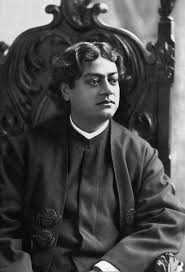
Speech by Swami Vivekananda in Chicago – September 1893
The Sanatana Dharma is explained in the most wonderful manner.
The day was September 11th, 1893, when Swami Vivekananda, a young Indian from Bengal, started delivering his powerful speeches at the Parliament of World’s Religions in Chicago. His profound knowledge of various scriptures, including the Srimad Bhagavad Gita, apart from his deep understanding of Advaita Vedanta, or the philosophy of non-dualism and universal oneness, can be easily experienced through his historic speeches. Swami Vivekananda, born Narendranath Dutta, was one of the eight children of Vishwanath Dutta, an influential attorney in Calcutta, and Bhuvaneshwari Devi, who had a great influence on him. As a young, talented boy, he was very intelligent and excellent in his studies. READ ON
Read
Introduction to Vedanta – A Crash Course
FAQs – Sanatana Dharma (Hinduism) for dummies
Q & A in Tamil on the fundamentals of the Sanatana Dharma
Thank yourself if you are a Sanatana Dharmi (Hindu)
Some misconceptions about the Sanatana Dharma
Why should one study Advaita Vedanta?
The Chariot Analogy of the Kat-hopanishad
Ishavasya Upanishad
Reading Corner – Recent Posts and Short Stories
The Three Margas

Haré Krishna Haré Krishna
Haré Krishna Haré Haré
Haré Rama Haré Rama
Haré Rama Haré Haré
 Tavamithram Sarvada