My Top 7 Life Strategies

Grasping life’s fundamental truths often takes years, causing many to look back with regret, wishing they had learned these lessons sooner. By adopting these seven Life Strategies, you can navigate your journey with greater confidence and fulfilment, avoiding the pitfalls that others have encountered. Embrace these principles now to set yourself on a path toward a more successful and enriching life.

If you’re in your early twenties and take the time to study and internalise these strategies, you’ll save yourself a great deal of time and effort in your pursuit of a fulfilling life.

1. Take Responsibility for Your Actions

Stop blaming others and start taking full responsibility for your actions. You alone are accountable for your decisions. Owning up to your actions empowers you to make positive changes and steer your life in the direction you want.

Example: If a project at work doesn’t succeed, instead of blaming your team, reflect on what you could have done differently and use that knowledge to improve future projects.

2. Select Your Life Partner with Thoughtful Consideration

Choosing your spouse is one of the most crucial decisions you’ll ever make. A good partner brings joy and support, while a poor choice can lead to unhappiness. Never decide in a hurry or when under pressure. Friedrich Nietzsche wisely advised, “When marrying, ask yourself this question: ‘Do you believe that you will be able to converse well with this person into your old age? Everything else in marriage is transitory.'”

Example: Imagine spending your life with someone who shares your interests and values, and with whom you can have deep, meaningful conversations. This is the foundation of a lasting and fulfilling marriage.

3. Embrace Lifelong Learning

Don’t let financial constraints hold you back from investing in your career development. The internet is full of resources offering vast opportunities for learning and growth. While degrees can be valuable, they don’t solely define your knowledge, wisdom, or capabilities.

Example: Many successful entrepreneurs have used online resources to learn new skills like coding, digital marketing, or design, and have built thriving businesses without formal education in those fields.

4. Adopt Gradual and Consistent Learning for Deeper Understanding and Full Internalisation.

Take your time to learn slowly, carefully, and steadily. By doing so, you’ll realise that you have the ability to achieve anything. Don’t let others discourage you. Give things a go and be prepared to fail before conceding defeat prematurely.

Example: Consider training for a marathon. At first, the goal may seem overwhelming, but by committing to a steady, incremental training plan, you build endurance and confidence over time. Each small, consistent effort contributes to your overall progress, transforming a seemingly insurmountable challenge into an achievable accomplishment. Similarly, learning a new skill or mastering a subject takes persistent, gradual effort, leading to profound understanding and success.

5. Develop the Habit of Investing and Understand the Power of Money

Start investing as early as possible. The earlier you begin, the more time your investments have to grow, providing you with financial security and freedom. Many of life’s problems can be alleviated with money. Financial stability provides the means to address challenges and seize opportunities. While money doesn’t buy happiness, it reduces stress and grants you the freedom to pursue your passions and goals.

Example: Starting an investment account with a small monthly contribution in your 20s can lead to significant savings by the time you reach retirement age, thanks to compound interest. Having a financial safety net can help you handle unexpected expenses like medical bills or car repairs without falling into debt or significant stress.

6. Don’t Let Regrets Hold You Back

Regrets are unproductive. Instead of dwelling on what could have been, focus on making the most of the present. Every moment spent regretting is a moment lost that could be used for positive action and growth.

Even if you’ve faced deep pain or significant losses, ask yourself, “So what?” followed by “What next?” and focus on your next steps. The past is gone and will never return, but it can sabotage your future if you allow it.

Example: Imagine you regret not taking a chance on a business idea years ago. Instead of ruminating on missed opportunities, redirect that energy into launching a new venture now. Research your market, develop a solid plan, and connect with potential mentors or investors. By focusing on actionable steps, you turn regret into motivation and create new possibilities for yourself.

7. Sleep on Important Decisions

Before making an important decision, take a pause and avoid deciding immediately. Instead, let it sit overnight. This brief delay allows you to gain clarity, giving you time to weigh the pros and cons thoughtfully, rather than being driven solely by emotions or excitement.

Example: If you receive a job offer, take a night to think it over. This allows you to assess the offer with a clear mind and make a well-considered decision.

By internalising and practising these seven strategies, you can navigate life with greater confidence, resilience, and fulfilment. Remember, the journey is just as important as the destination, so embrace each step with an open mind and a determined heart.

The TWO GOLDEN QUESTIONS – Understand and thank me later!

Actually, although there are four Cartesian questions, in the video below, I have simplified them to two.

If you want to do things absolutely right, remember that before saying or doing anything, subject yourself to at least all four Cartesian questions!

  1. What will happen if I do this?
  2. What won’t happen if I do this?
  3. What will happen if I don’t do this?
  4. What won’t happen if I don’t do this?

These questions can save you from unwanted problems and pave the way for an awesome life. By considering the consequences and outcomes, you empower yourself to make mindful decisions that align with your goals and values.

Start practising this today and watch your life transform!

(The video below focuses on the first two Cartesian questions.)

Fate and Time: The Tragic Story of Mike Lynch

In my latest video, I delve into the poignant and impactful story of Mike Lynch, a man whose life and career were marked by remarkable achievements and profound challenges. Despite his success, Lynch’s life took a tragic turn with his untimely death while on his yacht—a stark reminder of how swiftly fate can alter our course.

In this video, I offer an introspective look at Lynch’s journey, touching on the themes of fate, the passage of time, and the importance of living fully in the present. I explore how Lynch’s story serves as a powerful lesson about the unpredictable nature of life and the significance of embracing each moment with gratitude and responsibility.

Join me as I unravel the elements of Lynch’s life and legacy, and reflect on the crucial lessons we can learn from his experiences. Don’t miss this opportunity to gain insight into how to navigate life’s uncertainties with grace and mindfulness.

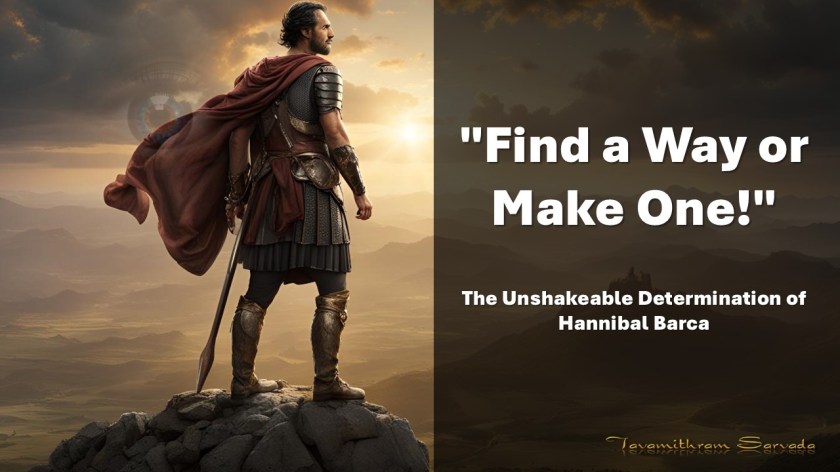
“Find a Way, or Make One!” The Unshakeable Determination of Hannibal Barca

Overcoming the Impossible with Sheer Will

Unyielding Determination: The Legacy of Hannibal Barca

In a world where challenges are constant and obstacles seem insurmountable, the story of Hannibal Barca serves as a beacon of inspiration. Born in 247 BCE in Carthage, a powerful city-state in North Africa, Hannibal became one of history’s greatest military leaders, known for his daring campaigns against the Roman Empire during the Punic Wars.

Hannibal’s life is a demonstration to the power of unwavering determination and relentless ambition. From his daring feats against Rome to his famous declaration, “I will either find a way or make one,” Hannibal’s journey offers timeless lessons that are just as relevant today as they were over two millennia ago.

In my latest video, I explore the mindset and principles that made Hannibal an enduring symbol of perseverance. Watch the video below to discover how Hannibal’s legacy can inspire you to overcome any challenge and reach your own goals, no matter how distant they may seem.

The Chrysalis: Change is Inevitable; Evolution is Eternal

Transformation is life’s enduring promise

TRANSFORMATION FUELS THE FUTURE

(someone sent me this beautiful time-lapse video)

Please watch this short video, and then read the post below, or listen to the audio.

Evolution is the natural order of life. Just as a pupa transforms into a beautiful butterfly, everything in nature is in a constant state of change and growth. This transformation is not just necessary but inevitable, driven by the forces of nature to improve, adapt, and thrive.

However, some choose to resist this natural process, clinging to outdated ways of thinking, strange beliefs in the name of religion, lost positions or property, former relationships, and old ways of being. This resistance is a denial of life’s fundamental principle—growth. By refusing to evolve, they remain stagnant, living in a state of delusion. In doing so, they waste the precious resources that nature provides, occupying space without contributing to the flow of progress.

Just as the butterfly’s emergence from its chrysalis is a testament to the power of transformation, so too should we embrace our own potential for growth. To resist evolution is to deny the very essence of life. By choosing to evolve, we not only fulfil our purpose but also honour the natural world that supports us.

Let’s embrace CHANGE, and EVOLVE.

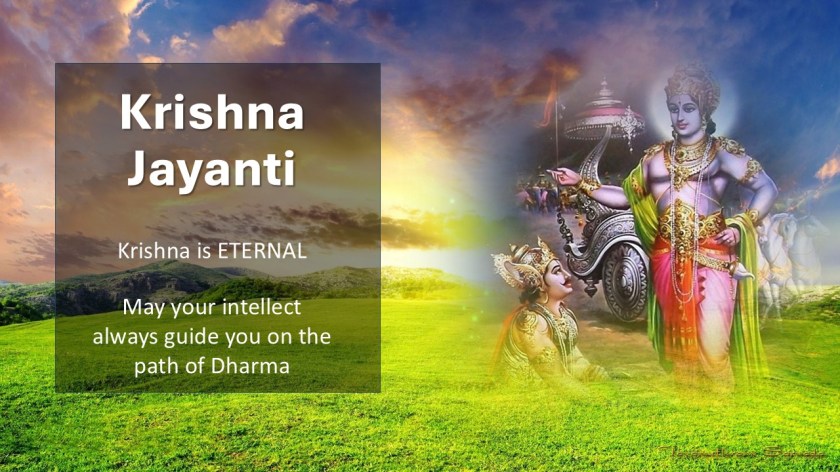
Krishna Jayanti – Janmashtami: Celebrating the Unborn and Eternal

Krishna Jayanti, or Janmashtami, marks the celebrated ‘birth’ of Bhagavan Shri Krishna, an event cherished across the globe. But how does this celebration reconcile with Krishna’s own words in the Srimad Bhagavad Gita, where he declares that He was never born, nor will He ever die?

Consider this profound Shloka:

नत्वेवाहं जातु नासं
न त्वं नेमे जनाधिपाः |
न चैव न भविष्यामः
सर्वे वयमतः परम् || २ १२ ||

na tvevaaham jaatu naasam
na tvam neme janaadhi-paaha
na chaiva na bhavishyaa-maha
sarve vayam-ataha param

SBG 2:12

“There never was a time when I did not exist, nor you, nor all these kings. We will also never cease to exist.”

In this Shloka, Krishna emphasises the eternal nature of the Atman. The physical birth and death that we observe are but mere transitions in the infinite existence of the SELF. Krishna, as the Supreme Being, transcends these limitations of time and space.

Arjuna, puzzled by this concept, continues with his questions and, in Chapter 4, asks Krishna as follows:

अर्जुन उवाच |
अपरं भवतो जन्म परं जन्म विवस्वतः |
कथमेतद्विजानीयां त्वमादौ प्रोक्तवानिति || ४ ४ ||

arjuna uvaacha
aparam bhavatho janma
param janma vivasvathaha
katham-etha-dhvijaa-niiyaam
tva-maadhau proktavaa-nithi

SBG 4:04

Arjuna said: “Your birth was after the birth of Vivasvaan. How should I understand when You say that You taught this Yoga to him?”

To this, Krishna responds, illuminating the mystery of His divine nature:

श्रीभगवानुवाच |
बहूनि मे व्यतीतानि जन्मानि तव चार्जुन |
तान्यहं वेद सर्वाणि न त्वं वेत्थ परंतप || ४ ५ ||

sri bhagavan uvaacha
bahuuni me vyatii-taani
janmaani tava-chaarjuna
taan-yaham veda sarvaaNi
na tvam vettha parantapa

SBG 4:05

Sri Krishna said: “Many births of mine as well as yours have passed. I know all of them, but you don’t, O Parantapa (Arjuna – destroyer of enemies).”

Here, Krishna acknowledges the cyclical nature of birth and rebirth, highlighting that while He is aware of all His incarnations, Arjuna remains unaware.

Krishna then reveals the ultimate truth of His existence:

अजोऽपि सन्नव्ययात्मा
भूतानामीश्वरोऽपि सन् |
प्रकृतिं स्वामधिष्ठाय
संभवाम्यात्ममायया || ४ ६ ||

ajo ‘pi san-navya-yaathma
bhuuthaanaa-miishvaro ‘pi san
prakrthim svaa-madhisht-haaya
sambhavaa-myaathma-maayayaa

SBG 4:06

“Though I am unborn and imperishable, and although I am the Bhagavan of all beings, I do incarnate by my own Maya or My Divine Energy.”

Krishna’s ‘birth’ is not conventional; it is a divine descent, an incarnation born of His own will and energy, symbolising the emergence of pure intellect after dispelling layers and layers of ignorance. Krishna Jayanti, while celebrating His appearance, also invites us to reflect on the deeper spiritual truths He embodies.

In this short video I’ve created, I delve into the essence of Krishna Janmashtami and how embracing these teachings can transform your life and lead to enduring bliss:
At the end of the short video, I have translated Shloka SBG 2:12 into six Indian languages apart from English.

It is crucial to remember that taking scriptural texts literally can lead one astray from the true path of Self-Realisation, potentially fostering rigid belief systems or cult-like thinking. The Srimad Bhagavad Gita offers profound wisdom—absorb its philosophy, and use it to cultivate a life of fulfilment and spiritual growth.

A ‘disclaimer’ from Srimad Bhagavatam (not Srimad Bhagavad Gita)

Canto 12, Chapter 3, Shloka 14
Shloka 12:3:14 Srimad Bhagavatam

कथा इमास्ते कथिता महीयसां
विताय लोकेषु यशः परेयुषाम् ।
विज्ञानवैराग्यविवक्षया विभो
वचोविभूतीर्न तु पारमार्थ्यम् ॥ १२.३.१४॥

kathaa imaaste kathita mahiiyasaam
vitaaya lokeshu yashah pareyushaam
vignyaana-vairaagya-vivakshayaa vibho
vachovibhootiirna tu paaramaartham

Shukadeva Gosvami spoke: O mighty King Parikshith, I have shared with you the accounts of these illustrious kings, whose fame and great deeds echoed worldwide before their departure. However, my fundamental intention has always been to impart the wisdom of the transcendental and the path of renunciation. Although the stories of kings embellish these narratives with grandeur and opulence, they, in and of themselves, do not represent the ultimate essence of knowledge.

Feel free to explore the resources I offer to sincere seekers on this journey.
Srimad Bhagavad Gita Resources

Jai Shri Krishna

Embracing Vitality: The Real Measure of Age

Age Is Just a Number!

DIET – EXERCISE – ATTITUDE

In our culture, age often comes with preconceived notions and limitations. However, the concept that age is merely a number, challenges these views, highlighting that vitality and well-being are not solely defined by how many years we’ve lived.

Click on the image to watch the YouTube #shorts video

Think of your body as a vehicle. Just as a car requires regular maintenance to function optimally, our bodies need consistent care to stay in peak condition. This involves more than just physical fitness—it encompasses a balanced diet, mental wellness, and a positive outlook on life.

Prioritising health and fitness ensures that our ‘vehicle’ runs smoothly and efficiently, allowing us to live fully and energetically. It’s not about our chronological age but about how we maintain our health and approach life’s challenges.

Adopting this perspective means recognising that it’s never too late to improve your health. Whether you’re in your 30s, 50s, or beyond, making positive lifestyle changes can lead to a more vibrant and fulfilling life.

I got my son interested in fitness when he was in his early teens, and now that he’s turned 20, it’s clear that he’s been bitten by the fitness bug. It’s truly wonderful to see a young person, whether male or female, building their physique early in life.

For Indians, this can be especially important, as we often have a disadvantage compared to some other races when it comes to building muscle easily. And when I say muscle, I’m not talking about the kind of bulk a bodybuilder might have—I mean the muscle strength that everyone needs, regardless of age.

The best approach is to start early in life, but if you haven’t, make it a top priority and start today. Consult a fitness coach or find guidance online, and follow through with dedication.

Ultimately, our well-being is shaped by our choices and attitudes, not just the passage of time. By focusing on self-care and embracing a proactive approach to health, we can enjoy a dynamic and enriching life, no matter our age.

-Go VEGAN
-Exercise Regularly
-Adopt a Mindful Lifestyle

Erase, Eject, Evolve!

Instant Liberation from Toxic Beliefs and Fears!

Simply study these two posts and notice how you feel at the end of them. Please follow the order in which the two posts are given for the best experience. (The posts will open in new tabs.)

Pathetic people and their pathetic lives

I can understand the lives of people, whose forefathers had converted to foreign religions either due to fear, greed, or whatever reason. But what about those whose forefathers faced it all, stood tall, protected the Vedic Sanatana Dharma, and passed it on so that the present generation could benefit from the highest knowledge of Vedanta?

How pathetic can such a huge number of people be, to not put in at least minimal efforts to study the Srimad Bhagavad Gita, which is called ….READ ON

A Mind-Bending Voyage

This experience confirmed a profound truth: what we call reality is shaped entirely by our perception. When I was a child, my world seemed vast. As an adult, returning to that same world, it appeared small and contained. The reality I perceived at 11 was not an absolute truth—it was a reflection of my limited perception at that time. READ ON

From Frustration to Fulfilment

The Essential Guide to Overcoming Life’s Unfavourable Situations

*SUBSCRIBE TO MY SUBSTACK – IT’S FREE*

Breaking Free from the Cycle

Many of us find ourselves stuck in a cycle of complaining, brooding, and feeling generally dissatisfied with our circumstances. Whether it’s our job, relationships, or personal achievements, the tendency to ruminate on what’s wrong can be overwhelming. And yet, despite the temporary relief we might find in venting to a friend or relative, we often wake up the next day only to repeat the same routine, with nothing having changed. The question then arises: how can we expect change when we continue to do the same thing?

The Unproductive Cycle of Complaints

Complaining and brooding are natural human responses to dissatisfaction. It’s almost instinctual to express our frustrations when things don’t go as planned. However, these actions rarely lead to meaningful change. Instead, they often serve as a temporary release, a way to momentarily ease the pressure without addressing the underlying issues. As a result, we remain stuck in the same unfavourable situation, repeating the cycle day after day.

To break free from this cycle, it’s crucial to take a different approach—one rooted in clarity and action. The key lies in defining your problems and goals with precision. Let me take you back to my childhood to illustrate this point.

As a young boy, I was naturally curious and had a mechanical aptitude that drove me to understand how things worked. I was always eager to get to the bottom of things, refusing to accept anything at face value without clear evidence. When I was reprimanded by elders or teachers for my behaviour, I didn’t just accept the scolding. Instead, I wanted to know what I had done wrong and, more importantly, what I should do right. However, my requests for guidance were often met with silence or a cold stare, leaving me with unanswered questions.

This experience taught me a vital lesson: in any situation, if something is wrong, it’s essential to ask, “What is right?” This principle can be applied to any area of life:

  1. If you’re dissatisfied with your job, ask: What is my ideal job?
  2. If you don’t like your life, ask yourself: What would my ideal life look like?
  3. If you’re unhappy in a relationship, ask: What is the ideal relationship I want?

The Three-Step Approach to Change

Once you’ve asked these questions, the next step is to define your situation clearly. Here’s a practical approach:

  1. Identify What You Don’t Like and Why: Be specific about what bothers you. Is it the long hours at work, the lack of appreciation, or perhaps a feeling of being stuck? Understand the root cause of your dissatisfaction.

  2. Create a Clear Vision of What You Want: Visualise your ideal situation in detail. What does your perfect job look like? What qualities define your ideal relationship? Be as specific as possible, down to the finest details.

  3. Develop a Plan to Achieve Your Vision: Identify the steps you need to take to move from your current situation to your ideal one. This might involve learning new skills, making lifestyle changes, or even having difficult conversations. The key is to take actionable steps that lead you closer to your goal.

The Danger of Temporary Fixes

Many people, when faced with an unfavourable situation, seek quick fixes to ease their minds temporarily. Whether it’s pouring out your woes to a friend, closing your eyes and sitting under a tree or in a religious place, or even turning to substances, these methods offer only momentary relief. They don’t address the core issues and often lead to more frustration when the problem inevitably resurfaces.

Please always remember that if someone truly wants something, they will find a way to get it. Consider alcohol and substance addicts or those addicted to gambling—they always manage to obtain what they crave. If you feel you’ve been working hard with no improvement in your life, instead of adopting a victim or ‘poor me’ attitude, try to view it from another perspective. Perhaps your efforts are insufficient, misdirected, or lack proper direction.

Summing up and Learning to Take Control of Your Life

If you’re unhappy with your current situation, don’t waste time complaining or seeking temporary distractions. Instead, follow the steps I’ve outlined:

  1. Define your issue clearly.
  2. Visualise your ideal situation.
  3. Take actionable steps to achieve your vision.

By doing so, you’ll find that you have the power to transform your life into something truly fulfilling. These steps may seem simple, but they are profoundly effective—I speak from experience.

Never forget that many people don’t know exactly what they want. Complaining and feeling depressed require less effort than reflecting and strategising, which is why slipping into self-pity is so easy. For anything good and positive to materialise, there must first be a clear image in the mind. So, the next time you feel the urge to complain or brood, make sure you know exactly what you want.

Real change begins with a clear definition of your goals and a commitment to taking action.