The Ultimate Science: How Vedanta Bridges Spirituality and Science

Join my Substack. IT IS FREE!

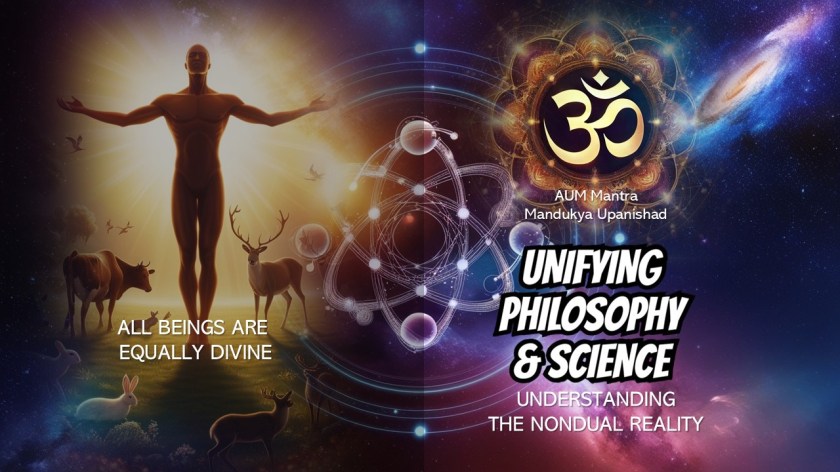
Learning to Understand the Mysteries of the Universe – Ancient Vedantic Wisdom Meets Modern Science

In this day and age, with scientific advancements revolutionising every field, it’s increasingly challenging to accept traditional narratives like ‘god’ creating man in his image or crafting the universe in six days and so on. Such beliefs often lead to the perplexing question: who created ‘god’? This inquiry spirals into an infinite regress, providing no satisfying answers.

However,…CONTINUE READING

Advaita Vedanta Video Collection: A Resource for Serious Seekers

I am pleased to share a comprehensive resource for those dedicated to the pursuit of self-realisation through Advaita Vedanta. This collection of 45 videos, hosted on YouTube, serves as a guided journey to help you internalise the profound teachings of non-dual Vedanta, the pinnacle of all Vedic studies. Each video is thoughtfully designed to facilitate a smoother path towards the realisation of Atma-Gnyaana — the knowledge of your own true, all-pervading, and attributeless SELF, known as Brahman or Krishna.

For your convenience, I have compiled these videos into a single PDF index with clickable links, allowing you to easily access each video at your own pace.

Download the PDF Index here: Understanding Vedanta with Tavamithram 03 (50 videos)

May this resource inspire and aid you in your quest for self-awareness and enlightenment, freeing you from all fears and negative emotions. These emotions can only rob you of your most precious asset — time on this planet — without offering true happiness in return.

The Path of Knowledge has been accorded the highest status among all paths towards Self-Realisation: Shloka SBG 4:38

Why We Suffer and How to Stop It

Join my Substack. It’s FREE!

In times of despair and suffering, it’s common for people to turn to beliefs, rituals, religions, and even godmen, hoping to find solace and answers. However, in doing so, they often miss the mark, failing to address the root cause of their challenges.

What if there was a deeper understanding, a hidden key to…..READ MORE 

From Unfounded Beliefs to Clarity Through Vedanta

Beliefs Divide, Vedanta Unites!

JOIN MY SUBSTACK – IT’S FREE

Religion often relies on beliefs without evidence, creating divisions and control through fear and greed.

In contrast, Vedanta, the pinnacle of spiritual understanding from the Indian subcontinent, promotes unity and true knowledge, urging individuals to rise above dualistic beliefs and introspect for deeper understanding. READ ON SUBSTACK

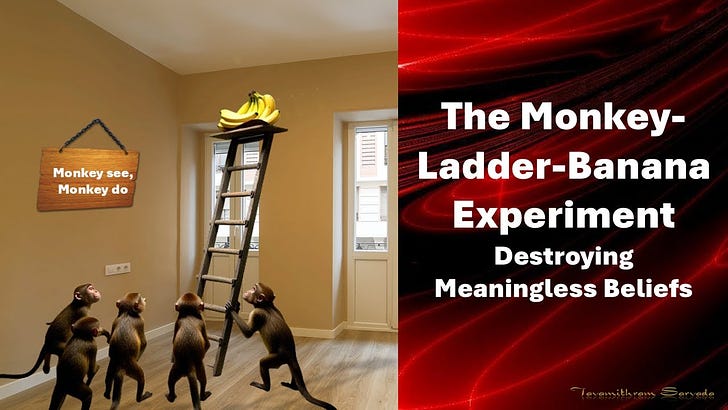
Trapped by Tradition: What Monkeys Teach Us About Blind Conformity

JOIN MY SUBSTACK – IT IS FREE

This video sheds light on an intriguing experiment that reveals deep insights into human behaviour and the importance of questioning established norms. The story serves as a powerful metaphor for how traditions and social customs can become…READ ON SUBSTACK AND WATCH THE VIDEO

“LEGACY IS ANOTHER WORD FOR EGO” – MIKE TYSON

Embrace True Life Beyond Illusions

Join my Substack. IT IS FREE.

Assumptions about oneself and blind adherence to religious beliefs lead to the illusion of greatness, fake nobility, holiness, and grandeur.

Life is the greatest gift, unfolding in the present moment. As Mike Tyson wisely puts it… READ ON SUBSTACK

Two ‘Mantras’ to Destroy Negative Karma and Start Afresh

Life is too precious. Nothing and no one is worth wasting your time on in life.

Discover simple steps to navigate even the most challenging times in life.

No matter how tough or daunting your situation might be, the first step is to come to terms with it – at least temporarily.

This acceptance allows your intellect to push your emotions aside and function fully, enabling you to come up with a solution.

General George S. Patton said, “Accept the challenges so that you can feel the exhilaration of victory.”

In the video presentation ‘So What? What Next?’, I explain two simple two-word ‘Mantras’ that can greatly help overcome the delusion caused by a sense of entitlement and the tendency to avoid troubles and risks.And in the other titled ‘Reset Karma’, I explain simple ways to change unfavourable patterns in life to more favourable ones.

It is primarily one’s sense of entitlement, ingrained since childhood, that often becomes a significant barrier to success. Believing they deserve only the best and most comfortable things in life, individuals can become morally weakened when faced with challenges. This mental block prevents them from recognising their own capabilities.

No matter how tough or daunting your situation might be, the first step is to come to terms with it, at least temporarily. This acceptance allows your intellect to function fully, pushing emotions aside and enabling you to find a solution. Whatever the situation, even if someone is facing a life-or-death scenario, they need to come out of denial, accept the truth, and start thinking rationally about what they can do to survive. Doing so removes the greatest obstacles in the form of fear, anger, or any other destructive emotions.

First Achieve and Then Let Go!

Sour Grapes and Self-Pity – Escaping Life’s Responsibilities

JOIN MY SUBSTACK. IT IS FREE.

In my journey of counselling and guiding individuals over the last decade through my Tavamithram blog, I have encountered numerous men and women who, after interactions with me, emerged more courageous, fearless, and self-confident. There have been a couple of young women who imbibed the knowledge I imparted so well that they did things requiring extensive courage—actions that would make a regular man think not just twice but three times. However, there are exceptions. Despite receiving extensive personal counselling, some individuals persist in wallowing in self-pity, which is something I always try to nip in the bud. This phenomenon, especially among young men, often manifests as existential rhetoric and disillusionment with worldly pursuits. This certainly does not sound even fundamentally manly to me. CONTINUE READING ON SUBSTACK.

From Stagnation to Success: Mastering Negative Karmic Inertia

Shattering All Blockades in Life

Understanding the Three Gunas: A Path to Self-Improvement

Understanding the three Gunas explained in the Srimad Bhagavad Gita offers profound insights into human behaviour and consciousness. These three fundamental qualities—Sattva (goodness), Rajas (passion), and Tamas (ignorance)—shape our thoughts, actions, and overall life experience. Among these, the Tamasa Guna, which embodies indolence, laziness, lethargy, negativity, and pessimism, often acts as a significant impediment to personal growth and productivity. I refer to this as ‘Negative Karmic Inertia.’

Much like maintaining a good hormonal balance is crucial for physical health, achieving a harmonious balance of the three Gunas is essential for a fulfilling and enriching life. By understanding and managing our Guna levels, we can enhance our self-awareness and work towards self-improvement. The real transformation happens within, even if the knowledge and inspiration come from external sources.

The Role of Tamasa Guna

Excessive Tamas is like a heavy weight that chains a person to the ground, preventing any positive change and perpetuating a state of lethargy and inertia. It not only affects one’s behaviour but also distorts one’s ability to rationalise and make sound decisions. A person overwhelmed by Tamas might find themselves stuck in a cycle of inaction and negativity, unable to break free and achieve their true potential.

The Three Gunas explained in the Bhagavad Gita

The Srimad Bhagavad Gita provides a detailed explanation of the three Gunas and their effects on individuals:

SBG 14:5 – “The three Gunas or qualities are Sattva, which is the quality of goodness; Rajas, which is the quality of passion; and Tamas, which is the quality of ignorance; O mighty-armed one. They are born of Prakriti which is Nature. These qualities bind very fast the immutable embodied Self in the body.”

SBG 14:6 – “Of these, Sattva, which, due to its purity, is luminous and healthy, frees a person of all Karmic reactions. Those of this Guna are attached to knowledge and to happiness, O sinless one.”

SBG 14:7 – “You should know Rajas to be the Guna or nature of passion, which is the source of desire and attachment. O Arjuna, it binds fast to the embodied Self by attachment to action.”

SBG 14:8 – “Tamas is born of ignorance and deludes all embodied beings. O Arjuna, this results in the binding of the embodied soul by negligence, sleep and laziness!”

SBG 14:9 – “O Arjuna, Sattva binds one to happiness, Rajas to action, while Tamas shrouds knowledge and binds one to idiocy.”

SBG 14:10 – “O descendant of Bharata (Arjuna), Sattva prevails over Rajas and Tamas, while Rajas manifests itself by overpowering Sattva and Tamas; and Tamas manifests itself by subduing Sattva and Rajas.”

SBG 14:11 – “When the light of wisdom shines through every sense in this body, it may be known that Sattva is predominant.”

SBG 14:12 – “When greed, endeavour for material gains, restlessness and longing arise; Rajas is predominant, O Arjuna.”

SBG 14:13 – “The presence of illusion, darkness, recklessness and delusion in a person indicate the predominance of Tamas in them, O Arjuna.”

Overcoming Negative Karmic Inertia

Many people struggle with feelings of demotivation and an inability to achieve their goals. This internal blockage often stems from an excess of the Tamasa Guna. Conversely, those driven by an excessive Rajas Guna might find themselves aggressive and even harmful in their pursuit of desires.

Managing Rajas

SBG 3:36-37: Arjuna asks Krishna: What prompts a man to perform sinful deeds, O descendant of Vrshni? Why does he commit such acts even without desiring to do them, as if he were forced?

Shri Bhagavan Krishna replies: Lust and anger are born out of the material nature called Rajoguna, which is insatiable and prompts man to commit sin. You must know that this is the greatest enemy in a man’s spiritual life.

Understanding one’s Guna ratio is akin to a doctor diagnosing a patient: it allows for targeted self-improvement. By identifying and addressing the predominant Guna that is out of balance, individuals can work on the specific areas needed to overcome unwanted situations in life.

Self-Study and Introspection

The path to self-improvement begins with self-study and introspection. Rather than casting blame on external factors, it is crucial to look within and understand the internal dynamics that drive our behaviour. By doing so, we can achieve a harmonious balance of the Gunas, leading to a more pleasant, enriching, and fulfilling life.

Finally, the knowledge of the three Gunas offers a powerful tool for self-awareness and personal growth. By recognising the influence of Tamas and working to balance it with Sattva and Rajas, we can overcome negative karmic inertia and realise our true potential. The journey to self-improvement is an inward one, and the key to success lies in understanding and managing the forces within us.

Reflect on your own Guna ratio, identify the areas that need attention, and take the necessary steps to bring balance and harmony into your life. Embrace the power of self-awareness and let it guide you towards a brighter, more fulfilling future.

If you truly want to change your life, it is you who must change, for the world will not bend to your will.

“Who looks outside dreams; who looks inside awakes.” – Carl Jung
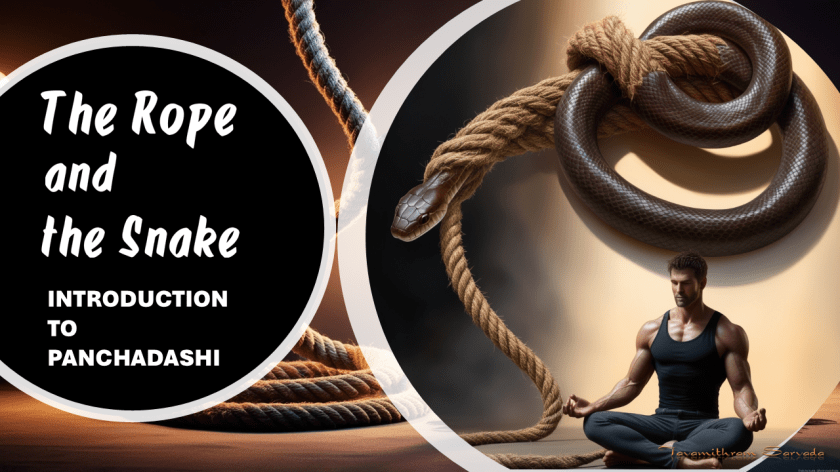
Is it a rope? Is it a snake?

Subscribing to Tavamithram’s Vedanta Wisdom Chronicles on Substack is FREE.

The Illusion of Reality

What if everything you perceive as reality is just an illusion shaped by your mind? In the ancient teachings of Advaita Vedanta, the analogy of the rope and snake is a powerful tool used to illustrate this profound truth. Imagine seeing a rope in dim light and mistaking it for a snake. Your fear and reactions are real, but the snake is not. The rope never ceases to be a rope, just as the ultimate reality never changes, despite our misconceptions. READ MORE