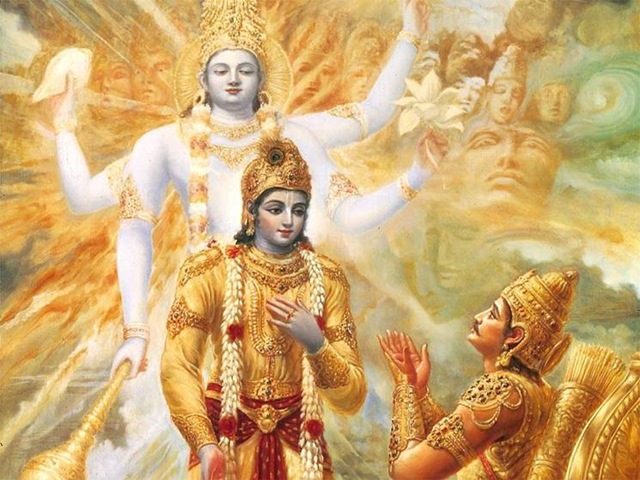
Karmic ‘Potholes’

Temptations are Karmic ‘potholes’ which are detrimental to one’s Karmic evolution.

There are temptations that can influence the minds of even very highly intelligent and educated people. Such people when tempted, are led to do things that they would normally never do. It is usually because of a moment of weakness, either due to desire, or due to the illusion of doing some good to someone (which is the result of one’s ego), that a person falters and commits a blunder that becomes and also stays a big blot on their personality during their lifetime. Such an action actually stems from a person’s ignorance or mental weakness due to the distortion of reality in their mind. The reality is that everything is Maya or illusion. The world exists only until the mind exists and is conscious. People who are unconscious or asleep, despite being alive, are oblivious to everything around them and also about themselves. When the mind is not awake, nothing exists. The body, which many people mistake to be their self, is an impermanent vehicle that the Atman uses in order to travel through a Janma and the mind is nothing but an abstract tool that one can use in order to think and carry out actions which, unfortunately, have Karmic reactions.

A Janma or lifetime of a person is basically the time between the first and the last breaths they take during one sojourn of theirs as a particular person on the planet. Whatever people do, apart from trying to survive, is to be happy. But an extremely important truth to be noted is that anything that people think, say or do collects Karma which needs to be balanced some day or the other. Therefore, thinking clearly before performing any action is of crucial importance to one’s Karmic evolution.

But what exactly is it that leads people to do things that they would normally not do?
Ref:
SBG 3:36 Arjuna said: “What prompts a man to perform sinful deeds O descendant of Vrshni (Krishna)? Why does he commit such acts even without desiring to do them, as if he were forced to do them?”
SBG 3:37 Shri Bhagavan said: It is lust, which is born out of the quality called Rajas Guna that leads to anger which in turn prompts a person to commit sin. It is all devouring and greatly sinful. You must know that this is the greatest enemy in the world.

Lust for someone, for wealth or for power stems from ego which stands on one’s ignorance about the Supreme Truth of Universal Oneness and tells them that they are a separate entity.

There are basically three kinds of bliss or pleasure that a person can experience:
1. Physical
2. Mental
3. Spiritual

Physical and mental pleasures might, initially, seem attractive but lamentably, they don’t last long.

It is only spiritual bliss, which is founded on divine knowledge, that lasts forever. People come under the influence of temptations and commit deeds that they believe will make them happy. However, they realise a bit late that such things don’t last long but the damage they cause in one’s life and in one’s Karmic journey, only because they yielded to such temptations, can last a whole lifetime and longer.

Why do people fall for temptations?
16:21
त्रिविधं नरकस्येदं द्वारं नाशनमात्मनः |
कामः क्रोधस्तथा लोभस्तस्मादेतत्त्रयं त्यजेत् || १६ २१ ||
trividham narakasyedam
dvaaram naashana-maat-manaha
kaamaha krodhas-tathaa lobhas-
tasmaa detat trayam tyajet
(SBG 16:21)
There are three gates to destroying oneself – they are lust, anger, and greed. These three should therefore be given up.
————————————————
16:22
एतैर्विमुक्तः कौन्तेय तमोद्वारैस्त्रिभिर्नरः |
आचरत्यात्मनः श्रेयस्ततो याति परां गतिम् || १६ २२ ||
etair-vimuktaha kaunteya
tamod-vaarai-stribhirnaraha
aachara-tyaat-manaha shreyas-
tato yaati paraam gatim
(SBG 16:22)
A person who is liberated from these three gates of hell lives a life that is favourable for his soul and he goes to the Supreme goal!
————————————————
16:23
यः शास्त्रविधिमुत्सृज्य वर्तते कामकारतः |
न स सिद्धिमवाप्नोति न सुखं न परां गतिम् || १६ २३ ||
yah shaastra-vidhi-mutsrujya
vartate kaama kaarataha
na sa siddhi-mavaapnoti
na sukham na paraam gatim
(SBG 16:23)
A person who disregards the teachings of the scriptures and acts under the influence of desire, attains neither perfection, happiness nor the Supreme goal.
————————————————
16:24
तस्माच्छास्त्रं प्रमाणं ते कार्याकार्यव्यवस्थितौ |
ज्ञात्वा शास्त्रविधानोक्तं कर्म कर्तुमिहार्हसि || १६ २४ ||
tasmaach-chaastram pramaanam te
kaaryaa-kaarya-vyavasthitau
jnaatvaa-shaastra-vidhaanoktam
karma kartumi-haarhasi
(SBG 16:24)
Therefore, let the scriptures be the authority and guide to let you know what you should do and what you should not do. Acquire knowledge from the teachings of the scriptures; and live and work according to that knowledge in this world.

Just as death is an unavoidable part of life, are separation and pain inevitable parts of possession and attachment. Why be attached to someone or to something that is impermanent? Why not be attached to the Eternal and Supreme Bhagavan Krishna who is the personification of the Supreme Truth?

The only permanent reality is Divine Consciousness. Learn to experience the Supreme Bhagavan Krishna after which, no one or nothing can ever cause you sadness, pain, fear, anxiety or anger.

Shreyo bhooyaath sakala janaanaam
May all be blessed with peace and happiness.

Jai Shri Krishna

May Dharma Prevail


Nothing can stop the greatest Indian leader, Modiji, from being the catalyst behind the uniting of all Dharmic people under the one and only Supreme Bhagavan Krishna and also from being the main force of annihilation of all anti Dharmic and anti Bharat Varsh forces, forever. Such is the power of Dharma that he strictly adheres to.

Karma, or duty performed with no attachment to its results, is called Karmayoga. It forms the core teaching of the greatest scripture – the Srimad Bhagavad Gita. The great and honourable Atalji Bihari Vajpayee, who has studied the Bhagavad Gita in depth, made no mistake in passing on the baton of Dharmic leadership of India to the modern Karmayogi Saint called Shri Narendra Modi 🙏

The self correcting nature of Mother Nature, can never go wrong. Whenever Adharma raises its ugly head in the world, she ‘chooses’ people that can do her work and set things right. Indians are extremely fortunate to have the most amazing Karmayogi leader, Modiji, who has been chosen and appointed by destiny. He has arrived in order to correct major blunders and crimes committed by people belonging to privileged dynasties. Those people from powerful dynasties, due to their proximity with colonisers and other brutal invaders, took over the great Bharat Mata, and have been passing down the control over her to their younger generations as if she were their own family property. Shameless bootlickers and mental slaves of the dynasties, who benefited from the crumbs they threw around, kept supporting them and continued to make them stronger and stronger.

However, the good Karma created by the forefathers of we Indians, who lived and died on our Punyabhoomi called Bharat Varsh or India, got us a Dharmic and powerful PM who was born to lead the nation back into her original position of being Vishvaguru. Modiji’s ‘Karmic might’ will also ensure that all evil forces acting against Dharma and Bharat Varsh, will exhaust the entire amount of material wealth they have, in order to fight him who is nothing but a towering mountain of Dharma, values, principles, courage, grit, intelligence and dedication. That’s good because there will be less trouble next time as they would have burned most, if not all, of their money by then, and would not be as rich as they are now. The great mountain called Narendra Damodardas Modi, is certainly a great force to reckon with.

Nature, Karma, Destiny or whatever it is, that has chosen Modiji to do the work of establishing Dharma in a world of confused people, must surely be right. How else could a land of over a billion people, that has been under plunderers, marauders, usurpers, colonisers and dynasties for such a long period of time, get such an honest, intelligent, bold, principled and committed leader who has no family apart from the people of the country he leads?

India went through a lot of learning experiences, particularly in the last 1000 years of brutal invasions, colonisation and of dynastic rule. Those were necessary for Indians in order for them to recognise different foreign cults that claim to be peaceful and loving while their very foundation has always been to overpower others and convert them into following their warped ideologies. The time of realisation for those whose forefathers converted into foreign cults either due to duress or due to greed, has arrived. Things will change and they will begin to understand that they are nothing but mental slaves of foreign powers.

India is now lucky to have an altruistic leader like Modiji whose life story proves that he is a selfless person and born leader. He has no personal interests that he would like to fulfill by being the Prime Minister of the greatest democracy in the world. Well, if at all he does have one, it could only probably be that of being the greatest Prime Minister of India ever – which is good for India and for all Indians.

Most people overlook the fact that not many years ago, the youth of any nation were little babies. Their formation totally depended on their upbringing, their peer groups and of course, on what they learned from senior people, who, along with leaders of the nation they live in, had the greatest influence on their mind and life. Blessed is a land that has teachers and leaders who are devoted to their work. A good leader sets an example that people from all age groups are impressed with and aspire to emulate. #Modi2019

यद्यदाचरति श्रेष्ठस्तत्तदेवेतरो जनः |
स यत्प्रमाणं कुरुते लोकस्तदनुवर्तते || ३ २१ ||
yadhyadaa charathi sreshtas
thattha devetaro janaha
sa yat pramaanam kurute
lokastha dhanu varthathe (SBG 3:21)
Whatever or whichever action an important person does, others follow him and emulate him. What he does becomes a standard for the others.

सक्ताः कर्मण्यविद्वांसो यथा कुर्वन्ति भारत |
कुर्याद्विद्वांस्तथाऽसक्तश्चिकीर्षुर्लोकसंग्रहम् || ३ २५ ||
saktaaha karmanya vidhvaamso
yathaa kurvanti bhaaratha
kuryaad vidvaam stathaa sakthash-
chikiirshur loka sangraham (SBG 3:25)
Just as ignorant people perform actions with attachment to the results, learned people perform work, but without being attached to the world. Their desire, if at all, is only the welfare of the world.

Save Dharma, save Bharat Varsh, save humanity. May all Dharmic people unite and back Modiji so that he may fulfill his Karmic duty of bringing back India’s lost glory and honour.

Jai Bharat🙏🙏🙏

Jai Shri Krishna 🙏🙏🙏

The Power of Apology

Compatibility problems and disagreements happen to people from all walks of life. Trouble in a relationship usually starts when there are misplaced expectations. It is a natural quality of humans to expect others to be like them and want them to agree with them in everything. This intrinsic quality in humans can sometimes cause even a simple disagreement over something trivial and inconsequential, to turn into a sharp cleaving axe that drives a deep wedge between two people who were deeply in love with each other. To exacerbate the issue, the ego and pride in people ensure that they don’t apologise to one another or take steps to talk out their differences.

Being considerate and kind is the prime requisite for building a true relationship that lasts a lifetime (and beyond). The easiest way to demonstrate to a person whom one may have hurt or wronged, either consciously or inadvertently, and to assure the person that they truly care for them, is to apologise sincerely.

There have been many instances of great and powerful people whose friendship with someone had turned into feud but was restored when at least one of the estranged persons buried the hatchet and sent a friendly note. Nevertheless, when a person sends someone a note of apology, it would be necessary to prepare oneself for either no response or for an unfriendly and rude one. This is because it is not always the case that a person, who feels wronged, agrees to restore a relationship only because of an olive branch in the form of a word of apology. But the nice thing of apologising to someone is the light feeling it gives to the one who is apologising, and this feeling is certainly worth it.

The greatest benefit of apologising and of forgiving, however, is that they break the negative Karmic cycle of the ‘You hurt me, so I hurt you, and you hurt me because I hurt you’ concept, which when left unchecked, can continue through hundreds of Janmas or lifetimes of those concerned.

Saying “Sorry”, is definitely not a sign of weakness, but it is one of mental and spiritual strength. It is also proof of having overcome one’s own ego, which, sadly, is nothing but a mere mental illusion that invariably succeeds in destroying the one whose intelligence it has veiled.

The ‘Veggie vegan’ twaddle

A video of a certain European man in ochre robes, claiming to be a devotee of Krishna, has been doing its rounds on social media. It is a distasteful video with irresponsible statements and a bag full of lies. The self-styled ‘guru’ in the video, proudly says that he is a ‘veggie vegan’. One is either a vegetarian or a vegan – what on earth is veggie-vegan? The person who is talking this kind of nonsense in the video is from an organised international cult which ‘IS CONning’ the world with their warped Krishna philosophy. It owns dairy farms all over the world including the one in his own country Hungary. They sell milk products at premium prices claiming that their animals are treated well. He proudly claims that he and his people care for animals by feeding them well and getting the bulls in their farm to exercise so that they don’t get too fat! Although he has, as per his claims, taken to Krishna and the Bhagavad Gita, his mind still seems to be infected with Abrahamic ideas that we humans are superior to animals and that God made animals, who don’t have souls, to serve us. By collecting, storing, consuming and selling bovine milk, he is doing nothing but stealing baby food and abusing the babies that the milk was meant for!

People who consume bovine milk and other products made out of the milk, gleefully shared the video on their timelines on Facebook, etc. because the words of the ‘Guru’ sanctified their habit of consuming products made from factory farmed milk. What is disturbing is that although there are hundreds of useful and informative videos on the internet, people usually tend to choose only those videos in which someone speaks something that agrees with what they think. People like this man claim to know the Bhagavad Gita very well and they preach Krishna consciousness, but what they are really doing is to slyly inject their western philosophical ideas into the minds of the people around the world. After centuries of being under foreign rule, many Indians have developed great admiration but also a servile attitude towards Westerners. It is a shame that they straightaway accept whatever a person from the West utters, even if it is plain rubbish. The way some people from the West sell their ideas about Krishna and Vedic spirituality to us Indian Sanatanis, is like an African trying to teach an Eskimo what ice is or a snake teaching a bird how to fly.

The truth is that a female mammal produces milk for her own babies and not for those belonging to another species. The milk she produces is not even for young ones born to other females belonging to their own species. Her milk has been specially designed by nature in order to help in the growth of her babies. Cow’s milk has four times more calcium than that found in human milk. That is because a small calf that grows into a large animal with a large skeleton, four times faster than human babies do, needs it. Why should human babies drink cow’s milk if it is not necessary for them to grow that fast? It is a well known fact that no other species other than humans, continues to drink milk after weaning and even into adulthood, more so the milk from another species.

Here are some nutritional facts:

Cow’s milk        Protein   3.3g/100g of whole milk   Calcium 120 mg/100ml

Human milk      Protein   1.2g/100g of whole milk   Calcium   34 mg/100ml

By the way, rat’s milk contains a lot of protein – 11.8g/100g. You want more protein? Huh?

It can be clearly seen that the protein and calcium contents in cow’s milk are much higher than in human milk. This high calcium content in cow’s milk is required for the rapid physical growth of a calf.  A human baby usually takes about 24 weeks to double its weight and a cow takes only seven. Human babies need calcium for the development of their brain whereas calves need calcium to make them bigger and stronger.

Healthy human babies average around 4 Kg at birth and are usually weaned when they are around one to one and a half years old. It is important to note that by the time calves are weaned, they are eight times heavier than what they weighed at birth. It is like a two-year-old child weighing 32 Kg!

Cow’s milk contains about three times the amount of protein than human milk. This creates metabolic disturbances in humans causing detrimental bone health consequences. It is true that children have faster growth when they have cow’s milk, but it has been proven that the high calcium content in cow’s milk does not strengthen bones but on the contrary, causes Osteoporosis.  Milk acidifies the body pH, which in turn starts a process of biological correction. Calcium, which is stored in the bones, is good at neutralising acid, and it is used to neutralise the natural effect of acidifying that milk has. This diverting of the calcium for a different purpose causes a deficit in calcium in the body that is required for the strengthening of the bones. Once the biological correction of the pH level is done, the calcium is sent out of the body as waste matter. The end result is calcium shortage due to drinking cow’s milk.

Dairy products also contain casein, which is a carcinogen. Milk protein promotes the growth or both normal as well as cancer cells. It also increases the proliferation of prostate cancer cells. Children with ASD (Autism Spectrum Disorders), who are given Casein Free Diets are known to have shown dramatic reduction in autistic behaviour. A thorough study of this subject should help clear tonnes of rubbish pumped into the heads of people through the media by giants of the multi-billion dollar food and healthcare industries.

Human diet has evolved over centuries. Many civilisations from different climate zones have tried out different kinds of diets and have settled for the ones that suited them the most. People of some civilisations drink camel milk and donkey milk too. Humans evolve through rationally guided trial and error. Veganism is a step further in the evolution of human diet.

Bhagavan Krishna, who is also known by the name Gopala, which literally means ‘protector of cows’, is believed to have loved cows and enjoyed consuming their milk and butter made out of milk. It is because of this reason that Krishna movements and cults praise the consuming of bovine milk. Consuming milk products has been a part of Indian and many other cultures. However, as time went by, the production of milk was industrialised and its control was held by a few major multinational organisations. Dairy lobbying grew stronger and stronger with every passing day and so did criminals too who invented new methods to benefit from the mass brainwashing of people through the media that the dairy industry has been so lavishly financing. There have been innumerable cases of adulterated milk and other such chemically concocted potions being sold as bovine milk. Even if the milk is not adulterated, how sure can the consumer be about what the cow, whose milk they drink, was fed? The safest way is to stay away from consuming meat or any kind of secretion that comes from animals. The man in the ‘Veggie-vegan’ video talks about ‘Ahimsa’ milk! calf-mA baby calf is deprived of its mother’s milk, and they call it ‘Ahimsa’! It is nothing but an egregious violation of the natural rights of a baby animal. The claim of selling ‘Ahimsa’ milk is like a butcher selling ‘Ahimsa meat’, telling his customers that he doesn’t slaughter animals but convinces them to ‘happily’ commit suicide in order to donate their meat to hungry humans! This is ridiculous! A simple Google search on ‘Ahimsa milk’ can help those interested in finding out more on this ‘religious’ way to exploit animals.

Think of what doctors usually tell patients when they have health problems, particularly stomach disorders. The first thing they tell them to do is to stay away from bovine milk and other related products.  The American Medical Association has recently issued a policy statement on plant-based foods. https://www.veganlifemag.com/american-medical-association-plant-based/

There are numerous cases of disease reversals through plant based diets and avoiding dairy. I have personally worked with people with advanced cancer, who recovered by giving up dairy and all kinds of animal proteins; and adhering strictly to plant based diets. Humans are basically designed to be herbivorous and frugivorous’ and like all other mammals, need mother’s milk only when they are babies and not when they are adults! When cows and bulls don’t drink a mother cow’s milk – why should humans?

It would be advisable for everyone to research and study this subject in order to find out what is best for them and for their children. Don’t get carried away by such funny videos posted by people with vested interests. Ask questions, read, analyse, talk to people and make sure that whatever you send down your food pipe is clean, healthy and sinless. It is a question of your health, your life and of your Karmic evolution after all.

Jai Shri Krishna

Watch this crisp video by ‘Mercy for Animals’ of Dr. Milton Mills explaining facts about the dangers of consuming animal products, and exploding popular myths spread by the food and healthcare industries.

Suggested films:

  • What the Health
  • Earthlings
  • Cowspiracy
  • Forks over Knives
Disclaimer: The author is not a medical professional. This post is meant to serve as an eye-opener for people who have been misled by the packaged foods’ industry, the dairy industry, the meat and poultry industries, and the media.

Also read:
Translation of the Gita and other Indian scriptures by Western ‘Indologists’ 

The relationship equation and the philosophy of forgiveness

L1FormelAn equation is the process of equating one thing with another. A relationship is a way in which two or more people or things are connected. It is also the state of their minds being connected and the way in which two or more people or groups regard and behave towards each other. Therefore, the equation in a relationship may be described as the process of equating the way two people BEHAVE towards each other.

Blood relationships like the ones between parents and children and those between siblings fall in a different group and will be discussed separately.

The relationship between a man and his wife is actually a partnership at a very high level of friendship and legally committed companionship. The relationship between friends belonging to theRelation3 same gender, like schoolmates, colleagues or even neighbours, is the one that is most dynamic in nature. Some last as short as a few months, while others last an entire lifetime. A friendship most often begins with a simple ‘Hello’, and it can grow into a very close relationship lasting over six or seven decades until one of the two people in the relationship departs. There are also many strong relationships that actually started with an argument or even after a quarrel. Strangely enough, such relationships last long.

When two people meet each other for the first time, either personally, over the telephone or through written communication, there is some unknown energy that flows between the two souls.  Right in the beginning, people somehow sense and recognise almost instantaneously those with whom they would build long-lasting relationships. Those who sense from within that they are connected with another person, depending on the nature of the connection, get on like a house on fire. There are also people that strongly dislike each other from the very moment of their first meeting or encounter.

When two people come into contact with each other for the first time and have their first interaction, there is a certain equation that is formed in their minds.   One mindhandshake automatically scans the other person to identify common interests, likes, dislikes and other traits in the new friend or acquaintance. This is the stage when the two, subconsciously, start building their expectations of one another. In other words, based on the observations they have made, either person actually decides how the other person should behave and also what he or she should do and not do. Once this stage is crossed, the basic equation in the relationship has been established.

As long as this equation is respected, the equilibrium within the relationship is maintained. Whenever one of the two does something that the other does not like, there is a jolt in the smooth-sailing relationship. The sailing becomes a rough one unless one of the two takes steps to stabilise it.

An important factor that disrupts friendships is the change in the financial and social status of one of the two persons. This is FormelXusually caused by success or failure in business or in work. Sudden changes in the financial and social situation of one of the two persons, lead to an imbalance in the relationship. When such a thing happens, there is a difference in the way the one who is successful treats the other who has suffered setbacks. The person, who is still nursing his or her bruises after the fall, feels insulted and belittled. Initially, it is the feeling of hurt, but this feeling eventually turns into anger and animosity and the two people who were once great friends, turn foes.

One of the main causes for the ruining of marriages is an imbalance in the equation that formed the very basis of the relationship when it first came into existence. Everything goes well until the equation is preserved. But unfortunately, even when things are going well, unexpected external forces do affect orMars2 disturb the balance in the equation. This disturbance normally comes in the form of an external entity whose views or opinions influence the equation. The entity could be a person or a character from a film, or from a book. When this happens, the partner, who is affected by the outside influence, starts acting or behaving differently. This disturbs the other person’s mind, and they enter into arguments that are unnecessary. If one of the two does not give in, the argument leads to a rift in the relationship, which becomes extremely difficult to mend. But the good news is that it is never too late to re-establish the relationship by looking back into the equation that existed when the relationship was first formed. All it takes a person is to travel back in memory, to analyse the different parts of the equation, and to take the necessary steps to balance it again.

The easiest and quickest way to regain control over the situation and to re-establish the original equation in the relationship is to embrace the philosophy of forgiveness. The act of forgiving others is not only one of the most divine ones with highly magical effects but is also one of the most sensible ones. Sensible because forgiving straight away ends the particular chain of negative Karma that the two people in question are in. It also indicates the magnanimous and benevolent nature of the person who forgives. Such a person becomes more likeable and loveable than ever before. Most importantly, people can actually satisfy their ego by forgiving. This is because, the act of forgiving, in some way or the other, is an act of ego, vanity and also that of arrogance – ‘I am greater than thou, and therefore I forgive thee.’

In Chaldean Hebrew Numerology, the numbers 9 and 6 represent the planets Mars and Venus, respectively. Mars is the planet of war and Venus the planet of love.  The effects of war and love can be shown using the following simple mathematical expression:

9+9 = 18   (1+8)= 9 (WAR)

9+9+9+9 = 36  (3+6) = 9 (WAR)

Now let us add some ‘love’ to it

9+9+6 = 24  (2+4) = 6 (LOVE)

9+9+9+9+6= 42  (4+2) = 6 (LOVE)

Mars : Mars – War

venus   : Venus – Love

Mars    +      Mars  =   Mars

Mars     +    venus     =  venus

It takes a tough and strong person to admit to a mistake and to say ‘SORRY’ and a magnanimous and gracious one, with a large heart, to FORGIVE.

Life is not all that very long to be wasted carrying the burden of anger, hatred, vengeance and all that rubbish.

Forgiving balances the relationship equation and breaks the chain of negative Karma – forever.

Knowledge is the memory of acquired information

Wise men say that ‘knowledge’ is most important. ‘Knowledge’ is nothing but acquired information that has been stored in the mind or in other words, MEMORY. Well, there are many factors that critically affect memory. Here are two verses from the Bhagavad Gita in which, Bhagavan Krishna teaches  Arjuna the importance of memory and the factors that imperil it :

*****
Srimad Bhagavad Gita 2:62 + 2:63

SBG 2:62
ध्यायतो विषयान्पुंसः सङ्गस्तेषूपजायते |
सङ्गात्संजायते कामः कामात्क्रोधोऽभिजायते || २ ६२ ||
dhyaayato vishayaan pumsaha
sangas teshu pajaayate
sangaat sanjaayate kaamaha
kaamaat krodho ‘bhijaayate (Gita 2:62)
A person who thinks of sense objects develops an attachment for them. From this attachment desires are born and from desires, anger is born.

SBG 2:63
क्रोधाद्भवति संमोहः संमोहात्स्मृतिविभ्रमः |
स्मृतिभ्रंशाद् बुद्धिनाशो बुद्धिनाशात्प्रणश्यति || २ ६३ ||
krodhaad bhavati sammohaha
sammohaat smrti vibhramaha
smrti bhramshaad buddhi naasho
buddhi naashaat pranashyati (Gita 2:63)
Anger gives birth to delusion and this delusion results in confusion of memory. When memory is confused, intelligence is destroyed and from the destruction of intelligence, the person perishes.


mindTherefore learning something is of no use unless it is stored in MEMORY.  But of what use is memory when a person is unconscious or even simply asleep? Let us try asking a super genius scientist who is asleep, some basic question on the subject he is good at and see what he says. A person who is in deep sleep can’t even hear you, let alone understand your question and answer it. This is because when one is asleep, it is only the subconscious mind that is awake maintaining vital bodily functions  while the conscious mind sleeps.

Therefore, knowledge is totally dependent on consciousness or rather, on being conscious.

Knowledge is actually the ability to access and process previously acquired and stored information in the mind. Even the most intelligent, rich or powerful person, while asleep, or when not conscious, is of no use to anyone including himself or herself. But simply being awake and being conscious of the fact that one is alive and kicking does not suffice; one needs philosophy. Philosophy means love of wisdom and wisdom means the ability to think and act using knowledge. There we go again. It’s always about knowledge and knowledge depends on the consciousness of the person.

Since time immemorial, in every group of people, there were invariably at least one or two guys that thought differently. They wanted to lead. In order to lead the group, these people used various techniques. Some of them even claimed to be  messengers or representatives of some fictitious God and so on. Others used these stories even decades after the so called ‘messengers’ died and created new religions and ruled entire continents. Such power mongers played around with the consciousness of people and convinced them, or rather, brainwashed them by disturbing their natural power of reason. This shows that consciousness also means having the power of reason. However, having the power of reason means neither blindly believing nor vehemently opposing known theories or facts but patiently listening and trying to understand the reasoning behind existing philosophies.

The fact remains that however clever and knowledgeable one may be, the moment he or she loses consciousness or the power of reasoning, all that knowledge and wisdom are futile.

Ultimately it’s about consciousness – or the knowledge of Krishna which has also been taught and promoted as Krishna Consciousness by certain organisations. In layman’s terms this can be described as the knowledge of being one with the eternal system, respecting and following its rules.

A person who drives on the left side of the road in a country following Right Hand Traffic cannot escape the law by claiming ignorance. This is because ignorance is not always bliss. Similarly the law of Karma is absolutely fair and claiming or even feigning ignorance is no way to get out of a bad Karmic cycle. Balancing it is a must. The sooner the better as it can save people some hundreds of births and deaths until Moksha or the end of cycle of death and rebirth.

In order to be able to do the right thing, one needs to be conscious and this consciousness lasts, until God or Karma allows it. A weak heart, hypertension and hypotension, lack of sufficient oxygen, skipping a couple of meals, embolism, a fall from the stairway or any one of innumerous factors may jeopardise consciousness anytime, anywhere.

I have experienced coming back to consciousness after some days in intensive care units of hospitals.  It was only after regaining consciousness that I realised I was alive during those dark days and that I did not know I was alive, simply because I was unconscious.

  • Let us be thankful for every breath, for every heartbeat, for every morsel of food and above all, for every single second of consciousness.
  • Let us use every moment possible while we are conscious, to love and respect mother nature.
  • Let us experience her beauty and express our gratitude to her by doing our small bit to protect her, at least by not disturbing her. It is she that gives us air, water and food but for which we would not be alive and conscious at all.

To her we will all return the last day of our life and at that moment of departing, our entire life will be nothing more than a filmstrip of memories. Filmstrip

But it is consciousness that will let us ‘watch’ the film of our life in our mind, when we travel out of the body. Being conscious of mother nature tunes our consciousness with the Super Consciousness which is personified in the form of  Bhagavan Krishna.

We cannot choose but we can only hope and pray, depending on which of the two we may wish for – to be or not to be conscious, during our final journey out.

The ‘noble’ thief – Gratitude and the salt metaphor

Gratitude and the salt metaphor

Recently, a person known to me who used to stay and eat at my home at least two to three days a week, suddenly turned hostile towards me and considered me his enemy. I am sure that he would never have experienced in is entire life,  the kind of respect and love that he received from us. Then what went wrong? The only possible reason could have been that he did not get enough attention from other people when I was around. He could not stand the fact that a younger person like me could be better than him at so many things. It made him jealous and the evil feeling of envy blinded him and wiped the spirit of Dharma from his mind. It is this recent painful experience with this elderly man that has inspired me to narrate the following story that my father told me when I was a young boy. May God forgive the poor ignorant man and all others like him.

The ‘noble’ thief

That was the time, many centuries ago when Dharma was practised by everyone in Bharat Varsh, no matter what profession one was engaged in. Strangely enough, even robbers of that age followed Dharma just as hunters and butchers too did. A few centuries ago, there lived a professional thief in a South Indian town. One evening, he left for work usual. He had already narrowed down on the house that he wished to burgle that night. He was a seasoned and a well experienced thief who had never been caught until then.

It was pitch dark and he walked towards the target house. It was a mansion inDieb1 which lived a wealthy businessman with his family. He stealthily moved around the mansion to find a way to sneak into it.  The cook who worked in the mansion had forgotten to shut one of the kitchen windows that night and the thief spotted it. He deftly slipped past the guards and made his way into the house through the open kitchen window.  An expert thief that he was, he could open the iron safe without much difficulty and he filled his bag with the booty consisting of gold jewellery and coins, diamonds and other precious stones.

He tiptoed back to the kitchen in order to escape though the window there. He entered the kitchen which was not all that dark thanks to the moonlight through the window. He saw a jar close to the window.
Jar02 It looked like a jar  to store sugar. As he was a bit stressed out, he felt like having some sugar to get some instantaneous energy. So he climbed up the window and as he was about to exit, he put his hand into the jar and collected from the contents whatever he could and he jumped out. As he landed on the ground he put into his mouth whatever he had taken from the jar. To his utter dismay, he realised that it was not sugar, but it was salt. He spat it out and looked around to see if there was a well in order to find some water to clear is mouth and throat.

Once he felt fine, he looked at his booty bag and looked at the mansion. His conscience told him that his Dharma did not permit him to steal from a family of which he had consumed salt. So the thief went to main door where the guards saw him and pounced upon him. The rich businessman was woken due to the melee and went out to find out what was happening. He was appalled to see the huge booty bag containing the wealth stolen from him, which was snatched away from the thief by the guards. The thief fell at the feet of the businessman and asked for pardon. He told him that as he consumed  salt in the mansion, his Dharma prevented him from stealing and hence he, instead of running away, would like to return the loot to the owner. The businessman was not at all surprised, because what the thief said was totally in accordance with the high moral values that prevailed during the classical age in Bharat Varsh (India) much before it was invaded, conquered, looted and its true essence diluted.

Even until this day, there are many who have an inborn sense of gratitude to those who help them or to those in whose houses, they have eaten or rather, consumed salt. Consuming salt (Namak in Hindi or Uppu in Tamil) from someone amounted to  making a commitment of loyalty towards that person or family. A person would never go against someone whose salt one has consumed. Even ancient Hebrews believed that they were bound to God by a covenant of salt.  Salt has been used as a metaphor because of its great importance in food. Of what use is  the most exotic dish and how could one relish it without that humble pinch of pure white salt?

Many animals particularly dogs, have a deep sense of gratitude. Unfortunately some humans disregard this divine quality which forms the basis of any relationship. People need to be grateful to each other. Gratitude need not be limited only to people whose salt one has consumed but it also needs to be shown to people who love us, or those who have been kind to us, have lent us an ear, have given us a piece of advice or even have given us a few minutes of their time on the planet. Gratitude towards one’s parents, teachers, siblings, cousins, spouses, colleagues, friends, employers, employees and others gives us a wonderful feeling of being modest and this alone is sufficient to help us reap positive Karma.

I express my sincere gratitude to my family, friends, teachers, to all those who love me, teach me, are kind to me, to those who have helped me and above all, to Bhagavan Krishna for protecting me and for magnanimously allowing me to continue to exist on the planet.

The power of Mantras

The significance of Sanskrit Mantras AUM or OM and other important Mantras

ॐ  AUM or OM from Space

Mantras came into existence during the Vedic period between 6000 and 10000 BC through great Rishis who had reached the highest levels of spiritual awareness. The most powerful and common Mantra is ॐ transliterated as ‘Aum’ also written as ‘Om’.

It is said that Aum is a primordial Mantra and is the sound which originated during the time of creation of the Universe. Western astronomy calls this creation of the Universe ‘The Big Bang’.
The Sanaatana Dharma is based on Nature and on Peace.
Below are two Shanti (Peace) Mantras from The Krishna Yajurveda Taittiriya Upanishad

ॐ सह नाववतु ।
सह नौ भुनक्तु ।
सह वीर्यं करवावहै ।
तेजस्वि नावधीतमस्तु मा विद्विषावहै ।
ॐ शान्तिः शान्तिः शान्तिः ॥

Transliteration:
Om saha nau-avatu |
Saha nau bhunaktu |
Saha veeryam karavaavahai |
Tejasvi naavadheetamastu maa vidvishaavahai |
Om Shaantih Shaantih Shaantih ||

Meaning:
Om, may we all be protected
May we all be nourished/ energised
May we all work together with energy
May we all be enlightened and rise to a higher degree of intellect and may there be no hostility (or animosity)
Om, Peace, Peace, Peace.

ॐ सर्वे भवन्तु सुखिनः
सर्वे सन्तु निरामयाः ।
सर्वे भद्राणि पश्यन्तु
मा कश्चिद्दुःखभाग्भवेत् ।
ॐ शान्तिः शान्तिः शान्तिः ॥

Transliteration:
Om sarve bhavantu sukhinah
Sarve santu niraamayaah |
Sarve bhadraanni pashyantu
Maa kashcidduhkha-bhaag-bhavet |
Om Shaantih Shaantih Shaantih ||

Meaning:
May all be prosperous and be happy
May all be free from illness.
May all experience upliftment
May no one Suffer.
Om Peace, Peace, Peace.

‘Ahimsa paramo Dharma’ अहिंसा परमो धर्मः। Non-violence is the highest way of life. Sanaatana Dharma is based on vibrating or rather, being in tune with Nature. There is no place for violence, killing, war or anything destructive as per the principles of the Dharma, except for the purpose of upholding Dharma. 

planets

Indian classical music is  based on the tenets of the Sanaatana Dharma or the ‘Eternal way of life’. The Vedas are composed on the ‘Saptasvara’ or seven musical notes.

Aum or Om is the universal Mantra and the original sound of the universe. ‘Aum’ is set to 136.1 Hz (Hz = Hertz is the number of oscillations per second) based on the A432 scale.  Modern Western Music is set to A440. This means that the ‘A’ note after Middle ‘C’ has a frequency of 440 Hz.

The four parts of the AUM Mantra, namely, the A, U, M, and silence, denote the three states of consciousness, which are the wakeful state, dream state, and deep sleep state. That which exists in all three states is known as ‘Turiya’ and it has been explained in the Mandukya Upanishad.

The early 1930s was a time when the science of Psychology was being used to inject narcissism, aggression, mass hysteria, hatred, etc. into the common man’s mind. Sigmund Freud’s theories were being experimented and practiced by the Nazis with the aim of  developing new mind control techniques.

In the year 1939, under the instructions of Joseph Goebbels, the Nazi Propoganda Minister, the A1 was changed from 432 Hz to 440 Hz.

The natural pitch 432 Hz is the tone frequency that resonates with people, nature and the universe in harmony.  Music in 432 Hz has a highly  relaxing and healing effect on humans which is easily noticeable. As it resonates with the sound of the earth’s frequency, it awakens our ‘Heart Chakra’ or the ‘Anahata Chakra’ and connects the heart with the universe.

The time taken by the earth to travel once around the sun  is 365.25243600 days. Therefore 365.25243600 days x 86400 seconds per day = 31,557,810 seconds per year. The frequency of the year measured in cycles per second would be 1 year/ 31,557,810 which is an extremely low frequency. We double that extremely low frequency 32 times or rather increase 32 octaves and we arrive at 136.10 Hz. This is the frequency of the ‘Aum’ tuning fork and is the same as Shadjama, Shadja or Sa in Indian classical music.  Shadjama is the first key of the octave.

The earth vibrates in one Earth Year in the 32nd octave to C #  (C sharp of modern Western Music based on A440) at 136.1 Hz.The frequency of the Earth Year results from the Earth’s vibration caused by the time the Earth takes to go once aroud the Sun. Indian classical music structured on the belief that the ‘Aum’ is the everlasting sound. The C# (C sharp) corresponds to the natural pitch in India and it is to this frequency that a Sitar for example, is tuned. Indian classical music is based on 136.1 Hz as Shadjama or the first key of the octave. Following this basic tone in its natural tone sequence, we arrive at the note A1 which equals 432 Hz.

Mantras

“मननात् त्रायते इति मन्त्रः॥ “Mananaat trayate iti mantraḥ”. This means “A Mantra is something which protects us from thinking”. Sounds strange? Protects us from thinking?

Here is the explanation:

मनन ‘Manan’ means ‘thinking’. The suffix ‘aat’ means indicates ’from’.  दूरात् ‘dooraat’ means ‘from a distance’.

Well, a Mantra does ‘protect’ us from thinking because, while reciting it, we have total focus and do NOT think about anything else! So there is nothing strange about it. A Mantra does protect us from thinking unnecessary things while trying to concentrate.

त्रायते ‘traayate’ – save, protect or defend.

Here is an example of another usage of the word  ‘iti’  – इति आदित्यहृदयम् मन्त्रस्य॥  ‘Iti Aaditya Hrudayam Mantrasya’ ‘This IS Aditya Hrudayam Mantra’.

We can deduce from the above explanation that a Mantra is something that helps us focus.

A Mantra can be a syllable, a word, a phrase, a quatrain, etc. Mantras are recited, sung, repeated aloud or even said in the mind. The Sanskrit term ‘Mantra’ can also be interpreted as ‘what the mind does’ or also ‘a method of regulating the mind’.  When we utter words they cause physical vibrations. Each and every word we say carries energy. While reciting Mantras,  the frequency of our mental vibration increases to such an extent that it coincides with that of Mother Nature’s. Different aspects added to the recitation of Mantras, such as rhythm and music, add more depth and multiply the effects of reciting them. Even thoughts vibrate at a very high frequency. For thousands of years, great sages who had mastered Mantras, chanted them in order to enter higher mental and spiritual planes.

The sounds made by sea waves or the ripple sounds created by the water in a stream or in a rivulet have a soothing effect even on the most depressed and sad person’s mind. It takes the person to a different state of mind. Listening to the chirping of birds or the cooing of cuckoos makes people happy. The sound of a roaring thunder or that of the wind in very stormy weather can scare people. Sounds have a great effect on the way people think and on their mental state. Reciting Mantras in Sanskrit and repeating them takes people into a trancelike state and to a much higher level of spiritual awareness.

Understanding what Mantras mean and pronouncing them correctly are very important.   They have a direct effect on the mind and on the central nervous system. This causes either a soothing feeling or a powerful one, depending on the Mantra, tone and speed at which it is recited. There are Mantras that can relieve people of physical pain almost instantaneously. The faith in Mantras add to the power  that we can derive out of them.

Sanskrit Mantras are not just random or whimsically written verses; they are stunningly amazing. Mantras are composed of different types of  Chandas or metres and metrical units.

Gayatri    : 3 paadas of 8 syllables containing 24 syllables in each stanza.

Ushnuk   : 4 paadas of 7 syllables containing 28 syllables in each stanza.

Anustup  : 4 paadas of 8 syllables containing 32 syllables in each stanza.

Brihati    : 4 paadas (8 + 8 + 12 + 8) containing 36 syllables in each stanza.

Pankti     : 4 paadas (sometimes 5 padas) containing 40 syllables in each stanza.

Tristubh  : 4 paadas of 11 syllables containing 44 syllabes in each stanza

Jagati       : 4 paadas of 12 syllables containing 48 syllables in each stanza

The Gayatri Mantra is composed in the Gayatri metre which has three verses with 8 syllables each. The first line actually has 7 syllables but to achieve metrical balance, the word ‘varenyam’ which has  three syllables is pronounced as ‘varen-I-yam’ which has four syllables thus giving the line  8 syllables.

ॐ भूर्भुवः॒ स्वः ।
ॐ तत्स॑वितुर्वरे॑णियं(तत्सवितुर्वरेण्यं) ।
भ॒र्गो॑ दे॒वस्य॑ धीमहि ।
धियो॒ यो नः॑ प्रचो॒दया॑त्

Transliteration:
Oṃ bhoor bhuvaḥ svaḥ
Om tat savitur vareṇ(I)yaṃ
bhargo devasya dheemahi
dhiyo yo naḥ prachodayaat

The Gayatri Mantra finds a mention even in the Vibhuti Yoga of the Bhagavad Gita – Chapter 10:35

बृहत्साम तथा साम्नां गायत्री छन्दसामहम्‌ ।
मासानां मार्गशीर्षोऽहमृतूनां कुसुमाकरः॥35॥

Transliteration:
brhat-saama tathaa saamnaam
gaayatri chandasaamaham
maasaanaam maarga sheershoh ‘ham
mrtunaam kusumaakarah

Meaning:
Of the Vedic hymns I am the Brihat Saama, of the metres, I am the Gaayatri, of months I am Maargashirsha (The 9th lunar month corresponding to November and December), of seasons I am spring.

The most common metre is the ‘Anushtup Chanda’ अनुष्टुप्छन्दः . Verses composed in the Anushtup Chanda are quatrains. Each stanza has four lines consisting of 8 syllables each. Every quatrain in Anushtup Chanda has 32 syllables. The entire Valmiki Ramayana  and the Mahabharata are  composed in Anusthup Chanda.

The birth of Anushtup Chanda is said to have occured as follows:

Krauncha was one of the five birds featuring in Ramayana. The five birds were Kakabhushundi (the sage-crow), Sampati (the vulture – brother of Jatayu), Krauncha (the crane), Garuda (the eagle) and Jataayu (the vulture)

A hunter shot dead Krauncha the male crane who was courting his female. The Sage Valmiki seeing the female crane crying and going around her dead mate, was enraged and he screamed out at the hunter a curse in verse. Just after he uttered it, Sage Valmiki realised that the curse that he had uttered had an organised metre. It was the sad death of Krauncha the crane that inspired Sage Valmiki to compose the over 24000 verses of Valmiki Ramayana in Anushtup Chanda. space

Examples of verses in Anushtup Chanda:

Shreemad Bhagavad Gita 1:1

धर्मक्षेत्रे कुरुक्षेत्रे
समवेता युयुत्सवः |
मामकाः पाण्डवाश्चैव
किमकुर्वत सञ्जय ||१-१||

Transliteration:
dharma-kshetre kuru-kshetre
samavetaa yuyutsavaha
maamakah paandavas chaiva
kim akurvata sanjayaa

Aditya Hridayam (Valmiki Ramayana – Yuddha Kaanda, Chapter 106)

आदित्यहृदयं पुण्यं सर्वशत्रुविनाशनम्।
जयावहं जपेन्नित्यम् अक्षय्यं परमं शिवम्॥ ४॥

Transliteration:
aadityahrudayam punnyam sarvashatruvinaashanam
jayaavaham japennityam akshayyam paramam shivam .. 4 ..

Chanting of Mantras regularly brings about great clarity in the mind. It makes us feel stronger and more confident and gives us the feeling of being in tune with Nature.  Our subconscious mind controls all involuntary actions in our body, such as our heartbeat, breathing rate, digestive system, etc. The chanting of powerful Mantras energises our subconscious mind. This ensures that all systems function well and good health is maintained.  It also systematically realises one by one,  the dreams and aspirations of the person, chanting them with devotion and total faith. Regular chanting of Mantras ensures peace of mind and the unexplainably amazing feeling of being one with Nature.

The easiest way to learn Mantras are by studying the metre of the Mantra, by first learning to pronounce each syllable separately and then connecting them in groups of three, four or even six syllables. These groups of three to six syllables can be treated as individual long words and memorised.  However, it is important to learn Mantras under the guidance of a knowledgeable teacher.  When beginning the Mantra course, it would be advisable to begin with the following Guru Mantra:

गुरुर ब्रह्मा गुरुर विष्णु गुरु देवो महेश्वरः
गुरु साक्षात परब्रह्म तस्मै श्री गुरवे नमः

Transliteration:
Gurur Brahma Gurur Vishnuhu
Guru Devo Maheswaraha
Guru Saakshaat Parabhrahma
Tasmai Sri Gurave Namaha

Translation:
Guru is Brahma, Guru is Vishnu,
Guru is Maheshwara (Shiva),
Guru is the Supreme Self Itself
Prostration unto the Guru

The Sanaatana Dharma is the only philosophy in which the Guru is accorded the status of the Supreme Self. This is because all that we ‘know’ comes from a Guru. The Guru could be the Atma Guru or the Guru within or anyone like a school teacher, a college professor, a neighbour, the spouse, a child who tells us something we don’t know or even someone we meet on the street who guides us to our destination.  All that we claim to know came from some external source, which is Guru. Some ask, how one could treat a human being as ‘God’. Why not? This problem arises when people consider ‘God’ to be a separate entity or individual. God is the entire system and our knowledge is Consciousness. Even a Nobel laureate’s mind is of no use when he or she is asleep! He or she is ‘intelligent’ only when awake or rather, conscious. Is there a difference in the ways an intelligent and unintelligent person sleeps? While asleep, both of them are the same as far as being useless to others is concerned! No difference! Therefore, it is consciousness or knowledge and this knowledge comes from a Guru and not from some voice we hear from the skies. But for my wonderful primary school teachers, I wouldn’t have been able to write this article at all. I humbly bow before my Teachers or Gurus and express my deepest gratitude to them.

I sincerely thank Bhagawan Krishna for His Divine Grace.

वसुदेव-सुतं देवं कंस-चाणूर-मर्दनम् |
देवकी-परमानन्दं कृष्णं वन्दे जगद्गुरुम् ||

Transliteration:
vasudeva-sutam devam kamsa-chaanNoora-mardanam |
devakee-paramaanandam krshnam vande jagad-gurum ||

To the son of Vasudeva, to the God, to the destroyer of Kamsa and ChaaNoora (representing evil) |
To the utter bliss of DevakI, to Krshna, praise, to the Universal Guru ||
One of the simplest yet most powerful Mantra which also has other uses such as that of a form of greeting, taking leave, expressing gratitude or a sigh of relief is Jai Shri Krishna जय श्री कृष्ण or जय श्री कृष्णा | However, some people are lazy to utter these four syllables contained in three words and simply say ‘JSK’! It’s like saying ‘ADHM’ ‘ADHM’ ‘ADHM’ when asked to chant the Aditya Hridayam Mantra three times! How senseless it is to shorten one of the most amazing Mantras!

Lokah Samastha Sukhino Bhavanthu

May the world (Lokah also means people) be happy

Jai Shree Krishna

Tavamithram
Gnyaana Vignyaana Yoga – The 7th Chapter of the Gita

A study of the 7th Chapter of the Srimad  Bhagavad Gita.

 lord-krishna.

Knowing and realising oneself and Knowledge of the ultimate truth

The following are words of Bhagavan Shree Krishna

1. Bhagavan Krishna said, “ Hear about how you with your consciousness deeply attached to me and your taking total shelter under me constantly trying to unite your individual consciousness with the ultimate consciousness, will be able to know Me completely and free of doubt.

2. I will now clearly explain to you this phenomenal knowledge and also its realisation after which there will be nothing further remaining to be known in the world.

3. Out of thousands of men, hardly one tries to achieve perfection in self-realisation and among those trying so hard to do so, there is hardly one who achieves perfection in self-realisation and among those who do achieve self-realisation, hardly one knows Me in truth.

4. Earth, water, fire, air, ether, mind, intelligence and certainly false ego together are My eight external energies.

5. Apart from this lower energy of Mine, you should know My Jiva Shakti which is another energy of Mine. It is superior to this, is the principle of life and sustains all living beings in the material world.

6. You must know that all living things are manifested in these two energies of Mine. I am the source of its manifestation, I sustain, and I am also the Destroyer.

7. Beyond Me, there is nothing superior. Everything is connected to me like pearls on a thread.

8. I am the sweet flavour in water, the radiant light of the moon and the sun, the primordial root syllable OM in the Vedas, the subsonic element of the sound of the ether and the manhood in man.

9. I am also the fragrance of the earth as well as the heat of the fire and the vitality of all living beings, and also the tolerance in people who practise austerities.

10.  Arjuna, you need to try to understand that I am the origin of all living beings, the intelligence of the intelligent and the power of the powerful.

11. I am the strength of the strong who are devoid of desire and attachment, and I am the energy of procreation in all living beings, which is not against righteousness.

12. And try to understand that of all which is surely in the state of goodness, passion and ignorance and all that is manifested by Me alone, you should not know Me as being in them, but that they are in Me.

13. The entire universe is deluded by the three Gunas of Prakriti, not knowing Me as being situated above them and as the immutable Supreme.

14. My Divine Maya with the three Gunas of Prakriti, is definitely very difficult to overcome without knowing Me as being situated above them as the immutable Supreme. But only those who take refuge in Me will be able to overcome this illusory energy or Maya.

15. Those who are depraved commit evil, are foolish and are not devoted to Me. Their minds are controlled by this illusory energy Maya and their discrimination is degraded by this.

16. Among the pious, there are four kinds who are devoted to me. They are the distressed, those seeking knowledge, people desiring material gain and people of wisdom.

17. Of these the one who is engaged in devotional service is superior to the one who seeks knowledge, I am dear and he or she is dear to me.

18. All these are certainly noble, but in my opinion, the one of wisdom whose soul is connected to Me is with Me because he or she is solely engaged in realising Me as the highest attainment.

19. Therefore, after innumerable births, the one who has perfected his or her wisdom, understanding fully My universal reality, surrenders to Me and such a soul is very rare.

20. Due to various desires, those deprived of knowledge, driven by their own particular natures, surrender themselves to the deities, and they adapt themselves to their corresponding rites and rituals.

21. Whoever is faithfully devoted to whatever form of a deity in worship as desired, I surely sustain that faith in him or her.

22. Endowed with firm faith of that deity and sanctioned only by Me, a devotee obtains all that he desires from that deity.

23. The results of insufficient understanding are always temporary. A devotee of a deity obtains the deity, but my devotee obtains Me.

24. Foolish people who do not know My formless, exalted, imperishable, and supreme nature think I assume a manifest human form.

25. I am not manifest to everyone, being veiled by My illusory potency in the external energy. The foolish and ignorant cannot understand Me – the unborn and imperishable.

26. O Arjuna, I know all the past, the present and the future and all living beings, but nobody really knows me.

27. By the illusion of duality that arose from desire and aversion, all forms of life from the beginning are in delusion.

28. But those whose sins are completely eradicated by performing virtuous deeds are free from the delusion of duality, and they dedicatedly engage in devotional service unto Me.

29. Those who strive to be freed from old age and death, take shelter in Me. Such people learn the ultimate truth, the embodied self and the law of action or reaction.

30. Those who know Me the ultimate principle of phenomenal existence, as the underlying foundation of all deities and sustainer of the performance of all sacrifices, with their minds absorbed in Me can know Me even at the moment of death.

Fearlessness – achieving it by understanding the ‘God’ Concept

The concept of ‘god’ – Krishna Consciousness or ‘god-consciousness’

Achieving absolute fearlessness 

Fear is a natural instinct, and it is a state of mind.  Physical and psychological dangers that people sense cause fear in their minds. It is a natural instinct which even animals, reptiles, birds, etc have. Instinct has nothing to do with intelligence but training and controlling it, do.

Loewe1

Fearing something or someone is also a kind of negative auto-suggestion. Confusions and illusions augment fear and the lack of faith worsens things. Out of the 86400 seconds every day, even 10 seconds spent fearing something is an absolute waste of time.

Some of the disadvantages of fearing :

i.    Causes unpleasant feelings
ii.   Is of no benefit
iii.  Makes people look scared and unattractive
iv.  Weakens intelligence, memory and intellect
v.   Causes anger and unfriendly behaviour
vi.  Plants negative seeds in the mind
vii.  Is a total waste of time

Some of the advantages of thinking positively:

i.    Causes Happiness
ii.   Greatly increases self-confidence
iii.  Makes people look radiant and good-looking
iv.  Strengthens the mind, stimulates memory and the intellect
v.   Makes people think in a magnanimous way thereby making them appear confident and benevolent
vi.  Plants positive seeds in the mind that will grow into large fruit-bearing trees
vii. Makes the mind more healthy paving the way for a great future

The strong belief in being under the protection of the personified Supreme Power makes people mentally very strong and it totally removes fear. When people fear, they visualise unpleasant situations which actually may not have been destined to happen at all.  Instead, people who have total faith in the Supreme Power, are absolutely confident and certain that no harm would ever befall upon them.  The easiest would be to personify the Supreme Power in such a way that people can relate to it. People are free to attribute whatever qualities or powers to the Supreme god they have personified. In the 11th chapter of the Gita, which is also called the Vishwaroopa Darshana Yoga,  Bhagavan Krishna has been described as follows:

krishna

किरीटिनं गदिनं चक्रहस्तमिच्छामि त्वां द्रष्टुमहं तथैव।
तेनैव रूपेण चतुर्भुजेनसहस्रबाहो भव विश्वमूर्ते॥

kiritinam gadinam chakra hastam
icchaami tvaam drashtum aham tathaiva
tenaiva rupena chatur bhujena
sahasra baaho bhava vishva murte

Oh universal Bhagavan, I wish to see You in Your four-armed form, with helmeted head and with club, wheel, conch and lotus flower in Your hands. I long to see You in that form.

In modern times, it would make sense to visualise Bhagavan Krishna to be an omnipotent and omnipresent muscular, handsome, powerful, extremely intelligent and loving god who stays with us each and every single second of the day. Depending on people’s perception of him, He could be a friend, a guide, a teacher, a brother or can be loved in the way one would love his or her own father. Believing that He is always there for people for an instant boost of energy and courage makes people totally confident, courageous and at the same time virtuous or  Dharma abiding.

An employee of a large organisation, who is very dear to the CEO, would never fear anyone or anything within the organisation because he or she has the direct support and protection of the CEO. The entire system in which we live is an extremely huge corporate organisation and the CEO is Bhagavan Krishna. When one is dear to him, has blind faith in Him and follows all His rules, even any traces of fear in the heart are wiped away giving way to abundant self-confidence and courageousness.

Understanding the ‘god-concept’

lord-krishna.

Gita 7:7

मत्तः परतरं नान्यत्किञ्चिदस्ति धनञ्जय ।
मयि सर्वमिदं प्रोतं सूत्रे मणिगणा इव ॥

mattaH parataraM naan yatkinchidasti dhananjayaa
mayi sarvamidaM protaM suutre maNigaNaa iva

 Beyond Me, there is nothing superior. Everything is connected to me like pearls on a thread.

In order to achieve the above-mentioned state of mind of fearlessness and in order to convince the mind of such a Supreme Power, it is essential to understand the god Concept.

During times of trouble, the lack of clarity in the concept of god causes and also nourishes fear. Believing in nothing gives no hope because it is ultimately only hope that helps people progress in their lives. People with an impersonal conception of god are usually bewildered by god Himself.

Humans, since time immemorial, have been anthropomorphising or personifying their deities, planets, stars and even natural forces such as the wind, the rain, etc. This is because of the fact that humans can naturally and very easily comprehend abstract things that are personified. People find it almost impossible to perceive anything that is intangible and does not have a shape or a form.  When we speak with a stranger on the phone, we tend to ‘put a face to the voice’ in our minds. But once we have seen the person or even his or her picture, it becomes much easier for us to communicate with and relate to the person.

From a modern and rational point of view, we could say that The Supreme god is a personification of the entire system. Some may object to this but this is not meant to belittle or demean any Dogma or Faith. This is because any kind of absolute Faith is powerful. It is the unflinching faith in god, in oneself, in another person or even in an inanimate object that makes people strong, helps them achieve their ambitions and gets them whatever they want. Faith also triggers the placebo effect in people and rids them of even severe illness and pain.

Intelligent and powerful conquerors and rulers used religion and the personification of the eternal and ultimate power to sway the masses and to control and rule over them. Wars were fought and millions were killed in the name of god. Religion after violence has been the ultimate means to achieve power over people. Fear as well as greed, were created in the minds of the masses. Hell and heaven were intelligently used to nurture both fear and greed in the minds of the people. In order to be saved from hell and to be guaranteed eternity in heaven, people needed priests and the priests worked for the king. This ensured the king a feudalistic and an undisturbed chain of command.

In the Bhagavad Gita, the entire system that runs based on unwritten laws is called the ultimate consciousness. Wrong or unclear conceptions of god cause illusion. The minds of people under this illusion can be very easily manipulated by powermongers. Understanding the ultimate consciousness helps people be a better part of the entire grand system, however small and innocuous they may be. When one follows the rules and regulations of the country that he or she lives in, living a safe and comfortable life becomes quite easy. Similarly, following Sanaatana Dharma which comprises of the basic code of conduct through social responsibility, ensures happiness, good health and prosperity and also positive Karma which is carried forward into future births or Janmas.

Although people know that there is a natural system that governs everything in the universe, developing faith in the system requires personification of the Supreme System. Bhagavan Krishna tells Arjuna that only those people who perceive the Supreme Power to possess a form, a personality, qualities, powers, etc. are in a position to overcome this illusion in order to truly and deeply experience their oneness with the System or Power.

A quote from the Bible describing our oneness with god.  Jesus Christ speaks to his disciple John:

John 14:20  On that day you will realise that I am in my Father, and you are in me, and I am in you.

battlefield-krishna

The following Shloka from the Srimad Bhagavad Gita speaks about the need for some to personify The Supreme Bhagavan to better perceive Him.

Gita: 12: 5
क्लेशोऽधिकतरस्तेषामव्यक्तासक्तचेतसाम्‌ ।
अव्यक्ता हि गतिर्दुःखं देहवद्भिरवाप्यते ॥
klesho ‘dhikataras teshaam
avyaktasakta chetasaam
avyakta hi gatir duhkham
dehavadbhir avaapyate
Those whose minds are attached to the formless or impersonal feature of the Supreme Bhagavan, find it difficult to perceive Him. People’s nature of identifying with the body makes perception of a formless god, difficult.

A few Biblical verses about ‘god’s’ appearance:

Genesis 1:26
God created man in His own image, in the image of god He created him; male and female He created them.

Ezekiel 1: 26-27
26. And above the firmament that was over their heads was the likeness of a throne, as the appearance of a sapphire stone: and upon the likeness of the throne was the likeness as the appearance of a man above upon it.
27. And I saw as the colour of amber, as the appearance of fire round about within it, from the appearance of his loins even upward, and from the appearance of his loins even downward, I saw as it were the appearance of fire, and it had brightness round about.

Revelations 1: 14-16
14. His head and his hairs were white like wool, as white as snow; and his eyes were as a flame of fire;
15. And his feet like unto fine brass, as if they burned in a furnace; and his voice as the sound of many waters.
16. And he had in his right hand seven stars: and out of his mouth went a sharp two-edged sword: and his countenance was as the sun shineth in his strength.

* The aforementioned verses from the Bible have been employed in this post solely to highlight the practice of humanising the central deity of organised religions, with the aim of fostering reliability and a connection with humanity.

The Bhagavad Gita says that the illusion of The Bhagavan’s external potency manifests itself as external energy in the demigoddess called ‘Maya’ and both are subservient to the Supreme Bhagavan Krishna. As per the Gita, in order to experience being a part of the System, it is of utmost importance to develop Ananya Bhakti or absolute and pure devotion. When people develop absolute or pure devotion, they follow Dharma, engage in good Karma and hence are good and useful citizens to whichever country they live in and also to the world.

A simple but powerful verse on devotion from the Gita:

Uniting individual consciousness with the ultimate consciousness

Gita 9:22
अनन्याश्चिन्तयन्तो मां ये जनाः पर्युपासते ।
तेषां नित्याभियुक्तानां योगक्षेमं वहाम्यहम्‌ ॥
ananyaas chintayanto mam
ye janaah paryupaasate
teshaam nityaabhiyuktaanaam
yoga kshemam vahaamyaham

Those who strive for eternal association with Me over everything and everyone else, meditate on me with extreme devotion. I assure such persons of uniting their individual consciousness with the ultimate consciousness forever.

Here is something for those who would prefer to continue with the dualistic path until they develop a better understanding of Shlokas such as SBG 2:46, 10:20, 13:02 (13:03 in some editions). The total faith that comes with being dear to the personified Supreme One, makes people mentally very strong and it totally removes fear. Fearlessness when once tasted is highly addictive. A complete understanding of Krishna is the quickest and the surest way of attaining fearlessness. Feeling one with Him helps people be absolutely certain of being under His care and protection. It gives people ultimate self-confidence and a positive mental attitude. The total faith they have works for them,  saves them from the most hopeless situations, helps them realise even their most impossible dreams and frees them from all sorts of fear.

Freedom from fear is freedom from bondage.

Jai Shree Krishna

Tavamithram Sarvada