Mainly for Vrischikans – Nope, this is not a Rahu Ketu Transit report

Most of you who are into Vedic Astrology, must be aware of the Rahu/Ketu transit which is due to take place on the 6th of March 2019 when Rahu moves into Gemini while Ketu transits into Sagittarius.

For Vrischikans, it would mean that Rahu and Ketu transit into the 8th and the 2nd houses from their natal moon, respectively.

As there are hundreds of websites that carry information about the ‘effects of the Rahu/Ketu transit’ on different Rashis or moon signs, which people can go to and read as many times they want, I am not going to say anything about it as I might only be repeating what others say and end up wasting time.

This post is in response to the mails that I have been receiving from many visitors of this site, particularly Vrischikans, who are currently the ‘senior most’ among the three signs under Sadé Sati. People born under the two other signs Dhanu (Sagittarius) and Makar (Capricorn), and all others may also read and absorb the main message in this post.

Dear Vrischikans who are worried about the Rahu/Ketu transit,

Haven’t you learned in the last seven years that worrying, crying, sobbing, fussing, writing sad stories, self pity, looking for sympathy, reading general astrological predictions, getting your charts analysed by ‘astrological geniuses’ on Vrischika Rashi blogs, lighting ghee lamps at Saturn temples, ‘offering a black ‘chadar’ to a beggar on Tuesdays’, ‘feeding sesame seeds to raven on Saturdays’, calling the beautiful ringed planet names, and incessantly complaining about life and the challenging fate you were born with, have not been useful to you but have only brought you more pain and frustration?

Even if we were to take a moment to multiply our imagination skills and assume that planets do meet up once in a while and discuss how to affect lives of human beings, you are too small and insignificant for a planet like Saturn that is 700 times the size the earth to ‘waste its time’ conspiring to ruin your life. I don’t wish to speak about brainwashed people who belong to organised religions, but I am appalled to see the number of Sanatana Dharmis (Hindus) who fall for such ridiculous ideas when the Sanatana Dharma based on Advaita Vedanta, is the only ancient, true, rational, scientific, sensible and logical way of life for true seekers, that even asks questions about the origin or creation of everything, for example in the Nasadiya Sukta of the Rig Veda. It is unfortunately the influence of foreign cults and organised religions on the people of Bharat, that has greatly contributed towards damaging and distorting the mind of the common Sanatani (Hindu) and removing from it the Dharmic concept of a Universal, Omnipresent, Omnipotent and Impersonal Supreme Brahman also worshipped in the form of Bhagavan Krishna. This ignorance is the prime weakness of such people which is well exploited by fake astrologers, fraudulent societies, ashrams and religious organisations.

Just like people who find it easier to believe in the existence of a spirit in an allegedly haunted house than perceiving the omnipresence of Divinity, when a person who is undergoing challenges in life is told that it is their own past Karma that caused the troubles, they adamantly continue to be in denial. But when they are told by an astrologer that it is their Saturn Dasha, Bhukti or any other planetary position on their chart that is causing it and that things would get better for them once the planet transits to the next house on their natal chart, they readily accept it and also praise the astrologer for being a good one! What the astrologer actually did was nothing more than offering counselling and moral support that the poor ‘victim of bad planetary positions’ paid for and altered the way he or she thought! Some people who come to this site are redirected from other blogs. They write their woeful tales on other blogs but when they come here, they silently read my posts, go through comments on the discussion forum, and go back to their crying corners because I don’t approve sob stories on this site since I am strictly against allowing even an iota of negativity around me thanks to the fact I am an incorrigible optimist.

The distorted and disturbed mind of a Sanatani (Hindu) is unable to understand and accept the principle of Cause and Effect, which in fact, is so simple that even a birdbrained person should be able to comprehend it with ease. Your present is the result of your past Karma and your future is being written right now by you through your present Karma! You might ask if this meant that Vedic Astrology is nonsense? No, not at all! The fact is that Vedic Astrology is an unbelievably wonderful Karmic diagnostic system created by our great ancestors. Those amazing wise people, studied patterns in the lives of people and probably found a correlation between events in a person’s life, their Karma and planetary movements; and brought into existence the great gift to mankind called Vedic Astrology. I personally consider a person’s natal chart to be their ‘Karmic diagnostic report’ from which, we could take hints and plan necessary course corrections instead of wasting time digging deeper and deeper into it.

Veg Pulao

When you want to prepare some vegetable pulao, you would start by collecting the necessary ingredients such as rice, vegetables, spices, cashew nuts and some oil, etc. and follow the recipe to make the vegetable pulao. If you wished to prepare mushroom pasta, you would need mushrooms, pasta and a recipe to prepare the dish. The end product always depends on what you use as ingredients and on how you use them. Take a few other analogies – If you want a mango tree to grow in your garden, you would plant a mango seed. A person who cheats another, gets cheated by someone. You dump someone unfairly, you will be dropped like a hot brick by somebody when you least expect. Hurt others and you can be sure of being hurt by others. Similarly, if you want good, do something that will get you good. Help others, and providence will bless you with the necessary help when you are in need of it. Share with others what you know and have, and the others too will do the same with you. That’s what the saying ‘reap what you sow’ means. That’s also called Cause and Effect! Reading astrological predictions for hours together or being upset about a supposedly unfavourable planetary transit can have no positive effects on your life but they can most certainly have negative ones! When your thoughts are negative, things that happen around you are bound to be negative. To recap, when you plant a papaya seed, you get a papaya tree, don’t you?

In order to study what actually happens during a tough astrological period like Sadé Sati in a person’s life, we could take a look at the different stages that the affected person goes through during the period.  Such a period usually begins with a shocking event and as time passes, it leads them into feeling forced to make certain changes in their habits and attitude towards life. This helps them grow wiser because they develop patience, become more kind and compassionate, get rid of bad habits, shed certain negative traits in them that used to block their growth and improvement in life, become more modest and also begin to altruistically help others who need help. This means that the person has benefitted from the trying time and has successfully balanced their Karma. However, unfortunately, there are also people who do nothing during such periods and don’t care to introspect in order make positive changes in themselves, but visit astrology sites everyday and eagerly wait for a new Rahu/Ketu or Guru transit to take place so that their life could all of a sudden turn into a bed of sweet roses! Nope, things don’t work that way. Let me quote Thomas Carlyle – “No pressure, no diamonds”! When you know that everything that happens is based on your past Karma, how can you expect your future to suddenly become wonderful when no new positive Karma from your side is being created and collected? In my opinion, people who do not ‘take advantage’ of a period of Saturn, or let us call it, any challenging period in their life, to correct and improve themselves, are simply wasting a golden Karma balancing period in their Janma.

Let us try to understand what really happens when a person is upset, depressed, sad or simply angry with their own destiny. They usually begin by finding faults with themselves and with others around them, and end up getting into the habit of actually visualising bad things happening to them. It is said that things usually happen twice – once in the mind and once for real. When you visualise bad things, you can be almost sure that all the bad things you thought of, can also happen for real. Do you want unpleasant or bad things to happen in your life? Thinking negative things is usually a result of self pity that stems from low self respect and poor self confidence. People who respect themselves never pity themselves! It is mostly people who are weak minded and lazy to improve their own spiritual knowledge, that are gullible victims of fake astrologers, astrology sites, swamies, babas as well as good, bad and ‘sad gurus’.

I started this site five years ago and ever since its beginning, I have been advising people to visit my Bhagavad Gita site, take a couple of hours of their time and complete reading my simple translations of the 700 Divine Verses of the Srimad Bhagavd Gita. Thousands of people did take my advice, read the SBG and straightaway enter a better state of mind which had a positive influence on their lives. However, there have also been many others who visited this site and for some reason or the other, were not particularly impressed with this simple suggestion of mine and sadly continued to suffer due to their own ignorance and faulty thinking. For Krishna’s sake – when I say that I suggest people or advice people, it definitely does not mean that I am some guru or religious expert! As my name suggests, I am TAVAMITHRAM – YOUR FRIEND and nothing beyond that. This is my site and so I share my views on it just as others write their views on their sites or you can publish your views on your own site. I share with others what I have learned in my life which certainly has not been a regular and stable one but has been rather adventurous and highly eventful. Let us be honest – how many of you have looked death in the eye not just once but many times and wished to stay awake and conscious when the impending event was to happen? I did. But I guess it is due to some Karmic reason that my moment of departure from this Janma of mine, hasn’t arrived as yet. Taking or not taking whatever I write here is totally left to the visitors of this site. There is no hurry. Never mind, everyone is bound to learn about the principle of Cause and Effect some day – at least in the next few hundred Janmas.

Those who find what I have said above to be acceptable,  and would like to take action in order to change the course of their life, might want to set aside a day or two and go through the following steps:

Preparation:
1. Study and define your position and status in life.
2. Re-evaluate your concept of a good life and a bright future. Define the situation you are in not just as a good or bad situation but write down a list of everything that you don’t like in your life and all the things that you want in your life. Being clear and precise can add great value to this exercise of yours.
3. Come to terms with the situation you are in. This means, understand thoroughly where you stand so that you can plan your next stride and calculate how long the stride needs to be. Even if they are bitter, accept inevitable truths such as losing a job, someone leaving your life, loss of wealth and property, having to work under an awful boss or even a change of place that you did not wish for.
4. Make a list of all the mistakes that you believe you have committed but wouldn’t repeat if you had a second chance.
5. UNDERSTAND that it is only your own POSITIVE THOUGHTS and ACTIONS that can produce POSITIVE RESULTS.

Training your mind and bringing it under your control – action plan:
1. Read and understand The Five Pearls that I follow in my life. It is a concentrated extract of the Srimad Bhagavad Gita.
2.  Click here to open our Srimad Bhagavad Gita site and complete reading all the 18 chapters. Don’t bother if you don’t understand some verses because you will anyhow read the Srimad Bhagavad Gita many times in your life and will learn to interpret the Divine Teachings in your own way.
3. Click here to study the Ishavasya Upanishad
4. Click here to study the Chariot Analogy based on the Kat-hopanishad

Should you sincerely and diligently complete the above tasks, you can be certain that by the time you are through with the last step, you would have become a Vedantist, would have built a great spiritual relationship with Bhagavan Krishna, be in a beautiful mental plane that will be entirely different from the one you are in now, and feel extraordinarily and also astonishingly courageous, self confident and mentally powerful. It is also quite possible that you will completely stop visiting astrology sites thereafter, and not need others to tell you how to make course corrections in your life in order to improve it. However, you don’t need to worry much in case you don’t wish to put in efforts in order to make changes in your life because our Sanatana Dharma, unlike some organised religions,  does not menace people with hellfire and some evil guys in a fiery hot hell to pour burning oil on you forever. The only thing that can happen is that you might have to go through a few hundred more challenging Janmas before you get the general picture and realise that it is your own Karma that causes everything in your life and in your Karmic journey.

Dear Vrischikans, please don’t allow gloomy and cynical people to influence your thoughts and make you pessimists like them but please follow my advice and take the most awesome Karmayogi leader our honourable and beloved Shri Narendra Modiji as your role model. Remember, he too is a Vrischikan and is under Sadé Sati, but he attained the highest levels of his personal success in this Janma of his, right in the middle of his Sadé Sati that people are generally so terribly scared of.

Stay blessed.

Best wishes.

Jai Shri Krishna
The Divinity in you

Bhagavan Krishna said to Arjuna:

(SBG 18:13)”Learn from Me, O mighty-armed Arjuna, the five factors, as declared in the Saankhya system which is the philosophy of spiritual illumination and the ultimate purpose of all actions.

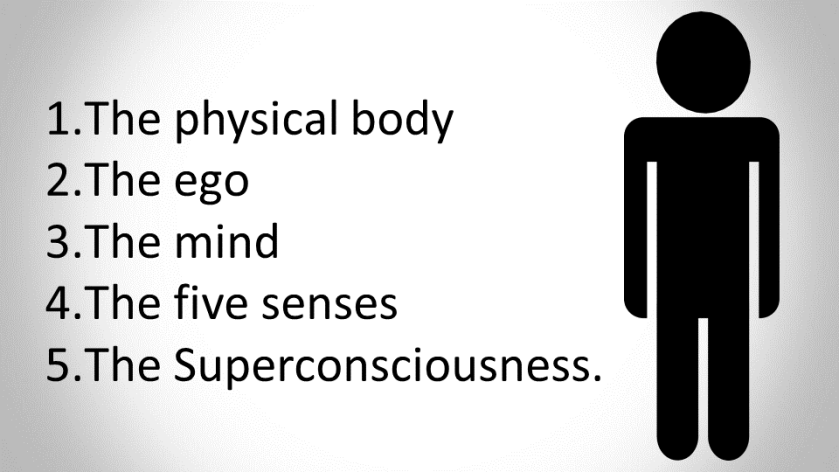
(SBG 18:14) “The five factors are, the body which is the seat of action; the ego that claims to be the doer; the mind and the various senses; the different functions performed by the being; and the Super Consciousness within as the fifth factor.  

The-five--factors

It can be gleaned from this Shloka that an individual is essentially made up of five factors which are the physical body, the ego, the mind, the senses and the Superconsciousness.

Bhagavan Krishna also said,  (SBG 15:08) “When the soul which is the master, acquires a body, it takes the mind and the five senses from the body it has left, just as the wind takes different odours along with it.”

It is evident from the above Shlokas that it is the presence of the Self or the Superconsciousness in a physical body that differentiates between one that is alive and another that has died. When the physical body of a person dies, it is the Self or the Superconsciousness that leaves it. The following Shlokas explain that the Self or Superconscioisness, not only in humans, but also in all beings, is Divinity, Brahman or Bhagavan Krishna Himself. This has been clearly stated in Shloka  SBG 18:20 given below.

An untamed and untrained mind, ego, ignorance, arrogance and being brainwashed into following an organised religion or cult, are some of the reasons that prevent people from being seekers, and from being aware of as well as from sensing the Divinity in themselves. This sends them flocking behind godmen, godwomen and astrologers who weave their own stories and keep naive people entangled in the web of their bizarre tales.

Reading and understanding The Srimad Bhagavad Gita is the easiest and surest way to break free from mental slavery and to begin an exciting, awe filled, Karmically rewarding, peaceful and fulfilling life.

Below are some Shlokas from The Srimad Bhagavad Gita that explain the Divinity in you.

SBG 2:20 The Self is never born nor does it die at any time. It does not come into existence when the body is born nor does it die when the body dies.

SBG 3:30 Renounce all your works completely in Me, have full knowledge of the Self and fix your mind on Me, don’t expect any benefits, be clear of arrogance and laziness and fight.

SBG 4:38 There is certainly nothing more purifying than knowledge. He who is perfect in Yoga, finds it in the Self in due course of time.

SBG 5:05 A person who is devoted to the path of selfless action, has a pure mind or a purified soul, has his body and senses under control, is compassionate to all living beings and sees his Self in them, although engaged in work, is never in bondage.

SBG 6:29 A yogi whose Self is united with Divine Consciousness, sees the Self abiding in all beings and all beings in the Self. Such a person sees the same everywhere.

SBG 6:31 The one who is in union with Me and worships Me residing in all beings, becomes a Yogi and, whatever circumstances the person may be in, resides in Me.

SBG 10:20 I am the Self, O Gudakesha (Arjuna), situated within all living entities. I am the origin, the middle and also the end of all beings.

SBG 13:24 There are some who perceive the Self within themselves through meditation and there are others who approach Him through the Yoga of knowledge or that of action.

SBG 13:27 The person who truly sees is the one who sees the Supreme Bhagavan, existing equally, the unperishing within the perishing.

SBG 13:28 Such a person perceives the same Supreme Bhagavan dwelling equally everywhere and he does not degrade his own spiritual well-being by mistaking his ego to be the Self like the way ignorant people do. He therefore reaches the highest goal.

SBG 17:05 Those who are impelled by the forces of egotism, passions and attachments, practise terrible austerities which are not taught in the scriptures.

SBG 17:06 These senseless men torture all the elements in their own bodies as also Me residing within it. You should know them to be of demoniacal qualities.

SBG 18:20 The knowledge by which one sees the one indestructible Reality in all beings, although divided in countless forms, is said to be Sattvic or pure.

SBG 18:53 A person who has given up egoism, false strength, arrogance, anger, desire, and covetousness; is free from possessiveness and is always peaceful; is fit to attain Brahman or Super-Consciousness.

SBG 18:54 Having become one situated in Brahman, a person becomes serene in the Self, does not lament or desire; and is the same to all beings. It is in that state that a person attains Supreme Devotion unto Me.

Click below to read the Srimad Bhagavad Gita

Srimad Bhagavad Gita

Jai Shri Krishna

‘Time Dilation’ mentioned in Dharmic Scriptures

According to the theory of relativity, time dilation is a difference in the elapsed time measured by two observers, either due to a velocity difference relative to each other, or by being differently situated relative to a gravitational field. As a result of the nature of spacetime, a clock that is moving relative to an observer will be measured to tick slower than a clock that is at rest in the observer’s own frame of reference. A clock that is under the influence of a stronger gravitational field than an observer’s will also be measured to tick slower than the observer’s own clock. (Source Wikipedia}

All

Srimad Bhagavad Gita:
SBG 8:17 By human calculation, one day of Brahma is equal to a thousand Yugas (millennia), and the night is also of the same duration. The wise who know this truth know about day and night.

The special theory of relativity of Albert Einstein’s results in time dilation for inertial systems.

Verses 9.3.30 – 32 from the Bhaagavata Purana, narrate about someone who went to the highest planetary system and stayed there for ’20 minutes’, but when he returned to earth, 116,640,000 years had passed by on earth. He found neither his friends and relatives nor his sons and grandsons. He could not even find a record of his family tree.

Srimad Bhaagavatam (Bhaagavata Puraana)
9:3:29 Taking his own daughter, Revati, Kakudmi went to Brahma in Brahmaloka, which is transcendental to the three modes of material nature, and inquired about a husband for her.

9:3:30: When Kakudmi arrived there, Brahma was engaged in hearing musical performances by the Gandharvas and had not a moment to talk with him. Therefore, Kakudmi waited, and at the end of the musical performances, he offered his obeisances to Brahma and thus submitted his long-standing desire.

9:3:31: After hearing his words, Brahma, who is most powerful, laughed loudly and said to Kakudmi: O King, all those whom you may have decided within the core of your heart to accept as your son-in-law have passed away in the course of time.

9:3:32: Twenty-seven chatur-yugas have already passed. Those upon whom you may have decided are now gone, and so are their sons, grandsons and other descendants. You cannot even hear about their names.

Now study the Nasadiya (pronounced naasadiya) Sukta from the Rig Veda, which is a sceptical inquiry into the creation.

An ideal Sanatana Dharmi (a Hindu), is one who is a true seeker. The Sanatana Dharma is the only scientific, rational, sensible, logical and credible way of life in which there are no commandments, Satan, messengers, agents, hell, heaven or a bearded jealous God sitting in the skies, who punishes people that don’t believe in him. Yet, due to the spiritual corruption that Sanatanis have undergone listening to the ridiculous stories told by missionaries and other marauders and usurpers, most Sanatana Dharmis ‘Hindus’ have completely lost the Dharmic God concept, and they have forced themselves into dark holes of ignorance and stupidity. Many do not even have any fundamental knowledge of the Divine Sanatana Dharma and the principle of Karma or Cause and Effect. It is for this reason that there still are Sanatanis who still believe that during challenging times in their lives, it is God that ‘tests’ them, or it is those planets out there that team up together and conspire to damage their love life, snatch their job away and create havoc in their life!

Nasaiya-sukta-thmbnl

The Chariot Analogy01.png

Read the Srimad Bhagavad Gita and go through the Ishavasya Upanishad as well as the Chariot Analogy from the Kat-Hopanishad and you will know that you are Divine. You will realise that The self in you is nothing but pure Divinity, the Self in you is Krishna and You give Him a form in order for you to be able to better visualise Him, meditate upon Him and also commune with Him.

SBG 12:05 Those whose minds are set on an unmanifested and impersonal Absolute Power face difficulties in reaching the goal. This is because people always identify with the body and when there is no perceptible form, it is difficult to perceive.

SBG 4:34 Acquire knowledge through reverence to teachers who have known the Truth, serve them and ask them questions until all your questions are answered. The wise who know the Truth will teach it to you.

SBG 4:35 After acquiring that knowledge, O Arjuna, you will not be deluded like this anymore and by that knowledge, you will see all beings in their entirety in you and also in Me.

SBG 6:31 He who is in union with Me and worships Me residing in all beings, becomes a Yogi and, whatever circumstances he may be in, resides in Me.

Planeten

The delusion of the mind, caused by ignorance, leads it to inflate their ego and makes them feel separate from Divinity as well as from the rest of nature. Money spinning religious movements headed by babas add to the confusion by taking advantage of this stupidity and ignorance of the common man and propounding their own theories in order to keep people uninformed and unenlightened forever.

Read the Srimad Bhagavad Gita today and make your direct connection with the Divine Supreme Being Krishna. Understand the natural principle of Cause and Effect. Learn to design your life and Karmic journey the way you want them to be.

SBG 3:30 Renounce all your works completely in Me, have full knowledge of the Self and fix your mind on Me, don’t expect any benefits, be clear of arrogance and laziness and fight.

Jai Shri Krishna

Guarding your Happiness Key and Preparing Yourself for the Future

Loneliness and Solitude
Quite often you hear single people say, “I feel lonely,” “I have no one to love me,” “Is my Karma so bad that I can’t get married and have a good spouse?” “I feel so depressed, dejected and bitter with my life,” and so on.

Perceiving being alone as either loneliness or as solitude is like trying to establish whether a glass filled with water up to the middle is half full or half empty. It is true that loneliness could be painful and depressing but if you regarded being alone not as loneliness but as solitude, it could turn out to be a great opportunity for you to look inwards and make necessary improvements in your own approach towards life. Solitude is something that people in committed relationships sometimes long for. That is why couples are advised once in a while, to take some time off from each other and be on their own for a few days or weeks. It gives them time to look outside of the window, into themselves, into their relationship, to learn to be thankful for what they have and to think of all that they could do to further strengthen their relationship rather than complaining about the inadequacies of their partner.

Relationship with oneself
An important fact that is usually ignored is that for people who are depressed, angry, bitter, complaining and negative; attracting someone into their life, particularly a lover or someone who would either propose to them or accept their proposal, could be very difficult. Don’t you think that just as you are looking for someone who would flood your life with romance, happiness, caring and togetherness; the other person too must be looking for someone like that? There is hardly anyone who would take the trouble to connect and start a relationship with a person who is always sad or cross. When someone asks you how you are doing, just say that you are doing great instead of beginning to narrate your sad story of being lonely and having no one to love. Be lavish in praising people and things around you and talk about pleasant things. Don’t forget that you will hardly find anyone who would be interested in sob stories. However, it should not be overlooked that in most cases, the prime reason why a person who is single is  trying to try to find a romantic relationship, is due to the myth that such a relationship or marriage is the only way to lead a happy and fulfilling life. The truth is that the most important relationship for anyone is the one with themself, which can be interpreted as accepting one’s own imperfections, pluses and minuses, as being normal. Until a person achieves a healthy relationship with oneself, it would be difficult for them to influence the hearts of others and lead them to like or love them.

Looking for relationships

Relationships are important but narrowing down the search for a good relationship to that of a lover or of a spouse is baseless and unrealistic, because there is no guarantee that a person will find an ideal romantic relationship. No one can be sure of a smooth and happy married life. Whereas, the chances of success in building a strong non-romantic relationship or a deep and committed friendship with a classmate, colleague, acquaintance, neighbour or cousin, are much higher and can be of a quality much better than that of a romantic one which, in a lot of cases, is nothing short of an illusion that people so vehemently chase all through their lives. Being thankful for the people we have in our life, doing our best to help them and to be there for them, are sure ways of laying the foundation for great lifelong relationships which may not be of a romantic nature. Appreciating others and thanking them for their friendship are magical ways to become more loved by others.

A romantic relationship is something that is a chance happening in one’s life. It is also quite possible that it doesn’t happen at all. That should not be the indicator of a happy and fulfilling life. You cannot plan or create a strategy to get into a romantic relationship with someone because if you did that, it would amount to trickery and there would be no honesty and truthfulness in the relationship acquired through such means. Although such a relationship happens by chance, cognisance needs to be taken of the fact that the stage for such an event to happen was in fact created subliminally by the person who has found romantic love. The method of building the possibility of finding love and increasing the chances such a thing happening in one’s life, will be discussed later in this post.

Just as some people long to find a romantic relationship; there are others who strive to protect the relationship that they are in; try to get back one that they have lost; or there also those who are tired of the one they feel they are stuck in. Whatever be the case, it is essential to learn how a romantic relationship is born, how it grows and in the event it dies, why it dies.

Measuring love
American social psychologist Zick Rubin, created a method to empirically measure love. As stated by Rubin, a romantic relationship consists of three factors, namely, attachment, caring and intimacy. He said that these three factors were like three pillars of a romantic relationship and that even if one of them were shaky, it could jeopardise an entire existing relationship or ruin the possibility of building a new one.

One of the greatest enemies of any relationship
As per my personal opinion based on my experience from my own life and also from those of my friends and of those I counsel, I would like to say that there is an evil element which is so powerful that it can even prevent a relationship from being born at all, let alone allowing it to grow and damaging it. That evil element is called EGO. This element is the foundation for many other disagreeable qualities such as selfishness, narcissism, arrogance, adamancy, and the ‘I deserve better’ attitude. This also causes jealousy, over-possessiveness and a strong suspicious nature. If only a person with a high level of ego could take some time to deeply introspect, they would realise that the prime reason for their ego is in fact their low self-confidence or some kind of an inferiority complex that they cleverly mask with an air of superiority. The question that arises is that how could a person, who is in such a state of mind ever attract anyone, and even if they somehow did attract someone into their life, how could they build a strong and deep relationship of love that would keep the loved person or spouse in it forever? Ego is one of the deadliest enemies of any relationship. What I said above may be summarised as, ‘No one wants to befriend or fall in love with either a sad and gloomy or an egotistical person.’ Therefore, if you want to pave the way for a new relationship to enter into your life, drive all the sadness and bitterness as well as your ego out of your mind and start being cheerful and emitting joy.

The good news
The good news is that there is a simple method that consists of a few steps, through which one could prepare themself to be a person suitable for a potential romantic encounter which could have the propensity of later on fructifying and culminating into marriage or a lifelong commitment. This method has two main benefits. On one hand, it prepares the person to change the colour and course of their life, while on the other, it contributes greatly towards their general health and well-being.

The method is to start caring more for yourself. That’s right. By doing the work of investing on yourself, you can become healthier; happier; gentler; kinder; more magnanimous and forgiving; and simply more attractive. Such a person attracts people like the way flowers attract butterflies (I didn’t say bees because they sting !) out of which there could be high chances of their finding the right one to be their life partner.

The method of caring more for yourself contains the following parts:

1. Jettison all negativity, anger and frustration; and start celebrating life. The three reasons that you are alive, healthy and sane are good enough for you to celebrate every moment of your life. Of course, continuing to be negative is certainly not all that bad because you wouldn’t be sent to hell for being so. The worst that could happen could be that you might be stuck in a negative Karmic pattern for many more Janmas or life times to come until the day in some future Janma of yours, in which you are enlightened with the basic knowledge of the principle of ‘Cause and Effect’ and you use your mental force to break the negative chain.

2. Whatever heartaches you might have, keep them to yourself because no one wants to hear them. Never mind, time heals even the gravest of wounds. Don’t reveal your weaknesses to others.

3. Work on your physical fitness. Remember, an individual is a ‘physical unit’ comprising of the Self, the mind and the body. It is the body in which the Self resides and the physical body’s good health assures a long and comfortable journey through one life time. A good looking person is usually one who is physically fit and is in shape. Spending hours before a TV, surfing the internet, reading or writing sob stories, visiting astrological sites or watching soaps, get you nothing but successfully waste your time on the planet. Instead, spending an hour at the nearby fitness centre regularly, can make you feel proud of yourself when you look in the mirror a few months later. A well groomed person who is healthy and in good physical shape, generally has a good amount of self confidence and such a person is seldom a sad, unattractive or an unfriendly one.

4. Don’t eat animal carcasses. It has been medically proven that portions of the undigested meat you eat, decay and remain in your colon as carrion for many years. It is like being a walking morgue or graveyard. (Read Meat Karma . Nourish yourself with good food that contains veggies, greens and fruit – They make your skin glow. Visit TVM Vegan

5. Get sufficient sleep.

6. Go out, be with friends and make more new friends.

7. Spend time for your hobbies and think of starting a new one.

8. Keep yourself busy. Take up a course on something that you have always wanted to learn but could did not find the time or the inclination to do so.

9. Most importantly, stay away from pessimists.

10. Develop patience because that is the first requirement to fight ego that has the power to seriously impede good conversations that could lead you into healthy relationships. Patience helps improve divine qualities such as kindness and forgiveness which are essential components of sincere relationships.

Don’t forget that the best relationships are those in which there is a lot of communication, appreciation, kindness, generosity and the absence of ego. Here is a quote from Friedrich Nietzsche’s ‘Human, All Too Human: A Book for Free Spirits’. “Marriage as a long conversation. – When marrying you should ask yourself this question: do you believe you are going to enjoy talking with this woman into your old age? Everything else in a marriage is transitory, but most of the time that you’re together will be devoted to conversation.”

Though Nietzsche’s quote refers to men seeking to marry, it can also be applied to women seeking lifelong relationships. Always remember that good and interesting conversations are usually not possible with dejected and gloomy people. Smiling, eye contact and the quality of listening, are extremely important to begin and have great conversations in which tremendous amounts of knowledge and emotions are exchanged between different minds.

Karmic blunder
Cherish the life you have. In case you have had a sad past, just dump it mercilessly. It’s over. Start anew. Life is short and the time left in the current life time is ticking away for everyone. In my opinion, killing the present which is the greatest gift, either thinking of a person who has left you or waiting for some imaginary person, and secluding yourself from the people you have in your life merely as an expression of depression and bitterness against your life pattern, would be a Karmic blunder of a massive proportion that could have severe Karmic repercussions. If you are not happy with your present, try to understand that it was your past, or rather, your own past Karma that caused your present. Why would you want to make the same mistake again and experience its effects in the future?

Karmic course correction

According to my concept of Karma 60-20-20, 60% of your destiny has already been written by your Karma in your past Janmas, 20% has been decided by your Karma in the current Janma and the remaining 20% is still open which you can use to change the course of not only your current Janma or life, but also of your entire Karmic voyage towards Moksha.

The happiness key
Simply throw away unwanted baggage, take a firm decision to take control of your life and happiness, and promise yourself that the key to your happiness stays with you because handing it over to someone else, or in other words, being dependent on others to become happy, is the easiest, shortest and surest way to create the possibility of a life of mental slavery, sadness, pain, frustration and anger.

Never give others the power to control the state of your state of mind and your life. Thank your blessings and follow the simple steps given above. You will certainly be a healthier, happier and more energetic version of yourself and you will be bubbling with joy and positivity. You will radiate love, kindness, warmth and divinity all around you and it is probably such a wonderful and charming person that your prospective date is looking for.

Stay blessed.

Jai Shri Krishna

Modiji writes about his life

A true Karmayogi leader, visionary, true friend of the common man, philosopher and guide…

Prime Minister Modiji, the greatest leader of our times, writes about his childhood, his spiritual quest and his efforts to know himself.

India is truly blessed to have an honest, sincere, dedicated, strong, wise, brave, knowledgeable, dynamic, kind and loving leader such as Modiji who is an ideal role model and source of great inspiration for the young as well as the old.

My family of 8 lived in a 40×12 feet house – it was small, but enough for us. Our days began early, around 5 AM when my mother would provide traditional forms of curing and healing to newborns and small children. Through the night my brother and I would take turns to keep the ‘chula’ going for her to use. She didn’t have the fortune of getting an education, but God was kind and she had a special way of curing ailments. Mothers would line up outside our house every morning because she was known for her healing touch.
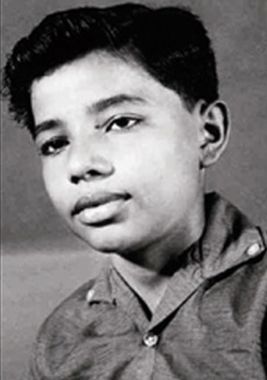
Then, I would open my father’s tea stall at the railway station, clean up and head off to school. As soon as school ended, I would rush back to help him, but what I really looked forward to was meeting people from all over the country. I would serve them tea and listen to their stories – that’s how I learnt to speak Hindi. I would hear some traders speak about ‘Bambai’ and wonder, ‘Will I ever get to see the city of dreams?’

I was always curious – I would go to the library and read everything I could get my hands on. I was 8 when I attended my first RSS meeting, and 9 when I was a part of an effort for the betterment of the lives of others – I set up a food stall with my friends to help the victims of the floods in parts of Gujarat. I wanted to do more, but I was aware that we had little means.
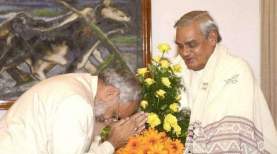
Still, even at that age, I strongly believed that God has made us all alike. It didn’t matter what circumstances I was born into, I could be something more. So when you ask me, what my struggles were, I’ll tell you that I had none. I came from nothing, I knew no luxury and hadn’t seen a ‘better’ life, so in my small world…I was happy.

If the way was ever difficult, I made my own way. I had a great need to look sharp and groomed. So, even though we couldn’t afford an iron, I would heat some coal, use an old ‘lota’, wrap a cloth around it and press my clothes – the effect was the same, then why complain?

This was the beginning of everything that I am today and I didn’t even know it at the time. So if you ask the 8 year old Narendra Modi, running around serving chai and cleaning his father’s tea stall, whether he even dared to dream about becoming the Prime Minister of India, his answer would be no. Never. It was too far to even think about.

While growing up, I had a lot of curiosity but very little clarity. I would see army men in their uniforms and think that this was the the only way to serve the country. But as my conversations with the saints and sadhus at the railway station grew deeper, I realised that this too was a world worth discovering.

I was undecided, unguided and unclear — I didn’t know where I wanted to go, what I wanted to do and why I wanted to do it. But all I knew, was that I wanted to do something. So I surrendered myself to God and left for the Himalayas at the age of 17. I bid goodbye to my parents as my mother gave me a sweet dish before I left and put a tilak on my forehead to bless my journey.

I went wherever God wanted to take me — it was an undecided period of my life but still, gave me so many answers. I sought to understand the world, to understand myself. I travelled far and wide, spent time at the Ramkrishna Mission, met sadhus and saints, stayed with them and began a discovery, inwards. I moved from place to place — I had no roof above my head, but still never felt more at home.

I would wake up during Brahma Mahurat, between 3 and 3:45 am, and take a bath in the freezing waters of the Himalayas, but still feel the warmth. I learnt that peace, oneness and Dhyan can be found, even in the simple sound of a waterfall. The sadhus I lived with taught me to align myself with the rhythm of the Universe.

So that’s what I did — I aligned and experienced revelations that help me till today. I realised that we’re all tied down by our thoughts and limitations. When you surrender and stand in front of the vastness — you know that you’re a small part of a large universe. When you understand that, any trace of arrogance you have in you melts and then life truly begins.

That’s when it all changed. After two years, I returned home with clarity and a guiding force to lead the way.

After coming back from the Himalayas, I knew that I wanted my life to be one that is lived in the service of others. Within a short span of returning, I left for Ahmedabad. It was my first brush with living in a big city – the pace of life was very different. I began my time there by occasionally helping my uncle at his canteen.

Eventually, I became a full time Pracharak of the Rashtriya Swayamsevak Sangh. There, I got the opportunity to interact with people from different walks of life and do a wide range of work. We all took turns to clean the RSS office, prepare tea and food for colleagues and clean utensils.

Life was rigorous and busy. But amidst all of my duties, I was determined to not let go of my learnings from the Himalayas. To ensure that this new phase of life didn’t take over the sense of peace that I achieved there, I decided to take out some time every year and introspect. It was my way of maintaining a balanced life.



Not many people know this, but I would go away for the 5 days of Diwali. Somewhere in a jungle – a place with only clean water and no people. I would pack enough food to last for those 5 days. There would be no radios or newspapers, and during that time, there was no TV or internet anyway. I would reflect – and the strength that this alone time gave me still helps me to handle life and its various experiences. People often asked me, ‘Who are you going to meet?’ And I would say, ‘मैं मुझसे मिलने जा रहा हूं।’ (I’m going to meet myself)

Which is why, I always urge everyone, especially my young friends, in the midst of your fast paced life and busy schedules, to take some time off…think and introspect. It will change your perception – you will understand your inner self better. You will start living in the true sense of the word. It will also make you more confident and undeterred by what others say about you. All of these things will help you in times to come. So I just want each and every one of you to remember that you are special and that you don’t have to look outside for the light…it’s already within you..

Narendra Damodardas Modi

Spiritual Corruption, Corruption in Spirituality and Trade-Offs with ‘Gods’

Scenario 1.
“Dear God, why are You punishing me? What wrong have I done? Don’t You have a heart? Are You blind? Are You deaf? Do you derive pleasure out of the sufferings of innocent people like me? Please help me! If you help me solve my financial problems,
a. I will donate 10 % of my profits to your temple.
b. I will gift You gold ornaments, diamond necklaces and a diamond crown.
c. Since I am not very rich, I will break a coconut at the doorstep of your temple.

Scenario 2.
Government officer to a builder: “I cannot grant you the permission to construct the building as per the design that has been given by you because it goes against the conditions stipulated by the law.”
Citizen to the officer: “Please do me a special favour and grant me permission. If you could do this for me, I will have a suitcase full of money sent to your home tonight.”

It is usually situations and deals which resemble scenario no. 2, that fall under corruption but never are deeds similar to the one in scenario no. 1, considered to be wrong. Why is that? It is because ‘fixing matches’ with the blessings of a deity has become a regular practice among people. They make special vows of donating money, jewellery, and other materials in return for Divine favours. Offering donations out of gratitude for Divine Blessings received is one thing but sending money to religious institutions as part of a bargain with the presiding deities of those institutions, is another. It is quite a common practice in India for people to advise their children to make a vow to Shri Ganesha to break 108 coconuts at the nearby Ganesha temple if they passed an examination. The funny part is that the parents as well as the children who make such deals are well aware of the fact that passing an exam calls for good preparation and not Divine Intervention.

As per the concept of ‘Cause and Effect,’ each and every situation that one is in, is the ‘Effect’ of something they thought, said or did in the past;  and the way they react to the situation and the action they take, will be the ‘Cause’ for some future ‘Effect’. It is a straightforward natural law. Making deals with ‘gods’ and asking for out of turn favours, are nothing but acts of corruption. When I explained as above to a person who sought my advice, the following questions were thrown at me. “So what should I do? Shouldn’t I pray to god and ask for what I want? Should I silently suffer, tolerate the injustice and not even question it? It is unfair!”

I replied, “Injustice? Unfairness? Has it ever occurred to you that ‘unfairness’ and ‘injustice’ are purely human qualities? Nothing in nature or in the animal kingdom is unfair. Every being behaves as per its own nature following the laws of nature. Man is the only being that tries to outsmart nature even if it meant using unfair methods. Take a simple example of people taking a vow to send money to a temple or ashram of some problem of theirs was solved. What else but corruption is it? When there is a problem, people should identify it, define it, study it, find countermeasures and solve it. Performing a puja asking for Divine Intervention amounts to cheating. Of course, you may ask for what you want! However, the most important favour you should be asking your ‘god’ for needs to be the ability to think clearly. Remember, when Arjuna, the brave, talented, knowledgeable and highly intelligent warrior king, was despondent, he requested Krishna to take him as His pupil and teach him how to live and fight.
[SBG 2:07 With my mind in a state of confusion regarding my duty and the feeling of helplessness because of weakness, I ask You to tell me what is good for me. I am Your disciple, and I have surrendered my soul to You. Please teach me.]

Arjuna did not ask Krishna to vanquish the Kauravas for him and make him victorious without fighting the war! Arjuna did not tell Krishna that he would present Him a part of his kingdom if he won the battle for him! That was because Arjuna was not CORRUPT! When Arjuna shelved his ego and completely surrendered before Krishna, the Divine Discourse called the Srimad Bhagavad Gita started. It was because of the ‘egoless’ mindset of a devout student hungry for knowledge that Arjuna maintained during the entire discourse that helped him acquire the Divine Knowledge imparted to him by Krishna, which then, in spite of the enemy army of Kauravas being extremely strong, enabled him to obliterate them.”

People who feel they are undergoing challenging situations need to remember that there are NO SHORTCUTS to balancing their Karma and that the only method if at all, that could help them bypass difficult situations in life is TOTAL SHARANAAGATI  before Krishna  (18:66). It takes simple common sense to comprehend that a person who has taken to Sharanaagati and performs all their actions as a sacrifice to Krishna (SBG 5:10), would never think, say or do anything Adharmic (unrighteous) and as a result, would not attract negative reactions to their actions.

In my posts called ‘4 Questions from the 18th Chapter of the SBG’ and ‘Karmayoga and Doership’, I had quoted Shlokas from the Srimad Bhagavad Gita through which Bhagavan Krishna explains to Arjuna about action or Karma, the five factors in a person that cause action, the reaction to every action and about ways to balance Karma. Unless people understand the concept of ‘Cause and Effect’, they will forever be complaining, cursing and brooding over the problems or conditions which are unfavourable to them in their life, and will be easy victims of fake astrologers, babas and swamis.

People usually complain that ‘As far as I know, I have harmed no one, so why should I undergo all these sufferings? Why can’t I lead a happy life? Why is it that others who cheat, lie and commit crime are doing well and are happy? I see people who harm others and are selfish, but they, too, get away with all that! How does one explain that? This is not fair! This is unjust – tut tut!” Some others add, “Why should I tolerate this? I am bitter! I can’t take this anymore! I am upset! I am sick of all this!”

Well, before delving any deeper into the naive and childish questions above, which many people ask themselves, it would be necessary to understand why the concept of ‘Cause and Effect’ makes more sense than any other theory. The gross inequalities and huge differences in the lives of people from different parts of the world and different strata of human society can theoretically be attributed to three major possibilities:

a.  There is no specific cause, and everything happens just by chance

b. As taught in organised religions, there is a ‘god’ in the sky who is jealous, proud, and sometimes compassionate when people sing praises of Him, but also sends disobedient people to an eternal hellfire.

c. Karma – Cause and Effect. As per this concept, there is no one punishing or rewarding an individual but the person’s own thoughts, words and deeds create the future of the individual. After the end of a Janma of a person, their Karmic future based on their Karma collected in the Janma that ended could be one of the following:

i. They simply cease to exist or no one knows what happened to the individual Jiivaatma. [SBG 2:28 O Arjuna, nothing is known before birth and after death. The only period known is between birth and death. Therefore of what use is lamentation.]

ii. Moksha, in which the Atman or the life energy becomes one with the whole, does not have an individual mind and does not occupy a physical body which creates the impression that it has a separate identity.

iii. Rebirth as a being that one subconsciously wished to be during the previous Janma or in any one of the earlier Janmas
[ SBG 8:06 At the time of death, while leaving the body, whatever one thinks of is what they will attain by being constantly absorbed in its thought, O Arjuna.]

iv. Rebirth as a being whose Janma teaches them something extremely important that they were unaware of or did not bother to learn.

v.  Rebirth as a person, who at the point of ending their previous Janma, thought of acquiring or achieving something in the next Janma.

vi. Rebirth as a person that needs to undergo the entire learning process through challenging experiences until they acquire the required knowledge. Sorry, a Janma like this one can be quite a tough and excruciating one.

vii. Rebirth, simply in order to settle a score with someone!

It is quite evident that as per the law of ‘Cause and Effect,’ every individual literally writes their own future. So why blame others or ruin the possibility of a better future through the act of creating even more negative Karma by being negative, sad, thankless, materialistic and angry? 

Being upset because you don’t get what you want is ludicrous. This is because desires, wishes, dreams and ambitions of people keep changing with time. Preferences and tastes of people change. It starts right from childhood. A child that receives as a present a flashy bicycle or an expensive pencil case that he or she dreamed of, soon loses interest over that dream object and aspires for other things. It is the same case with many couples. In the beginning, they feel they can’t live without one another, but as time passes by and their different masks begin to fall off one by one, they start by crying out affe01for some ‘personal space’ within the relationship and finally end up abandoning the person they promised to be with until the end and marrying someone else. People’s minds keep changing according to the different environments they are in. An old saying in the Tamil language compares the human mind with a monkey because of its antics and due to its unpredictable behaviour, which is very difficult to control. Something that one considers to be most valuable and precious, could become a thing of no value in another part of time in their life.  What one considers to be an earth-shattering problem at a particular stage in their life could soon become a trivial thing of the past. What one longs for right now, could become totally uninteresting and be forgotten after some time.

Until one is alive and has a sound mind, there are the three greatest and priceless gifts that one should be extremely grateful for:
1. Being alive
2. Being of good physical health
3. Possessing good mental health

Those who truly understand the value of the three priceless gifts mentioned above are never affected by even the worst of challenges in life. They always treat every challenge as an enormous opportunity to experience, learn and evolve.

Attachment to physical possessions is the greatest stumbling block in the processes of Karmic as well as Spiritual evolution of a person. The only physical object that will most certainly remain with an individual until the end of their Janma, is their body because it is a part of the unit called an ‘individual’, which is made up of five factors, namely, itself (the body), the ego, the mind, the various senses, and the Super Consciousness or Aatman. Disrespect and improper care of the body, which is a temple of divinity, could result in serious illnesses, loss of some of its parts, even before the end of a Janma or shortening of the Janma.

As I said in another post, when the mind changes, life changes. Cribbing, complaining, fretting and fuming over difficult situations which are temporary anyway, result in the waste of the NOW, which, as a matter of fact, can be perceived by an individual only due to their blessings of life and consciousness, which they should always be extremely thankful for.

When Yama, the lord of death, decided to teach Nachiketa the Kat-hopanishad, (read this post ‘The Chariot Analogy’ ), he commenced by stating the two paths that humans are interested in – One that leads to pleasure and the other that leads to spiritual satisfaction. Yama said that the former path leads people to death, while the latter one leads people to immortality. All attachments invariably end in pain simply because nothing or no one is permanent. Should one’s situation be unfavourable or unpleasant, the primary step the person should be taking in order to come out of it would be to wholeheartedly and modestly accept their Karmic responsibility for their situation. Trying to ‘bribe god’ might sometimes seem to solve your problems temporarily because of your sheer faith in the method you have adopted, but the Karmic problem that you attempt to circumvent cannot be brushed under the carpet forever because as per the law of ‘Cause and Effect,’ it needs to be settled or balanced, some day or some Janma or the other. From the manner in which some babas, godmen and godwomen make a living out of exploiting the spiritual ignorance of people and offering them methods to make trade-offs with Gods in order to solve their problems, it is rather apparent that they have not given the power of the law of Cause and Effect a serious thought. Had they done it, they wouldn’t be doing what they are doing because when their payback time arrives, it can be a highly gruelling and truly chastening experience.

What cannot be defined cannot be managed, therefore introspecting instead of brooding and complaining, and finding ways to correct one’s nature, would be better options for people in trouble. Reading and understanding the Srimad Bhagavad Gita can do wonders to the way a person thinks, perceives and interprets life.

  • You are Divine. You don’t need agents between you and the Supreme Divine Being. Study the Mandukya Upanishad
  • There are no shortcuts to balancing Karma except TOTAL SHARANAAGATI
  • Nothing is permanent – not even troubles and pains.
  • Live the NOW.
  • Live in the NOW. 
  • Be lavish in expressing your gratitude for The Three Priceless Gifts
  • Follow The Five Pearls which can be called the essence of the Srimad Bhagavad Gita

SBG 2:14 O Arjuna, impermanent things like happiness and sadness, heat and cold in summer and winter, come and go. They are temporary, so learn to endure them.

SBG 18:66 Giving up all your ideas of righteousness or religion, take complete refuge in Me. I will liberate you from all sinful reactions. Do not fear.

Jai Shri Krishna

The Utimate Divine Truth

“SBG 2:41 In this path, O descendant of Arjuna, there is a single point of focus and determination. The thoughts of the undecided are branched and are infinite.”

A poorly understood, untamed and uncontrolled mind is the prime cause of all problems in life.

People write to me requesting me to advise them if they could go to this temple or that temple, to the Shani temple or to perform special poojas for Shani, Rahu, Ketu, etc. My simple advice to them would be to have a proper ‘God concept’ and a clear focus in life. Dissipating their mental energy, devotion and also their supplication before the Divine, can only cause them frustration and do no good to them. Religious organisations and cults mislead people into believing in different deities, gurus, babas and others in order to profit from the desperation that people suffer from. The particular weakness of people to tend to believe a story about the presence of an evil spirit in a dilapidated house rather than the grand truth of the omnipresence of Divinity is what makes soul traders not only thrive but also become powerful organisations that control huge masses of people. The Karma of one individual CANNOT be borne or settled by another. It has to be managed by each individual, no matter which guru’s or swami’s devotee he or she might be or which precious stone he or she might be wearing on their person!

Remember that your nature, thoughts and actions are directly responsible for all that happens in your life. When your thoughts change, your life changes. Make it a point to NEVER ever begin your day brooding over the past, thinking of having lost something or someone, or feeling low.  What is gone, is gone. Be done with it. Have faith in Krishna, who is the personification of the entire Whole, and is yourSELF, and start afresh. Every day is a great and miraculous Divine Blessing apart from being the first day of the rest of your life.

cast-overboard

It is never late to start all over again. Dump all unwanted thoughts just like jetsam that is cast overboard in order to lighten and stabilise a floating vessel, and steer your life back onto the right course.

Please watch the following video and PATIENTLY read the Shlokas from the Srimad Bhagavad Gita given below it. The power is within you. It is your mind that needs to be managed, after which everything will automatically fall into place. It’s just a matter of intention, focus, dedication, faith, confidence and some time.

Jai Shri Krishna

SBG 4:37 Just as a blazing fire burns wood used as fuel into ashes, O Arjuna, knowledge burns all actions and reactions due to material activities, into ashes.

SBG 4:38 Just as a blazing fire burns wood used as fuel into ashes, O Arjuna, knowledge burns all actions and reactions due to material activities, into ashes.

SBG 7:16
Among the pious, there are four kinds who are devoted to me. They are the distressed, those seeking knowledge, people desiring material gain and people of wisdom.

SBG 7:17
Of those, the one of wisdom who is engaged in devotional service is the best. I am dear to such a knower, and he or she, in turn, is dear to Me.

SBG 7:18
While all these are certainly noble souls, the one of wisdom who is connected to Me is with Me because he or she is solely engaged in aiming for Me as the highest attainment.

SBG 7:19
Therefore, after innumerable births, the one who has perfected his or her wisdom understanding fully My universal reality surrenders to Me and such a soul is very rare.

SBG 12:01
Arjuna said: Those devotees who are ever steadfast and worship You, and those also who worship the Imperishable and the formless Absolute—which of them are better versed in Yoga?

SBG 12:02
Shri Bhagavan Krishna said: Those who, fixing their minds on Me, worship Me, ever steadfast and endowed with supreme faith, I regard them as the best of Yogis.

SBG 12:03
Those who worship the Imperishable; the Indefinable; the Unmanifested; the Omnipresent; the Unthinkable; the Eternal; the Formless and the Immovable;

SBG 12:04
…have their senses controlled, possess a balanced mind, and are engaged in the welfare of others; certainly, come to Me.

SBG 12:05
Those whose minds are set on an unmanifested and impersonal Absolute Power face difficulties in reaching the goal. This is because people always identify with the body and when there is no perceptible form, it is difficult to perceive.

SBG 12:06
But to those who worship Me, renouncing all actions in Me, regarding Me as the Supreme Goal, meditating on Me with single-minded Yoga, ..

SBG 12:07
…to those whose minds are set on Me, O Arjuna, I certainly become the saviour out of the ocean of the mortal Samsara!

SBG 13:15
He, The Supreme Truth, exists both inside and outside all moving and non-living beings and as it is subtle, is far away from material senses to be seen or known. Although the Supreme Truth or Brahman is far away, it is near to all.

SBG  13:16
He is not divisible, yet He exists as if divided in beings; He is to be known as the supporter of beings; He devours, and He generates too.

SBG 13:17
He is the Light of all lights, is beyond darkness; He is knowledge, the Knowable and the goal of knowledge, seated in the hearts of all.

SBG 13:18
Thus, the Field, as well as knowledge and the Knowable, have been briefly stated. My devotee, who knows this, is suitable to attain My Divine Nature.

SBG 13:19
You should know that both Prakriti or Nature and Purusha or Spirit, are without beginnings. You should also know that all modifiable objects and qualities are born from Prakriti.

SBG 13:20
In the production of the effect and the cause, Nature or matter is said to be the cause; and in the experience of pleasure and pain, it is the individual soul that is responsible.

SBG 13:21
The soul seated in Nature experiences the Gunas or the qualities born of Nature. The attachment of the soul to the Gunas is the cause of its birth in good and evil wombs.

SBG 13:22
The Supersoul in this body is also called the Spectator, the One who permits, the Supporter and the Transcendental Enjoyer. He is the Paramatma, the Supreme Self and the great Bhagavan Himself.

SBG 13:23
One who comprehends this truth about the Spirit, Matter and the interaction of the Gunas is liberated and, whatever condition such a person may be in, will not take birth again.

SBG 13:24
Some behold the Self in the Self by the Self through meditation, some do so by the Yoga of knowledge, and others by the Yoga of action.

SBG 13:25
Others, who do not have spiritual knowledge but start worshipping after hearing from others, certainly transcend the ocean of birth and death.

SBG 13:26
Wherever a being is born, whether it be unmoving or moving, you should know, O best of the Bharatas (Arjuna), that it is from the combination of the Field and its Knower.

SBG 13:27
The person who truly sees is the one who sees the Supreme Soul or the Supreme Bhagavan, existing equally in all beings, the unperishing within the perishing.

SBG 13:28
Such a person perceives the same Supreme Bhagavan dwelling equally everywhere, and he does not degrade his own spiritual well-being by mistaking his ego to be the Self like the way ignorant people do. He, therefore, reaches the highest goal.

SBG 13:29
He who is a seer perceives that all actions are performed by Prakriti or the material nature which is born of the body and mind. He sees that the true spiritual Self does nothing.

SBG 13:30
When a man sees the whole variety of beings as resting in the One, and spreading forth from That alone, he attains the realisation of Brahman.
Note:
A man becomes one with the Supreme when he realises that all these various forms are rooted in the One.

SBG 13:31
The imperishable Supreme Self is without any beginning and is devoid of material qualities, O Arjuna. Although it dwells in the body, it neither acts nor is tainted.

SBG 13:32
Just as the all-pervading ether is not tainted because of its subtlety, the Self seated everywhere in the body, does not mix with it nor is affected by it.

SBG 13:33
As the sun that illuminates the whole world, the Self or the Soul which is Bhagavan of the Kshetram or the body, illuminates the whole field, O Arjuna.

Tat Tvam Asi.

You are THAT.

Read the Srimad Bhagavad Gita, follow the teachings of Krishna, and realise your own Divine SELF.


Nasadiya Sukta – The Hymn of Creation

Questions regarding the origin of the universe, its creation, the birth of the earth and all its inhabitants, etc. have remained unanswered. However, religions attribute everything that is inconceivable and unknown to an invisible ‘god’ who, according to them, lives in heaven, which they believe to exist high up in the skies. Most organised religions are based on this dualistic ‘god’ concept.

Another version of the Nasadiya Sukta on the New Vedanta Channel – Timeless Vedanta:

One of the important organised religions of the world teaches its followers that creation took place over a period of six days, during which night and day were created on the second ‘day’ but the sun, moon, and stars in the sky were created on the fourth ‘day’! This makes it quite difficult to understand what the separating element between day and night could have been even before the sun was created. Another significant world religion is also based on the six-day creation story; however, their book says that ‘god’ created the earth in two days, took four days to place mountains on it, nourish and bless it, and took two more days to create the stars and the seven heavens. Two plus four plus two equals eight, not six! Well, they were also commanded to never disbelieve or question the book. How convenient!

An organised religion has a set of rules and conditions that every follower is expected to follow. Those who go against the rules of the religion are called heretics and apostates, and they deserve severe punishment. Whereas a person who really believes in something because he or she is told to do so does not use their power of thinking and reasoning at all, and this is exactly what is wanted out of them by their religious leaders because it makes controlling them and ruling over them easy. When you believe that what you believe in is right, you automatically come to the conclusion that all others are wrong. This causes those who believe in a particular dogma to hate those who don’t.

The very idea of ‘god’ being separate from nature is the core principle of organised religions. Followers of such religions and cults are brainwashed to believe that a particular ‘god’ created them, and he expects people to revere him. They are warned against going against authorities, saying that if they did so, they would be going against the will of ‘god’, who was the one who put all those people in power. Right from the time they were little children, they were made to believe that those who did not abide by the commandments of ‘god’, would be punished in hell forever, but those who were sincere in their religion would be lavishly rewarded in heaven after death. Therefore, according to organised religions, the way to avoid hell and ensure a place in heaven is to be devoutly religious by refraining from thinking and asking questions, obeying the clergy (who work for the authorities), and paying taxes to the religious organisation they are a part of.

On the other hand, the Sanatana Dharma, which was not founded or created by any individual, is a beginningless and endless way of life with a strong value system that in no way restricts the spiritual freedom of sincere seekers. In fact, even Krishna, in the final chapter of the Srimad Bhagavad Gita, asked Arjuna to use the knowledge he had gained from Krishna and to act as per his own wish.
SBG 18:63 I have taught you the secret wisdom, which is deeper than all that is confidential and profound. Reflect fully on what I declared to you and do what you wish to do.

Seeking the truth with the help of scriptures, teachers, and the experiences that life offers is the prime goal of followers of the Sanatana Dharma.

Freedom of thought, hunger for knowledge, always being awestruck by nature, and experiencing oneness with the entire system help a seeker achieve a much higher state of consciousness in which nothing matters to them or bothers them because they are continuously evolving. It is a path for a seeker to experience and pass through different levels of understanding before finally experiencing the ultimate level of realising the Self. That state is nothing short of inexplicable bliss, which is priceless.

The Nasadiya Sukta is a set of seven Shlokas of the 129th Hymn from the 10th Mandala of the Rig Veda. It starts and ends with questions regarding creation. It does not say that ‘god’ made the universe, the stars, the sun, the moon, the earth, the plants, the animals, and the humans; on the contrary, it asks how anyone could know how and when creation happened because everything and all beings, including the ‘Devas’ or ‘god’, could have appeared only after the universe came into existence! The Sanatana Dharma, which has Vedanta at its pinnacle, is the highest and most rational scientific philosophy, unlike organised religions that stand on fairy tales and bedtime stories. Being born into a family following such an advanced way of thinking could be either a stroke of chance or, as some say, the result of the person’s excellent past Karma. Do thank yourself if you were born in one.

The unfortunate part, however, is that despite being born into Dharmic families, many people still want to cling on to sectarian ideas, to ‘babas’ and ‘swamis’; to ‘ashrams’ and ‘mutts’, etc. instead of opening their heart, mind, and soul to seek and experience the truth.

The human mind, which can be the source of unimaginable force, is most difficult to control. A seeker’s mind is filled with countless questions, which makes it challenging to control it and calm it down. The twelfth chapter of the Srimad Bhagavad Gita is one that is dedicated to teaching devotion and focus. It is in this chapter that Krishna talks about the need for some humans to worship the Supreme Brahman or Krishna, with a form simply because the human mind cannot imagine anything that is formless.

SBG 12:05 Those whose minds are set on an unmanifested and impersonal Absolute Power face difficulties in reaching the goal. This is because people always identify with the body and when there is no perceptible form, it is difficult to perceive.

All beings are part of the omnipresent One. It is this understanding that takes people hundreds, if not thousands, of Janmas or lifetimes to realise and comprehend.

We are all part of the same Supreme Divine Energy, but occupy different ‘containers’ called bodies. Oneness with the Supreme Being can be experienced through knowledge, right action, ‘egoless’ devotion, and meditation.

The Nasadiya Sukta नासदीय सूक्तः – The Quest about creation

नास॑दासी॒न्नो सदा॑सीत्त॒दानी॒म् नासी॒द्रजो॒ नो व्यो॑मा प॒रो यत्।
किमाव॑रीव॒: कुह॒ कस्य॒ शर्म॒न्नंभ॒: किमा॑सी॒द्गह॑नं गभी॒रम्॥१॥
naasadaa-siinno sadaa-siit tadaaniim naasiidrajo no vy-o-maa paro yat |
kimaavariivah kuha kasya sharmannambhah kim-aa-siidgahanam gabhiiram ||1||
There was neither existence nor non-existence, neither matter nor space
What covered it? Where was it? What was its purpose? What protected it? Who was the master of the cosmic water (space plasma) that was dense and deep?

न मृ॒त्युरा॑सीद॒मृतं॒ न तर्हि॒ न रात्र्या॒ अह्न॑ आसीत्प्रके॒तः।
आनी॑दवा॒तं स्व॒धया॒ तदेकं॒ तस्मा॑द्धा॒न्यन्न प॒रः किञ्च॒नास॑॥२॥
na mrutyur-aa-siidamritam na tarhi na raatryaa annha-aasiit praketaha |
aan-ii-davaatam svadhayaa tadekan-tasm-aa-ddhaanyanna parah-kinchanaasa ||2||
There was neither death nor immortality, and nothing to separate night and day,
That One existed enclosed in nothingness, there was only that One and no other.

तम॑ आसी॒त्तम॑सा गू॒ळ्हमग्रे॑ऽप्रके॒तं स॑लि॒लं सर्व॑मा इ॒दं।
तु॒च्छ्येना॒भ्वपि॑हितं॒ यदासी॒त्तप॑स॒स्तन्म॑हि॒ना जा॑य॒तैकं॑॥ ३॥
tama aasiit tamasaa guuL hamagre-e’praketam salilam sarvamaa idam |
tuchhyenaabh-vapihitam –yadaasiit-tapasastan-mahinaa jaa-yataikam-m || 3 ||
Darkness covered darkness, all this was hidden intelligence in cosmic water (Space Plasma)
And the One enclosed in nothing arose from the power of heat.

काम॒स्तदग्रे॒ सम॑वर्त॒ताधि॒ मन॑सो॒ रेत॑: प्रथ॒मं यदासी॑त्।
स॒तो बन्धु॒मस॑ति॒ निर॑विन्दन् हृ॒दि प्र॒तीष्या॑ क॒वयो॑ मनी॒षा॥४॥
kaamastadagre sama-varta-taa-dhimanaso retah prathamam- yadaasii-t |
sato bandhuma-sati niravindan hrudi pratiishy-aa kava-y-o manishaa ||4||
Desire entered and the primal seed appeared from the cosmic mind.
The wise who searched deep within their heart could discern between that which is and that which is not

ति॒र॒श्चीनो॒ वित॑तो र॒श्मिरे॑षाम॒धः स्वि॑दा॒सी दु॒परि॑ स्विदासी त्।
रे॒तो॒धा आ॑सन्महि॒मान॑ आसन्त्स्व॒धा आ॒वस्ता॒त्प्रय॑तिः प॒रस्ता॑त्॥५॥
tirash-chiino vitato rashmir-e-shaamadhah svidaasiiii dupari svidaasiiii ta |
retodhaa –aa-sanmahimaana aasantsvadhaa aavastaatprayatih parast-aat ||5||
From the primal seed sprang crisscross rays holding all the forces above and below.
The strong powers made fertile forces with strength below and impulse above.

को अ॒द्धा वे॑द॒ क इ॒ह प्र वो॑च॒त्कुत॒ आजा॑ता॒ कुत॑ इ॒यं विसृ॑ष्टिः।
अ॒र्वाग्दे॒वा अ॒स्य वि॒सर्ज॑ने॒नाथा॒ को वे॑द॒ यत॑ आब॒भूव॑॥६॥
ko addhaa v-e-da ka iha pra v-o-chatkuta aaj-aa-taa kuta iyam visrushtihi |
arvaagdevaa asya visarjanenaathaa ko v-e-da yata aababhuuvaa ||6 ||
Who can say and know where all this came from and how all this came to be?
The Devas (Gods) came after all this manifested, so who knows where all this came from?

इ॒यं विसृ॑ष्टि॒र्यत॑ आब॒भूव॒ यदि॑ वा द॒धे यदि॑ वा॒ न।
यो अ॒स्याध्य॑क्षः पर॒मे व्यो॑म॒न्त्सो अ॒ङ्ग वे॑द॒ यदि॑ वा॒ न वेद॑॥ ७॥
iyam visrushtir-yata aabhabhuuva yadi vaa dadhe yadi va na |
yo asyaadhyakshah parame vy-o-mantso anga ve-eda yadi va ne veda || 7 ||
Where did creation have its origin? Who is the One that created it, or did that One not create it?
That One alone perceives all from above and knows the beginning, or maybe doesn’t?

Aum Shaantih Shaantih Shaantihi
Harihi Aum

Thank yourself if you are a Sanatana Dharmi (Hindu)

Ask yourself, “Was I born into a Sanatana Dharmic (Hindu) family or am I one who had earlier belonged to some organised religion but have embraced the Sanatana Dharma?”  Should your answer to either of the questions be ‘yes’, the first and foremost thing you could consider doing would be to give yourself a pat on your back for the wonderful past Karma you have created and collected.

Bhagavan Krishna said to Arjuna that even if a person had committed any Adharma in the past, but also has positive Karma credits to his or her account, they will certainly be born in a family of good Dharmic people. Such a birth or such a life happens only to blessed people who have been righteous in the past.

SBG 6:37 Arjuna said: He who is unable to control himself although he has the faith, and whose mind wanders away from Yoga, what end does he meet, having failed to attain perfection in Yoga, O Krishna?
SBG 6:38 Fallen from Yoga and Meditation, does he not perish like a detached cloud without any support, being deluded on the path of the Ultimate Truth, O Krishna?

SBG 6:39 Please remove this doubt of mine completely, O Krishna, There is no one else who can remove it but You.
SBG 6:40 Bhagavan Krishna said: O Arjuna, neither in this world, nor in the next world is there destruction for him; because the one who does good, O My dear, never comes to evil.
SBG 6:41 After having attained the worlds of the righteous and after having dwelt there for many years, he who fell from Yoga, is reborn in the house of the pure and the prosperous.

SBG 6:42 Or he is born in a family of even the wise Yogis which is a kind of birth that is very difficult to obtain in this world.
SBG 6:43 There his previous divine consciousness is revived and he comes in contact with the knowledge acquired in his former body. He then works even harder in order to achieve perfection, O Arjuna.
SBG 6:44 With the divine consciousness from the previous birth, a person gets attracted to Yogic principles as they will come to him even if he does not go behind them. Such a person strives for yoga and is steadfast in Yogic principles.

The Oxford English Dictionary defines the term ‘religion’ as follows:
1. The belief in and worship of a superhuman controlling power, especially a personal God or gods.
2. A particular system of faith and worship. ‘the world’s great religions.’

Therefore, a  person who follows a religion is expected to believe in a God, in a messenger, in a book or in a set of rules stipulated by the body that governs the religion and its followers. One who does not comply with the rules of the religion is either punished on earth or are threatened to be sent to an eternal hell after death.

In order to comprehend the greatness of being a Dharmic (Hindu) person who is naturally blessed with mental, physical and spiritual freedom, one could take a moment of their time to think how their life would have been had their heart, mind and soul been hijacked and placed under the control of dangerous ‘religious leaders’ or clergymen and if they were forced to believe in some book apart from being commanded to believe in a God in heaven and in someone else who lived a long time ago they neither saw nor experienced.

The Sanatana Dharma (Hinduism), which is founded on Universal Oneness, is a way of life that encourages seeking, learning, growing spiritually and perceiving the Divinity existing equally in all beings. There is no compulsion to believe in anyone or in anything. As against the rules of a typical organised religion, asking questions is not only a Dharmic person’s right but is also recommended to everyone.

SBG 13:27 The person who truly sees is the one who sees the Supreme Soul or the Supreme Bhagavan, existing equally in all beings, the unperishing within the perishing. 

SBG 13:28 Such a person perceives the same Supreme Bhagavan dwelling equally everywhere and he does not degrade his own spiritual well-being by mistaking his ego to be the Self like the way ignorant people do. He therefore reaches the highest goal.

Particularly noteworthy is the fact that after the entire discourse Bhagavan Krishna gave Arjuna, He did not order or force Arjuna to do anything or to follow a set of commandments, but asked him to reflect on the knowledge He had imparted and to act as he wished. Can anyone think of an organised religion that allows its followers to act as per their wish, not to mention thinking for themselves and not be accused of heresy or apostasy?
इति ते ज्ञानमाख्यातं गुह्याद्गुह्यतरं मया |
विमृश्यैतदशेषेण यथेच्छसि तथा कुरु || १८ ६३ ||
iti te jnaana-maakhyaatam guhyaad-guhyataram mayaa
vim-rushyaita-dasheshena yathe-cchasi tathaa kuru
SBG 18:63 I have taught you the secret wisdom which is deeper than all that is confidential and profound. Reflect fully on what I declared to you and do what you wish to do.

Be grateful to yourself for the good person that you have been in the past, to your respectable ancestors who protected the Sanatana Dharma and have handed it over to you despite the threats and torture they received from barbaric invaders as well as from crafty and cruel colonisers and to the great Bharat Varsh or India that you were either born in or originate from.

Jai Shri Krishna

Read

FAQs – Sanatana Dharma (Hinduism) for dummies

Some misconceptions about the Sanatana Dharma

Why should one study Advaita Vedanta?

Krishna and Sanatana Dharma

The Chariot Analogy of the Kat-hopanishad

Ishavasya Upanishad

Reading Corner – Recent Posts and Short Stories

The Three Types of Happiness

SBG 2:14 (Bhagavan Krishna said) O Arjuna, impermanent things like happiness and sadness, heat and cold in summer and winter, come and go. They are temporary. Therefore, learn to endure them.

Anila receives two phone calls

A man and his young daughter, Anila, were seated in their living room, eagerly awaiting a call through which they would be given the results of an important examination Anila had taken a month earlier. A positive result in the exam could land Anila a job with an excellent pay packet and great perks in the organisation of her dreams, while a negative result would mean that she would have to wait another whole year in order to take the next annual examination. Anila was nervous and biting her nails in anticipation. Then all of a sudden, the phone rang, and she jumped off her chair to answer it. The person on the other end of the phone read out her registration number and gave her the news that she had scored 95% in the exam and that she was selected for the job. Anila’s joy knew no bounds, and she screamed with joy. She announced the news to her father, who hugged her and congratulated her. It had been hardly ten minutes since she received the news, and Anila had already informed her cousins and friends about her success. She and her father were ecstatic and were planning to throw a party that evening when the phone rang again. It was the same person at the other end of the line but this time, he apologised profusely for his mistake of misreading Anila’s registration number! He confirmed that Anila had not made it and that she would have to wait for an entire year before she could take the exam again. That was it.  Anila and her father were shattered. Anila turned almost hysterical, picked up things from the table and started hurling them on the floor. She tore her hair and began to cry loudly. Her happiness was gone, and she plunged into extreme sadness.
One phone call took her to the heights of happiness and ecstasy, while another destroyed the wonderful feeling she had and shred her morale to bits. The telephone calls were external factors that had direct control over the state of Anila’s mind as well as that of her father.

Happiness is something that everyone strives to achieve. It is an ideal state of mind of feeling nice that can be achieved by successfully completing a task, by acquiring something one longed for, by winning someone’s heart, by earning a lot of money or for many other reasons that can give a person pleasure. However, many people overlook the fact that happiness is a fleeting feeling and if it is founded on an external factor, it will certainly not stay for long. On the other hand, people also experience unhappiness when something unpleasant happens, someone says or does something bad, when they lose someone or something, or simply when they don’t get what they want.  
The OED defines happiness as:
a. the state of feeling or showing pleasure
b. the state of being satisfied that something is good or right.
Happiness can be simply defined as the feeling you get when things give you pleasure. It is a state of mind which can be reached and also influenced, both by oneself, as well as by allowing external factors to do so.

Bhagavan Krishna spoke to Arjuna about the three classifications of happiness:

SBG 18:36 Now hear from Me, O Arjuna, of the three kinds of pleasure, in which the soul in the body enjoys and reaches the end of all pain.

SBG 18:37 The happiness which first seems like poison but in the end is like nectar, is said to be Sattvic. It is born of one’s intellect which is situated in Self-realisation.

SBG 18:38 The happiness or pleasure which is first like nectar due the contact of sense organs and sense objects, but in the end is like poison, is said to be Rajasic.

SBG 18:39 The pleasure which shrouds Self-realisation right from the beginning until the end and is derived from sleep, indolence and delusion, is declared to be Tamasic.

SBG 18:40 There is no being either on earth or in celestial abodes and not even among deities, that is free of these three Gunas or qualities which are born of Nature.

A person’s happiness and the type of their happiness depend on their Gunas. Everyone exists in a web of their own Gunas, and it is the dominant one among the three Gunas in them, that forms their nature and general character. It is important to note that the Sattvik Guna is the only Guna from which one can move higher; attain a state of TriguNaatiita (त्रिगुणातीत) which means a state that transcends all the Gunas; and proceed towards attaining Brahman.

SBG 2:56 He who is not agitated or disturbed despite the threefold miseries (a. miseries that stem from the mind and body, b. miseries caused by other beings, and c. miseries caused by natural calamities and catastrophes over which no one has control), is also not euphoric when he has comforts and is free from attachment, fear and anger, is a sage with a steady mind.

SBG 2:57 He who is free from attachment and neither rejoices when he achieves good nor hates evil, has steady wisdom and perfect knowledge.

SBG 18:53 A person who has given up egoism, false strength, arrogance, anger, desire, and covetousness; is free from possessiveness and is always peaceful; is fit to attain Brahman or Super-Consciousness.

SBG 18:54 Becoming Brahman, serene in the Self, he neither grieves nor desires; he is the same to all beings and he attains supreme devotion unto Me.

Arjuna had earlier asked Bhagavan Krishna to help him by showing him the way to fight the restlessness of the mind.

SBG 6:33 Arjuna said: This Yoga of equanimity taught by You, O Krishna, I do not see its steady continuance, because of restlessness of the mind.

SBG 6:34 The mind is certainly restless, turbulent, strong and unyielding, O Krishna! I think it is extremely difficult to control it, just as the wind is.

SBG 6:35 The Blessed Bhagavan said: Undoubtedly, O mighty-armed Arjuna, the mind is difficult to control and restless. But it can be restrained through practice and dispassion.

SBG 3:36 Yoga is difficult to attain for a person whose mind is not controlled. But it is possible for one who has his mind under control and works through prescribed means.

If you are dependent on others or on material possessions to make you happy or feel good, it could only mean that it is not you but others and material objects that have control over the state of your mind. A strong and self-respecting person should never allow external factors to affect the state of their mind and go to the extent of causing them unhappiness. Permitting others or empowering them to be the reason for your happiness or sadness causes your state of mind to be a toy that others play around with, which, if they wished, they could also destroy at any time. Learning to be the master of one’s own mind needs to be the first step before taking up any task or challenge in life. Before starting a job, a project, a relationship or anything, it would be advisable to think it over clearly, weigh the pros and cons and begin with a calm mind. A person who rushes into something, runs the risk of experiencing pain in the future should things not go as planned, but on the contrary, any task taken up by a person with a balanced mind has a low or zero probability of failure.
SBG 2:38 Fight the battle treating alike pleasure and pain, gain and loss as well as victory and defeat. By doing so, you will not sin.

American poet and writer Archibald MacLeish said something brutally true: “The only thing about a man that is a man is his mind. Everything else you can find in a pig or a horse.”  (!)

But for the mind, people wouldn’t even know they exist or who they are. The mind is the interface between the Self, the brain and the physical body. A person’s knowledge of the Srimad Bhagavad Gita which is the greatest ‘Mind Management Manual’ ever, along with the right way of applying that knowledge in their life, however distressing the situation they may be in, will keep them afloat, living, discovering, inventing, creating, building and also serving others apart from being naturally happy.

A person who has a mind totally under control, experiences Sattvik happiness which is truly blissful and never ends in pain. Sincerely loving Bhagavan Krishna and sacrificing all actions unto Him, can completely safeguard people from unhappiness, bitterness, fear, hatred and all other negative qualities and influences. 

SBG 9:27 Whatever you do, whatever you eat, whatever you offer in sacrifice, whatever you give, whatever you practise as austerity, O Arjuna, do it for Me and as an offering unto Me.

SBG 9:28 By doing so, you will be freed from the bonds of action that result in good and in bad. By being free and with your mind guided by the principle of the Yoga of renunciation, you will attain to Me.

May your hearts be calm, blissful and filled with Sattvik happiness forever.

Jai Shri Krishna