Overcoming Mental Suffering: Clarity Beyond Self-Pity

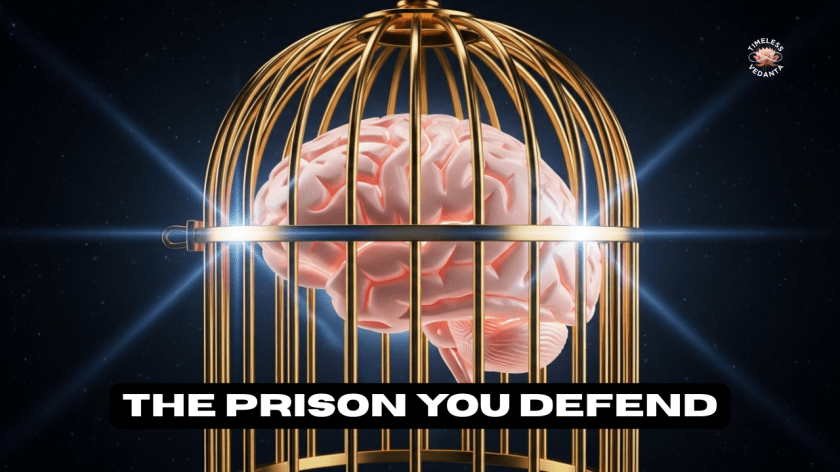
Why do we suffer so much in our own minds, even when nothing is actually going wrong?

This short video explores a familiar psychological pattern, the self-centred question “Why me?”, and shows how it becomes a source of unnecessary mental suffering.

Drawing on Stoicism, Vedantic psychology, and direct observation of the mind, the video explains why we suffer more in imagination than in reality, how anticipation and fear distort perception, and why overthinking creates anxiety where no real danger exists. Instead of offering comfort or emotional validation, it focuses on mental clarity, responsibility, and mastery over thought patterns.

If you are interested in understanding the mind without superstition, self-pity, or motivational fluff, this reflection points to the same clarity explored in The Ever-Relevant Gita, which examines fear, suffering, and self-inquiry rationally and practically.

This is not about belief.
It is about seeing the mind clearly.

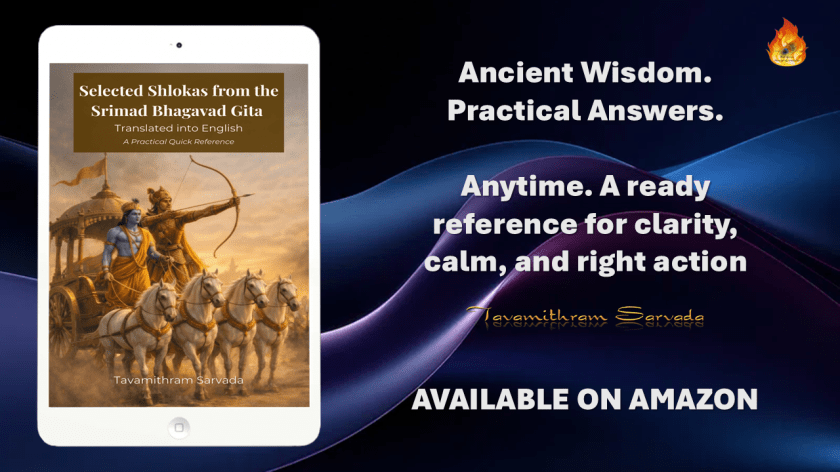
Selected Shlokas from the Srimad Bhagavad Gita: A Practical Quick Reference

EBOOK: A Practical Quick Reference for Daily Life

AMAZON LINK

Visit Amazon and click on the country of your residence

In moments of confusion, stress, fear, indecision, or emotional disturbance, most people do not need long explanations or philosophical debates. They need immediate clarity. They need a direct pointer that helps the mind settle and the intellect take charge.

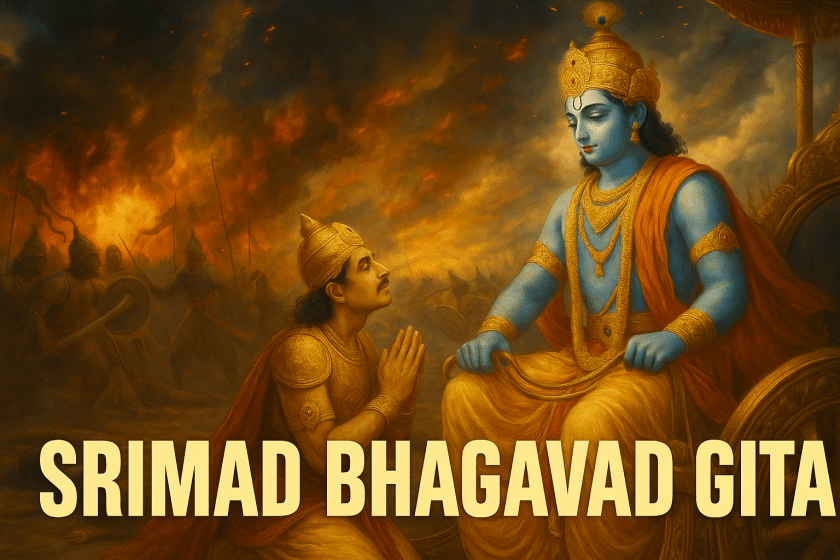
Now, imagine being like Arjuna and having Bhagavan Krishna always close to you, so that you can consult Him whenever you want.

That is precisely the purpose of the newly released eBook,
Selected Shlokas from the Srimad Bhagavad Gita : A Practical Quick Reference,
now available on Amazon.

Get the eBook here:
https://www.amazon.com/dp/B0GC81LCJQ/
(Select your country or region on Amazon to purchase from your local store.)


Why This eBook Is Different

This is not another commentary, nor a ritualistic presentation of scripture.

This eBook is designed as a ready reference, something you keep on your phone, tablet, or Kindle and return to whenever life presents a challenge.

Each Shloka has been carefully selected and translated into clear, direct English, focusing on practical understanding rather than blind belief. The intent is simple:
help you respond to life with clarity instead of emotional turbulence.

Just as people carry emergency numbers or reference guides, this book is meant to be mentally accessible at all times.


Use It As a Mental First Aid Kit

Life does not wait until we are calm or prepared. Problems appear suddenly, and reactions often follow faster than understanding.

This eBook allows you to:

  • Pause before reacting
  • Reflect instead of panicking
  • Shift from emotion to understanding
  • Re-centre the mind during pressure, loss, fear, or confusion

It is especially useful during moments when the mind feels:

  • Restless
  • Overwhelmed
  • Angry
  • Fearful
  • Directionless
  • Emotionally entangled

Categories Covered in the eBook

The Shlokas in this eBook are organised under the following specific categories and topics, allowing the reader to turn directly to the guidance most relevant to their present situation:

  1. Krishna – The Divine Father and Mother
  2. Overcoming Fear, Anger, and Mental Disturbance
  3. Understanding Action, Duty, and Responsibility
  4. Detachment, Clarity, and Inner Freedom
  5. Knowledge, Devotion, and Self-Mastery
  6. Becoming Dear to Bhagavan Krishna

This structure allows you to open the book at the exact point of need, rather than reading sequentially.


A Companion for Everyday Living

The Srimad Bhagavad Gita is not meant to be confined to temples, ceremonies, or academic study. It is a manual for living intelligently.

This eBook serves as:

  • A daily reflection tool
  • A companion during difficult decisions
  • A grounding reference during emotional storms
  • A reminder of clarity when the mind slips into confusion

You do not need prior knowledge, belief, or background to use it. You only need the willingness to pause and reflect.

For readers who wish to delve deeper and experience the Srimad Bhagavad Gita as a complete, flowing teaching, there is also the long-form YouTube video of “The Ever-Relevant Gita: A Present-day Rendering in English available on Amazon.”

This video presents the entire message of the Gita in clear, contemporary English, without ritualism, mysticism, or unnecessary abstraction. It is ideal for those who want a structured, start-to-finish understanding of Krishna’s teaching as a philosophy of life, responsibility, clarity, and self-mastery. While the eBook functions as a quick-access reference for daily situations, this video serves as a comprehensive foundation for sustained reflection and deeper understanding.


Where to Get It

The eBook is available globally on Amazon.

👉 Access it here:
https://www.amazon.com/dp/B0GC81LCJQ/

Simply choose your country or region on Amazon and download it to your device.


Final Thought

Carry this eBook with you, not as a religious object, but as a tool for clarity.

When life presses hard, wisdom should be close at hand.

Jai Shri Krishna

Understanding Shiva Tandava Stotra: Ego and Liberation

The Shiva Tandava Stotra is one of the most striking and philosophically layered compositions in Sanskrit literature. Traditionally attributed to Ravana, the king of Lanka, this hymn occupies a unique place in Shaiva thought, not merely as an act of devotion, but as a profound symbolic exposition of reality, consciousness, and transformation.

Unlike many devotional hymns that praise a deity through submission or supplication, this Stotra is intense, rhythmic, and uncompromising. Its imagery is fierce, expansive, and unapologetically cosmic. It does not sentimentalise Shiva. It presents him as the very principle that governs creation, destruction, and the restless movement of existence itself.

Ravana: The Composer and the Paradox
Ravana is not a conventional devotee. He is described in the epics as supremely learned, extraordinarily powerful, and overwhelmingly egoic. He represents intellect without restraint, ambition without humility, and mastery without surrender. In this sense, Ravana signifies extreme ego, the height of self-assertion. That such a figure composes the Shiva Tandava Stotra is not accidental. The Stotra arises at the edge of confrontation between ego and reality. Ravana’s strength, knowledge, and pride reach a limit where they collide with something that cannot be dominated or possessed. Shiva, in this context, is not an object of worship but a force that dissolves arrogance by sheer clarity.

The Stotra is therefore not the voice of submission. It is the voice of recognition. Ravana does not diminish himself. Instead, his ego is forced to acknowledge a reality that cannot be controlled, threatened, or negotiated with. The intensity of the verses reflects this encounter. The hymn becomes an expression of awe, not obedience, and insight, not fear.

The Tandava as a Cosmic Vision
The dance described in the Shiva Tandava Stotra is not a physical performance confined to form or location. It is a cosmic metaphor for the nature of existence itself.

The Tandava represents the ceaseless movement of reality. Nothing in the universe is static. Forms arise, transform, and dissolve continuously. Creation and destruction are not opposing events but phases of the same ongoing process. Shiva’s dance symbolises this unbroken rhythm that governs matter, energy, time, and life.

The circle of flames within which Shiva dances represents the total field of existence. It encompasses space, time, mass, energy, and all phenomena that appear within them. The flames signify impermanence. Everything within this circle is subject to change. Nothing endures as form.

The ‘damaru’, a small hand drum, held in one hand symbolises rhythm and order, the principle through which manifestation occurs. Sound here is not mere noise but pattern, sequence, and structure. In another hand, Shiva holds fire, the force of transformation and dissolution. Creation and destruction are thus shown as inseparable, emerging from the same source.

Shiva’s flowing, matted hair symbolises yogic awareness. It extends outward, suggesting that contemplation does not withdraw from the universe but includes it entirely. Awareness is not confined or limited. It is vast enough to contain all movement without being disturbed by it.

One hand is raised in reassurance. This gesture conveys fearlessness. Despite constant change, decay, and uncertainty, existence is not hostile. When understood rightly, the movement of life does not threaten awareness.

Ego, Ignorance, and Liberation
Beneath Shiva’s foot lies the dwarf of ignorance, often interpreted as ego. This figure does not represent moral evil but psychological bondage. Ego is the false centre that claims ownership, control, and permanence in a world that offers none. The dwarf is not destroyed. It is restrained. This is significant. The ego cannot be eliminated by force or denial. It must be seen clearly and placed in its proper position. Shiva’s foot presses upon it, indicating mastery rather than annihilation.

The raised foot represents transcendence. It is lifted against gravity, symbolising freedom from compulsive identification with form, fear, and desire. This lifted foot points to contemplation, inward stillness, and clarity. Liberation is not an escape from the world but a release from misidentification within it.

The Tandava also includes suffering. Shiva dances not only in celebration but in cremation grounds. Death, loss, decay, and dissolution are not excluded from the vision. They are integral to it. The Stotra does not deny pain or impermanence. It demands their acceptance as part of the total movement of existence.

Shiva and Shakti: Awareness and Existence
The Tandava cannot be understood without recognising the role of Shakti, Shiva’s consort.

Shiva represents pure awareness, unmoving, unchanged, and self-luminous. Shakti represents existence itself, movement, energy, form, and expression. All action, transformation, creation, and dissolution belong to Shakti. All knowing, witnessing, and clarity belong to Shiva.

They are not two separate realities. They are two aspects of the same truth. Awareness without existence would have nothing to illuminate. Existence without awareness would be blind and meaningless.

The dance occurs because of Shakti. The still centre of the dance is Shiva. This expresses a fundamental insight: awareness does not act, yet nothing acts without awareness. The universe moves, transforms, and dissolves within awareness, not outside it.

To see Shiva and Shakti as separate is ignorance. To recognise their unity is understanding. The Tandava shows that stillness and movement, silence and sound, being and becoming are not opposites. They are inseparable.

The Meaning of the Stotra
The Shiva Tandava Stotra is therefore not merely a devotional hymn. It is a complete symbolic vision of reality. It explains the cosmos outside and the turbulence within the human mind through a single, integrated metaphor.

Ravana’s ego confronts the absolute. The universe dances. Awareness remains untouched. Existence moves endlessly. Liberation lies not in stopping the dance, but in understanding its nature.

This is the vision that unfolds in the Shlokas that follow.

1
जटाटवीगलज्जलप्रवाहपावितस्थले
गलेऽवलम्ब्य लम्बितां भुजङ्गतुङ्गमालिकाम् ।
डमड्डमड्डमड्डमन्निनादवड्डमर्वयं
चकार चण्डताण्डवं तनोतु नः शिवः शिवम् ॥१॥

jataa tavee gala jala pravaaha paavitha sthale
galae valambya lambitaam bhujanga tunga maalikaam
damad damad damad damanni naadha vadda marvayam
chakaara chaNda thaaNdavam thanothu nah shivah shivam.

On the sacred ground made pure by the streams flowing down from the forest of matted locks,
with a lofty and hanging garland of serpents adorning the neck,
as the damaru resounds again and again with its thunderous rhythm,
may Shiva, who performs the fierce Tandava, bestow auspiciousness upon us.

2
जटाकटाहसम्भ्रमभ्रमन्निलिम्पनिर्झरी
विलोलवीचिवल्लरीविराजमानमूर्धनि ।
धगद्धगद्धगज्जलल्ललाटपट्टपावके
किशोरचन्द्रशेखरे रतिः प्रतिक्षणं मम ॥२॥

jataa kataaha sambhrama bhramanni nilimpa nirjharee
vilola veechi vallaree viraaja maana moordhani
dhagad dhagad dhagaj jvalal lalaata patta paavake
kishora chandra shekhare ratih pratikshaNam mama.

As the celestial river whirls restlessly through the cauldron-like mass of matted hair,
with rippling waves spreading and adorning the head in restless motion,
while the blazing fire crackles fiercely across the broad forehead,
my mind finds delight at every moment in the one crowned with the youthful crescent moon.

3
धराधरेन्द्रनन्दिनीविलासबन्धुबन्धुर
स्फुरद्दिगन्तसन्ततिप्रमोदमानमानसे ।
कृपाकटाक्षधोरणीनिरुद्धदुर्धरापदि
क्वचिद्दिगम्बरे मनो विनोदमेतु वस्तुनि ॥३॥

dharaa dharendra nandinee vilaasa bandhu bandhura
sphurad diganta santati pramoda maana maanase
krupaa kataaksha dhoraNee niruddha durdharaa padi
kvachid digambare mano vinoda mettu vastuni.

Bound in playful companionship with the daughter of the mountain king,
whose mind rejoices as joy spreads to the farthest horizons,
whose steady stream of compassionate glances restrains even unbearable calamity,
may my mind find delight in that sky-clad, boundless reality.

4
जटाभुजङ्गपिङ्गलस्फुरत्फणामणिप्रभा
कदम्बकुङ्कुमद्रवप्रलिप्तदिग्वधूमुखे ।
मदान्धसिन्धुरस्फुरत्त्वगुत्तरीयमेदुरे
मनो विनोदमद्‍भुतं बिभर्तु भूतभर्तरि ॥४॥

jataa bhujanga pingala sphurat phanaa mani prabhaa
kadhamba kumkuma drava pralipta dig vadhuu mukhae
madaandha sindhura sphurat tvagut tareeya medure
mano vinoda madbhutam bibhartu bhoota bhartari.

From the tawny serpents coiled in the matted hair, the radiance of the jewels on their raised hoods flashes forth,
smearing the faces of the directions as if with flowing kadamba and vermilion,
while the quivering hide of an intoxicated elephant forms a powerful covering,
may the sustainer of all beings hold my mind in wondrous delight.

5
सहस्रलोचनप्रभृत्यशेषलेखशेखर
प्रसूनधूलिधोरणी विधूसराङ्घ्रिपीठभूः ।
भुजङ्गराजमालया निबद्धजाटजूटक
श्रियै चिराय जायतां चकोरबन्धुशेखरः ॥५॥

sahasra lochana prabhrutya shesha lekha shekhara
prasoona dhooli dhoranee vidhoosara anghri peethabhuh
bhujanga raaja maalayaa nibaddha jaata jootaka
shriyai chiraaya jaayatam chakora bandhu shekharah.

Adorned by the assembled hosts beginning with the thousand-eyed one,
whose footrest is dusted and greyed by streams of flower pollen,
whose matted locks are bound by a garland of the king of serpents,
may the moon-crested one, the companion of the chakora bird, arise for enduring prosperity.

6
ललाटचत्वरज्वलद्धनञ्जयस्फुलिङ्गभा
निपीतपञ्चसायकं नमन्निलिम्पनायकम् ।
सुधामयूखलेखया विराजमानशेखरं
महाकपालिसम्पदेशिरोजटालमस्तु नः ॥६॥

lalaata chatvara jvalad dhananjaya sphulinga bhaa
nipeeta pancha saayakam namanni nilimpa naayakam
sudhaa mayookha lekhayaa viraaja maana shekharam
mahaa kapaali sampade shiro jataala mastu nah.

From the blazing centre of the forehead flashes the conquering spark of fire,
which consumed the five arrows and before whom the celestial beings bow,
whose head shines adorned with the crescent traced in nectar-like rays,
may the great skull-bearing one, with matted locks, grant us prosperity.

7
करालभालपट्टिकाधगद्‍धगद्‍धगज्ज्वलद्
धनञ्जयाहुतीकृतप्रचण्डपञ्चसायके ।
धराधरेन्द्रनन्दिनीकुचाग्रचित्रपत्रक
प्रकल्पनैकशिल्पिनि त्रिलोचने रतिर्मम ॥७॥

karaala bhaala pattikaa dhagad dhagad dhagaj jvalad
dhananjayaa huthee kruta prachanda pancha saayake
dharaa dharendra nandinee kuchaagra chitra patraka
prakalpanaika shilpini trilochane ratir mama.

As the fearsome fire blazes across the broad surface of the forehead,
having reduced the fierce five arrows to a sacrificial offering,
while the movements of the dance trace wondrous patterns upon the bosom of the mountain’s daughter, my devotion rests in the three-eyed one, the sole master craftsman of creation.

8
नवीनमेघमण्डली निरुद्‍धदुर्धरस्फुरत्
कुहूनिशीथिनीतमः प्रबन्धबद्धकन्धरः ।
निलिम्पनिर्झरीधरस्तनोतु कृत्तिसिन्धुरः
कलानिधानबन्धुरः श्रियं जगद्धुरंधरः ॥८॥

naveena megha mandalee niruddha durdhara sphurat
kuhoo nisheethi neetamah prabandha baddha kandharah
nilimpa nirjharee dharas tanotu krutti sindhurah
kalaa nidhaana bandhurah shriyam jagat dhurandharah.

With the dense brilliance of newly formed cloud-clusters restrained around the neck,
binding the deep darkness of the moonless night in a continuous band,
the bearer of the celestial river and the wearer of the elephant hide,
the beloved source of all arts, the sustainer of the universe’s prosperity, may bestow auspiciousness.

9
प्रफुल्लनीलपङ्कजप्रपञ्चकालिमप्रभा
वलम्बिकण्ठकन्दलीरुचिप्रबद्धकन्धरम् ।
स्मरच्छिदं पुरच्छिदं भवच्छिदं मखच्छिदं
गजच्छिदान्धकच्छिदं तमन्तकच्छिदं भजे ॥९॥

prafulla neela pankaja prapancha kaalima prabhaa
valambi kantha kandalee ruchi prabaddha kandharam
smaracchidam puracchidam bhavacchidam makhacchidam
gajacchidandhakacchidam tamantakacchidam bhaje.

Whose dark radiance spreads like fully bloomed blue lotuses across the expanse,
whose neck bears that lustre, held and bound in glowing brilliance,
the destroyer of desire, the destroyer of the cities, the destroyer of becoming, the destroyer of sacrifice,
the slayer of Gaja and Andhaka, the bringer of death to death itself, that one I revere.

10
अखर्वसर्वमङ्गलाकलाकदम्बमञ्जरी
रसप्रवाहमाधुरीविजृम्भणामधुव्रतम् ।
स्मरान्तकं पुरान्तकं भवान्तकं मखान्तकं
गजान्तकान्धकान्तकं तमन्तकान्तकं भजे ॥१०॥

akharva sarva mangalaa kalaa kadamba manjaree
rasa pravaaha maadhuri vijrumbhanaa madhu vratam
smaraantakam puraantakam bhavaantakam makhaantakam
gajaantakaandhakaantakam tamanta kaantakam bhaje.

An unceasing cluster of all auspicious arts, unfolding in abundance,
from whom flows a stream of sweetness, expanding like nectar in full bloom,
the transcender of desire, the transcender of the cities, the transcender of becoming, the transcender of sacrifice,
the destroyer of Gaja and Andhaka, the transcender of death itself, that one I revere.

11
जयत्वदभ्रविभ्रमभ्रमद्‍भुजङ्गमश्वसद्
विनिर्गमत्क्रमस्फुरत्करालभालहव्यवाट् ।
धिमिद्धिमिद्धिमिध्वनन्मृदङ्गतुङ्गमङ्गल
ध्वनिक्रमप्रवर्तितप्रचण्डताण्डवः शिवः ॥११॥

jayatva dabhravibhrama bhramad bhujangam ashvasad
vinirgamat krama sphurat karaala bhaala havya vaat
dhimid dhimid dhimid dhvanan mrudanga tunga mangala
dhvani krama pravartita prachanda taandavah shivah.

Victory to Shiva, whose fierce Tandava surges forth,
as serpents whirl and hiss in restless motion,
while the blazing altar of the fearsome forehead pulses in rising flames,
driven by the powerful, auspicious rhythms of the ‘mridanga’ sounding dhimid, dhimid, again and again.

12

स्पृषद्विचित्रतल्पयोर्भुजङ्गमौक्तिकस्रजोर्
गरिष्ठरत्नलोष्ठयोः सुहृद्विपक्षपक्षयोः ।
तृणारविन्दचक्षुषोः प्रजामहीमहेन्द्रयोः
समप्रवृत्तिकः कदा सदाशिवं भजाम्यहम् ॥१२॥

sprushad vichitra talpayor bhujanga mauktika srajor
garishtha ratna loshthayoh suhrud vipaksha pakshayoh
trunaaravinda chakshushoh prajaa mahee mahendrayoh
sama pravrittikah kadaa sadaashivam bhajaamyaham.

When shall I revere Sadashiva with equal vision,
seeing no difference between a splendid couch and the bare ground,
between a serpent’s pearl garland and a lump of clay, between friend and foe,
between blade of grass and lotus, between a subject and a sovereign?

13

कदा निलिम्पनिर्झरीनिकुञ्जकोटरे वसन्
विमुक्तदुर्मतिः सदा शिरस्थमञ्जलिं वहन् ।
विलोललोललोचनो ललामभाललग्नकः
शिवेति मन्त्रमुच्चरन्कदा सुखी भवाम्यहम् ॥१३॥

kadaa nilimpa nirjharee nikunja kotare vasan
vimukta durmateeh sadaa shirastha manjalim vahan
vilola lola lochano lalaama bhaala lagnakah
shiveti mantra muchcharan kadaa sukhee bhavaamyaham.

When shall I dwell in a forest hollow beside the celestial river,
freed from distorted thought, bearing folded hands upon my head,
with unsteady eyes and the sacred mark fixed upon the forehead,
uttering the mantra “Shiva”, when shall I abide in happiness?

14
इदम् हि नित्यमेवमुक्तमुत्तमोत्तमं स्तवं
पठन्स्मरन्ब्रुवन्नरो विशुद्धिमेतिसंततम् ।
हरे गुरौ सुभक्तिमाशु याति नान्यथा गतिं
विमोहनं हि देहिनां सुशङ्करस्य चिन्तनम् ॥१४॥

idam hi nityam eva muktam uttamottamam stavam
pathan smaran bruvan naro vishuddhim eti santatam
hare gurau subhaktim aashu yaati na anyathaa gatim
vimohanam hi dehinaam sushankarasya chintanam.

Whoever continually recites, remembers, and speaks this supreme hymn
attains lasting inner purity,
quickly developing unwavering devotion toward Hara and the guiding teacher, with no other path remaining,
for contemplation of Shankara alone dispels the delusion of embodied beings.

15
पूजावसानसमये दशवक्त्रगीतं
यः शम्भुपूजनपरं पठति प्रदोषे ।
तस्य स्थिरां रथगजेन्द्रतुरङ्गयुक्तां
लक्ष्मीं सदैव सुमुखीं प्रददाति शम्भुः ॥१५॥

pooja vasaana samaye dashavaktra geetam
yah shambhu poojana param pathati pradoshe
tasya sthiraam ratha gajendra turanga yuktaam
lakshmeem sadaiva sumukheem pradadaati shambhuh.

Whoever recites this hymn sung by the ten-faced one
at the close of worship, devoted to Shambhu, at the sacred twilight hour,
to that person is granted enduring prosperity, accompanied by chariots, elephants, and horses,
and Lakshmi ever bestows her gracious presence.

इति श्रीरावणकृतं
शिवताण्डवस्तोत्रं
सम्पूर्णम् ॥

iti shri raavana krutam
shiva taandava Stotram
sampoornam.

Thus ends the Shiva Tandava Stotra,
composed by Ravana,
complete.
What Next?: The End of Inner Conflict

He Who Conquers His Mind Is the Mightiest Warrior

People think strength is aggression. They think power is domination. Many think victory means defeating an external opponent.

That understanding does not survive scrutiny.

Real strength has nothing to do with overpowering others. It has everything to do with … CONTINUE READING ON SUBSTACK

The Secret Battle Inside Your Head (And How to Win It)

The mind presents a profound paradox. It is a collection of beliefs, attitudes, delusions, and illusions, yet it remains the core of our intellect. It can craft either ‘heaven’ or ‘hell’ within the span of a single breath. Learning to manage this incredibly powerful instrument, which can also act as a destructive weapon, is arguably life’s most important mastery.

My talk, How to Stop Being Triggered | The Way Out of the Mind Trap, shows how Vedanta provides the ultimate framework for understanding, training, and ultimately transcending the restless mind.

Engage with this talk, reflect deeply, and uncover the hidden mechanism behind every emotion, along with the path to freedom from it. By the end, it becomes clear that whatever is experienced arises in the mind, and that life and one’s world can be transformed by working on one’s perception and reaction.

Stop Distorting the Srimad Bhagavad Gita

KRISHNA IS THE SUBSTRATUM OF ALL THAT EXISTS AND DOES NOT EXIST! Someone made a video and called Him the ‘backbone of India!’ What? And What about the rest of the universe??

Eisegesis is the practice of reading one’s own ideas into a text instead of drawing out the meaning that is actually there. That is exactly what the speaker in a video I recently watched did.

The ideas promoted in the video, reduce the universal philosophy of the Srimad Bhagavad Gita to shallow slogans, and that needs to be corrected. The speaker takes ‘Jana Gana Mana’ and forces his own narrow view into it, capitalising on the fact that most people have neither read nor understood the Srimad Bhagavad Gita.

There are confusions and distortions that get repeated again and again. Let us set them straight.

Was it written for George V?
Many people have said that Tagore composed the song in praise of George V in 1911. The timing made the suspicion stronger, since it was sung at the Indian National Congress session just when the King arrived in India. Tagore denied this charge later and said he had written it for the “Eternal Charioteer.” The truth is that the words are veiled in such a way that they can be read in more than one way. That ambiguity itself should alert us to be cautious and not jump to easy conclusions.

It is also worth remembering that when this song was written, the modern political entity called India did not yet exist. To confine Krishna, the all-pervading Self, within the limits of a political boundary on Earth is to miss the essence of the Srimad Bhagavad Gita. The Gita reveals the cosmic Krishna, whose presence transcends nations and even this planet, which itself is but a speck in the vast universe.

Krishna is not a human deity
In SBG 7:24, Krishna says: “Foolish people who do not know My formless, exalted, imperishable, and supreme nature think I assume a manifest human form.”

And in SBG 10:20, He states: “I am the Self, O Gudakesha (Arjuna), situated within all living entities. I am the origin, the middle and also the end of all beings.”

This makes it clear that Krishna is the universal Self, not a political or sectarian figure limited to India! To call Him the “backbone of India” is to completely misrepresent the entire Krishna Tattva or Krishna Principle.

Contradicting Chapters 10 and 11

  • Chapter 10 shows Krishna as the essence behind every greatness, not as the ‘backbone’ of a single land.
  • Chapter 11 shows Arjuna the universal form, containing all beings, all worlds, and all time. Reducing Bhagavan Shri Krishna to a mascot of a country is to rubbish these chapters.

Tagore’s wording
Tagore’s phrase “Eternal Charioteer” was a universal metaphor. To twist it into a sectarian slogan is dishonest and disrespectful to his intent. Tagore was a poet and philosopher who could have deliberately used metaphors broad enough to be interpreted universally.

Exploiting ignorance
Since most people mistake the personification of Krishna in the Bhagavad Gita for an anthropomorphic deity, speakers like this exploit that gap. They impose their own ideas and turn Vedanta into shallow propaganda.

One word twisted into nonsense
The speaker picks up a single word “chira-sarathi” and cooks up an entire narrative out of it. In the Srimad Bhagavad Gita, Krishna’s role as Arjuna’s charioteer serves as a metaphor for the intellect guiding the mind. As per the chariot analogy, the chariot is the body, Arjuna is the owner of the body, Krishna is the intellect, the reins are the mind, the horses are the senses, and the path is the world in which one lives. To literalise it and claim that Tagore’s “Eternal Charioteer” must mean a historical Krishna who is the backbone of India is pure invention. Worse, it reduces the Bhagavad Gita’s universal truth to a narrow slogan.

The truth is simple. Krishna is the eternal, formless Self. The Srimad Bhagavad Gita is a universal scripture that points us to clarity and self-realisation. Do not allow your ignorance of the great life-altering scripture to make you fall for shallow interpretations that limit the boundless truth of Vedanta.

Have you completed reading or listening to the Srimad Bhagavad Gita? Whether your answer is yes or no, here is your chance to spend just three hours and internalise the most supreme philosophy of nondual universal oneness.

Below is my harmonica rendition of the Indian National Anthem

Do This AT LEAST ONCE in Your Lifetime – Only 3 Hours!

No Mantras, No Prayers, No Fasting – Just 3 Hours to Smash Illusion and Gain the Supreme Truth!

I am not saying this. KRISHNA SAYS IT IN THE SRIMAD BHAGAVAD GITA.

All worries, fears, stress, anger, envy, and every negative force that can block, weaken, or destroy your chance of living a truly beautiful and fulfilling life will be crushed to smithereens and pulverised to dust.

With soothing sound, captivating visuals, and clear English text to follow along.

Please let me be honest, my dear brothers and sisters, I find it utterly saddening that so many people have been convinced that the Srimad Bhagavad Gita is “too difficult to comprehend” and that without a “good guru” they can never learn it.

In Shloka SBG 9:02, Bhagavan Krishna clearly says that this knowledge is not only VERY EASY, but also it is also VERY EASY TO PRACTISE and it is EVERLASTING. All it takes is the small effort of sitting down and reading a simple translation of the 700 Shlokas. In fact, I must have read this supreme scripture over a thousand times, and I never tire of it. The same applies to every genuine seeker. You cannot read it once and expect to fully grasp it. But at the very least, read it, listen to it, or go through it ONCE BEFORE YOU DIE!

As part of my SBG for ALL Mission, here is my humble offering: a three-hour guided study of this life-changing scripture, a true gift to humanity.

Experience this once, and the weight of your illusions will collapse into nothing.

Please, take this opportunity. Whatever you think it is worth, COMPLETE IT. Do it at least for your brother’s sake. You can thank me later 🙂

JAI SHRI KRISHNA.

LOOK UP, AND WAKE UP

Voyager 1 has been flying non-stop for nearly 48 years since 1977. It has already travelled over 24 billion kilometres and is still not even one light-day away from Earth.
Let that sink in. Just one day of light-speed travel, and we haven’t reached it yet.

And here we are…
On this tiny, fragile speck called Earth, floating in infinite space,
Wasting our precious moment of life with ego, pride, inferiority, religious superiority, hatred, and greed.

All our religious places, ideologies, nations, and flags – they vanish into nothingness when seen from just a few kilometres above Earth, let alone from Voyager’s view.

The spacecraft carries a golden record of music and greetings from humanity, in case it ever meets another intelligent being.
Imagine if it did. What would we say we stood for?

It’s time we grow up, let go of imaginary divisions, ridiculous beliefs, and cults, and embrace the sheer miracle of being alive at all. Because in the grand movie of the universe, we’re not even a pixel on the screen.

Letting Go: The Illusion of Stillness Explained

A Deeper Look into Stillness, Identity, and the Final Trap

Have you ever tried letting go of your worries, your fears, or your attachments, only to still feel like something remains?
You’re not alone. For many sincere seekers, the final barrier is subtle: it’s not your thoughts, not your ego, not even your desires. It’s the silent identity hiding behind all of them. The witness.

In my latest video, I unpack what I call the final illusion: the quiet and respectable identity of the “observer”, the one who is calm, still, and watching.
But here’s the truth: stillness too is a role. And unless that role drops, freedom will remain just out of reach.

Watch the Video: Why Life Gets Better When You Let Go

This is not about theory. It is not spiritual entertainment.
This is PURE VEDANTIC CLARITY, aimed at dismantling the last mask the mind wears, even in meditation.

If you have ever searched for:

  • How to overcome suffering through awareness
  • How to let go of mental attachments, or
  • How to go beyond thought and ego

Then this video will show you what lies beyond even those answers.

No beliefs. No rituals. No frills.
Just clear, unfiltered self-inquiry, rooted in the teachings of the Srimad Bhagavad Gita.

Experience the Bhagavad Gita: A Dynamic Approach

Now Is the Time. Experience the Srimad Bhagavad Gita Like Never Before!

It is rather ironic that in India, people solemnly place their hand on the Srimad Bhagavad Gita in a court of law and swear to speak the truth, yet many of them have never read it, let alone truly understood its message. How strange it is that a civilisation that produced the world’s most brilliant text on life, ethics, detachment, work, and clarity, treats it like a prop or a ritual object, rather than the supreme manual for life that it truly is.

This is why I, Tavamithram Sarvada, have taken it upon myself to make the Srimad Bhagavad Gita easily available, accessible, and comprehensible to all, not by mystifying it, but by bringing it to life.
And here is a rendition like no other.

🎙️ Each Shloka Delivered Powerfully, Not Sung Dully

Most recitations of the Gita are delivered in a monotonous and emotionless chant, often with all 700 Shlokas sung in a single flat tune. But remember that the scenario is that of war, and to ensure the energy and power apart from the wisdom the Bhagavad Gita imparts, I came to the conclusion that it needs to be delivered dramatically and powerfully.

With a background in acting and a deep grounding in Vedanta, I have delivered each Shloka with the tone, expression, and intensity its meaning calls for. This is not a performance – it is a sacred transmission, infused with clarity, emotion, and strength.

Each Shloka appears on-screen in Sanskrit, accompanied by its romanised transliteration, English transliteration, and meaning. Whether or not you understand Sanskrit, this immersive experience will draw you into the battlefield of Kurukshetra and place you right beside Arjuna and at the feet of Bhagavan Shri Krishna, both mentally and spiritually.

📽️ Why This Matters Now

In an age of confusion, disconnection, and identity crisis, the Srimad Bhagavad Gita remains the most powerful antidote to fear, sorrow, and indecision. But you must listen to it, not once, not just as a ritual, but as if your life depended on it.

Because in many ways, it does.

💡 Don’t Believe. Know!

This is the spirit of Timeless Vedanta, and this is your invitation to listen to the Srimad Bhagavad Gita as never before. There is no concept of belief in Vedanta as it is in organised religions. It is purely about realisation. Don’t leave this life without having at least heard the full message of Bhagavan Krishna.

If you haven’t yet read or heard the Srimad Bhagavad Gita even once in your life, start today. You owe it to yourself.

🎧 Now is the time. Experience the Srimad Bhagavad Gita, like never before!

👇🏼 Watch the full video here:

The Srimad Bhagavad Gita Explained Simply In English

SrimadBhagavadGita #BhagavadGitaRecitation #GitaWithMeaning #TimelessVedanta #Don’tBelieveKnow #SanskritGita #GitaForEveryone #PowerfulRecitation #ArjunaKrishna #SpiritualAwakening